


What is Bhramari Pranayama?
Bhramari Pranayama—commonly known as Humming Bee Breath—is a controlled breathing practice (pranayama) from the Hatha yoga tradition in which the practitioner produces a steady humming sound during exhalation, resembling the buzz of a bee. The name derives from the Sanskrit word bhramara, meaning “humming big black bee”, and the technique is classified among the eight classical pranayamas described in foundational yogic texts. Unlike most breathwork techniques that rely solely on regulation of the breath, Bhramari is unique among pranayamas because it directly employs self-generated audible sound vibration as its primary tool for pratyahara (sense withdrawal) and dharana (concentration).
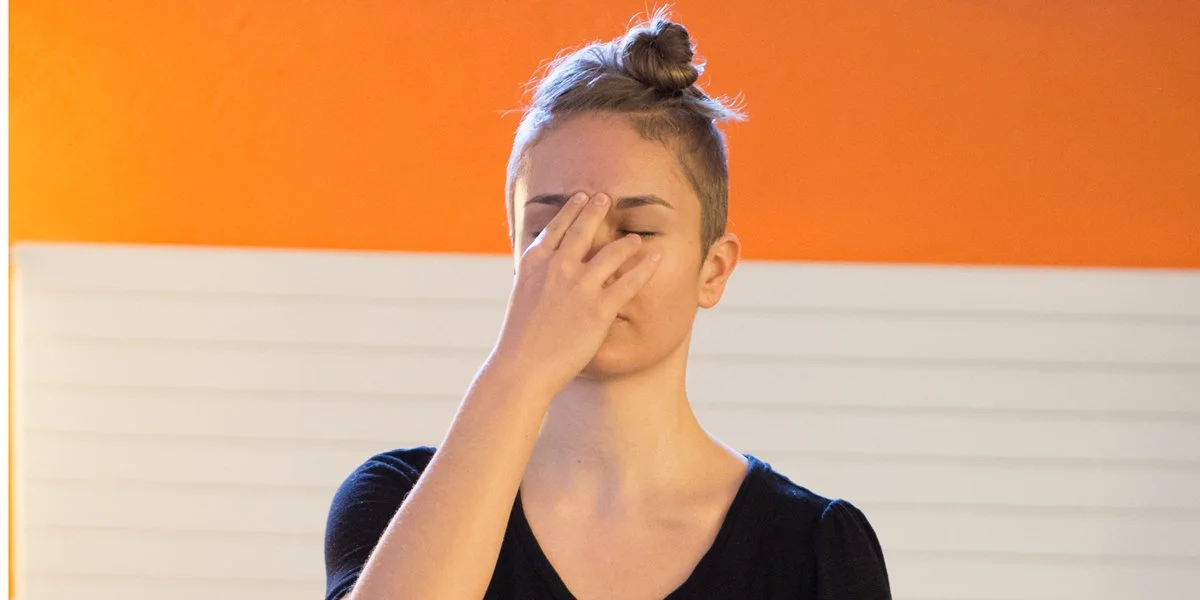
The core technique involves seated inhalation through the nose followed by a slow, controlled exhalation while making a low-pitched humming sound with the lips sealed. The vibration travels through the throat, skull, and chest, creating an internal resonance practitioners describe as both soothing and focusing. In the full classical form, the practitioner uses Shanmukhi Mudra—sealing the ears, eyes, nostrils, and mouth with the fingers—to deepen sensory withdrawal.
Origins & Lineage
Bhramari Pranayama is described in the Hatha Yoga Pradipika, a classic 15th-century yoga text by Swami Swatmarama, which states: “Breathe in quickly, making a reverberating sound like the male black bee, and exhale slowly while softly making the sound of the female black bee. By this yogic practice, one becomes Lord of the Yogis and the mind is absorbed in bliss” (Chapter 2, Verse 68). The practice is also mentioned in the Gheranda Samhita, another major text of Hatha yoga, where it is categorized as a nada (sound-based) pranayama.
The Hatha Yoga Pradipika describes Bhramari’s capacity to lead the practitioner from external sound awareness into the internal experience of Nada (the subtle, unstruck cosmic sound). This aligns the practice with the broader yogic cosmology in which sound serves as a bridge between gross and subtle realities. Within the Indian scriptural tradition, bees themselves carry symbolic weight; they appear in Vedic hymns and Puranic narratives as emblems of purity, divine order, and the creative hum of the cosmos.
While the exact date of the Hatha Yoga Pradipika’s composition is debated, most scholars place it in the 15th century CE. The earliest mention of pranayama as a concept can be traced back to the Upanishads, written between 800 BCE and 500 BCE, though Bhramari itself appears to be a later systematization within the Hatha lineage.
How It’s Practiced
Bhramari Pranayama is typically practiced seated in a stable, upright posture such as Sukhasana (easy pose) or Padmasana (lotus pose). The spine remains erect, the shoulders relaxed, and the eyes gently closed. After dropping the chin to the chest, the practitioner begins to exhale slowly, making a steady, low-pitched ‘hmmm’ sound at the back of the throat—like the humming of a bee—with focus on making the sound soft, smooth, and steady.
In the simplified version, the practitioner places the index fingers lightly on the cartilage of the ears (the tragus), applying gentle pressure during the exhalation to intensify the internal resonance. In the full expression with Shanmukhi Mudra, as mentioned by B.K.S. Iyengar in Light on Pranayama, the fingers are lightly placed over the ears, eyes, nose and mouth, helping the practitioner withdraw from the senses. The humming exhalation typically lasts as long as is comfortable, without strain, followed by a smooth inhalation through the nose.
Variations exist: some traditions emphasize a high-pitched hum, others a low drone; some include breath retention (kumbhaka) after inhalation, while others keep the breath flowing continuously. Practitioners may repeat the cycle 3–4 times daily, though the technique can also be practiced as a standalone calming intervention.
Bhramari Pranayama Today
Bhramari Pranayama has gained widespread recognition in contemporary yoga studios, meditation centers, and wellness retreats around the world. It is frequently taught in beginner pranayama courses due to its accessibility and immediate calming effects. Teachers often introduce it early in a yoga class to settle the mind, or at the close of asana practice to transition into meditation or savasana.
In the modern therapeutic context, the practice appears in stress-reduction programs, trauma-informed yoga, and clinical breathwork interventions. Recordings and guided sessions are available on apps such as Insight Timer, Calm, and YouTube channels dedicated to pranayama instruction. Organizations like the Art of Living Foundation and Isha Foundation incorporate Bhramari into their breathing workshops.
Seekers encounter the technique in ashrams in Rishikesh and other yoga hubs in India, as well as in online courses led by teachers trained in Iyengar, Sivananda, or Satyananda lineages. The practice has also attracted scientific interest: research published in peer-reviewed journals has examined its effects on blood pressure, heart rate variability, sinus ventilation, and mental health markers.
Common Misconceptions
Bhramari Pranayama is not a mantra practice, though the humming sound may superficially resemble chanting. The vibration is self-generated and non-semantic; it does not invoke deities or carry doctrinal meaning. It is a physiological technique with meditative effects, not a devotional act.
The practice is also not synonymous with “bee breathing” in the broader sense—some contemporary breathwork modalities use similar terms but differ in technique and intention. Bhramari is specifically rooted in the Hatha yoga canon and should be understood within that framework.
While Bhramari is calming for most practitioners, it is not universally appropriate. It should not be practiced by pregnant or menstruating women, and is contraindicated for individuals with extremely high blood pressure, epilepsy, chest pain, or an active ear infection; it should also not be practiced in a supine position. The humming sound, while gentle, may feel uncomfortable or overstimulating for individuals with certain auditory sensitivities.
Finally, Bhramari does not produce instant enlightenment or “bliss” in the colloquial sense. The reference to ananda (bliss) in the Hatha Yoga Pradipika should be read as a description of meditative absorption—a quality of mental stillness—not as a guarantee of euphoria.
How to Begin
For those interested in learning Bhramari Pranayama, the most reliable entry point is instruction from a certified yoga teacher trained in pranayama. Many studios offer introductory breathwork classes, and online platforms provide step-by-step video guidance.
Recommended texts for self-study include Light on Pranayama by B.K.S. Iyengar, which offers detailed instructions and variations, and Asana Pranayama Mudra Bandha by Swami Satyananda Saraswati, a practical manual from the Bihar School of Yoga. The original source, the Hatha Yoga Pradipika (available in English translation by Swami Muktibodhananda), provides the classical verse and commentary.
Beginners should start with just 3–5 rounds of simple humming exhalations, without hand mudras or breath retention, and gradually build familiarity with the sensation of internal vibration. As with most pranayamas, Bhramari is best practiced on an empty stomach. The technique can be practiced independently or integrated into a broader yoga or meditation routine. Consistency—daily practice, even if brief—yields deeper effects than sporadic intensive sessions.