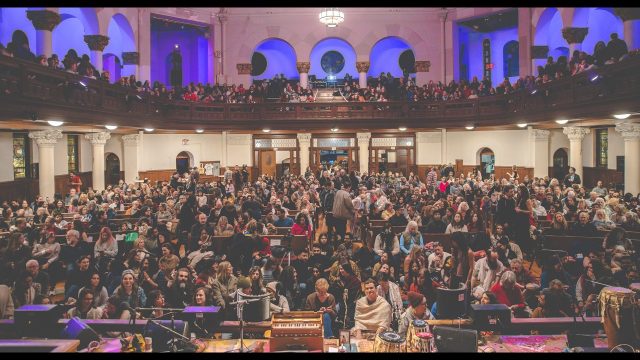
Todd Boston's "The Brightest Night" is a contemplative musical work that explores the paradoxical presence of inner light, hope, and spiritual resilience during humanity's darkest experiences. The piece invites listeners to examine how profound illumination—whether understood as clarity, grace, or awakening—often emerges not despite darkness, but through intimate encounter with it. This is not about denying difficulty, but about discovering the luminosity already present within consciousness when we stop resisting our pain.
The title itself contains a profound spiritual paradox. In most human experience, night is understood as the time when light disappears—when we cannot see, when we are vulnerable, when external reassurance fades. Yet the phrase "brightest night" inverts this expectation. It suggests that within the deepest darkness, a light burns most vividly. This is not metaphorical optimism or false positivity. Rather, it points to a dimension of consciousness that remains luminous even when—or perhaps especially when—the outer world or inner emotional landscape falls into shadow.
Spiritual traditions across cultures recognize this paradox. The mystics speak of "dark nights of the soul" not as punishment, but as initiatory passages where the individual ego's false certainties dissolve, making way for a deeper, more stable light to be recognized. In Hindu and Buddhist philosophy, ignorance (avidya) is darkness, but wisdom (vidya) is not simply the absence of ignorance—it is a positive luminosity that was always present but obscured. Todd Boston's work engages this threshold: the moment when seeking ceases and finding begins.
Many spiritual seekers expect the path to consist of accumulating positive experiences—more joy, more peace, more certainty. Yet the invitation embedded in "The Brightest Night" is subtly different. It asks: what becomes visible when we stop fleeing from what is difficult? When grief, loss, confusion, or despair are met with full presence rather than distraction, what intelligence do they reveal?
The experience is not that darkness transforms into light—rather, the seeker's relationship with darkness undergoes profound shift. A meditator sitting in silence with her anxiety does not make anxiety vanish; instead, she discovers that the awareness *witnessing* the anxiety is not itself anxious. This witnessing awareness—which remains clear, spacious, and fundamentally untouched—is the "brightest" light, precisely because it shines undisturbed within the night of difficulty.
Boston's work, as a musical expression, invites this very recognition through sound. Music in darkness often penetrates more directly than in daylight, because without visual distraction, the listener is drawn into intimate relationship with vibration, frequency, and the emotional resonance beneath language.
One layer of "The Brightest Night" points toward grace—the unexpected arrival of clarity, compassion, or presence that we cannot manufacture through effort alone. Grace is often experienced most acutely when the individual self has exhausted its strategies. When you have tried everything and failed, when you have asked all the right questions and received no answer, when you have performed all the rituals and the outcome remains uncertain—in that emptiness, grace can enter.
This is not passive resignation. Rather, it is the recognition that illumination does not belong to the ego-driven self; it belongs to something larger. The mystic poet Rumi spoke of this constantly: "Out beyond ideas of wrongdoing and rightdoing, there is a field. I'll meet you there." The brightest night is that field—the space where the small self's usual categories (success/failure, right/wrong, my suffering/their suffering) dissolve, and a vaster awareness becomes accessible.
In moments of genuine crisis—grief, loss, illness, betrayal—many people report a strange clarity. The mind that was previously cluttered with petty concerns quiets entirely. In that quiet, an unexpected quality of being emerges. It is not happiness in the ordinary sense, but a kind of okayness-with-what-is, a resilience that does not depend on circumstances changing. This is the grace hidden within the brightest night.
A critical distinction must be made here: speaking of inner light or spiritual resilience is not a warrant for spiritual bypassing—the use of spiritual ideas to avoid processing genuine pain, trauma, or injustice. The Brightest Night is not a suggestion that we should detach from suffering or pretend it doesn't matter.
Rather, the work invites a both/and: yes, the suffering is real, the difficulty is real, and simultaneously, the awareness that witnesses and holds this difficulty is untouched, clear, and fundamentally okay. This is not a contradiction but a necessary maturity. A parent holding a crying infant does not tell the child "your hurt isn't real"—yet the parent's presence itself is a kind of light that says, "you are held, you are seen, and you will not be destroyed by this."
This both/and orientation requires actual spiritual work: meditation, honest self-inquiry, compassionate witnessing of one's own defenses. It is not intellectually available; it must be *experienced* in the body and nervous system through sustained contemplative practice. Boston's music, approached as an invitation to stillness, can support this recognition.
Several well-established contemplative practices help develop familiarity with the paradox of the brightest night:
- Sitting meditation: Regular practice in silence, especially in darkness or dimness, trains the attention to recognize the quality of awareness itself—the luminosity of consciousness that remains constant regardless of emotional content.
- Self-inquiry: Asking "Who is aware of this darkness?" or "What is the quality of the awareness that knows this pain?" shifts identification from the content of experience (the pain, the fear) to the context (consciousness itself) that contains all content.
- Contemplative listening: Music, sacred chant, or ambient sound approached as a meditation—rather than as entertainment—can dissolve the boundary between self and sound, revealing the listening presence beneath the individual listener.
- Loving-kindness practice: Deliberately cultivating goodwill toward oneself and others, especially during difficulty, shifts the nervous system from contraction to openness, making the underlying okayness more accessible.
- Dream work: The night, in its most literal sense, is the realm of dream and the unconscious. Paying attention to dreams—journaling them, sitting with their imagery—reveals the deeper intelligence that operates outside rational control.
Todd Boston is described as a kirtan artist and consciousness musician—this is significant. Kirtan, the call-and-response chanting tradition rooted in devotional Hinduism, is built on the principle that sound itself is consciousness. Not metaphorically, but literally: the vibration of sound is understood as a direct transmission of spiritual resonance. When approached with openness, listening to or singing sacred chant can bypass the analytical mind and activate recognition at the level of the nervous system itself.
A musical work titled "The Brightest Night" likely operates in this space: inviting the listener into a state of receptivity where the usual mental chatter quiets, and the luminosity of presence becomes almost tangible. This is not esoteric or magical—neuroscience confirms that certain frequencies, rhythms, and tonal qualities directly impact the parasympathetic nervous system, moving the body out of fight-flight reactivity and into states of rest, integration, and openness.
In this context, Boston's work may be understood as a kind of sonic spiritual practice—a tool for deepening familiarity with the inner light that always exists, awaiting recognition.
If "The Brightest Night" resonates with you, consider approaching it not merely as music to enjoy, but as an invitation to practice. Create a space of actual darkness—dim the lights or sit at night—and listen with full attention. Notice what arises: sensations, emotions, memories, or simply the quality of presence itself. Pay particular attention to the moments when you are not focused on the music but on the silence between sounds, or on your own awareness listening.
Deepen this practice by combining it with meditation: sit in silence for 10-20 minutes before and after listening. Explore the question: "What is the quality of awareness that is present both in the music and in the silence?" Over time, this direct investigation—rather than belief or philosophy—will reveal the literal truth embedded in the paradoxical title: the brightest light dwells in and emerges from the deepest night.