BrightStar
ブログマイチケット
ブログマイチケット
Saved events
ヘルプ・お問い合わせ新規登録ログイン
イベント
  • すべてのイベントを見る
  • 探求者向け
  • ヨガ
  • 瞑想
  • ブレスワーク
  • 気功
  • 聖なる音楽
  • ワールドミュージック
  • メディスンミュージック
  • サウンドヒーリング
  • エクスタティックダンス
  • セレモニー
  • プラントメディスン
  • エネルギーヒーリング
  • サットサンと智慧
  • タントラ
  • リトリート
  • すべてのカテゴリ →
目的地
  • Bali
  • Sedona
  • Los Angeles
  • Costa Rica
  • Tulum
  • Byron Bay
  • San Francisco
  • Austin
  • New York
  • San Diego
  • Seattle
  • Portland
  • Miami
  • London
  • Maui
  • Boulder
  • Oakland
  • すべての都市 →
プラットフォーム
  • 主催者向け
  • ムーブメントに参加
  • Sell Globally
  • クリエイター向け
  • チーム向け
  • ライター向け
  • 講師向け
  • キルタンアーティスト向け
  • スタジオ向け
  • フェスティバル向け
  • リトリートセンター向け
  • 非営利団体向け
  • ブランドアンバサダー
  • 無料チケット販売
  • Elevate
  • Amplify
  • エコシステム
機能

チケット販売と購入

  • Ticket categories
  • Assigned seating
  • Custom questions
  • Coupon codes
  • Smart pricing
  • Ticket sharing
  • Waitlist
  • Flexible refunds
  • Digital waivers
  • Tip jar
  • Donations and sliding scale
  • Embed widget
  • Mindful checkout
  • Recurring events
  • Private sessions
  • Online courses
  • Summits
  • Rooms and stays
  • Ticket scanner

マーケティングと成長

  • Abandoned cart recovery
  • Visitor recovery
  • Upsells and add-ons
  • Affiliate engine
  • Upsell affiliate network
  • Brand ambassador
  • Meta retargeting
  • Verified buyer network
  • Outbound email marketing
  • Email sequences
  • SMS and WhatsApp
  • Event upsell network
  • Direct mail campaigns
  • SEO engine
  • Syndication
  • Event sharing
  • Custom event pages
  • Artist profiles
  • Link in bio
  • Event blog
  • Blog newsletter

決済

  • Payments, powered by Stripe
  • Buy now, pay later
  • Apple Wallet
  • Multi currency

データと運営

  • Team access
  • Message center
  • Reports
  • Analytics reporting
  • Performance reporting
  • Customer data
  • Integrations
  • Switch from another platform

AI

  • Assistant
  • AI FAQ assistant
  • すべての機能 →
会社
  • 概要
  • よくある質問
  • お問い合わせ
  • ブログ
  • 用語集
  • Guides
  • インスピレーション
  • ヘルプセンター
  • APIドキュメント
  • ブランドアセット
  • プレス
  • 利用規約
  • プライバシーポリシー

イベント

  • すべてのイベントを見る
  • 探求者向け
  • ヨガ
  • 瞑想
  • ブレスワーク
  • 気功
  • 聖なる音楽
  • ワールドミュージック

目的地

  • Bali
  • Sedona
  • Los Angeles
  • Costa Rica
  • Tulum
  • Byron Bay
  • San Francisco
  • Austin

プラットフォーム

  • 主催者向け
  • ムーブメントに参加
  • Sell Globally
  • クリエイター向け
  • チーム向け
  • ライター向け
  • 講師向け
  • キルタンアーティスト向け

機能

  • コミュニティネットワーク
  • カート放棄リカバリー
  • チケットカテゴリ
  • 定期イベント
  • 座席指定
  • アフィリエイトシステム
  • ウェイトリスト / 通知
  • すべての機能 →

会社

  • 概要
  • よくある質問
  • お問い合わせ
  • ブログ
  • 用語集
  • Guides
  • 利用規約
  • プライバシーポリシー
続きを読む

イベント

  • メディスンミュージック
  • サウンドヒーリング
  • エクスタティックダンス
  • セレモニー
  • プラントメディスン
  • エネルギーヒーリング
  • サットサンと智慧
  • タントラ
  • リトリート
  • すべてのカテゴリ →

目的地

  • New York
  • San Diego
  • Seattle
  • Portland
  • Miami
  • London
  • Maui
  • Boulder
  • Oakland
  • すべての都市 →

プラットフォーム

  • スタジオ向け
  • フェスティバル向け
  • リトリートセンター向け
  • 非営利団体向け
  • ブランドアンバサダー
  • 無料チケット販売
  • Elevate
  • Amplify
  • エコシステム

会社

  • インスピレーション
  • ヘルプセンター
  • APIドキュメント
  • ブランドアセット
  • プレス

チケット販売と購入

  • Ticket categories
  • Assigned seating
  • Custom questions
  • Coupon codes
  • Smart pricing
  • Ticket sharing
  • Waitlist
  • Flexible refunds
  • Digital waivers
  • Tip jar
  • Donations and sliding scale
  • Embed widget
  • Mindful checkout
  • Recurring events
  • Private sessions
  • Online courses
  • Summits
  • Rooms and stays
  • Ticket scanner

マーケティングと成長

  • Abandoned cart recovery
  • Visitor recovery
  • Upsells and add-ons
  • Affiliate engine
  • Upsell affiliate network
  • Brand ambassador
  • Meta retargeting
  • Verified buyer network
  • Outbound email marketing
  • Email sequences
  • SMS and WhatsApp
  • Event upsell network
  • Direct mail campaigns
  • SEO engine
  • Syndication
  • Event sharing
  • Custom event pages
  • Artist profiles
  • Link in bio
  • Event blog
  • Blog newsletter

決済

  • Payments, powered by Stripe
  • Buy now, pay later
  • Apple Wallet
  • Multi currency

データと運営

  • Team access
  • Message center
  • Reports
  • Analytics reporting
  • Performance reporting
  • Customer data
  • Integrations
  • Switch from another platform

AI

  • Assistant
  • AI FAQ assistant
アプリを入手
App StoreからApp StoreGoogle Playで手に入れようGoogle Play
© 2026 BrightStar. 全著作権所有. BrightStar Selection · 写真クレジット · 変更履歴 ·
Inspiration

Spacious Awareness: Resting in Openness Beyond Thought

Ram Dass
Ram Dass
Dec 22, 2025
読了 約6分

出典:Be Here Now Network

Spacious awareness is a meditative state in which consciousness itself—rather than the content of thought—becomes the primary point of rest. Unlike ordinary waking consciousness, which is habitually caught in the stream of thinking, emotions, and reactive patterns, spacious awareness involves a fundamental shift toward resting in the open, boundless field of consciousness itself. This practice dissolves the sense of a separate, contracted self and allows direct experience of the mind's natural spaciousness and clarity.

読む · 6セクション

What is Spacious Awareness?

Spacious awareness is not another state to achieve or attain through striving. Rather, it is the discovery of what consciousness is when we release our habitual contraction around thought and experience. In ordinary consciousness, attention is typically absorbed by the content of experience—mental narratives, emotional reactions, sensory impressions—leaving the sense of a small, localized "I" at the center of experience. Spacious awareness shifts this fundamental orientation: instead of identifying with the content of consciousness, attention rests in the open space in which all content arises and dissolves.

This spaciousness is not empty or blank. It is aware, responsive, and luminous. When consciousness is no longer collapsed into the narrow bandwidth of personal thought, it naturally expands to include the whole field of experience. This field is spacious because it is not confined to the body, not bound by the narrative of the personal self, and not limited by concepts about what should or should not be present.

How Does the Mind Contract Away from Spaciousness?

From infancy onward, the mind learns to organize itself around survival, security, and identity. These are practical necessities, but they come with a cost: awareness becomes habitually contracted around a sense of a separate, vulnerable self that must be protected, defended, and advanced. This contraction is so automatic and constant that it feels like the only reality. The mind constantly scans for threat, opportunity, and confirmation of the story of "me." This ongoing contraction narrows consciousness into a tight, vigilant point.

Thought itself is not the enemy; rather, it is the identification with thought—the sense that "I am my thinking"—that maintains contraction. When awareness rests in thought, it cannot rest in space. The two cannot happen simultaneously. A mind caught in the stream of thinking is like a spotlight that can only illuminate one small area, missing the vast field that surrounds it.

How Do You Rest in Spacious Awareness?

Resting in spacious awareness is fundamentally a practice of releasing effort and expectation. It begins with noticing where attention habitually goes and, without judgment, allowing it to shift. One classical approach is to notice the space between thoughts rather than the thoughts themselves. Between one thought and the next, there is an infinitesimal gap—a moment of clarity and openness. By repeatedly directing attention to this gap, awareness begins to recognize itself as the space itself rather than as an entity looking at space.

Another approach is to rest attention in the sense of being aware itself. Rather than asking "What am I aware of?" the question becomes "What is awareness?" This simple shift moves attention away from the content of consciousness and toward the nature of consciousness itself. As this shift deepens, the sense of a separate observer gradually dissolves. What remains is awareness aware of itself—consciousness resting in its own nature.

The practice requires patience and gentleness. The mind will contract again and again. Thoughts will arise, emotions will surge, and the sense of self will re-establish itself. Each time this happens, it is simply an opportunity to notice the contraction and, without force, to let attention relax back into spaciousness. Over time, this becomes more fluid and natural. Resting in space is not rare or difficult—it is actually the default state of consciousness once the habit of contraction is loosened.

What is the Relationship Between Spacious Awareness and Liberation?

In contemplative traditions, liberation or freedom is not understood as achieving a new state or acquiring something missing. Rather, it is the dissolution of the false sense of self that creates suffering. As long as consciousness is identified with the narrow, separate self, there is inherent vulnerability and fear. From that perspective, everything is a potential threat or opportunity for gain. This creates a constant underlying anxiety regardless of external circumstances.

Spacious awareness reveals directly that the sense of a small, separate self was always a contraction, not a reality. Beyond that contraction lies consciousness itself—boundless, unharmed, and untouched by the ups and downs of experience. This is not a belief to adopt but a direct recognition that can be experienced through practice. As this recognition stabilizes, the urgent, fearful quality of ordinary consciousness naturally relaxes. There is still living, thinking, and acting, but it is no longer driven by the compulsion to protect and advance a separate self.

How Does Spacious Awareness Transform Daily Life?

When consciousness spends extended periods resting in spaciousness, this naturally ripples into ordinary daily functioning. The urgency of reaction decreases. There is more capacity to pause between stimulus and response. Choices become less automatic and more conscious. This is not because spacious awareness teaches specific ethical principles, but because from the perspective of boundless consciousness, the arbitrary boundaries between "self" and "other" become less rigid. What harms another ultimately harms the whole field of which both self and other are expressions.

Relationships deepen because there is less defensive posturing and more genuine meeting. Work becomes less about personal advancement and more about genuine contribution. Sensory experience becomes richer and more vivid because attention is not contracted in worry about self-image. Paradoxically, even as the sense of personal self loosens, everyday life becomes more functional, more peaceful, and more genuinely responsive to what is actually needed in each moment.

Where to Go From Here

Begin a simple practice of noticing the space between thoughts, even for brief moments throughout the day. You need not sit in formal meditation, though that can deepen the practice. Simply pause, notice the sensations of breathing, and allow attention to rest in the openness that is already present. Notice what happens when you are not generating or consuming content—even for five seconds. This direct experience is more reliable than any teaching. As this familiarity grows, you can explore longer periods of sitting practice, working with a teacher, or studying contemplative texts that point toward spacious awareness. The direct recognition of spaciousness is available now and requires nothing but a shift in the direction of attention.

コメント

会話を読み込み中…

この記事のアーティスト

Ram Dass

Ram Dass

Spiritual Teacher

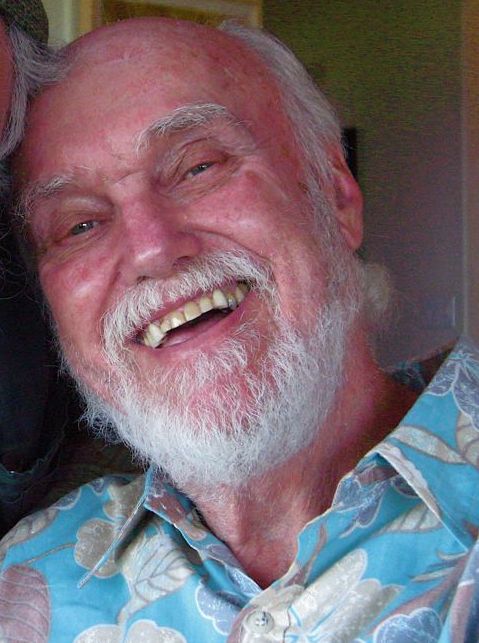
Ram Dass (born Richard Alpert, 1931-2019) was an American spiritual teacher, psychologist, and author whose 1971 book Be Here Now helped popularize Eastern spirituality in the West. A Harvard psychologist turned Hindu devotee, he bridged psychedelic research, yoga, and conscious living for millions.

プロフィールを見る
トピックを見る
Spacious awarenessConsciousnessMeditation practiceNon dualitySelf liberation
よくある質問

よくある質問

Regular meditation often involves focusing attention on an object like breath or mantra, training concentration. Spacious awareness, by contrast, dissolves the distinction between observer and observed, resting consciousness in the open field itself rather than directing it at something. Both are valid practices; spacious awareness represents a shift toward recognizing the nature of awareness itself rather than improving concentration.

Spacious awareness is characterized by a sense of openness without a clearly defined observer or boundary around the self. There is clarity and aliveness without the normal mental narrative. The experience is often accompanied by a sense of ease, as if effort is no longer required. It may feel simple, obvious, and entirely natural—not exotic or special.

Spacious awareness can absolutely be recognized and rested in throughout daily life—while working, walking, or in conversation. The key is noticing when attention shifts from content (what you are aware of) to the space itself (awareness aware of itself). Brief moments of this recognition, repeated throughout the day, gradually stabilize the shift.

No. Spacious awareness is not about suppressing or rejecting thoughts and emotions. Rather, it is about consciousness no longer being identified with or contracted around them. Thoughts and emotions continue to arise, but they are recognized as movements within space rather than as the identity of the observer.

This varies widely depending on temperament, prior practice, and the clarity of pointing-out instructions. Some people recognize it immediately; others develop familiarity gradually over weeks or months of gentle practice. The key is not to force or measure progress, but to repeatedly relax into what is already available in this moment.

Spacious awareness can be recognized in moments or extended periods, but stabilizing it as a constant background to all experience is what contemplative traditions point toward as liberation. The practice is learning to rest in space increasingly naturally until the sense of a separate self no longer reasserts control over consciousness.

This is a common subtlety. When consciousness becomes aware of itself observing, a new kind of boundary can form—the sense of a witness separate from experience. Spacious awareness is more subtle still: it is openness itself, not an entity resting in openness. If you notice you are 'doing' spacious awareness or observing it, relax even that effort and allow awareness to simply rest in itself.

こちらもおすすめ

すべて表示
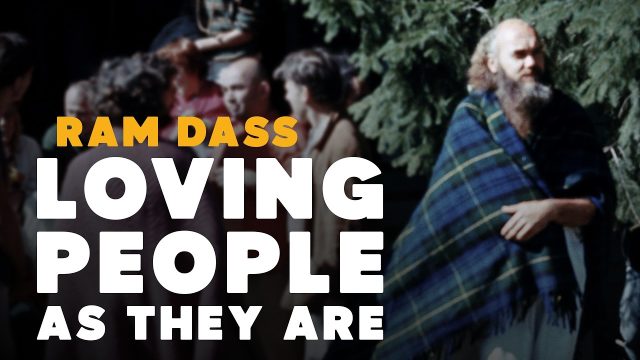
Love People As They Are: Responsive vs. Reactive
Inspire

Love People As They Are: Responsive vs. Reactive

Learn how to love people unconditionally by shifting from reactive patterns to responsive presence, keeping your heart open in the face of s…

9 min read
Freedom Without Connection: Why Liberation Feels Empty
Inspire

Freedom Without Connection: Why Liberation Feels Empty

External freedom without spiritual connection leaves the heart hollow. Explore why liberation requires more than just the absence of constra…

7 min read
First Meeting with a Living Guru: Recognition and Transformation
Inspire

First Meeting with a Living Guru: Recognition and Transformation

Krishna Das reflects on his first encounters with his teacher Maharaj-ji and Ram Dass, describing the moment he recognized something real ab…

7 min read
Rumi's Teaching Story: Presence and Spiritual Wisdom
Inspire

Rumi's Teaching Story: Presence and Spiritual Wisdom

Ram Dass shares a timeless Rumi story on presence and spiritual awakening. A brief but potent lesson in mindfulness and the heart's capacity…

6 min read
すべて見るこちらもおすすめ→

旅をつづける

BrightStarのディレクトリから、さらなる智慧と集いを。

もっと記事を読む

教え、インタビュー、ガイドのライブラリ全体をご覧ください。

すべての記事に戻る →

講師とアーティスト

コンシャスな世界の系譜、音楽家、導き手を探しましょう。

アーティストを探す →

イベントを見つける

キルタン、リトリート、サウンドバス、ブレスワーク、フェスティバル — まもなく開かれます。

イベントを見る →