BrightStar
ブログマイチケット
ブログマイチケット
Saved events
ヘルプ・お問い合わせ新規登録ログイン
イベント
  • すべてのイベントを見る
  • ヨガ
  • 瞑想
  • ブレスワーク
  • 気功
  • 聖なる音楽
  • ワールドミュージック
  • メディスンミュージック
  • サウンドヒーリング
  • エクスタティックダンス
  • セレモニー
  • プラントメディスン
  • エネルギーヒーリング
  • サットサンと智慧
  • タントラ
  • リトリート
  • すべてのカテゴリ →
目的地
  • Bali
  • Sedona
  • Los Angeles
  • Costa Rica
  • Tulum
  • Byron Bay
  • San Francisco
  • Austin
  • New York
  • San Diego
  • Denver
  • Seattle
  • Portland
  • Miami
  • London
  • Maui
  • Boulder
  • すべての都市 →
プラットフォーム
  • 主催者向け
  • ムーブメントに参加
  • Sell Globally
  • クリエイター向け
  • チーム向け
  • ライター向け
  • 講師向け
  • キルタンアーティスト向け
  • スタジオ向け
  • フェスティバル向け
  • リトリートセンター向け
  • 非営利団体向け
  • ブランドアンバサダー
  • 無料チケット販売
  • Pro
  • Amplify
  • エコシステム
機能

チケット販売と購入

  • Ticket categories
  • Assigned seating
  • Custom questions
  • Coupon codes
  • Smart pricing
  • Ticket sharing
  • Waitlist
  • Flexible refunds
  • Digital waivers
  • Tip jar
  • Donations and sliding scale
  • Embed widget
  • Mindful checkout
  • Recurring events
  • Private sessions
  • Online courses
  • Summits
  • Rooms and stays
  • Ticket scanner

マーケティングと成長

  • Abandoned cart recovery
  • Visitor recovery
  • Upsells and add-ons
  • Affiliate engine
  • Upsell affiliate network
  • Brand ambassador
  • Meta retargeting
  • Verified buyer network
  • Outbound email marketing
  • Email sequences
  • SMS and WhatsApp
  • Event upsell network
  • Direct mail campaigns
  • SEO engine
  • Syndication
  • Event sharing
  • Custom event pages
  • Artist profiles
  • Link in bio
  • Event blog
  • Blog newsletter

決済

  • Payments, powered by Stripe
  • Buy now, pay later
  • Apple Wallet
  • Multi currency

データと運営

  • Team access
  • Message center
  • Reports
  • Analytics reporting
  • Performance reporting
  • Customer data
  • Integrations
  • Switch from another platform

AI

  • Assistant
  • AI FAQ assistant
  • すべての機能 →
会社
  • 概要
  • よくある質問
  • お問い合わせ
  • ブログ
  • 用語集
  • Guides
  • インスピレーション
  • ヘルプセンター
  • APIドキュメント
  • ブランドアセット
  • プレス
  • 利用規約
  • プライバシーポリシー

イベント

  • すべてのイベントを見る
  • ヨガ
  • 瞑想
  • ブレスワーク
  • 気功
  • 聖なる音楽
  • ワールドミュージック
  • メディスンミュージック

目的地

  • Bali
  • Sedona
  • Los Angeles
  • Costa Rica
  • Tulum
  • Byron Bay
  • San Francisco
  • Austin

プラットフォーム

  • 主催者向け
  • ムーブメントに参加
  • Sell Globally
  • クリエイター向け
  • チーム向け
  • ライター向け
  • 講師向け
  • キルタンアーティスト向け

機能

  • コミュニティネットワーク
  • カート放棄リカバリー
  • チケットカテゴリ
  • 定期イベント
  • 座席指定
  • アフィリエイトシステム
  • ウェイトリスト / 通知
  • すべての機能 →

会社

  • 概要
  • よくある質問
  • お問い合わせ
  • ブログ
  • 用語集
  • Guides
  • 利用規約
  • プライバシーポリシー
続きを読む

イベント

  • サウンドヒーリング
  • エクスタティックダンス
  • セレモニー
  • プラントメディスン
  • エネルギーヒーリング
  • サットサンと智慧
  • タントラ
  • リトリート
  • すべてのカテゴリ →

目的地

  • New York
  • San Diego
  • Denver
  • Seattle
  • Portland
  • Miami
  • London
  • Maui
  • Boulder
  • すべての都市 →

プラットフォーム

  • スタジオ向け
  • フェスティバル向け
  • リトリートセンター向け
  • 非営利団体向け
  • ブランドアンバサダー
  • 無料チケット販売
  • Pro
  • Amplify
  • エコシステム

会社

  • インスピレーション
  • ヘルプセンター
  • APIドキュメント
  • ブランドアセット
  • プレス

チケット販売と購入

  • Ticket categories
  • Assigned seating
  • Custom questions
  • Coupon codes
  • Smart pricing
  • Ticket sharing
  • Waitlist
  • Flexible refunds
  • Digital waivers
  • Tip jar
  • Donations and sliding scale
  • Embed widget
  • Mindful checkout
  • Recurring events
  • Private sessions
  • Online courses
  • Summits
  • Rooms and stays
  • Ticket scanner

マーケティングと成長

  • Abandoned cart recovery
  • Visitor recovery
  • Upsells and add-ons
  • Affiliate engine
  • Upsell affiliate network
  • Brand ambassador
  • Meta retargeting
  • Verified buyer network
  • Outbound email marketing
  • Email sequences
  • SMS and WhatsApp
  • Event upsell network
  • Direct mail campaigns
  • SEO engine
  • Syndication
  • Event sharing
  • Custom event pages
  • Artist profiles
  • Link in bio
  • Event blog
  • Blog newsletter

決済

  • Payments, powered by Stripe
  • Buy now, pay later
  • Apple Wallet
  • Multi currency

データと運営

  • Team access
  • Message center
  • Reports
  • Analytics reporting
  • Performance reporting
  • Customer data
  • Integrations
  • Switch from another platform

AI

  • Assistant
  • AI FAQ assistant
アプリを入手
App StoreからApp StoreGoogle Playで手に入れようGoogle Play
© 2026 BrightStar. 全著作権所有. BrightStar Selection · 写真クレジット · 変更履歴 ·
Inspiration

Living vs Surviving: Alan Watts on Being Fully Present

Alan Watts
Alan Watts
Feb 26, 2026
読了 約6分

出典:Be Here Now Network

In this excerpt from "Being in the Way Podcast," Alan Watts articulates a critical distinction between mere survival and genuine living. The core insight is that most people operate in survival mode—mechanically moving through existence—while the possibility of true living requires a shift in consciousness toward presence, awareness, and engagement with the immediate moment. Watts emphasizes that this isn't about achieving external success, but about transforming how we relate to our existence itself.

読む · 6セクション

What Is the Difference Between Surviving and Living?

Alan Watts draws a sharp line between two modes of human existence that often go unexamined. Survival is the default state for most people: going through the motions, checking off tasks, managing obligations, and treating life as something to get through. It is reactive rather than creative, mechanical rather than conscious. In survival mode, we are essentially asleep to our own experience.

Living, by contrast, is a state of engagement with the present moment. It involves awareness, choice, and a quality of presence that transforms even ordinary activities into expressions of consciousness. Watts suggests that most cultures, educational systems, and social structures condition us toward survival—toward productivity, security, and the postponement of joy—rather than toward genuine living.

The distinction matters because it affects not only how we feel about our lives but how we actually experience time, relationships, and our own bodies. Someone in survival mode experiences life as something happening to them; someone truly living experiences themselves as the life that is happening.

How Does Presence Transform Survival Into Living?

Watts emphasizes that the gateway between these two states is presence—a quality of attention and awareness in the here and now. Presence is not a luxury or spiritual indulgence; it is the fundamental difference between being numb to existence and being awake to it.

When we are present, we notice things that survival mode obscures: the texture of a moment, the quality of an interaction, the aliveness of our own body and senses. A person can eat the same meal in two completely different ways—mechanically, while thinking about the next task, or with full sensory and emotional presence. The second person is living; the first is surviving.

This presence is cultivated not through striving but through a shift in attention. Watts would likely point out that we already know how to be present—children are naturally present until they are trained out of it—so the practice is largely one of unlearning the habitual patterns that keep us locked in survival consciousness.

Why Do Cultural Systems Push Us Toward Survival Rather Than Living?

Watts often critiques the underlying assumptions of Western culture, and this distinction reveals why. Our economic, educational, and social systems are largely organized around scarcity, future security, and deferred gratification. We are taught to sacrifice the present for the future: go to school now to get a job later, work hard now to retire later, delay pleasure now to achieve success later.

This future-oriented thinking makes people treat life as a means to an end rather than as an end in itself. We become servants of our own ambitions, always working toward a state we never quite reach. The irony, as Watts points out, is that this approach never actually delivers the promised satisfaction—we simply move the finish line further away.

Schools and workplaces reward obedience, punctuality, and delayed gratification—all survival values—rather than creativity, presence, and genuine engagement. This conditions us from childhood to believe that our worth depends on future achievement, not on our present being.

What Does Living Require From Us?

Living, in Watts' view, does not require changing your external circumstances. A person can live while working a job, raising a family, or managing responsibilities. What it requires is a change in consciousness—a reversal of the usual relationship between effort and reward.

Rather than treating life as a destination to arrive at, living means recognizing that you are already here, in this moment, which is the only moment you ever have. The paradox Watts explores is that when you truly accept this—when you stop fighting against the present moment—you become more capable, creative, and effective in your actions.

Living also requires permission—permission to enjoy simple things without guilt, to be present without constantly optimizing, to acknowledge that the point of life is life itself, not some external achievement. In a culture built on the assumption that you must earn the right to be happy, this permission can feel revolutionary.

How Does This Relate to Spiritual Practice?

For Watts, the distinction between surviving and living is not separate from spiritual practice; it is spiritual practice. Meditation, presence work, and contemplative traditions exist to undo the conditioning that locks us into survival consciousness and return us to an awakened relationship with existence.

The Buddha's First Noble Truth—that ordinary existence involves suffering or unsatisfactoriness—is not pessimism; it is clarity about what happens when we remain in survival mode, chasing security and avoiding discomfort. The path out is not to change circumstances but to change our fundamental relationship to them through presence and awareness.

Watts suggests that spiritual awakening is really just waking up to the life you are already living, rather than perpetually postponing your existence in service to an imagined future self.

Where to Go From Here

The immediate practice following this insight is simple: notice, right now, whether you are surviving or living. Are you fully present, or are you moving through this moment as a means to another moment? What would it feel like to treat this task, this conversation, this breath as worthy of full attention?

Explore Watts' full conversation on Being in the Way Podcast Ep. 35: "Dreaming the World" for a deeper dive into his philosophy. Consider experimenting with presence in one small area of daily life—eating, walking, or working—and notice what shifts when you bring full awareness to something you usually do on autopilot. Many spiritual traditions, from Zen to Advaita to Dzogchen, offer specific techniques for cultivating this presence. The thread running through all of them is the same: reclaiming your aliveness in the present moment is the gate between mere survival and genuine living.
コメント

会話を読み込み中…

この記事のアーティスト

Alan Watts

speaker and lecturer

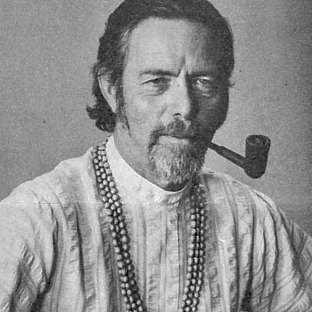
Speaker and lecturer Alan Watts, whose hundreds of hours of talks recorded from 1960 to 1973 on vinyl, tape reels, and cassettes continue to be shared today through the Alan Watts Org.

プロフィールを見る
トピックを見る
Alan wattsPresenceConsciousnessSurvivalLiving now
よくある質問

よくある質問

Surviving is a mechanical, unconscious mode of moving through life—checking off tasks and postponing joy. Living is a state of presence and conscious engagement with the present moment, where awareness transforms ordinary actions into expressions of aliveness. The shift from one to the other requires a change in consciousness, not external circumstances.

Start by bringing full attention to one ordinary activity—eating, walking, or working—without planning ahead or thinking about the next task. Notice the sensory details, emotions, and aliveness available in that moment. This simple practice reverses the habitual conditioning toward survival mode and awakens you to the life already present.

Cultural systems, education, and economic structures condition us to sacrifice the present for future security and achievement. We are taught to treat life as a means to an end—work now for retirement later—rather than recognizing that the present moment is the only place life actually occurs.

While formal spiritual practice can support presence, what matters is the shift in consciousness itself. Meditation and contemplative traditions help undo survival conditioning and return us to our natural awareness, but presence is available to anyone willing to shift their attention to the here and now.

Yes—living is not about changing external circumstances but about changing your relationship to them. You can work, raise a family, and manage obligations while remaining fully present and engaged with each moment, which paradoxically makes you more capable and effective.

Being in the way suggests not fighting against reality or the present moment, but flowing with it. It's about getting out of your own way—removing the mental resistance and survival patterns—so that life can move through you naturally and consciously.

こちらもおすすめ

すべて表示
Why Predictability Is an Illusion: Embracing Uncertainty
Inspire

Why Predictability Is an Illusion: Embracing Uncertainty

Predictability is a fundamental illusion that constrains how we live. Exploring uncertainty and the nature of control reveals deeper wisdom …

8 min read
Alan Watts' Veil of Thoughts: Money, Work & Civilization
Inspire

Alan Watts' Veil of Thoughts: Money, Work & Civilization

Alan Watts examines how abstract thinking obscures our relationship with money and work, and how civilization perpetuates illusions that dis…

7 min read
Medicine Buddha Practice: Feeling Beneath the Thinking
Inspire

Medicine Buddha Practice: Feeling Beneath the Thinking

Lama Rod Owens opens a Monday-night Medicine Buddha session six years into the practice, teaching how to feel an experience instead of think…

10 min read
We Are All Visitors to This Material World: A Gita Reflection
Inspire

We Are All Visitors to This Material World: A Gita Reflection

In a 22-second clip, Radhika Das frames human life as a temporary visit, not a permanent residence. The idea draws on Bhagavad-gītā 8.15 and…

3 min read
すべて見るこちらもおすすめ→

旅をつづける

BrightStarのディレクトリから、さらなる智慧と集いを。

もっと記事を読む

教え、インタビュー、ガイドのライブラリ全体をご覧ください。

すべての記事に戻る →

講師とアーティスト

コンシャスな世界の系譜、音楽家、導き手を探しましょう。

アーティストを探す →

イベントを見つける

キルタン、リトリート、サウンドバス、ブレスワーク、フェスティバル — まもなく開かれます。

イベントを見る →

