BrightStar
ブログマイチケット
ブログマイチケット
Saved events
ヘルプ・お問い合わせ新規登録ログイン
イベント
  • すべてのイベントを見る
  • ヨガ
  • 瞑想
  • ブレスワーク
  • 気功
  • 聖なる音楽
  • ワールドミュージック
  • メディスンミュージック
  • サウンドヒーリング
  • エクスタティックダンス
  • セレモニー
  • プラントメディスン
  • エネルギーヒーリング
  • サットサンと智慧
  • タントラ
  • リトリート
  • すべてのカテゴリ →
目的地
  • Bali
  • Sedona
  • Los Angeles
  • Costa Rica
  • Tulum
  • Byron Bay
  • San Francisco
  • Austin
  • New York
  • San Diego
  • Denver
  • Seattle
  • Portland
  • Miami
  • London
  • Maui
  • Boulder
  • すべての都市 →
プラットフォーム
  • 主催者向け
  • ムーブメントに参加
  • Sell Globally
  • クリエイター向け
  • チーム向け
  • ライター向け
  • 講師向け
  • キルタンアーティスト向け
  • スタジオ向け
  • フェスティバル向け
  • リトリートセンター向け
  • 非営利団体向け
  • ブランドアンバサダー
  • 無料チケット販売
  • Pro
  • Amplify
  • エコシステム
機能

チケット販売と購入

  • Ticket categories
  • Assigned seating
  • Custom questions
  • Coupon codes
  • Smart pricing
  • Ticket sharing
  • Waitlist
  • Flexible refunds
  • Digital waivers
  • Tip jar
  • Donations and sliding scale
  • Embed widget
  • Mindful checkout
  • Recurring events
  • Private sessions
  • Online courses
  • Summits
  • Rooms and stays
  • Ticket scanner

マーケティングと成長

  • Abandoned cart recovery
  • Visitor recovery
  • Upsells and add-ons
  • Affiliate engine
  • Upsell affiliate network
  • Brand ambassador
  • Meta retargeting
  • Verified buyer network
  • Outbound email marketing
  • Email sequences
  • SMS and WhatsApp
  • Event upsell network
  • Direct mail campaigns
  • SEO engine
  • Syndication
  • Event sharing
  • Custom event pages
  • Artist profiles
  • Link in bio
  • Event blog
  • Blog newsletter

決済

  • Payments, powered by Stripe
  • Buy now, pay later
  • Apple Wallet
  • Multi currency

データと運営

  • Team access
  • Message center
  • Reports
  • Analytics reporting
  • Performance reporting
  • Customer data
  • Integrations
  • Switch from another platform

AI

  • Assistant
  • AI FAQ assistant
  • すべての機能 →
会社
  • 概要
  • よくある質問
  • お問い合わせ
  • ブログ
  • 用語集
  • Guides
  • インスピレーション
  • ヘルプセンター
  • APIドキュメント
  • ブランドアセット
  • プレス
  • 利用規約
  • プライバシーポリシー

イベント

  • すべてのイベントを見る
  • ヨガ
  • 瞑想
  • ブレスワーク
  • 気功
  • 聖なる音楽
  • ワールドミュージック
  • メディスンミュージック

目的地

  • Bali
  • Sedona
  • Los Angeles
  • Costa Rica
  • Tulum
  • Byron Bay
  • San Francisco
  • Austin

プラットフォーム

  • 主催者向け
  • ムーブメントに参加
  • Sell Globally
  • クリエイター向け
  • チーム向け
  • ライター向け
  • 講師向け
  • キルタンアーティスト向け

機能

  • コミュニティネットワーク
  • カート放棄リカバリー
  • チケットカテゴリ
  • 定期イベント
  • 座席指定
  • アフィリエイトシステム
  • ウェイトリスト / 通知
  • すべての機能 →

会社

  • 概要
  • よくある質問
  • お問い合わせ
  • ブログ
  • 用語集
  • Guides
  • 利用規約
  • プライバシーポリシー
続きを読む

イベント

  • サウンドヒーリング
  • エクスタティックダンス
  • セレモニー
  • プラントメディスン
  • エネルギーヒーリング
  • サットサンと智慧
  • タントラ
  • リトリート
  • すべてのカテゴリ →

目的地

  • New York
  • San Diego
  • Denver
  • Seattle
  • Portland
  • Miami
  • London
  • Maui
  • Boulder
  • すべての都市 →

プラットフォーム

  • スタジオ向け
  • フェスティバル向け
  • リトリートセンター向け
  • 非営利団体向け
  • ブランドアンバサダー
  • 無料チケット販売
  • Pro
  • Amplify
  • エコシステム

会社

  • インスピレーション
  • ヘルプセンター
  • APIドキュメント
  • ブランドアセット
  • プレス

チケット販売と購入

  • Ticket categories
  • Assigned seating
  • Custom questions
  • Coupon codes
  • Smart pricing
  • Ticket sharing
  • Waitlist
  • Flexible refunds
  • Digital waivers
  • Tip jar
  • Donations and sliding scale
  • Embed widget
  • Mindful checkout
  • Recurring events
  • Private sessions
  • Online courses
  • Summits
  • Rooms and stays
  • Ticket scanner

マーケティングと成長

  • Abandoned cart recovery
  • Visitor recovery
  • Upsells and add-ons
  • Affiliate engine
  • Upsell affiliate network
  • Brand ambassador
  • Meta retargeting
  • Verified buyer network
  • Outbound email marketing
  • Email sequences
  • SMS and WhatsApp
  • Event upsell network
  • Direct mail campaigns
  • SEO engine
  • Syndication
  • Event sharing
  • Custom event pages
  • Artist profiles
  • Link in bio
  • Event blog
  • Blog newsletter

決済

  • Payments, powered by Stripe
  • Buy now, pay later
  • Apple Wallet
  • Multi currency

データと運営

  • Team access
  • Message center
  • Reports
  • Analytics reporting
  • Performance reporting
  • Customer data
  • Integrations
  • Switch from another platform

AI

  • Assistant
  • AI FAQ assistant
アプリを入手
App StoreからApp StoreGoogle Playで手に入れようGoogle Play
© 2026 BrightStar. 全著作権所有. BrightStar Selection · 写真クレジット · 変更履歴 ·
Inspiration

Kirtan as Cosmic Language: Bhakti Singing & Devotion

Jai Uttal
Jai Uttal
Jun 27, 2011
読了 約7分

出典:Jai Uttal

視聴 · 6

Kirtan is a devotional singing practice rooted in bhakti (the yoga of devotion) where participants chant sacred mantras and melodies, each bringing their own prayers and intentions. The practice operates as a "cosmic language of communication," allowing singers to access deeper connection with their own soul, their guru, and the divine. Rather than prescribing a single conception of God or spirit, kirtan honors the multiplicity of ways each person experiences the sacred—different prayers, needs, and yearnings—while the act of singing itself serves as a tool for remaining open, vulnerable, and uncontracted.

読む · 6セクション

What Is Kirtan and How Does It Function as Devotional Practice?

Kirtan is the practice of call-and-response chanting and singing within the bhakti (devotional) tradition. Unlike meditation or silent prayer, kirtan is an embodied, participatory practice where music becomes the primary vehicle for expression and transformation. As explained in this introduction, music functions as something far more than entertainment or aesthetic enjoyment—it operates as what the teacher describes as a "cosmic language of communication," a means through which devotees can address and commune with the divine.

The power of kirtan lies partly in its inclusivity. Rather than demanding that all participants share a single theology or conception of God, kirtan practitioners each "think of God differently" and "think of the spirit differently." Within the same circle of singing, one person might be praying to Krishna, another to the divine feminine, another to an abstract universal consciousness, and another to the sacred within their own heart. This pluralism is not incidental to kirtan—it is central to its function. Each person brings "different prayers, different needs, different intentions, different yearnings" into the shared sonic field, and the practice contains all of them without requiring doctrinal unity.

How Does Singing Deepen the Connection to Soul and Guru?

The speaker describes a specific phenomenon that occurs through the act of singing: each time he sings, he "seems to go into the unknown." This descent or opening into the unknown is not random or chaotic; rather, it is the means by which the singing strengthens two simultaneous connections. First, there is a direct connection with one's own soul—a felt sense of interior presence that is "maintained and gradually increased" through the act of singing. Second, there is a parallel deepening of connection with the guru (the spiritual teacher), which is similarly "maintained and nourished and nurtured" by the practice.

What is striking in this formulation is that these two connections are not described as separate or competing. The speaker explicitly notes that "that connection with my Guru is not really different than my connection with My Soul—it's kind of all the same thing." This reflects a classical understanding in bhakti and Advaita philosophy: the guru is not separate from one's own deepest self, and the devotional relationship with a teacher becomes, in time, a recognition of non-duality. The guru reflects back to the devotee the truth of their own nature. Singing, then, is a practice that dissolves false divisions—between the self and the other, between the individual soul and the guru, between the many conceptions of the divine and the singular reality underlying them.

Why Is Singing a Protection Against Contraction and Closure?

The teacher offers a practical rationale for kirtan as a regular practice: "Singing for me is such a great way to keep myself open, to keep myself from getting contracted and from getting locked up." This suggests that without regular practice, the natural tendency of the psyche and nervous system is to contract—to narrow, to close, to protect itself, and to become "locked." This contraction is not merely psychological; it affects the whole being, including one's accessibility to spiritual experience and to the felt sense of connection with soul and guru.

Singing serves as an antidote to this contraction. The very act of opening the mouth, of breathing deeply to sustain sound, of harmonizing with others, of surrendering to the call-and-response structure of the practice—all of these elements work against the defensive closure that habitually settles into the body and mind. Kirtan is, in this sense, a prophylactic practice: it prevents the spiritual hardening or "locking up" that can occur through routine, fear, or defensive patterns. It maintains the openness that is necessary for genuine spiritual experience and transformation to occur.

What Is the Role of Bhakti Yoga in Western Spiritual Practice?

The speaker notes that "in the world of devotion we're all just following the callings of our hearts." This frames bhakti not as a system of rules or beliefs, but as a path of genuine feeling and authentic longing. In this framing, there is no false hierarchy between practitioners who have more "advanced" experiences and those who are beginning. Each person is honestly following their own heart's deepest calling, and that authenticity is enough.

The introduction also mentions that kirtan camps—gatherings of devotees for extended periods of singing and celebration—have been established to "bring bhaktas together to celebrate life and love with Kirtan." These camps function as containers for immersive practice, where participants can deepen their experience through sustained community singing and can be supported by the collective energy of others on the same path. The context of Guatemala and the mention of celebrating "life and love" alongside devotion suggests that bhakti practice, as taught here, is not world-negating or ascetic in the classical sense, but rather integrated with the celebration of existence itself.

How Does Kirtan Hold Space for Multiplicity in Spiritual Experience?

One of the most radical aspects of this introduction to kirtan is its refusal to impose a single metaphysical framework or theological requirement on practitioners. In a contemporary spiritual marketplace often dominated by syncretism or the search for a "universal" teaching that transcends tradition, kirtan instead honors the integrity of each person's unique spiritual sensibility. You do not have to convert your prayers or reframe your intentions to participate; the practice is large enough to hold your actual, lived experience of the sacred.

This approach has profound implications. It means that kirtan circles can bring together people from different religious traditions, with different philosophical commitments, and even with different levels of belief or skepticism—and the practice still functions. The music itself becomes the common language, not the doctrine. The shared breathing, the harmonizing, the rhythm, the emotional opening—these are the real substance of the practice, and they do not depend on theological agreement.

Where to Go from Here

If you are new to kirtan, this introduction suggests several entry points. First, understand that kirtan is not a performance—it is a participatory practice in which your own voice and heart matter, regardless of musical training or knowledge of Sanskrit. Second, recognize that singing is a practice of opening, not achieving. There is no goal state to reach, no "correct" experience to have. Third, explore local kirtan circles or camps in your area, or seek out recordings and guided sessions online. Fourth, approach the practice with your authentic prayers and intentions, whatever they may be; the practice is designed to honor that authenticity rather than override it. Finally, observe over weeks of practice whether your connection to your own depths (your soul, your guru, your deepest self) strengthens, and whether you experience less contraction and more openness in your daily life. That lived experience will be your own proof of the practice's power.

コメント

会話を読み込み中…

Transcript

[0:17] music is is such an amazing mysterious

[0:21] Cosmic language of communication in in

[0:24] bakti in in the world of devotion we're

[0:27] all just following the callings of our

[0:30] our hearts and all of us think of God

[0:33] differently all of us think of the

[0:34] spirit differently all of us have

[0:36] different prayers different needs

[0:38] different intentions different

[0:59] yearnings

[1:06] every time I sing I I seem to go into

[1:11] the

[1:11] unknown through the singing I Feel the

[1:15] connection with my own soul is is

[1:18] maintained and is is gradually gradually

[1:21] increased and at the same

[1:23] time the connection with my Guru is is

[1:25] maintained and is is nourished and

[1:28] nurtured and that connection with my

[1:30] Guru is not really different than my

[1:32] connection with My Soul it's kind of all

[1:33] the same thing singing for me is is such

[1:37] a great way to keep myself open to keep

[1:41] myself from getting contracted and from

[1:42] getting locked

[1:59] up

[2:07] Tre

この記事のアーティスト

Jai Uttal

Jai Uttal

Kirtan Artist

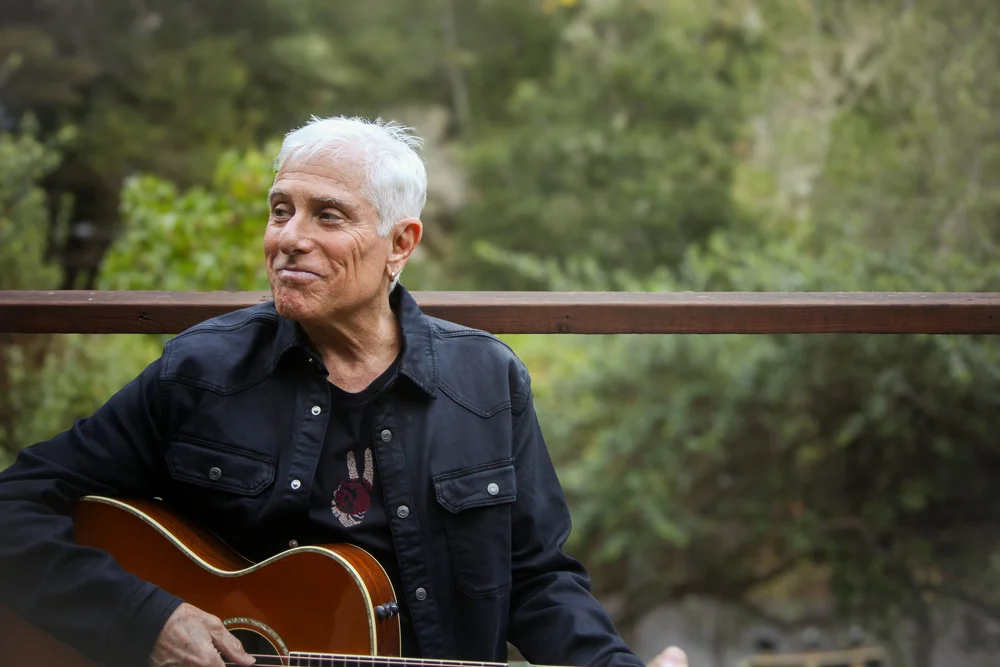
Grammy-nominated kirtan artist who pioneered the fusion of Indian devotional chanting with Western rock, jazz, and reggae. A disciple of Neem Karoli Baba, he has led kirtan worldwide for nearly five decades.

プロフィールを見る
トピックを見る
KirtanBhakti yogaDevotional singingCosmic languageSoul connection
よくある質問

よくある質問

Kirtan is call-and-response devotional singing rooted in bhakti (the yoga of devotion), where participants chant sacred mantras and melodies together. Unlike silent meditation, kirtan is an embodied, participatory practice that uses music as a "cosmic language of communication" to deepen connection with soul, guru, and the divine.

No. Kirtan practitioners each "think of God differently" and "think of the spirit differently," bringing their own prayers, needs, and intentions into the shared practice. The music itself becomes the common language, allowing people from different spiritual traditions to participate authentically.

Through singing, practitioners descend into "the unknown," which deepens both their connection to their own soul and to their guru. The teacher notes these connections are "maintained and gradually increased" through the practice, and fundamentally they are not separate—the guru reflects back the truth of one's own deepest self.

Singing serves as an antidote to the psyche's natural tendency to contract and close. The act of opening the mouth, breathing deeply, harmonizing with others, and surrendering to the practice all work against defensive closure, maintaining the openness necessary for spiritual experience.

Kirtan camps are immersive gatherings where devotees come together for extended periods of singing and celebration of life and love. They are designed for anyone following the calling of their heart, regardless of musical experience or background, and provide community support for deepening practice.

No. Kirtan is a participatory practice in which your own voice and heart matter regardless of musical training or Sanskrit knowledge. The practice honors the authenticity of each person's experience rather than requiring technical proficiency or doctrinal knowledge.

こちらもおすすめ

すべて表示
Where Souls Meet: Shiva, Self-Concept, and Sacred Chanting
Inspire

Where Souls Meet: Shiva, Self-Concept, and Sacred Chanting

Ram Dass explores how devotional chanting transforms ego-based identity into soul awareness, merging with the Divine through bhakti practice…

8 min read
Hanuman Chalisa for World Peace: Ancient Chant for Modern Times
Inspire

Hanuman Chalisa for World Peace: Ancient Chant for Modern Times

Jai Uttal leads a devotional rendering of the Hanuman Chalisa, a 40-verse Sanskrit hymn invoking strength, clarity, and peace through kirtan…

9 min read
Kirtan as Mourning: Grief and Presence in Devotional Practice
Inspire

Kirtan as Mourning: Grief and Presence in Devotional Practice

A live kirtan honoring Shyam Das explores how chanting the Maha Mantra holds both longing and presence—the dual nature of bhakti when rememb…

8 min read
Medicine Buddha Practice: Feeling Beneath the Thinking
Inspire

Medicine Buddha Practice: Feeling Beneath the Thinking

Lama Rod Owens opens a Monday-night Medicine Buddha session six years into the practice, teaching how to feel an experience instead of think…

10 min read
すべて見るこちらもおすすめ→

旅をつづける

BrightStarのディレクトリから、さらなる智慧と集いを。

もっと記事を読む

教え、インタビュー、ガイドのライブラリ全体をご覧ください。

すべての記事に戻る →

講師とアーティスト

コンシャスな世界の系譜、音楽家、導き手を探しましょう。

アーティストを探す →

イベントを見つける

キルタン、リトリート、サウンドバス、ブレスワーク、フェスティバル — まもなく開かれます。

イベントを見る →