Jai Uttal's "Gopala Lullaby" is a devotional kirtan that repeats multiple names of Lord Krishna—Gopala, Sri Krishna, Govind, Hari, Murari, Narayana, and Vasudeva—woven into a gentle, repetitive melodic structure. The piece functions as both a lullaby for rest and a mantra for deeper devotional practice, using the cyclical nature of kirtan to anchor awareness in the sacred names themselves. Rather than teaching doctrine or philosophy, the song works through direct invocation and sonic immersion, relying on the listener's openness to the practice of nama-japa (chanting divine names).
The Gopala Lullaby is a short kirtan (devotional chant) performed by Jai Uttal, a Western-born musician and spiritual teacher who has dedicated decades to kirtan practice and transmission. This particular piece, released in 2016, is described as "a sweet song for my patrons" and functions simultaneously as a lullaby—a gentle, sleep-inducing piece—and as a mantra practice. The song is structured around the repetition of eight primary names or epithets of Krishna, each carrying distinct spiritual resonances within Hindu devotional tradition:
- Gopala — "Cowherd boy," emphasizing Krishna's pastoral, innocent, and playful aspects; the name that dominates the piece
- Sri Krishna — The formal invocation of Krishna, where "Sri" adds auspiciousness and majesty
- Govind — A name meaning "one who tends cows," also spelled Govinda, associated with sustenance and nourishment
- Hari — "One who removes," typically understood as removing obstacles or delusions from consciousness
- Murari — "Enemy of Mura," referencing Krishna's mythological victory over a demon, suggesting the divine power that overcomes darkness
- Narayana — A cosmic name referring to the universal divine principle, often associated with water and creation
- Vasudeva — Krishna's father's name, but also used as a name for Krishna himself, emphasizing his embodied, human aspect
What makes this piece a "lullaby" is not a narrative or story, but rather the sonic and psychological design. The melody is simple, repetitive, and deliberately stripped of complexity. Each name is sung at a tempo and with a melodic shape that encourages the listener to relax rather than think analytically. The voice stays within a narrow melodic range, and the phrases resolve gently, creating a sense of completion without tension.
In Hindu and many non-dualistic traditions, the divine name (nama) is not separate from the divine itself. To chant the name is not to summon something distant, but to invoke or recognize what is always-already present. This principle underlies the entire practice of the Gopala Lullaby.
The repetition of names in kirtan—called nama-japa—serves multiple functions. First, it occupies the thinking mind with a task that is simple enough to be restful but engaging enough to prevent distraction. Second, each name carries a particular quality or vibration that, through sustained attention and repetition, begins to attune the nervous system to that quality. When you repeatedly invoke Hari—the remover—you are gradually aligning your consciousness with the principle of removal or dissolution. When you invoke Govind, the nourisher, you align with sustenance and care.
Jai Uttal's approach to kirtan has always emphasized this non-sectarian dimension. While the Gopala Lullaby uses explicitly Krishna-centered names, the underlying principle—that divine names are living forces that reshape consciousness through devotional engagement—is universal. The practice does not require belief in Krishna as a literal deity; it requires only willingness to allow sound, breath, and repetition to work on the nervous system and subtle body.
Kirtan traditionally comes in many styles. Some forms, like call-and-response kirtans in a congregational setting, are designed to generate energy, joy, and community participation. They often build in tempo and intensity. The Gopala Lullaby takes the opposite approach: it is designed for the bedroom, for the threshold between waking and sleep, for the dissolution of the day-mind into rest.
This choice reflects a sophisticated understanding of how chant works at different times and in different states of consciousness. A rousing kirtan activates rajasic (activating, stimulating) energy. A lullaby-form kirtan activates sattvic (pure, peaceful) and tamasic (grounding, settling) energies. The gentle repetition, the soft production of the voice, and the lack of dynamic build-up all serve to lower the listener's nervous system activation and move them toward the parasympathetic state associated with rest, meditation, and sleep.
The lullaby form also connects this practice to the archetypal image of Krishna as Gopala—the child-god who was sung to sleep by his mother Yasoda. By singing a lullaby to Krishna, the chanter and listener enter into an inverted relationship with the divine: they become the caretaker, and the divine becomes the beloved child who is cared for and soothed. This reversal is itself a tool for devotional deepening.
The piece begins with instrumental music, then enters the primary phrase: "Gopa, Gopala, Gopala, Gopala, Gopal, Gopala, Gopala, Gopala." This opening establishes the foundational frequency of the piece. Gopala, the cowherd boy, is the gravitational center.
After several cycles of pure Gopala repetition, Jai Uttal introduces the other names in a specific order. First comes "Gopala, Gopala, Sri Krishna, Govind, Hare," which brings in the majestic aspect (Sri Krishna) and the sustaining aspect (Govind), along with Hari (remover). This sequence is then extended: "Murari, He Natha, Na Narayana, Vasudeva, Gopala, Gopala."
The structure is not rigidly sequential; rather, the names return in variations throughout the piece, but the opening and closing movements always return to Gopala and the simpler forms. The final moments of the piece return to pure names and end with "Hari Om, Hari, Om"—moving from the specific invocation of Krishna to the universal vibration of Om.
This architecture serves both aesthetic and spiritual purposes. Aesthetically, it prevents monotony by introducing variation while maintaining the lullaby quality. Spiritually, it allows the listener to first ground themselves in the intimate, playful energy of Gopala, then expand outward to embrace the cosmic, universal names (Narayana, Vasudeva), and finally resolve into the universal syllable Om.
All of the names in the Gopala Lullaby refer to aspects of Krishna—or to Krishna as the embodiment of the universal divine. However, each name emphasizes a different dimension:
Gopala emphasizes Krishna's playfulness, innocence, and intimacy. In scripture and iconography, Gopala is depicted as a beautiful child, often blue-skinned, playing a flute and surrounded by adoring cowherd girls (gopis). This is the most personal, emotionally accessible face of the divine—not distant or abstract, but present, playful, and capable of love.
Sri Krishna adds formality and respect. Sri is an honorific meaning prosperity, beauty, and auspiciousness. The full invocation "Sri Krishna" honors both the divine itself and the devotee's own capacity to recognize and bow to it.
Govind or Govinda is often explained as "one who satisfies the cows"—but in deeper interpretation, it refers to one who satisfies and nourishes all beings. It is the principle of universal care and sustenance.
Hari traditionally means "one who removes," but the name carries complex associations. In some contexts, Hari refers to Vishnu or Krishna as the god who sustains and protects. The "removal" can be understood as the removal of suffering, delusion, or the false sense of separation from the divine.
Murari is a mythological name, deriving from Krishna's defeat of the demon Mura. It invokes the aspect of the divine that is powerful, heroic, and capable of overcoming evil or ignorance.
Narayana is a cosmic, universal name. Nara means human or individual, and Yana means vehicle or dwelling. Narayana is understood as the divine that dwells in and pervades all beings. It is the transcendent, all-pervading aspect.
Vasudeva, finally, is Krishna's father's name but also a name of Krishna himself. It emphasizes the incarnational, embodied aspect—the divine not as abstract principle but as lived presence in a human form.
Together, these names create a full arc from the intimate and playful (Gopala) to the cosmic and universal (Narayana), and back to the embodied and relational (Vasudeva). The listener who engages with these names is invited to recognize the divine in all its dimensions: as play, as majesty, as sustenance, as removal of obstacles, as cosmic presence, and as intimate embodied reality.
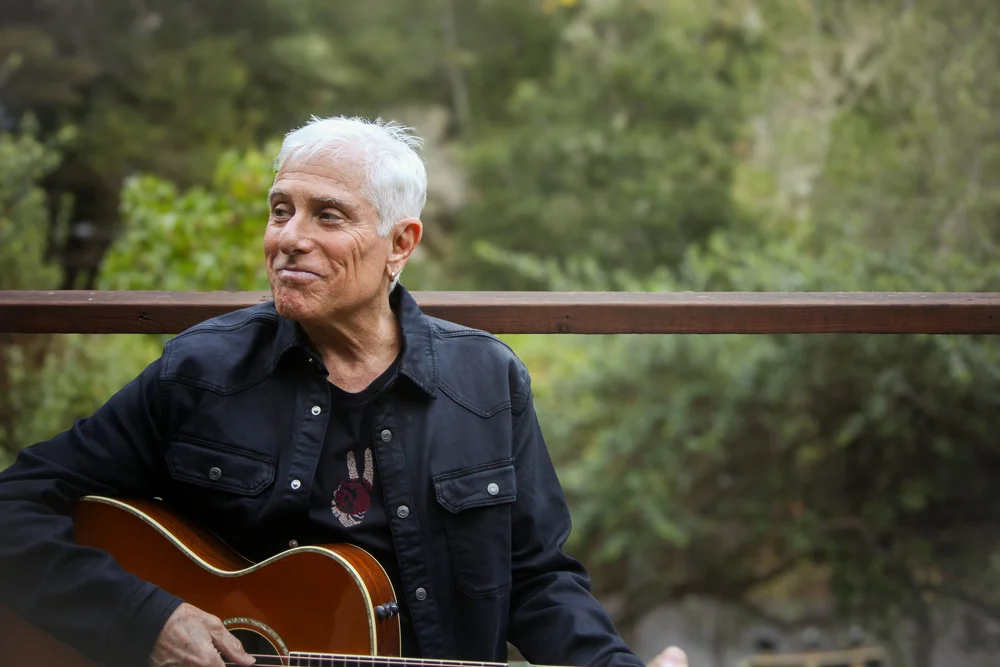
Jai Uttal is an American-born musician and spiritual teacher who has spent over forty years studying and practicing kirtan, mantra, and devotional music traditions. He trained extensively in India with teachers from various lineages and has become one of the primary translators of kirtan practice for Western audiences. His approach is characterized by a deep respect for tradition combined with an openness to the universality of the underlying principles.
Unlike some kirtan practitioners who frame the practice within a specific religious or sectarian context, Jai Uttal consistently emphasizes that kirtan is a technology of consciousness available to anyone, regardless of belief system. The Gopala Lullaby reflects this sensibility: it is rooted in the Krishna tradition, but it works through the universal principles of sound, rhythm, repetition, and devotional opening—principles that transcend any single religion.
The fact that this piece was created "for patrons" also reflects Jai Uttal's engagement with his community of practitioners. He regularly creates and shares kirtan recordings, many of them available to his community, as tools for daily practice.
The piece invites several modes of engagement. The simplest is to listen before sleep, allowing the gentle repetition and soft melody to guide the nervous system into rest. No prior knowledge, belief, or experience is necessary for this approach to work; the neurological effects of simple, repetitive, soothing sound are universal.
A second mode is active participation: singing or humming along with Jai Uttal. This deepens the practice by engaging not just the auditory but also the vocal apparatus, breath, and proprioception. The vibrations created by one's own voice singing the names carry additional effects.
A third mode is meditative listening: sitting quietly, following the sound, and allowing the names to resonate in the heart-space rather than the thinking mind. This is closer to the traditional practice of mantra meditation.
A fourth mode is to use the piece as a template for one's own chanting practice. Many practitioners of kirtan learn a melody and then sustain the practice on their own, with the recorded version as a reference.
There is no "correct" way to engage with the Gopala Lullaby. The practice adapts to the person and the moment. What matters is regularity, openness, and willingness to let the sounds and names do their work.
If you resonate with the Gopala Lullaby, there are several directions for deepening the practice. You might explore other recordings by Jai Uttal, who has released numerous kirtans across different moods and invocations. Many of these are available on streaming platforms and through his website.
You might also seek out other styles of kirtan—both devotional recordings and live kirtan events in your community. Each tradition and teacher brings different textures and emphases to the practice.
For those interested in the philosophical and mythological context, reading selections from the Bhagavad Gita or the Krishna chapters of the Bhagavata Purana can deepen understanding of who Krishna is and why these names carry the power they do. Books like "The Way of the Lover" by Jai Uttal himself, or "Sri Krishna: The Supreme Personality of Godhead" by A.C. Bhaktivedanta Swami, offer accessible entry points.
Finally, and most importantly: the practice itself is the teacher. Regular engagement with the Gopala Lullaby—whether as a pre-sleep ritual, a meditation anchor, or a devotional offering—will reveal its effects and teachings far more directly than any conceptual explanation can.