BrightStar
ブログマイチケット
ブログマイチケット
Saved events
ヘルプ・お問い合わせ新規登録ログイン
イベント
  • すべてのイベントを見る
  • ヨガ
  • 瞑想
  • ブレスワーク
  • 気功
  • 聖なる音楽
  • ワールドミュージック
  • メディスンミュージック
  • サウンドヒーリング
  • エクスタティックダンス
  • セレモニー
  • プラントメディスン
  • エネルギーヒーリング
  • サットサンと智慧
  • タントラ
  • リトリート
  • すべてのカテゴリ →
目的地
  • Bali
  • Sedona
  • Los Angeles
  • Costa Rica
  • Tulum
  • Byron Bay
  • San Francisco
  • Austin
  • New York
  • San Diego
  • Denver
  • Seattle
  • Portland
  • Miami
  • London
  • Maui
  • Boulder
  • すべての都市 →
プラットフォーム
  • 主催者向け
  • ムーブメントに参加
  • Sell Globally
  • クリエイター向け
  • チーム向け
  • ライター向け
  • 講師向け
  • キルタンアーティスト向け
  • スタジオ向け
  • フェスティバル向け
  • リトリートセンター向け
  • 非営利団体向け
  • ブランドアンバサダー
  • 無料チケット販売
  • Elevate
  • Amplify
  • エコシステム
機能

チケット販売と購入

  • Ticket categories
  • Assigned seating
  • Custom questions
  • Coupon codes
  • Smart pricing
  • Ticket sharing
  • Waitlist
  • Flexible refunds
  • Digital waivers
  • Tip jar
  • Donations and sliding scale
  • Embed widget
  • Mindful checkout
  • Recurring events
  • Private sessions
  • Online courses
  • Summits
  • Rooms and stays
  • Ticket scanner

マーケティングと成長

  • Abandoned cart recovery
  • Visitor recovery
  • Upsells and add-ons
  • Affiliate engine
  • Upsell affiliate network
  • Brand ambassador
  • Meta retargeting
  • Verified buyer network
  • Outbound email marketing
  • Email sequences
  • SMS and WhatsApp
  • Event upsell network
  • Direct mail campaigns
  • SEO engine
  • Syndication
  • Event sharing
  • Custom event pages
  • Artist profiles
  • Link in bio
  • Event blog
  • Blog newsletter

決済

  • Payments, powered by Stripe
  • Buy now, pay later
  • Apple Wallet
  • Multi currency

データと運営

  • Team access
  • Message center
  • Reports
  • Analytics reporting
  • Performance reporting
  • Customer data
  • Integrations
  • Switch from another platform

AI

  • Assistant
  • AI FAQ assistant
  • すべての機能 →
会社
  • 概要
  • よくある質問
  • お問い合わせ
  • ブログ
  • 用語集
  • Guides
  • インスピレーション
  • ヘルプセンター
  • APIドキュメント
  • ブランドアセット
  • プレス
  • 利用規約
  • プライバシーポリシー

イベント

  • すべてのイベントを見る
  • ヨガ
  • 瞑想
  • ブレスワーク
  • 気功
  • 聖なる音楽
  • ワールドミュージック
  • メディスンミュージック

目的地

  • Bali
  • Sedona
  • Los Angeles
  • Costa Rica
  • Tulum
  • Byron Bay
  • San Francisco
  • Austin

プラットフォーム

  • 主催者向け
  • ムーブメントに参加
  • Sell Globally
  • クリエイター向け
  • チーム向け
  • ライター向け
  • 講師向け
  • キルタンアーティスト向け

機能

  • コミュニティネットワーク
  • カート放棄リカバリー
  • チケットカテゴリ
  • 定期イベント
  • 座席指定
  • アフィリエイトシステム
  • ウェイトリスト / 通知
  • すべての機能 →

会社

  • 概要
  • よくある質問
  • お問い合わせ
  • ブログ
  • 用語集
  • Guides
  • 利用規約
  • プライバシーポリシー
続きを読む

イベント

  • サウンドヒーリング
  • エクスタティックダンス
  • セレモニー
  • プラントメディスン
  • エネルギーヒーリング
  • サットサンと智慧
  • タントラ
  • リトリート
  • すべてのカテゴリ →

目的地

  • New York
  • San Diego
  • Denver
  • Seattle
  • Portland
  • Miami
  • London
  • Maui
  • Boulder
  • すべての都市 →

プラットフォーム

  • スタジオ向け
  • フェスティバル向け
  • リトリートセンター向け
  • 非営利団体向け
  • ブランドアンバサダー
  • 無料チケット販売
  • Elevate
  • Amplify
  • エコシステム

会社

  • インスピレーション
  • ヘルプセンター
  • APIドキュメント
  • ブランドアセット
  • プレス

チケット販売と購入

  • Ticket categories
  • Assigned seating
  • Custom questions
  • Coupon codes
  • Smart pricing
  • Ticket sharing
  • Waitlist
  • Flexible refunds
  • Digital waivers
  • Tip jar
  • Donations and sliding scale
  • Embed widget
  • Mindful checkout
  • Recurring events
  • Private sessions
  • Online courses
  • Summits
  • Rooms and stays
  • Ticket scanner

マーケティングと成長

  • Abandoned cart recovery
  • Visitor recovery
  • Upsells and add-ons
  • Affiliate engine
  • Upsell affiliate network
  • Brand ambassador
  • Meta retargeting
  • Verified buyer network
  • Outbound email marketing
  • Email sequences
  • SMS and WhatsApp
  • Event upsell network
  • Direct mail campaigns
  • SEO engine
  • Syndication
  • Event sharing
  • Custom event pages
  • Artist profiles
  • Link in bio
  • Event blog
  • Blog newsletter

決済

  • Payments, powered by Stripe
  • Buy now, pay later
  • Apple Wallet
  • Multi currency

データと運営

  • Team access
  • Message center
  • Reports
  • Analytics reporting
  • Performance reporting
  • Customer data
  • Integrations
  • Switch from another platform

AI

  • Assistant
  • AI FAQ assistant
アプリを入手
App StoreからApp StoreGoogle Playで手に入れようGoogle Play
© 2026 BrightStar. 全著作権所有. BrightStar Selection · 写真クレジット · 変更履歴 ·
Inspiration

Direct Perception Without Thought: A Practice Guide

Eckhart Tolle
Eckhart Tolle
Jul 30, 2025
読了 約6分

出典:Eckhart Tolle

Direct perception without thinking is the practice of relating to your inner and outer experience without the filter of conceptual thought. Rather than experiencing life through interpretation and mental labeling, this approach involves observing what is actually present—sensations, emotions, the environment itself—without immediately translating it into thought. The core insight is that there is a mode of awareness that exists prior to and independent of the thinking mind, and cultivating this mode reduces unnecessary suffering that arises from over-intellectualizing experience.

読む · 5セクション

What Does It Mean to Perceive Without Thinking?

Most people spend their waking hours experiencing the world through a layer of mental interpretation. An emotion arises, and immediately the thinking mind labels it, judges it, creates a story around it. A sensation appears in the body, and thought begins to analyze what it means. An external event unfolds, and the mind immediately conceptualizes and categorizes it. This is intellectualizing experience—filtering direct perception through the lens of thought.

Perceiving without thinking means reversing this process. It means contacting what is present—both inwardly and in your environment—before the thinking mind has a chance to translate it into concepts. This is not about suppressing thought or entering a blank mental state. Rather, it is about recognizing that there is a dimension of awareness available to you that operates independently of the conceptual mind. You can see, hear, sense, and know without needing to think about what you are experiencing.

The key distinction is between direct knowing and indirect knowing. When you directly perceive, you are in immediate contact with reality as it is. When you filter everything through thought, you are in contact with your mind's interpretation of reality—which often distorts, exaggerates, or obscures what is actually present.

Why Does Over-Intellectualizing Create Suffering?

The thinking mind is useful for practical tasks—planning, problem-solving, language, analysis. However, when you apply this same mechanism to everything—including your emotions, sensations, and moment-to-moment experience—it creates unnecessary complexity and suffering. Here's why: thought tends to fragment reality into separate parts and then create narratives about those parts. An uncomfortable bodily sensation becomes "proof" that something is wrong. A fleeting anxious thought becomes "I am an anxious person." A difficult situation becomes "This is a tragedy" or "I am a victim."

Each of these moves adds a layer of interpretation on top of what is actually present. The sensation, the thought, or the situation is one thing; the story the mind tells about it is another. Most human suffering comes not from direct experience itself, but from the mental stories we construct around experience. When you perceive without thinking, you remove this storytelling layer. You meet reality without the intermediary of interpretation.

Additionally, the thinking mind loves to dwell on the past and project into the future. This constant mental time-travel pulls your awareness away from the only place where life is actually happening: the present moment. Direct perception naturally anchors you in what is present now, which is the only time you can actually respond to life effectively.

How Can You Practice Direct Perception?

The video presents this as a thought experiment, a simple practice you can use to shift your relationship with experience. The essence of the practice is attention—bringing awareness to what is present without immediately converting it into thought.

With external experience: Instead of looking at something and immediately naming or analyzing it, try simply observing. Notice colors, shapes, movement, light. Notice sounds without labeling them as "good" or "bad" sounds. Feel textures without thinking about what they mean. Your five senses naturally perceive without thinking—an infant perceives this way before language develops. You can return to this pre-conceptual mode of sensing.

With internal experience: Notice emotions and sensations in your body as pure phenomena, without the mental commentary. An emotion is a sensation with energy and movement. Before you think "I am angry" or "This is bad," there is simply a raw energy moving through you. Can you feel that directly? Similarly, physical sensations can be felt without the thought layer that says "This is pain" or "This is injury." Often when you remove the conceptual overlay, the actual sensation is quite different from what the thinking mind claims about it.

The practice is not about achieving a particular state or eliminating all thought. Rather, it is about developing the capacity to perceive directly when you choose to. This capacity always exists within you—you are not creating something new, but rather uncovering an awareness that was always available but obscured by habitual thinking.

What Is the Relationship Between Perception and Presence?

Direct perception is intimately connected to presence—the quality of being fully here, now, without mental distraction. When you perceive without thinking, you are naturally present. You cannot be mentally lost in past or future and simultaneously engaged in direct sensory perception. The two modes are different. Conversely, when your awareness is fragmented by constant thought and mental commentary, your presence in the actual moment is diluted.

This is why the practice of perceiving without thinking is also a practice of deepening presence. Each time you catch yourself over-intellectualizing an experience and instead choose to perceive directly, you are training your attention to remain anchored in the now. Over time, this practice creates a shift in your baseline state of consciousness. You become less trapped in thought and more capable of meeting life as it actually is.

Where to Go From Here

The immediate next step is to apply this practice throughout your day. Choose a specific activity—washing dishes, taking a walk, drinking tea—and do it with direct perception. Notice what happens when you allow sensory experience to be present without translating it into thought. Pay attention to the quality of that experience, the sense of aliveness that may emerge when you are not filtering everything through the conceptual mind.

You can also explore the edges of your habitual thinking patterns. When you notice yourself telling a story about an emotion or sensation, pause and see if you can contact the raw experience beneath the story. This doesn't require suppressing thought; simply creating space where direct knowing is also possible. Over time, you will develop the flexibility to move between thinking and perceiving, using each appropriately rather than defaulting to one mode all the time.


コメント

会話を読み込み中…

この記事のアーティスト

Eckhart Tolle

Eckhart Tolle

Spiritual Teacher

Eckhart Tolle is a spiritual teacher and author whose bestsellers The Power of Now and A New Earth have introduced millions to living in the present moment, and who sees awakened Presence as the essential next step in human evolution.

プロフィールを見る
トピックを見る
Direct perceptionPresenceNon conceptual awarenessThinking mindConsciousness
よくある質問

よくある質問

Bring direct sensory awareness to what is present—internal sensations, emotions, or external sights and sounds—without immediately translating them into mental concepts or stories. Notice the raw sensation or experience as it is, before the thinking mind adds interpretation or judgment.

Direct perception contacts reality immediately through the senses before thought intervenes, while thinking interprets and conceptualizes experience after the fact. Both are useful, but over-reliance on thinking to process everything creates unnecessary mental complexity and suffering.

The thinking mind fragments experience into concepts and then creates stories about those parts. Most suffering comes from these mental narratives rather than from the raw experience itself—the thinking mind exaggerates, judges, and projects past or future meanings onto present reality.

Yes. Direct perception is not about eliminating all thought, but rather developing the capacity to perceive without constantly filtering everything through thought. You learn to move between thinking and direct sensing as needed.

Both practices involve present-moment awareness and reducing automatic reactivity. Perceiving without thinking emphasizes direct sensory contact prior to conceptualization, which naturally strengthens the mindfulness quality of being fully present without mental distraction.

Yes. Emotions are fundamentally sensations with energetic and physical dimensions. Before the mind labels an emotion as 'anger' or 'sadness,' there is a raw, felt experience. Contacting that directly often reveals that the emotion is different from what your thinking mind claims about it.

こちらもおすすめ

すべて表示
God Beyond the Sky: Rethinking Divine Nature
Inspire

God Beyond the Sky: Rethinking Divine Nature

God is not an external judge deciding human suffering. Suffering itself becomes the mechanism through which consciousness awakens to itself.…

6 min read
God, Suffering, and the One Life Across Traditions
Inspire

God, Suffering, and the One Life Across Traditions

Eckhart Tolle explores how Islam, Buddhism, and Greek philosophy all point to the same ultimate reality—and why the problem of suffering dis…

7 min read
Sacred Feminine Power: Chanting Devi Beyond the Mat
Inspire

Sacred Feminine Power: Chanting Devi Beyond the Mat

An in-person gathering in Bengaluru merges ancient devotional chanting with modern psychotherapy to explore how the Goddess archetype illumi…

8 min read
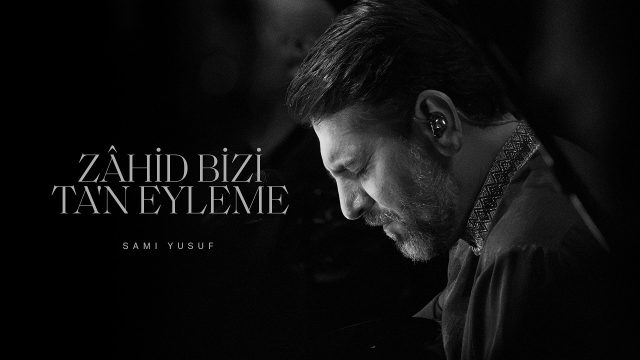
Zâhid Bizi Ta'n Eyleme: 400 Years of Turkish Devotion Reborn
Inspire

Zâhid Bizi Ta'n Eyleme: 400 Years of Turkish Devotion Reborn

Sami Yusuf performs a 16th-century Turkish spiritual masterpiece with a 50-piece ensemble, honoring four centuries of tradition while forgin…

6 min read
すべて見るこちらもおすすめ→

旅をつづける

BrightStarのディレクトリから、さらなる智慧と集いを。

もっと記事を読む

教え、インタビュー、ガイドのライブラリ全体をご覧ください。

すべての記事に戻る →

講師とアーティスト

コンシャスな世界の系譜、音楽家、導き手を探しましょう。

アーティストを探す →

イベントを見つける

キルタン、リトリート、サウンドバス、ブレスワーク、フェスティバル — まもなく開かれます。

イベントを見る →