BrightStar
ブログマイチケット
ブログマイチケット
Saved events
ヘルプ・お問い合わせ新規登録ログイン
イベント
  • すべてのイベントを見る
  • ヨガ
  • 瞑想
  • ブレスワーク
  • 気功
  • 聖なる音楽
  • ワールドミュージック
  • メディスンミュージック
  • サウンドヒーリング
  • エクスタティックダンス
  • セレモニー
  • プラントメディスン
  • エネルギーヒーリング
  • サットサンと智慧
  • タントラ
  • リトリート
  • すべてのカテゴリ →
目的地
  • Bali
  • Sedona
  • Los Angeles
  • Costa Rica
  • Tulum
  • Byron Bay
  • San Francisco
  • Austin
  • New York
  • San Diego
  • Denver
  • Seattle
  • Portland
  • Miami
  • London
  • Maui
  • Boulder
  • すべての都市 →
プラットフォーム
  • 主催者向け
  • ムーブメントに参加
  • Sell Globally
  • クリエイター向け
  • チーム向け
  • ライター向け
  • 講師向け
  • キルタンアーティスト向け
  • スタジオ向け
  • フェスティバル向け
  • リトリートセンター向け
  • 非営利団体向け
  • ブランドアンバサダー
  • 無料チケット販売
  • Pro
  • Amplify
  • エコシステム
機能

チケット販売と購入

  • Ticket categories
  • Assigned seating
  • Custom questions
  • Coupon codes
  • Smart pricing
  • Ticket sharing
  • Waitlist
  • Flexible refunds
  • Digital waivers
  • Tip jar
  • Donations and sliding scale
  • Embed widget
  • Mindful checkout
  • Recurring events
  • Private sessions
  • Online courses
  • Summits
  • Rooms and stays
  • Ticket scanner

マーケティングと成長

  • Abandoned cart recovery
  • Visitor recovery
  • Upsells and add-ons
  • Affiliate engine
  • Upsell affiliate network
  • Brand ambassador
  • Meta retargeting
  • Verified buyer network
  • Outbound email marketing
  • Email sequences
  • SMS and WhatsApp
  • Event upsell network
  • Direct mail campaigns
  • SEO engine
  • Syndication
  • Event sharing
  • Custom event pages
  • Artist profiles
  • Link in bio
  • Event blog
  • Blog newsletter

決済

  • Payments, powered by Stripe
  • Buy now, pay later
  • Apple Wallet
  • Multi currency

データと運営

  • Team access
  • Message center
  • Reports
  • Analytics reporting
  • Performance reporting
  • Customer data
  • Integrations
  • Switch from another platform

AI

  • Assistant
  • AI FAQ assistant
  • すべての機能 →
会社
  • 概要
  • よくある質問
  • お問い合わせ
  • ブログ
  • 用語集
  • Guides
  • インスピレーション
  • ヘルプセンター
  • APIドキュメント
  • ブランドアセット
  • プレス
  • 利用規約
  • プライバシーポリシー

イベント

  • すべてのイベントを見る
  • ヨガ
  • 瞑想
  • ブレスワーク
  • 気功
  • 聖なる音楽
  • ワールドミュージック
  • メディスンミュージック

目的地

  • Bali
  • Sedona
  • Los Angeles
  • Costa Rica
  • Tulum
  • Byron Bay
  • San Francisco
  • Austin

プラットフォーム

  • 主催者向け
  • ムーブメントに参加
  • Sell Globally
  • クリエイター向け
  • チーム向け
  • ライター向け
  • 講師向け
  • キルタンアーティスト向け

機能

  • コミュニティネットワーク
  • カート放棄リカバリー
  • チケットカテゴリ
  • 定期イベント
  • 座席指定
  • アフィリエイトシステム
  • ウェイトリスト / 通知
  • すべての機能 →

会社

  • 概要
  • よくある質問
  • お問い合わせ
  • ブログ
  • 用語集
  • Guides
  • 利用規約
  • プライバシーポリシー
続きを読む

イベント

  • サウンドヒーリング
  • エクスタティックダンス
  • セレモニー
  • プラントメディスン
  • エネルギーヒーリング
  • サットサンと智慧
  • タントラ
  • リトリート
  • すべてのカテゴリ →

目的地

  • New York
  • San Diego
  • Denver
  • Seattle
  • Portland
  • Miami
  • London
  • Maui
  • Boulder
  • すべての都市 →

プラットフォーム

  • スタジオ向け
  • フェスティバル向け
  • リトリートセンター向け
  • 非営利団体向け
  • ブランドアンバサダー
  • 無料チケット販売
  • Pro
  • Amplify
  • エコシステム

会社

  • インスピレーション
  • ヘルプセンター
  • APIドキュメント
  • ブランドアセット
  • プレス

チケット販売と購入

  • Ticket categories
  • Assigned seating
  • Custom questions
  • Coupon codes
  • Smart pricing
  • Ticket sharing
  • Waitlist
  • Flexible refunds
  • Digital waivers
  • Tip jar
  • Donations and sliding scale
  • Embed widget
  • Mindful checkout
  • Recurring events
  • Private sessions
  • Online courses
  • Summits
  • Rooms and stays
  • Ticket scanner

マーケティングと成長

  • Abandoned cart recovery
  • Visitor recovery
  • Upsells and add-ons
  • Affiliate engine
  • Upsell affiliate network
  • Brand ambassador
  • Meta retargeting
  • Verified buyer network
  • Outbound email marketing
  • Email sequences
  • SMS and WhatsApp
  • Event upsell network
  • Direct mail campaigns
  • SEO engine
  • Syndication
  • Event sharing
  • Custom event pages
  • Artist profiles
  • Link in bio
  • Event blog
  • Blog newsletter

決済

  • Payments, powered by Stripe
  • Buy now, pay later
  • Apple Wallet
  • Multi currency

データと運営

  • Team access
  • Message center
  • Reports
  • Analytics reporting
  • Performance reporting
  • Customer data
  • Integrations
  • Switch from another platform

AI

  • Assistant
  • AI FAQ assistant
アプリを入手
App StoreからApp StoreGoogle Playで手に入れようGoogle Play
© 2026 BrightStar. 全著作権所有. BrightStar Selection · 写真クレジット · 変更履歴 ·
Inspiration

Death as Illusion: Understanding Life Across Dimensions

Sadhguru
Sadhguru
Jul 1, 2025
読了 約6分

出典:Sadhguru

Sadhguru proposes that death is fundamentally a misunderstanding created by limited awareness rather than an actual cessation of existence. His perspective reframes death not as an ending but as a transition—a shift where life continues moving from one dimension of reality to another. This teaching challenges the conventional Western fear-based relationship with mortality by suggesting that consciousness itself never truly ceases, only transforms.

読む · 6セクション

What is Death According to Sadhguru?

In this teaching, Sadhguru presents a radical reinterpretation of death: it is not a real phenomenon but a "fiction of the unaware." This statement rests on a particular understanding of consciousness and dimensionality. Rather than viewing death as termination—the complete end of a person's existence—Sadhguru suggests that death is an artifact of limited perception, something created by minds that lack the awareness to perceive continuity beyond the physical body's dissolution.

The core assertion is that "there is only life, life, and life alone." This repetition emphasizes that existence at its fundamental level is fundamentally alive, fundamentally conscious, fundamentally dynamic. Death, in this framework, cannot be real because life itself is the only constant. What changes is not the existence of life but the form it takes, the dimension it occupies.

How Does Life Transition Between Dimensions?

Sadhguru's teaching hinges on the idea that life moves "from one dimension to another." This is not metaphorical poetry but a specific philosophical claim about the structure of reality. The use of "dimension" suggests that existence is not singular or monolithic but rather multidimensional—that there are different layers, planes, or modes of being that consciousness can inhabit.

In this view, what we call the physical world—the dimension we perceive through five senses—is only one layer of reality. The transition we label as "death" is the movement of consciousness or life force from this physical dimension into another dimension of existence. The person no longer appears in the physical world, which creates the impression of ending, but their consciousness or life essence continues in a realm not perceptible to ordinary human senses.

This framework reinterprets the fear of death as fundamentally a fear of change, a resistance to transition. If consciousness never ceases but only shifts form, then the existential terror many people experience around mortality becomes a terror of the unknown rather than a terror of genuine non-existence. The continuity of life is preserved; only its apparent form in our dimension is disrupted.

What Does It Mean to Be "Unaware" About Death?

Sadhguru's claim that death is a fiction of the unaware makes an implicit statement about consciousness and knowledge. To be unaware, in this context, is to perceive reality only through the limitations of physical form and sensory experience. The unaware person believes that consciousness is produced by the brain and therefore ends when the brain ceases functioning. This is the materialist assumption that underpins much of modern Western thinking.

By contrast, an aware person—in Sadhguru's usage—would perceive the continuity of consciousness beyond physical form. They would understand that the body is a vehicle or instrument of consciousness rather than its source. An aware being does not fear death because they perceive that there is no death to fear; there is only transformation.

This distinction between aware and unaware relates to direct experiential knowledge rather than intellectual belief. An aware person is someone who has experienced consciousness in states beyond the normal waking mind—through meditation, yogic practice, or other contemplative disciplines—and thus understands empirically that awareness can exist independent of the body's ordinary functioning.

Why Is Death Called a Fiction?

The word "fiction" carries specific weight here. A fiction is something that is invented, constructed, or imagined rather than inherent to reality itself. When Sadhguru calls death a fiction, he is saying that death is not woven into the fabric of existence; it is a conceptual creation of human minds that lack awareness of reality's true nature.

This teaching echoes certain non-dual and Eastern philosophical traditions that propose that the individual self—the ego or separate identity—is itself illusory. If the individual self is ultimately an illusion, then the death of the individual self is also illusory. What persists is not the small personal self but the larger consciousness or universal awareness that the small self was always a manifestation of.

In this interpretation, fearing death becomes similar to fearing the dissolution of a wave back into the ocean. The wave believes itself to be a separate entity and therefore fears its own destruction. But the moment the wave understands that it is always and only the ocean, taking a temporary form, the fear dissolves. The wave cannot die; it can only return to its source.

How Does This Perspective Change Our Relationship With Mortality?

If taken seriously, this teaching fundamentally reorients a person's relationship with their own impending death. Rather than seeing death as the ultimate failure or tragedy, it becomes reframed as a natural transition—no more threatening than falling asleep at night, if consciousness continues on the other side as Sadhguru suggests.

This reframe does not require accepting it as literal doctrine. Rather, contemplating the possibility can loosen the grip of existential anxiety. If death is indeed a transition rather than an ending, then the urgency to extract meaning or achieve goals before death loses some of its desperate quality. Life becomes something to be lived fully not because it is short and fragile but because it is always continuously unfolding, always available.

Sadhguru's teaching also implies practical consequences for how one lives. If consciousness persists beyond the physical dimension, then actions taken in this lifetime—intentions set, karmic seeds planted, spiritual development pursued—may have consequences that extend beyond death. This would make ethical living and inner transformation not merely beneficial for this life but for whatever dimensions of existence follow.

Where to Go From Here

Those interested in exploring Sadhguru's full teaching on death and the nature of consciousness can engage in several directions. First, investigate meditation and yoga practices designed to expand perception beyond ordinary sensory consciousness—many of Sadhguru's teachings are grounded in his own yogic lineage and the experiences that such practices can generate. Second, study non-dual philosophical traditions from Advaita Vedanta to contemporary non-dual teachers that explore similar themes of consciousness transcending individual identity. Third, consider how accepting the possibility of dimensional continuity shifts your lived relationship with mortality—not necessarily as literal belief but as a reorientation of values and presence. Finally, examine your own deepest assumptions about what consciousness is, where it comes from, and whether it could persist beyond the body's death; direct inquiry into these questions may prove more valuable than accepting or rejecting Sadhguru's claims on authority.

コメント

会話を読み込み中…

この記事のアーティスト

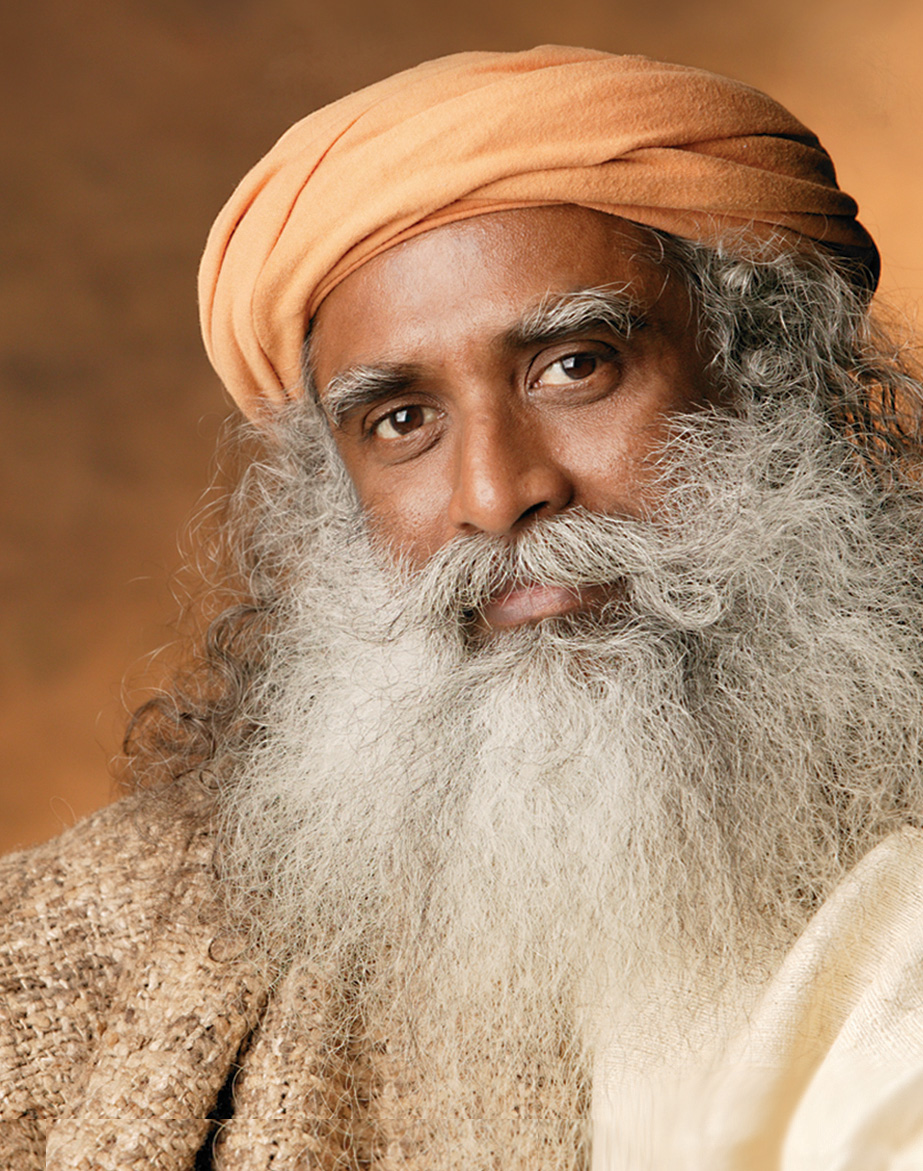
Sadhguru

Sadhguru

Teacher

A modern mystic and spiritual leader who founded the Isha Foundation, blending ancient yogic wisdom with contemporary life to foster inner transformation and environmental sustainability globally.

プロフィールを見る
トピックを見る
Death consciousnessSpiritual perspectivesNon dualitySadhguru teachingsConsciousness dimensions
よくある質問

よくある質問

Sadhguru teaches that death is a fiction created by limited awareness rather than a true cessation of existence. He proposes that life never ends but rather transitions from one dimension of reality to another, with consciousness continuing beyond the physical body's dissolution.

Sadhguru suggests that reality exists across multiple dimensions or planes of being beyond the physical world we perceive. When what we call death occurs, consciousness transitions from the physical dimension to another dimension of existence that is not perceptible to ordinary human senses.

If consciousness genuinely persists beyond physical death and merely transitions to another form, the existential terror of non-existence becomes unnecessary. Fear of death then becomes fear of the unknown rather than fear of genuine annihilation, which fundamentally changes one's psychological relationship with mortality.

In Sadhguru's framework, unaware people perceive consciousness as produced by the brain and ending with physical death. Aware people, typically through meditative experience, understand consciousness as independent of the body and therefore perceive its continuity beyond physical form.

If consciousness persists beyond death and transitions to other dimensions, actions, intentions, and spiritual development in this life may have consequences extending beyond death. This implies living ethically and pursuing inner transformation not just for this lifetime but for whatever existence follows.

While related, Sadhguru's teaching focuses on consciousness transitioning between dimensions rather than explicitly describing a reincarnation cycle. The framework allows for reincarnation but emphasizes the fundamental continuity of life itself rather than the specific mechanics of rebirth.

Sadhguru's teaching is based on non-dual philosophical understanding and yogic practice that allegedly allows direct experiential knowledge of consciousness beyond the body. This type of knowledge is accessed through meditation and contemplative practice rather than scientific measurement.

こちらもおすすめ

すべて表示
Mind as Vehicle: Are You Driving Consciously?
Inspire

Mind as Vehicle: Are You Driving Consciously?

Explore how the mind functions like a vehicle requiring skilled operation. Learn why unconscious mental habits create suffering and how awar…

9 min read
Sleep Hours and Spiritual Practice: What Yogis Actually Need
Inspire

Sleep Hours and Spiritual Practice: What Yogis Actually Need

Sadhguru reveals his personal sleep patterns and explains why the typical 8-hour prescription doesn't apply to those with disciplined yogic …

8 min read
Ganga Is a Mother to Us All: A Story From Sri Siddhi Ma
Inspire

Ganga Is a Mother to Us All: A Story From Sri Siddhi Ma

A holy dip at Har Ki Pauri turns into a revelation in Sri Siddhi Ma. Nina Rao reads Jaya Prasada's Ganga passage beside the river.…

9 min read
The Heart Space Where All Is Welcome: A Guided Meditation
Inspire

The Heart Space Where All Is Welcome: A Guided Meditation

Tara Brach's guided meditation starts with a smile spreading across an open sky. Here is how its softening, expanding awareness and return t…

9 min read
すべて見るこちらもおすすめ→

旅をつづける

BrightStarのディレクトリから、さらなる智慧と集いを。

もっと記事を読む

教え、インタビュー、ガイドのライブラリ全体をご覧ください。

すべての記事に戻る →

講師とアーティスト

コンシャスな世界の系譜、音楽家、導き手を探しましょう。

アーティストを探す →

イベントを見つける

キルタン、リトリート、サウンドバス、ブレスワーク、フェスティバル — まもなく開かれます。

イベントを見る →