BrightStar
ブログマイチケット
ブログマイチケット
Saved events
ヘルプ・お問い合わせ新規登録ログイン
イベント
  • すべてのイベントを見る
  • ヨガ
  • 瞑想
  • ブレスワーク
  • 気功
  • 聖なる音楽
  • ワールドミュージック
  • メディスンミュージック
  • サウンドヒーリング
  • エクスタティックダンス
  • セレモニー
  • プラントメディスン
  • エネルギーヒーリング
  • サットサンと智慧
  • タントラ
  • リトリート
  • すべてのカテゴリ →
目的地
  • Bali
  • Sedona
  • Los Angeles
  • Costa Rica
  • Tulum
  • Byron Bay
  • San Francisco
  • Austin
  • New York
  • San Diego
  • Denver
  • Seattle
  • Portland
  • Miami
  • London
  • Maui
  • Boulder
  • すべての都市 →
プラットフォーム
  • 主催者向け
  • ムーブメントに参加
  • Sell Globally
  • クリエイター向け
  • チーム向け
  • ライター向け
  • 講師向け
  • キルタンアーティスト向け
  • スタジオ向け
  • フェスティバル向け
  • リトリートセンター向け
  • 非営利団体向け
  • ブランドアンバサダー
  • 無料チケット販売
  • Pro
  • Amplify
  • エコシステム
機能

チケット販売と購入

  • Ticket categories
  • Assigned seating
  • Custom questions
  • Coupon codes
  • Smart pricing
  • Ticket sharing
  • Waitlist
  • Flexible refunds
  • Digital waivers
  • Tip jar
  • Donations and sliding scale
  • Embed widget
  • Mindful checkout
  • Recurring events
  • Private sessions
  • Online courses
  • Summits
  • Rooms and stays
  • Ticket scanner

マーケティングと成長

  • Abandoned cart recovery
  • Visitor recovery
  • Upsells and add-ons
  • Affiliate engine
  • Upsell affiliate network
  • Brand ambassador
  • Meta retargeting
  • Verified buyer network
  • Outbound email marketing
  • Email sequences
  • SMS and WhatsApp
  • Event upsell network
  • Direct mail campaigns
  • SEO engine
  • Syndication
  • Event sharing
  • Custom event pages
  • Artist profiles
  • Link in bio
  • Event blog
  • Blog newsletter

決済

  • Payments, powered by Stripe
  • Buy now, pay later
  • Apple Wallet
  • Multi currency

データと運営

  • Team access
  • Message center
  • Reports
  • Analytics reporting
  • Performance reporting
  • Customer data
  • Integrations
  • Switch from another platform

AI

  • Assistant
  • AI FAQ assistant
  • すべての機能 →
会社
  • 概要
  • よくある質問
  • お問い合わせ
  • ブログ
  • 用語集
  • Guides
  • インスピレーション
  • ヘルプセンター
  • APIドキュメント
  • ブランドアセット
  • プレス
  • 利用規約
  • プライバシーポリシー

イベント

  • すべてのイベントを見る
  • ヨガ
  • 瞑想
  • ブレスワーク
  • 気功
  • 聖なる音楽
  • ワールドミュージック
  • メディスンミュージック

目的地

  • Bali
  • Sedona
  • Los Angeles
  • Costa Rica
  • Tulum
  • Byron Bay
  • San Francisco
  • Austin

プラットフォーム

  • 主催者向け
  • ムーブメントに参加
  • Sell Globally
  • クリエイター向け
  • チーム向け
  • ライター向け
  • 講師向け
  • キルタンアーティスト向け

機能

  • コミュニティネットワーク
  • カート放棄リカバリー
  • チケットカテゴリ
  • 定期イベント
  • 座席指定
  • アフィリエイトシステム
  • ウェイトリスト / 通知
  • すべての機能 →

会社

  • 概要
  • よくある質問
  • お問い合わせ
  • ブログ
  • 用語集
  • Guides
  • 利用規約
  • プライバシーポリシー
続きを読む

イベント

  • サウンドヒーリング
  • エクスタティックダンス
  • セレモニー
  • プラントメディスン
  • エネルギーヒーリング
  • サットサンと智慧
  • タントラ
  • リトリート
  • すべてのカテゴリ →

目的地

  • New York
  • San Diego
  • Denver
  • Seattle
  • Portland
  • Miami
  • London
  • Maui
  • Boulder
  • すべての都市 →

プラットフォーム

  • スタジオ向け
  • フェスティバル向け
  • リトリートセンター向け
  • 非営利団体向け
  • ブランドアンバサダー
  • 無料チケット販売
  • Pro
  • Amplify
  • エコシステム

会社

  • インスピレーション
  • ヘルプセンター
  • APIドキュメント
  • ブランドアセット
  • プレス

チケット販売と購入

  • Ticket categories
  • Assigned seating
  • Custom questions
  • Coupon codes
  • Smart pricing
  • Ticket sharing
  • Waitlist
  • Flexible refunds
  • Digital waivers
  • Tip jar
  • Donations and sliding scale
  • Embed widget
  • Mindful checkout
  • Recurring events
  • Private sessions
  • Online courses
  • Summits
  • Rooms and stays
  • Ticket scanner

マーケティングと成長

  • Abandoned cart recovery
  • Visitor recovery
  • Upsells and add-ons
  • Affiliate engine
  • Upsell affiliate network
  • Brand ambassador
  • Meta retargeting
  • Verified buyer network
  • Outbound email marketing
  • Email sequences
  • SMS and WhatsApp
  • Event upsell network
  • Direct mail campaigns
  • SEO engine
  • Syndication
  • Event sharing
  • Custom event pages
  • Artist profiles
  • Link in bio
  • Event blog
  • Blog newsletter

決済

  • Payments, powered by Stripe
  • Buy now, pay later
  • Apple Wallet
  • Multi currency

データと運営

  • Team access
  • Message center
  • Reports
  • Analytics reporting
  • Performance reporting
  • Customer data
  • Integrations
  • Switch from another platform

AI

  • Assistant
  • AI FAQ assistant
アプリを入手
App StoreからApp StoreGoogle Playで手に入れようGoogle Play
© 2026 BrightStar. 全著作権所有. BrightStar Selection · 写真クレジット · 変更履歴 ·
Inspiration

Suffering and Transcendence: Moving From Surface to Depth

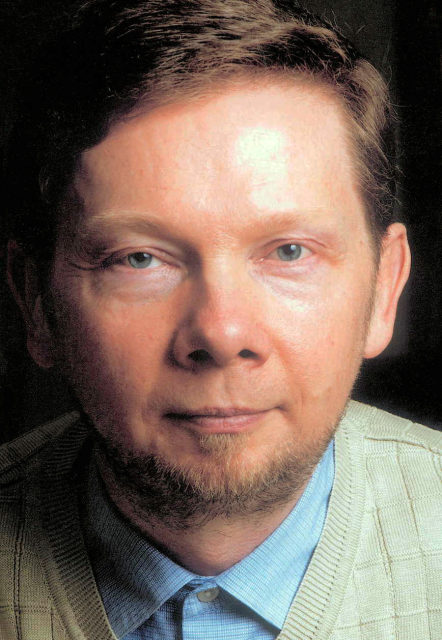
Eckhart Tolle
Eckhart Tolle
Nov 16, 2026
読了 約6分

出典:Eckhart Tolle

視聴 · 7

The Buddha's core teaching is often misread as pessimistic. "Dukkha is wherever you go, whatever you do," the Buddha said. The word dukkha—usually translated as suffering, but more precisely meaning misery, unsatisfactoriness, or simple unhappiness—awaits you sooner or later, and usually sooner. For those encountering this teaching without its full context, it can seem like a doctrine of cosmic futility. But the Buddha, Eckhart Tolle explains, did not stop at diagnosis. He showed the cure. His actual teaching, as Tolle understands it, was always dual: "I teach suffering and the end of suffering."

This distinction reshapes everything. The Buddha was not saying the world is fundamentally broken or that enlightenment requires you to escape into denial. Rather, he mapped out a path in which suffering arises through a specific mechanism—unconscious, egoic living on what Tolle calls the horizontal dimension—and can be transcended by accessing something deeper.

読む · 5セクション

What the Horizontal Dimension Actually Is

When Tolle speaks of the horizontal dimension, he is describing the realm of surface experience: your thoughts, your circumstances, your personal identity, the events that unfold in time. It is the domain of doing, acquiring, and becoming. On this level, challenges are inevitable. Even if you apply positive thinking—which Tolle affirms as genuinely useful for improving the texture of daily life—difficulties, obstacles, and setbacks will still arrive "periodically, big and small." This is not a failure of technique or willpower. It is the nature of the horizontal plane itself.

The error, Tolle emphasizes, is not that difficulties come. The error is the belief that they were not supposed to come. When we operate solely on the horizontal dimension, we build an unconscious expectation that life should be a steady stream of comfort and favorable outcomes. When reality contradicts this, we suffer not only from the actual challenge but from the shock of its contradiction to our imagined world. We suffer twice: once from what happens, and once from the story we tell ourselves about what should happen.

The Vertical Dimension and the Deep I

The antidote is not to change the horizontal dimension—though it will naturally shift as your consciousness shifts—but to gain access to what Tolle calls the vertical dimension, or the "deep I" within you. This is not a new identity to acquire or a belief system to adopt. It is a dimension of your being that exists underneath the persona, the ego, the narrative self. From this depth, something emerges that Tolle describes as power, though not power in the conventional sense of control or force. This power transcends who you are as a person.

At this point, Tolle introduces the word he uses sparingly: God. He is hesitant about it, noting that the moment the word enters language, it becomes a mental concept, a thing the mind can grasp and label—which immediately diminishes what it refers to. But the three-letter word points to something real: you are ultimately not an autonomous entity, isolated and self-sufficient. You are connected to the source of all life. That connection is not theoretical or aspirational. It is a lived reality accessible through the vertical dimension.

How Suffering Becomes Greatly Diminished and Disappears

When you have access to this depth dimension, the suffering that felt inescapable on the horizontal level becomes greatly diminished and can even disappear entirely. This does not happen because external circumstances improve, though they sometimes do. It happens because your relationship to what happens has fundamentally changed. The challenge still arrives—the financial pressure, the illness, the loss, the disappointment—but it no longer hooks into your sense of self. It no longer carries the existential weight of personal catastrophe.

This is crucial: Tolle is not promising that the horizontal dimension will stop presenting obstacles. He is saying that obstacles stop defining you. Whatever happens on the surface "is no longer that problematic" when you have anchored yourself in the vertical. Yes, the horizontal dimension will always challenge you. But the challenge no longer feels like a threat to your existence, because your existence is no longer confined to the person-self operating on that surface.

The power that emanates from the deep I transcends your autonomy as a human being. It is not yours to wield; rather, you become a channel for it. This is why positive thinking, though valuable, has limits. Positive thinking works on the horizontal plane and genuinely improves life there. But it still operates within the realm of the person-self, trying to manipulate circumstances toward your preference. The vertical dimension operates from a completely different order.

The Erroneous Belief at the Heart of Modern Suffering

Tolle names the fundamental misunderstanding that props up much of modern suffering: the belief that the world is here to make you happy. This belief is seductive because it feels true in moments of pleasure and achievement. But it inverts the relationship between self and world. The world is not a machine designed for your gratification. The world simply is—indifferent, arising according to laws and forces vastly larger than individual preference. When you unconsciously adopt the expectation that it should center on your happiness, you guarantee chronic disappointment.

This is not cynicism or defeatism. It is realism followed by transcendence. The Buddha's teaching acknowledges that suffering is woven into the fabric of the horizontal dimension. But it also shows that you are not confined to that dimension. You have access to a vertical depth in which the grip of surface-level pain loosens and eventually dissolves, not because the surface changes, but because you have relocated your sense of self to a place from which the surface no longer appears as the whole of reality.

Where to go from here

The practical application of this teaching is not to become passive or to spiritually bypass real difficulties. Tolle explicitly endorses positive thinking and the effort to improve your life on the horizontal dimension. But it means letting go of the unconscious contract with reality that says discomfort should not exist. It means beginning to notice, through presence and awareness, the moments in which you are operating from the deep I rather than from the ego. It means recognizing that every setback, every frustration, every encounter with dukkha is an invitation to go deeper rather than a proof that something has gone wrong. The vertical dimension is not a distant goal. It is here, accessible now, beneath the constant noise of the person-self. That is the teaching the Buddha showed and that Tolle restates: suffering is real, but so is the transcendence of suffering. Both are always available.

コメント

会話を読み込み中…

Transcript

[0:00] I teach suffering and the end of

[0:03] suffering,

[0:04] which means I show you how suffering

[0:08] arises through your

[0:11] unconscious egoic living

[0:14] on the horizontal dimension, and I show

[0:16] you how you can go deeper

[0:19] so that

[0:21] the suffering that is

[0:23] that is inevitable on the horizontal

[0:26] dimension

[0:28] at first

[0:29] [clears throat] becomes greatly

[0:30] diminished

[0:32] and then even disappears.

[0:37] [bell]

[0:41] Dukkha is wherever you go, whatever you

[0:44] do, said the Buddha, [clears throat]

[0:45] you'll encounter dukkha. Dukkha is

[0:48] translated usually as suffering, but

[0:51] other possible translations are

[0:53] misery, unsatisfactoriness,

[0:56] or simple

[0:58] simple unhappiness.

[1:00] So

[1:02] so wherever you go, whatever you do,

[1:04] sooner or later, and usually sooner,

[1:06] you will encounter this frustration,

[1:08] this

[1:10] Why?

[1:12] Now this if you only look at that

[1:13] message of the Buddha, it seems well the

[1:15] Buddha's

[1:16] teaching is very negative. No, because

[1:20] he also showed something else.

[1:22] He showed how to transcend that,

[1:25] and therefore he also said this is

[1:28] literally I'm convinced he said that he

[1:31] said I teach suffering and the end of

[1:34] suffering,

[1:35] which means I show you how suffering

[1:39] arises through your

[1:42] unconscious egoic living

[1:45] on the horizontal dimension, and I show

[1:48] you how you can go deeper

[1:51] so that

[1:52] the suffering that is

[1:54] that is inevitable on the horizontal

[1:57] dimension

[1:59] at first

[2:00] become [clears throat] becomes greatly

[2:02] diminished

[2:03] and then even disappears.

[2:07] How does it become diminished and

[2:09] disappear? Because you have access

[2:14] to the

[2:16] vertical the deep eye within you.

[2:19] And that is the power that emanates from

[2:22] there transcends who or what you are as

[2:24] a person.

[2:25] It transcends

[2:27] uh

[2:29] who who

[2:31] who

[2:32] your autonomy as a human being you're

[2:34] not an autonomous entity ultimately you

[2:37] are connected

[2:40] to the source of all life which there's

[2:43] a three letter word that sometimes used

[2:46] to describe it.

[2:50] I don't use it very often because it

[2:52] immediately makes into mental concept.

[2:55] But the three letter word obviously is

[2:57] God.

[2:58] So you're connected to the source

[3:02] of all life in that depth dimension.

[3:05] And then whatever happens on the

[3:07] horizontal

[3:09] is no longer that problematic.

[3:12] Yes,

[3:14] the horizontal dimension will always

[3:16] challenge you.

[3:18] Even if you practice

[3:20] positive thinking to make your life

[3:22] better on the horizontal dimension which

[3:24] is a good thing,

[3:26] positive thinking will improve your

[3:28] life.

[3:30] But

[3:31] even then you will encounter challenges

[3:34] periodically big and small.

[3:37] In other words difficulties, obstacles

[3:40] on your path, things going wrong so to

[3:43] speak. So you that is inevitable the

[3:46] world

[3:49] it is

[3:50] erroneous an erroneous belief to to

[3:53] think that the world is here to make you

[3:56] happy.

Eckhart Tolle

Eckhart Tolle

アーティスト

German-born spiritual teacher whose 1997 book The Power of Now became one of the most widely read spiritual works of the 21st century. After a profound transformation at 29 — moving from suicidal depression into deep stillness — he spent years sitting on park benches in a state of "uninterrupted bliss" before beginning to teach. His pointing is invariably toward presence, the dissolution of the egoic mind, and the awakening of consciousness in the now.

プロフィールを見る
トピックを見る
SufferingConsciousnessEgoVertical dimensionTranscendence
よくある質問

よくある質問

The Buddha taught that dukkha—suffering, misery, or unsatisfactoriness—is unavoidable on the horizontal dimension of life (the realm of circumstances, thoughts, and time). This is not pessimism but realism. However, the Buddha also showed how to transcend it by accessing a deeper vertical dimension within consciousness where suffering loses its grip.

The horizontal dimension is the realm of surface experience—your thoughts, circumstances, personal identity, and events unfolding in time. The vertical dimension is the deep inner dimension of your being, what Tolle calls the deep I, connected to the source of all life. From this depth, the challenges of the horizontal plane no longer feel as problematic.

Positive thinking is valuable and genuinely improves life on the horizontal dimension. However, it operates within the realm of the person-self and circumstance. Even with positive thinking, challenges and difficulties will still arrive periodically. True transcendence of suffering requires access to the vertical dimension, not just improvement on the surface.

This belief inverts the actual relationship between self and world. The world is not designed for your gratification; it simply is. When you unconsciously expect it to center on your happiness, you guarantee chronic disappointment and suffering when reality fails to meet that expectation.

Suffering diminishes not because the horizontal dimension improves, but because your sense of self relocates to the vertical dimension—the deep I connected to the source of all life. From this depth, challenges still arise, but they no longer define you or carry existential weight. The suffering disappears because your relationship to what happens has fundamentally changed.

Tolle uses the word God to describe this connection, though hesitantly, because words make it into a mental concept. The point is that you are ultimately not an autonomous entity isolated unto yourself. Through the vertical dimension, you are connected to something vast and intelligent that transcends your individual person-self.

It is acceptance followed by transcendence. The teaching does not ask you to deny difficulties or spiritually bypass real challenges. Rather, it asks you to stop believing difficulties shouldn't exist, and to access a depth of consciousness from which those difficulties no longer dominate your sense of self or reality.

こちらもおすすめ

すべて表示
Consciousness in Cycles: Why Regression Awakens Us
Inspire

Consciousness in Cycles: Why Regression Awakens Us

Humanity moves through cycles of growth and regression, not linear progress. In dark times, individual consciousness becomes the stabilizing…

7 min read
When Your Life Feels Like a Problem to Solve
Inspire

When Your Life Feels Like a Problem to Solve

Eckhart Tolle reveals why identifying with your problems keeps you trapped—and how shifting from doing to being dissolves suffering at its r…

8 min read
Kirtan as Sacred Thirst: A Closing Ceremony with Krishna Das
Inspire

Kirtan as Sacred Thirst: A Closing Ceremony with Krishna Das

Krishna Das closes NYC's annual kirtan weekend with a final ceremony of devotional chanting, blending musical innovation with timeless Hindu…

6 min read
Direct Recognition of Pure Being Beyond Mind
Inspire

Direct Recognition of Pure Being Beyond Mind

A guide to recognizing the unchanging witness beneath thought. This satsang shows how to find the stability that observes all mental activit…

9 min read
すべて見るこちらもおすすめ→

旅をつづける

BrightStarのディレクトリから、さらなる智慧と集いを。

もっと記事を読む

教え、インタビュー、ガイドのライブラリ全体をご覧ください。

すべての記事に戻る →

講師とアーティスト

コンシャスな世界の系譜、音楽家、導き手を探しましょう。

アーティストを探す →

イベントを見つける

キルタン、リトリート、サウンドバス、ブレスワーク、フェスティバル — まもなく開かれます。

イベントを見る →