BrightStar
ブログマイチケット
ブログマイチケット
Saved events
ヘルプ・お問い合わせ新規登録ログイン
イベント
  • すべてのイベントを見る
  • 探求者向け
  • ヨガ
  • 瞑想
  • ブレスワーク
  • 気功
  • 聖なる音楽
  • ワールドミュージック
  • メディスンミュージック
  • サウンドヒーリング
  • エクスタティックダンス
  • セレモニー
  • プラントメディスン
  • エネルギーヒーリング
  • サットサンと智慧
  • タントラ
  • リトリート
  • すべてのカテゴリ →
目的地
  • Bali
  • Sedona
  • Los Angeles
  • Costa Rica
  • Tulum
  • Byron Bay
  • San Francisco
  • Austin
  • New York
  • San Diego
  • Seattle
  • Portland
  • Miami
  • London
  • Maui
  • Boulder
  • Oakland
  • すべての都市 →
プラットフォーム
  • 主催者向け
  • ムーブメントに参加
  • Sell Globally
  • クリエイター向け
  • チーム向け
  • ライター向け
  • 講師向け
  • キルタンアーティスト向け
  • スタジオ向け
  • フェスティバル向け
  • リトリートセンター向け
  • 非営利団体向け
  • ブランドアンバサダー
  • 無料チケット販売
  • Elevate
  • Amplify
  • エコシステム
機能

チケット販売と購入

  • Ticket categories
  • Assigned seating
  • Custom questions
  • Coupon codes
  • Smart pricing
  • Ticket sharing
  • Waitlist
  • Flexible refunds
  • Digital waivers
  • Tip jar
  • Donations and sliding scale
  • Embed widget
  • Mindful checkout
  • Recurring events
  • Private sessions
  • Online courses
  • Summits
  • Rooms and stays
  • Ticket scanner

マーケティングと成長

  • Abandoned cart recovery
  • Visitor recovery
  • Upsells and add-ons
  • Affiliate engine
  • Upsell affiliate network
  • Brand ambassador
  • Meta retargeting
  • Verified buyer network
  • Outbound email marketing
  • Email sequences
  • SMS and WhatsApp
  • Event upsell network
  • Direct mail campaigns
  • SEO engine
  • Syndication
  • Event sharing
  • Custom event pages
  • Artist profiles
  • Link in bio
  • Event blog
  • Blog newsletter

決済

  • Payments, powered by Stripe
  • Buy now, pay later
  • Apple Wallet
  • Multi currency

データと運営

  • Team access
  • Message center
  • Reports
  • Analytics reporting
  • Performance reporting
  • Customer data
  • Integrations
  • Switch from another platform

AI

  • Assistant
  • AI FAQ assistant
  • すべての機能 →
会社
  • 概要
  • よくある質問
  • お問い合わせ
  • ブログ
  • 用語集
  • Guides
  • インスピレーション
  • ヘルプセンター
  • APIドキュメント
  • ブランドアセット
  • プレス
  • 利用規約
  • プライバシーポリシー

イベント

  • すべてのイベントを見る
  • 探求者向け
  • ヨガ
  • 瞑想
  • ブレスワーク
  • 気功
  • 聖なる音楽
  • ワールドミュージック

目的地

  • Bali
  • Sedona
  • Los Angeles
  • Costa Rica
  • Tulum
  • Byron Bay
  • San Francisco
  • Austin

プラットフォーム

  • 主催者向け
  • ムーブメントに参加
  • Sell Globally
  • クリエイター向け
  • チーム向け
  • ライター向け
  • 講師向け
  • キルタンアーティスト向け

機能

  • コミュニティネットワーク
  • カート放棄リカバリー
  • チケットカテゴリ
  • 定期イベント
  • 座席指定
  • アフィリエイトシステム
  • ウェイトリスト / 通知
  • すべての機能 →

会社

  • 概要
  • よくある質問
  • お問い合わせ
  • ブログ
  • 用語集
  • Guides
  • 利用規約
  • プライバシーポリシー
続きを読む

イベント

  • メディスンミュージック
  • サウンドヒーリング
  • エクスタティックダンス
  • セレモニー
  • プラントメディスン
  • エネルギーヒーリング
  • サットサンと智慧
  • タントラ
  • リトリート
  • すべてのカテゴリ →

目的地

  • New York
  • San Diego
  • Seattle
  • Portland
  • Miami
  • London
  • Maui
  • Boulder
  • Oakland
  • すべての都市 →

プラットフォーム

  • スタジオ向け
  • フェスティバル向け
  • リトリートセンター向け
  • 非営利団体向け
  • ブランドアンバサダー
  • 無料チケット販売
  • Elevate
  • Amplify
  • エコシステム

会社

  • インスピレーション
  • ヘルプセンター
  • APIドキュメント
  • ブランドアセット
  • プレス

チケット販売と購入

  • Ticket categories
  • Assigned seating
  • Custom questions
  • Coupon codes
  • Smart pricing
  • Ticket sharing
  • Waitlist
  • Flexible refunds
  • Digital waivers
  • Tip jar
  • Donations and sliding scale
  • Embed widget
  • Mindful checkout
  • Recurring events
  • Private sessions
  • Online courses
  • Summits
  • Rooms and stays
  • Ticket scanner

マーケティングと成長

  • Abandoned cart recovery
  • Visitor recovery
  • Upsells and add-ons
  • Affiliate engine
  • Upsell affiliate network
  • Brand ambassador
  • Meta retargeting
  • Verified buyer network
  • Outbound email marketing
  • Email sequences
  • SMS and WhatsApp
  • Event upsell network
  • Direct mail campaigns
  • SEO engine
  • Syndication
  • Event sharing
  • Custom event pages
  • Artist profiles
  • Link in bio
  • Event blog
  • Blog newsletter

決済

  • Payments, powered by Stripe
  • Buy now, pay later
  • Apple Wallet
  • Multi currency

データと運営

  • Team access
  • Message center
  • Reports
  • Analytics reporting
  • Performance reporting
  • Customer data
  • Integrations
  • Switch from another platform

AI

  • Assistant
  • AI FAQ assistant
アプリを入手
App StoreからApp StoreGoogle Playで手に入れようGoogle Play
© 2026 BrightStar. 全著作権所有. BrightStar Selection · 写真クレジット · 変更履歴 ·
Inspiration

Limits of Perception: How Patterns Shape Reality

Alan Watts
Alan Watts
Mar 30, 2026
読了 約6分

出典:Be Here Now Network

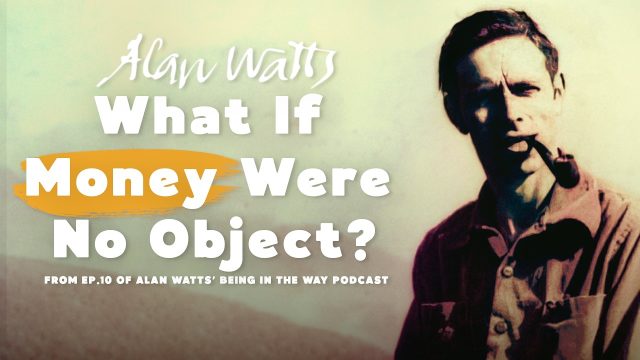
This excerpt from Being in the Way with Alan Watts explores how human perception operates within the constraints of pattern-recognition, how we impose cause-and-effect narratives onto reality, and the illusions that emerge when we mistake our mental constructs for objective truth. The talk points toward a non-dual understanding where the separation between observer and observed, subject and object, is revealed as a perceptual artifact rather than fundamental reality.

読む · 6セクション

What Are the Limits of Perception?

Perception is not a neutral window onto reality—it is an active, filtering process. The human mind evolved to recognize patterns as a survival mechanism: to spot the predator in the grass, the food source, the threat. This pattern-recognition capacity is extraordinarily useful for navigating the material world, but it also imposes a structure on experience that may not match reality itself.

When we perceive, we are not simply receiving data; we are interpreting it through a grid of concepts, categories, and learned associations. This means that what we call "reality" is already filtered through our perceptual apparatus before it reaches consciousness. The limits of perception, then, are the limits of what we can represent in thought—and thought is inherently a system of symbols and patterns, not direct reality.

How Do Patterns Shape Our Understanding of Reality?

Patterns are the language of the mind. The mind cannot hold infinity, chaos, or pure formlessness; it must carve reality into recognizable chunks—objects, events, persons, causes. We see a pattern (a face, a tree, a sequence of events) and instantly classify it, compare it to memory, and make predictions based on it. This is how we function in daily life.

But patterns also distort. When we impose a pattern on something that may not fit that pattern, we create a kind of cognitive illusion. For instance, we see life as a narrative of cause and effect—"this happened because of that"—even though the actual relationships between phenomena may be far more complex, simultaneous, or even non-causal at a deeper level. The pattern of causality, while useful, may not reflect the actual nature of reality as it is.

In a pattern-based consciousness, we also tend to separate things into subject and object, observer and observed. We believe there is "me" perceiving "reality out there." But this separation itself is a pattern imposed by the mind for practical purposes—it is not necessarily true at the fundamental level of existence. What appears as two separate things (perceiver and perceived) may be expressions of a single, undivided whole.

What Is the Relationship Between Cause and Effect and Perception?

Cause-and-effect thinking is perhaps the most pervasive pattern in human consciousness. We are taught from childhood to see the world as a chain of causation: if A happens, then B follows. This linear, sequential understanding of reality is incredibly useful for engineering, planning, and prediction. It is the foundation of science as we typically practice it.

However, cause-and-effect may be a mental overlay rather than a fundamental feature of reality. In quantum physics, at the subatomic level, the relationships between phenomena are not strictly causal—they are better described as correlations or entanglements. At the level of consciousness and systems, causality becomes even more elusive: everything influences everything else in networks so complex that the notion of discrete cause and effect breaks down.

Moreover, cause-and-effect thinking inherently creates a sense of separation. If A causes B, then A and B are separate entities in a temporal sequence. But what if, at a deeper level, A and B are not separate at all? What if they are two aspects of a single unified process? Then the cause-and-effect narrative would be a pattern we impose for convenience, not a description of how things actually are.

What Does It Mean That Reality and Illusion Are Connected?

The word "illusion" in spiritual contexts does not mean that the world is fake or that nothing matters. Rather, it means that our habitual way of perceiving and conceptualizing reality does not match reality's actual nature. We mistake the map for the territory, the symbol for the thing itself.

The illusion is subtle because the pattern-recognition mind is so efficient. It creates a consistent, coherent experience. You wake up, you have thoughts, you perceive objects and people, events seem to happen in order, cause leads to effect. The pattern holds together so well that we rarely question it. But the coherence of the pattern does not prove its correspondence to reality.

Art and perception are closely related in this regard. Art can short-circuit our automatic pattern-recognition by presenting familiar elements in unfamiliar arrangements, or by highlighting the very process of perception itself. In doing so, art can suggest that what we take as reality is more like a construction, a painting, a play of consciousness—not a fixed, objective given.

How Does Oneness Relate to the Limits of Perception?

If perception is pattern-based and patterns require separation—the separation of figure from ground, subject from object, cause from effect—then perception itself obscures non-dual reality. Oneness is not something that can be perceived in the normal way because perception, by its nature, divides. To perceive something is to objectify it, to place it "out there," separate from the perceiver.

This does not mean oneness is inaccessible. Rather, it suggests that access to it requires a shift in consciousness beyond the perceptual-conceptual mind. Meditation, contemplative practice, and certain forms of direct inquiry can quieten the pattern-generating mind and allow a more immediate, undivided awareness to emerge. In such states, the boundaries between self and other, subject and object, dissolve—not because the world changes, but because the filtering, separating activity of perception temporarily stills.

From the perspective of unity, all the patterns and separations we perceive are valid and useful within their context, but they are not the final truth. They are like waves on the ocean: each wave has its form and pattern, but all are expressions of water. The limits of perception are, in a sense, the limits of the wave's ability to perceive itself as separate from the ocean.

Where to go from here

Understanding the limits of perception is not meant to lead to nihilism or the abandonment of thought and pattern-recognition. Rather, it is an invitation to hold our patterns more lightly, to recognize them as useful tools rather than ultimate truths. In daily life, you can practice noticing the patterns your mind imposes: the cause-and-effect stories you tell about your experience, the way you separate yourself from others and the world. Simply noticing these patterns without judgment can loosen their grip.

Further exploration might include studying non-dual philosophies (Advaita Vedanta, Mahayana Buddhism, Kashmir Shaivism), investigating the nature of perception in phenomenology, or deepening meditation and contemplative practice. The goal is not to escape perception or to deny its usefulness, but to wake up to its constructed nature while still engaging it skillfully.

コメント

会話を読み込み中…

この記事のアーティスト

Alan Watts

speaker and lecturer

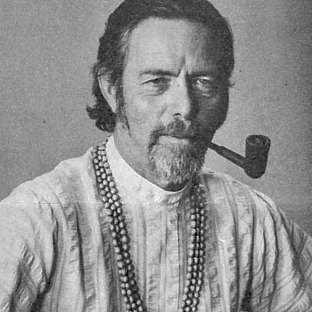
Speaker and lecturer Alan Watts, whose hundreds of hours of talks recorded from 1960 to 1973 on vinyl, tape reels, and cassettes continue to be shared today through the Alan Watts Org.

プロフィールを見る
トピックを見る
Perception realityPatterns consciousnessCause effectOnenessNon duality
よくある質問

よくある質問

The mind evolved to recognize patterns for survival, but this same mechanism filters all experience through concepts and categories. Patterns are useful for navigation and prediction, but they also impose a structure on reality that may not match how things actually are, creating a kind of cognitive illusion where we mistake the mental map for the territory.

Cause-and-effect is a useful pattern the mind imposes for understanding and predicting events, but at deeper levels of reality—quantum physics, complex systems, consciousness—strict causality breaks down. What appears as A causing B may be two aspects of a unified, interconnected process, making our linear cause-and-effect narratives a convenience rather than fundamental truth.

This does not mean the world is fake, but that our habitual perception of reality—as divided into separate objects, people, and events in causal sequence—does not match reality's actual nature. The illusion is that the pattern-generated experience we have is the final truth, when it is actually a useful but limited representation.

Perception inherently divides reality into subject and object, self and other. Oneness or non-duality transcends this separation and cannot be fully perceived in the normal sense. However, through practices like meditation that quiet the pattern-generating mind, a more direct, undivided awareness can arise—not changing the world, but shifting consciousness to see beyond the illusion of separation.

Yes. Understanding the limits of perception does not require abandoning thought or pattern-recognition. Rather, it means holding patterns more lightly, recognizing them as useful tools for functioning in daily life while not confusing them with ultimate reality. This allows for both skillful engagement and spiritual insight.

Art can disrupt automatic pattern-recognition by presenting familiar elements in unexpected ways, making visible the very process of perception itself. In doing so, art suggests that what we take as solid reality is more like a construction—a play of consciousness—and opens the possibility of seeing beyond habitual perceptual patterns.

こちらもおすすめ

すべて表示
Why Predictability Is an Illusion: Embracing Uncertainty
Inspire

Why Predictability Is an Illusion: Embracing Uncertainty

Predictability is a fundamental illusion that constrains how we live. Exploring uncertainty and the nature of control reveals deeper wisdom …

8 min read
Alan Watts' Veil of Thoughts: Money, Work & Civilization
Inspire

Alan Watts' Veil of Thoughts: Money, Work & Civilization

Alan Watts examines how abstract thinking obscures our relationship with money and work, and how civilization perpetuates illusions that dis…

7 min read
Sacred Feminine Power: Chanting Devi Beyond the Mat
Inspire

Sacred Feminine Power: Chanting Devi Beyond the Mat

An in-person gathering in Bengaluru merges ancient devotional chanting with modern psychotherapy to explore how the Goddess archetype illumi…

8 min read
Work Isn't Your Spiritual Problem—Attachment Is
Inspire

Work Isn't Your Spiritual Problem—Attachment Is

The Bhagavad Gita teaches that career and ambition aren't obstacles to spirituality—attachment, ego, and ownership are what bind us.…

2 min read
すべて見るこちらもおすすめ→

旅をつづける

BrightStarのディレクトリから、さらなる智慧と集いを。

もっと記事を読む

教え、インタビュー、ガイドのライブラリ全体をご覧ください。

すべての記事に戻る →

講師とアーティスト

コンシャスな世界の系譜、音楽家、導き手を探しましょう。

アーティストを探す →

イベントを見つける

キルタン、リトリート、サウンドバス、ブレスワーク、フェスティバル — まもなく開かれます。

イベントを見る →