BrightStar
ブログマイチケット
ブログマイチケット
Saved events
ヘルプ・お問い合わせ新規登録ログイン
イベント
  • すべてのイベントを見る
  • ヨガ
  • 瞑想
  • ブレスワーク
  • 気功
  • 聖なる音楽
  • ワールドミュージック
  • メディスンミュージック
  • サウンドヒーリング
  • エクスタティックダンス
  • セレモニー
  • プラントメディスン
  • エネルギーヒーリング
  • サットサンと智慧
  • タントラ
  • リトリート
  • すべてのカテゴリ →
目的地
  • Bali
  • Sedona
  • Los Angeles
  • Costa Rica
  • Tulum
  • Byron Bay
  • San Francisco
  • Austin
  • New York
  • San Diego
  • Denver
  • Seattle
  • Portland
  • Miami
  • London
  • Maui
  • Boulder
  • すべての都市 →
プラットフォーム
  • 主催者向け
  • ムーブメントに参加
  • Sell Globally
  • クリエイター向け
  • チーム向け
  • ライター向け
  • 講師向け
  • キルタンアーティスト向け
  • スタジオ向け
  • フェスティバル向け
  • リトリートセンター向け
  • 非営利団体向け
  • ブランドアンバサダー
  • 無料チケット販売
  • Pro
  • Amplify
  • エコシステム
機能

チケット販売と購入

  • Ticket categories
  • Assigned seating
  • Custom questions
  • Coupon codes
  • Smart pricing
  • Ticket sharing
  • Waitlist
  • Flexible refunds
  • Digital waivers
  • Tip jar
  • Donations and sliding scale
  • Embed widget
  • Mindful checkout
  • Recurring events
  • Private sessions
  • Online courses
  • Summits
  • Rooms and stays
  • Ticket scanner

マーケティングと成長

  • Abandoned cart recovery
  • Visitor recovery
  • Upsells and add-ons
  • Affiliate engine
  • Upsell affiliate network
  • Brand ambassador
  • Meta retargeting
  • Verified buyer network
  • Outbound email marketing
  • Email sequences
  • SMS and WhatsApp
  • Event upsell network
  • Direct mail campaigns
  • SEO engine
  • Syndication
  • Event sharing
  • Custom event pages
  • Artist profiles
  • Link in bio
  • Event blog
  • Blog newsletter

決済

  • Payments, powered by Stripe
  • Buy now, pay later
  • Apple Wallet
  • Multi currency

データと運営

  • Team access
  • Message center
  • Reports
  • Analytics reporting
  • Performance reporting
  • Customer data
  • Integrations
  • Switch from another platform

AI

  • Assistant
  • AI FAQ assistant
  • すべての機能 →
会社
  • 概要
  • よくある質問
  • お問い合わせ
  • ブログ
  • 用語集
  • Guides
  • インスピレーション
  • ヘルプセンター
  • APIドキュメント
  • ブランドアセット
  • プレス
  • 利用規約
  • プライバシーポリシー

イベント

  • すべてのイベントを見る
  • ヨガ
  • 瞑想
  • ブレスワーク
  • 気功
  • 聖なる音楽
  • ワールドミュージック
  • メディスンミュージック

目的地

  • Bali
  • Sedona
  • Los Angeles
  • Costa Rica
  • Tulum
  • Byron Bay
  • San Francisco
  • Austin

プラットフォーム

  • 主催者向け
  • ムーブメントに参加
  • Sell Globally
  • クリエイター向け
  • チーム向け
  • ライター向け
  • 講師向け
  • キルタンアーティスト向け

機能

  • コミュニティネットワーク
  • カート放棄リカバリー
  • チケットカテゴリ
  • 定期イベント
  • 座席指定
  • アフィリエイトシステム
  • ウェイトリスト / 通知
  • すべての機能 →

会社

  • 概要
  • よくある質問
  • お問い合わせ
  • ブログ
  • 用語集
  • Guides
  • 利用規約
  • プライバシーポリシー
続きを読む

イベント

  • サウンドヒーリング
  • エクスタティックダンス
  • セレモニー
  • プラントメディスン
  • エネルギーヒーリング
  • サットサンと智慧
  • タントラ
  • リトリート
  • すべてのカテゴリ →

目的地

  • New York
  • San Diego
  • Denver
  • Seattle
  • Portland
  • Miami
  • London
  • Maui
  • Boulder
  • すべての都市 →

プラットフォーム

  • スタジオ向け
  • フェスティバル向け
  • リトリートセンター向け
  • 非営利団体向け
  • ブランドアンバサダー
  • 無料チケット販売
  • Pro
  • Amplify
  • エコシステム

会社

  • インスピレーション
  • ヘルプセンター
  • APIドキュメント
  • ブランドアセット
  • プレス

チケット販売と購入

  • Ticket categories
  • Assigned seating
  • Custom questions
  • Coupon codes
  • Smart pricing
  • Ticket sharing
  • Waitlist
  • Flexible refunds
  • Digital waivers
  • Tip jar
  • Donations and sliding scale
  • Embed widget
  • Mindful checkout
  • Recurring events
  • Private sessions
  • Online courses
  • Summits
  • Rooms and stays
  • Ticket scanner

マーケティングと成長

  • Abandoned cart recovery
  • Visitor recovery
  • Upsells and add-ons
  • Affiliate engine
  • Upsell affiliate network
  • Brand ambassador
  • Meta retargeting
  • Verified buyer network
  • Outbound email marketing
  • Email sequences
  • SMS and WhatsApp
  • Event upsell network
  • Direct mail campaigns
  • SEO engine
  • Syndication
  • Event sharing
  • Custom event pages
  • Artist profiles
  • Link in bio
  • Event blog
  • Blog newsletter

決済

  • Payments, powered by Stripe
  • Buy now, pay later
  • Apple Wallet
  • Multi currency

データと運営

  • Team access
  • Message center
  • Reports
  • Analytics reporting
  • Performance reporting
  • Customer data
  • Integrations
  • Switch from another platform

AI

  • Assistant
  • AI FAQ assistant
アプリを入手
App StoreからApp StoreGoogle Playで手に入れようGoogle Play
© 2026 BrightStar. 全著作権所有. BrightStar Selection · 写真クレジット · 変更履歴 ·
Inspiration

How Inner Peace Prevents War: A Dharma Response

BB
BDG: Buddhistdoor Global
Nov 13, 2026
読了 約6分

出典:BDG: Buddhistdoor Global

視聴 · 6

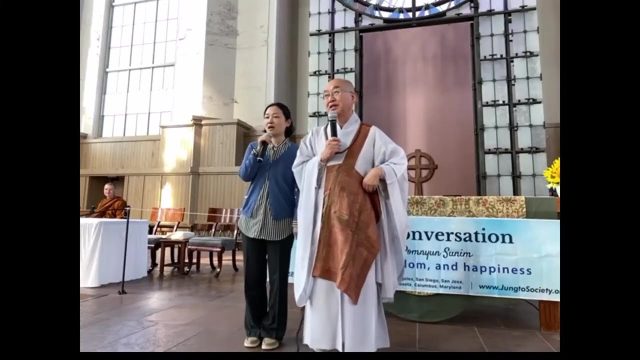
When a Chinese American expresses deep anxiety about U.S.–China tensions spiraling toward war, the response from a Korean Buddhist teacher is not what the worried questioner might expect. There is no geopolitical roadmap, no list of policy interventions, no appeal to diplomatic channels. Instead, the teaching begins inward: the mind itself is the terrain where war is either prevented or enabled. This reframing—from external crisis management to internal cultivation—is the spine of what Ven. Pomnyun Sunim, a Seon master and humanitarian activist, offers in a direct dharma exchange about preventing global conflict.

読む · 6セクション

The Paradox of Peace: Why Inner Stability Comes First

Sunim's opening instruction is unambiguous: "First and foremost, in the midst of this situation, we must first cultivate peace within our own minds." This is not spiritual bypassing—the teaching does not minimize the real danger of war or dismiss geopolitical complexity. Rather, it identifies a psychological trap. If we cannot maintain peace within ourselves, Sunim warns, "it is inevitable that we become resentful toward either country. This lack of peace could even drive us to act violently in the name of peace." The irony is sharp: anxiety about conflict can itself become the seed of conflict, manifesting as blame, prejudice, or reactive aggression directed at one nation or another.

This insight draws on classical Buddhist analysis of how afflicted mental states generate destructive action. The teaching is practical: before we can engage wisely in any peace movement, we must understand our own mind clearly. That clarity requires us to "develop an accurate understanding of what is truly happening in the world." Accuracy—not ideology, not fear, not tribal loyalty—is the ground on which ethical action rests.

When the Top Powers Compete: History as Instruction

Sunim offers historical perspective to dispel the sense that war between superpowers is inevitable. He traces the pattern across human history: "If we look back at the history of humankind, the top two countries or groups often end up in conflict or competition. In most cases, this has led to war, but not always." The critical word is "not always." The Soviet Union and the United States emerged as rivals after World War II, locked in ideological and military competition for decades. Yet when the Soviet system collapsed, war did not follow. The rivalry dissolved without the catastrophic military clash that many feared.

This precedent is neither guarantee nor prediction, but it opens a space of possibility. The current U.S.–China situation, Sunim acknowledges, "is arguably more tense and less amicable than that rivalry." The two nations are genuine competitors. Yet they also "share significant commonalities and areas of mutual interest." Sunim's assessment is sobering but not deterministic: "In my opinion, there is a 50:50 chance that this situation could result in war or simply continue as a competition." Conflict is not written into the structure of great-power relations; outcomes depend on human choice.

The Model: How Anti-War Movements Stop Wars

Sunim turns to the war in Ukraine as a concrete example of how ordinary people can intervene at scale. The mechanism is clear: "The way to stop the war in Ukraine would be for the Russian people to organize anti-war protests within Russia. If a strong anti-war movement gains momentum inside Russia, it could help end the war without any one side being completely defeated." This is not abstract idealism. History shows that wars lose political sustainability when citizens actively withdraw consent. An anti-war movement inside the aggressor nation itself—where the state apparatus is most present and repressive—can erode the will to fight.

Applied to U.S.–China tensions, the logic is parallel: "To resolve the tensions between the U.S. and China, people in both countries, Americans in the U.S. and Chinese citizens in China, need to lead anti-war movements within their nations." For the Chinese American questioner—belonging to neither nation yet connected to both—this poses a particular ethical responsibility and a particular cost.

The Cost of Speaking Up: Why Peace Activism is Costly

Sunim does not hide what speaking against war inside a nation locked in conflict requires. "When two countries are in conflict and competition is severe, having an anti-war or anti-conflict movement within your country might lead to significant criticism or rejection from others within the country." In China, peace advocates risk being branded a "traitor to your country." In the U.S., they face charges of disloyalty. These are not minor social penalties; they cut at identity and belonging.

And yet the teaching does not flinch: "Even knowing these difficulties, we must be proactive and engage in peace movement." The call is to act anyway, not despite the cost but with clear eyes about it. This is courage in the classical sense—not the absence of fear, but action taken in the presence of real danger.

Where Action Meets Anxiety: The Power of Small Acts

Sunim's final teaching cuts through the paralysis that often accompanies large-scale crises. When a person feels dwarfed by geopolitical forces beyond their control, despair can masquerade as realism. Instead, Sunim reframes: "It is more important to take even small actions, no matter how small they may seem, rather than being overly worried or anxious about what might happen." The instruction is not to ignore danger but to distinguish between psychological rumination and effective engagement. Small actions—conversations, organizing, bearing witness, refusing to demonize—are real interventions in the field of consciousness and politics.

This teaching flows from a recognition found throughout Sunim's humanitarian work: that scale and complexity need not paralyze. Jungto Society, which Sunim founded, has built a model of engaged Buddhism rooted in "sharing and simple, sustainable living." The same ethic applies to peace work. You cannot single-handedly prevent war between superpowers. You can cultivate peace in your own mind, speak truthfully within your own nation, and join others in collective witness and resistance. These are the levers available.

Where to go from here

For anyone watching the world spin toward greater geopolitical tension, Sunim's dharma offers a map that is both inward and outward. The teaching invites introspection: Can you maintain equanimity in the face of genuine danger? Can you see clearly, without the distortion of fear or tribal loyalty? And it invites action: Where in your own nation can you add your voice to the case for peace? What conversations can you have? What communities can you join? What understanding can you deepen so that you speak from wisdom rather than anxiety? The Chinese American questioner left the exchange grateful—not because the crisis had been solved, but because the path had been clarified.
コメント

会話を読み込み中…

Transcript

[0:09] (Questioner) Thank you so much for taking my question, Pomnyun Sunim,

[0:12] and I hope you stay safe throughout all your travels.

[0:16] I'm Chinese American.

[0:20] Throughout my life, I've visited China every few years to see my extended family.

[0:27] Over the years, I’ve witnessed

[0:29] the relationship between the two countries deteriorate completely,

[0:36] and it feels painfully clear to me

[0:39] that these two countries are closer to war than they have ever been before.

[0:45] This has been troubling me for a long time because I believe war is always wrong.

[0:51] How is it possible that these two countries,

[0:57] whose leaders initially engaged to generate more wealth,

[1:03] can’t simply sever their relationship,

[1:07] like divorced partners who no longer live together?

[1:11] How can ordinary people support or participate in war

[1:16] when most people around the world would never willingly take another life,

[1:21] let alone in the horrific ways war demands?

[1:26] Finally, what can I do, in my own life, to help prevent war?

[1:31] (Sunim) First and foremost, in the midst of this situation,

[1:41] we must first cultivate peace within our own minds.

[1:46] If we cannot maintain peace within our minds,

[1:55] it is inevitable that we become resentmentful toward either country.

[2:03] This lack of peace could even drive us to act violently in the name of peace.

[2:15] Therefore, the first step is to develop an accurate understanding

[2:25] of what is truly happening in the world.

[2:28] If we look back at the history of humankind,

[2:44] the top two countries or groups often end up in conflict or competition.

[2:57] In most cases, this has led to war,

[3:05] but not always.

[3:13] For example, after the World War II, the Soviet Union and the U.S. were rivals,

[3:26] but the Soviet Union dissolved without war when it collapsed.

[3:38] However, the current situation between the U.S. and China

[3:52] is arguably more tense and less amicable than that rivalry.

[4:03] Even though they are competitors, the U.S. and China share

[4:15] significant commonalities and areas of mutual interest.

[4:19] In my opinion, there is a 50:50 chance that this situation could result in war

[4:37] or simply continue as a competition.

[4:43] Let’s look at the war in Ukraine as an example.

[4:56] The way to stop the war in Ukraine would be for the Russian people

[5:01] to organize anti-war protests within Russia.

[5:06] If a strong anti-war movement gains momentum inside Russia,

[5:24] it could help end the war without any one side being completely defeated.

[5:30] Similarly, to resolve the tensions between the U.S. and China,

[5:51] people in both countries, Americans in the U.S. and Chinese citizens in China,

[5:57] need to lead anti-war movements within their nations.

[6:04] However, when two countries are in conflict and competition is severe,

[6:23] having an anti-war or anti-conflict movement within your country might lead to

[6:30] significant criticism or rejection from others within the country.

[6:38] For example, in China, you could be criticized as a traitor to your country.

[6:53] Likewise, in the U.S., you might face accusations of being disloyal.

[6:58] Even knowing these difficulties, we must be proactive and engage in peace movement.

[7:15] It is more important to take even small actions,

[7:23] no matter how small they may seem,

[7:26] rather than being overly worried or anxious about what might happen.

[7:33] (Questioner) Thank you so much. That helps.

BDG: Buddhistdoor Global

アーティスト

Watch more from BDG: Buddhistdoor Global on YouTube.

トピックを見る
Peace activismDharma teachingGeopolitical conflictInner peaceWar prevention
よくある質問

よくある質問

According to Sunim, if we cannot maintain peace within our minds, we inevitably become resentful toward one nation or another, which can drive us to act violently in the name of peace. Cultivating inner stability allows us to see geopolitical situations clearly, without the distortion of fear or tribal loyalty, and to act from wisdom rather than reaction.

Yes, according to Sunim's analysis. History shows that rival superpowers do not always go to war—the Soviet Union and U.S. were intense rivals but the conflict resolved without military confrontation when the Soviet system collapsed. Sunim assesses current U.S.–China tensions as a 50:50 chance between war and continued competition, meaning outcomes depend on human choice.

Sunim points to anti-war movements within each nation as the most effective lever. Using Ukraine as an example, he explains that strong anti-war protests inside Russia could help end the conflict. Similarly, Americans and Chinese citizens organizing peace movements within their own countries can reduce the momentum toward war.

Sunim acknowledges the real cost of peace activism during severe conflict—in China you may face accusations of betrayal, in the U.S. accusations of disloyalty. His teaching is clear: despite these difficulties, we must engage in peace movements anyway. The call is to act with full awareness of the cost, not to avoid action because of it.

Sunim directly addresses this paralysis: it is more important to take even small actions, no matter how small they seem, than to become consumed by worry or anxiety. Individual actions—conversations, organizing, bearing witness, refusing to demonize—are real interventions that shift the collective field of consciousness and politics.

Sunim distinguishes between psychological rumination and effective engagement. Anxiety that leads only to worry can itself fuel resentment and reactive aggression. True peace work requires cultivating inner clarity first, then taking concrete actions within your own nation and community—conversations, organizing, deepening understanding—from a place of stability rather than fear.

こちらもおすすめ

すべて表示
Letting Go Without Losing Yourself: A Buddhist Teacher's Answer
Inspire

Letting Go Without Losing Yourself: A Buddhist Teacher's Answer

A Korean Buddhist monk reframes the spiritual cliché of "letting go of yourself" through visceral personal experience, showing how suffering…

7 min read
The Great Compassion Dharani: Unlocking Sanskrit's Sacred Mantra
Inspire

The Great Compassion Dharani: Unlocking Sanskrit's Sacred Mantra

Venerable Guan Cheng unpacks 2,500 years of Sanskrit wisdom, revealing why mantras resist translation and how the Great Compassion Dharani c…

9 min read
Medicine Buddha Practice: Feeling Beneath the Thinking
Inspire

Medicine Buddha Practice: Feeling Beneath the Thinking

Lama Rod Owens opens a Monday-night Medicine Buddha session six years into the practice, teaching how to feel an experience instead of think…

10 min read
We Are All Visitors to This Material World: A Gita Reflection
Inspire

We Are All Visitors to This Material World: A Gita Reflection

In a 22-second clip, Radhika Das frames human life as a temporary visit, not a permanent residence. The idea draws on Bhagavad-gītā 8.15 and…

3 min read
すべて見るこちらもおすすめ→

旅をつづける

BrightStarのディレクトリから、さらなる智慧と集いを。

もっと記事を読む

教え、インタビュー、ガイドのライブラリ全体をご覧ください。

すべての記事に戻る →

講師とアーティスト

コンシャスな世界の系譜、音楽家、導き手を探しましょう。

アーティストを探す →

イベントを見つける

キルタン、リトリート、サウンドバス、ブレスワーク、フェスティバル — まもなく開かれます。

イベントを見る →

