BrightStar
ブログマイチケット
ブログマイチケットSaved events
ヘルプ・お問い合わせ新規登録ログイン
イベント
  • すべてのイベントを見る
  • 探求者向け
  • ヨガ
  • 瞑想
  • ブレスワーク
  • 気功
  • 聖なる音楽
  • ワールドミュージック
  • メディスンミュージック
  • サウンドヒーリング
  • エクスタティックダンス
  • セレモニー
  • プラントメディスン
  • エネルギーヒーリング
  • サットサンと智慧
  • タントラ
  • リトリート
  • すべてのカテゴリ →
目的地
  • Bali
  • Sedona
  • Los Angeles
  • Costa Rica
  • Byron Bay
  • San Francisco
  • Austin
  • New York
  • San Diego
  • Seattle
  • Miami
  • London
  • Maui
  • Boulder
  • Oakland
  • Berkeley
  • Hudson Valley
  • すべての都市 →
クリエイター向け
  • 無料でイベントを掲載
  • Join the Movement
  • Why we list
  • Sell Globally
  • クリエイター向け
  • チーム向け
  • ライター向け
  • 講師向け
  • キルタンアーティスト向け
  • スタジオ向け
  • フェスティバル向け
  • リトリートセンター向け
  • 非営利団体向け
  • ブランドアンバサダー
  • 無料チケット販売
  • Elevate
  • Amplify
機能

Ticketing & checkout

  • Ticket categories
  • Assigned seating
  • Custom questions
  • Coupon codes
  • Smart pricing
  • Ticket sharing
  • Waitlist
  • Flexible refunds
  • Digital waivers
  • Tip jar
  • Donations and sliding scale
  • Embed widget
  • Mindful checkout
  • Recurring events
  • Private sessions
  • Online courses
  • Summits
  • Rooms and stays
  • Ticket scanner

Marketing & growth

  • Abandoned cart recovery
  • Visitor recovery
  • Upsells and add-ons
  • Affiliate engine
  • Upsell affiliate network
  • Brand ambassador
  • Meta retargeting
  • Verified buyer network
  • Outbound email marketing
  • Email sequences
  • SMS and WhatsApp
  • Event upsell network
  • Direct mail campaigns
  • SEO engine
  • Syndication
  • Event sharing
  • Custom event pages
  • Artist profiles
  • Link in bio
  • Event blog
  • Blog newsletter

Payments

  • Payments, powered by Stripe
  • Buy now, pay later
  • Apple Wallet
  • Multi currency

Data & operations

  • Team access
  • Message center
  • Reports
  • Analytics reporting
  • Performance reporting
  • Customer data
  • Integrations
  • Switch from another platform

AI

  • Maestro
  • AI FAQ assistant
  • すべての機能 →
会社
  • 概要
  • エコシステム
  • ブログ
  • 用語集
  • インスピレーション
  • ヘルプセンター
  • お問い合わせ
  • APIドキュメント
  • ブランドアセット
  • プレス
  • 利用規約
  • プライバシーポリシー

イベント

  • すべてのイベントを見る
  • 探求者向け
  • ヨガ
  • 瞑想
  • ブレスワーク
  • 気功
  • 聖なる音楽
  • ワールドミュージック

目的地

  • Bali
  • Sedona
  • Los Angeles
  • Costa Rica
  • Byron Bay
  • San Francisco
  • Austin
  • New York

クリエイター向け

  • 無料でイベントを掲載
  • Join the Movement
  • Why we list
  • Sell Globally
  • クリエイター向け
  • チーム向け
  • ライター向け
  • 講師向け

機能

  • コミュニティネットワーク
  • カート放棄リカバリー
  • チケットカテゴリ
  • 定期イベント
  • 座席指定
  • アフィリエイトシステム
  • ウェイトリスト / 通知
  • すべての機能 →

会社

  • 概要
  • エコシステム
  • ブログ
  • 用語集
  • インスピレーション
  • ヘルプセンター
  • 利用規約
  • プライバシーポリシー
続きを読む

イベント

  • メディスンミュージック
  • サウンドヒーリング
  • エクスタティックダンス
  • セレモニー
  • プラントメディスン
  • エネルギーヒーリング
  • サットサンと智慧
  • タントラ
  • リトリート
  • すべてのカテゴリ →

目的地

  • San Diego
  • Seattle
  • Miami
  • London
  • Maui
  • Boulder
  • Oakland
  • Berkeley
  • Hudson Valley
  • すべての都市 →

クリエイター向け

  • キルタンアーティスト向け
  • スタジオ向け
  • フェスティバル向け
  • リトリートセンター向け
  • 非営利団体向け
  • ブランドアンバサダー
  • 無料チケット販売
  • Elevate
  • Amplify

会社

  • お問い合わせ
  • APIドキュメント
  • ブランドアセット
  • プレス

Ticketing & checkout

  • Ticket categories
  • Assigned seating
  • Custom questions
  • Coupon codes
  • Smart pricing
  • Ticket sharing
  • Waitlist
  • Flexible refunds
  • Digital waivers
  • Tip jar
  • Donations and sliding scale
  • Embed widget
  • Mindful checkout
  • Recurring events
  • Private sessions
  • Online courses
  • Summits
  • Rooms and stays
  • Ticket scanner

Marketing & growth

  • Abandoned cart recovery
  • Visitor recovery
  • Upsells and add-ons
  • Affiliate engine
  • Upsell affiliate network
  • Brand ambassador
  • Meta retargeting
  • Verified buyer network
  • Outbound email marketing
  • Email sequences
  • SMS and WhatsApp
  • Event upsell network
  • Direct mail campaigns
  • SEO engine
  • Syndication
  • Event sharing
  • Custom event pages
  • Artist profiles
  • Link in bio
  • Event blog
  • Blog newsletter

Payments

  • Payments, powered by Stripe
  • Buy now, pay later
  • Apple Wallet
  • Multi currency

Data & operations

  • Team access
  • Message center
  • Reports
  • Analytics reporting
  • Performance reporting
  • Customer data
  • Integrations
  • Switch from another platform

AI

  • Maestro
  • AI FAQ assistant
アプリを入手
App StoreからApp StoreGoogle Playで手に入れようGoogle Play
© 2026 BrightStar. 全著作権所有. 写真クレジット ·
Inspiration

Nervous System Recovery: One Artist's Path Through Collapse

The Wong Janice
The Wong Janice
Nov 13, 2026
読了 約4分

出典:The Wong Janice

Two and a half months ago, the body simply stopped. Not gradually, not with warning—from one day to the next, the nervous system collapsed under accumulated strain, and what had been a full life of music, performance, and connection compressed into something unrecognizable: 90% of each day horizontal, energy capacity at zero, the outside world reduced to medical appointments.

This is the story of radical limitation, and what it means to listen when the body demands it.

読む · 6セクション

When the System Crashes

The initial instinct, as it so often is, was to push through. At the start of the collapse, there was optimism—a belief that rest would be temporary, that the body's normal resilience would kick in quickly. So there were two performances, small social activities, an attempt to carry on. But each push backward. The nervous system wasn't bouncing back; it was signaling that something had fundamentally shifted.

It took weeks to realize that pushing was the problem itself. Not weakness. Not failure. The pushing was delaying recovery. And so began the harder work: the work of staying still.

This kind of nervous system collapse—sometimes discussed in medical literature as post-exertional malaise or burnout-driven dysfunction—represents a threshold moment. The body isn't tired. It's speaking in its most urgent language: the language of total shutdown. The capacity doesn't just shrink gradually; it evaporates.

The Reality of Radical Rest

Two months of being mostly horizontal is not a retreat or a sabbatical in the way those words comfort us. It's confinement. It's loss of agency in the most immediate sense. For someone whose life had been built on creation, performance, and human presence—the absence of all three is not just physical limitation; it's existential.

The mental and emotional weight of such sudden incapacity cannot be overstated. From one day to the next, the life that existed simply ceased. The projects, the performances, the future that had been scheduled and anticipated—all of it, off the table. The grief of that is real, and the devastation is justified.

What becomes possible in such extreme rest, however, is something different: attention. Not the kind of attention we bring to productivity or problem-solving, but the kind that listens to what the body is actually saying, rather than negotiating with it.

Stress in All Its Forms

The recovery protocol, as described, is deceptively simple and radically comprehensive: limiting physical, cognitive, emotional, and social demands. Not one of these. All of them. This suggests a nervous system so depleted that even the usual categories of "rest"—mental work, emotional processing, social connection—register as too much.

This is important because it challenges the common assumption that rest means lying down while the mind works, or that emotional support automatically helps. For a system truly in collapse, even these can be demands the body cannot meet. The calculus becomes: what is the minimum input required to allow the nervous system to begin restoring itself?

It's the opposite of optimization. It's the arithmetic of survival.

The Incremental Return

What marks this update as significant—what lifts it from despair into something approaching hope—is the presence of incremental improvement. Weeks into the crash, small capacities began returning. The ability to use the computer for short periods. The strength to make this announcement itself, which the speaker identifies as a milestone. Not because it's impressive by ordinary standards, but because it represents the nervous system beginning to listen to its own healing signals rather than override them.

This is how recovery from nervous system collapse actually looks: not in leaps, but in the smallest possible increments, each one hard-won and genuine.

What Trust Sounds Like

Embedded in this story is an act of faith that deserves attention: trust that the body knows how to heal on its own, and will restore to its healthy blueprint. This isn't passive optimism or wishful thinking. It's a specific kind of trust born from having pushed hard enough to break, and having discovered that the body's response—the crash itself—was not a failure but a correction. The shutdown is the body's intelligence. Honoring it becomes the path forward.

For anyone living with chronic limitations, post-viral illness, burnout, or nervous system dysregulation, this recognition matters: the collapse isn't the failure. The recovery is the work. And the work, in this case, looks like the hardest possible thing—which is to stop doing.

Where to go from here

If you're navigating your own nervous system recovery, the framework here is practical: examine not just physical rest, but the cognitive, emotional, and social dimensions of what you're demanding from yourself. If you're in the thick of collapse, remember that incremental improvements—even tiny ones—are real progress. The body doesn't heal on a timetable we choose; it heals when we finally listen closely enough to follow its lead.

Comments

Loading the conversation…

The Wong Janice

The Wong Janice

Artist

The Wong Janice is an Amsterdam-based cellist and composer whose improvised ambient cello meditation music, made with loop machines and effect pedals, invites listeners toward stillness, healing and freedom.

プロフィールを見る
トピックを見る
Nervous systemRest recoveryBurnoutChronic illnessEmbodiment
よくある質問

よくある質問

Nervous system collapse is a total system shutdown where capacity shrinks to near zero almost overnight, often triggered by accumulated stress. Unlike ordinary fatigue that responds to rest within days, collapse requires sustained limitation of physical, cognitive, emotional, and social demands—sometimes for months—before the system can begin recovery.

When the nervous system is in collapse, pushing through adds stress that delays recovery rather than building resilience. The crash itself is the body's way of saying it has exceeded its capacity. Honoring that signal and maintaining radical rest is what allows the nervous system to begin healing.

Yes, but recovery is slow and measured in incremental improvements rather than rapid bouncebacks. The body appears to have an innate capacity to restore itself to health when given sufficient rest and protection from further stress—what the speaker describes as trust in the body's 'healthy blueprint.'

Radical rest means limiting not just physical activity, but cognitive load (like computer work), emotional demands, and social interaction. For someone in deep collapse, even activities normally considered restful—like reading or having conversations—may register as too much and need to be reduced.

Recovery shows up in very small increments: the ability to use a computer for a few minutes without relapse, managing medical appointments without setback, or having slightly more energy on some days than others. These tiny milestones are genuine progress and signs the nervous system is beginning to stabilize.

こちらもおすすめ

すべて表示
Divine Feminine Rising: Wah! & MC Yogi's Mythic Collaboration
Inspire

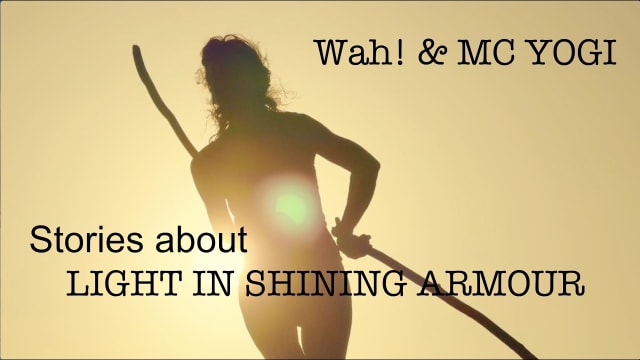
Divine Feminine Rising: Wah! & MC Yogi's Mythic Collaboration

Wah! and MC Yogi channel global goddess archetypes in a "low-budget epic" exploring divine feminine power across cultures.…

6 min read
Heart of the Path: A Week in Costa Rican Kirtan Retreat
Inspire

Heart of the Path: A Week in Costa Rican Kirtan Retreat

Krishna Das and Nina Rao lead an immersive week-long retreat in Costa Rica combining kirtan, mantra practice, yoga, and open dialogue for sp…

5 min read
Work Isn't Your Spiritual Problem—Attachment Is
Inspire

Work Isn't Your Spiritual Problem—Attachment Is

The Bhagavad Gita teaches that career and ambition aren't obstacles to spirituality—attachment, ego, and ownership are what bind us.…

2 min read
Science Meets Mantra: West Coast Tour Unites Music and Consciousness
Inspire

Science Meets Mantra: West Coast Tour Unites Music and Consciousness

Grammy-nominated kirtan artists join bestselling biologist Bruce Lipton for a rare convergence of devotional practice and scientific inquiry…

5 min read
すべて見るこちらもおすすめ→

旅をつづける

BrightStarのディレクトリから、さらなる智慧と集いを。

もっと記事を読む

教え、インタビュー、ガイドのライブラリ全体をご覧ください。

すべての記事に戻る →

講師とアーティスト

コンシャスな世界の系譜、音楽家、導き手を探しましょう。

アーティストを探す →

イベントを見つける

キルタン、リトリート、サウンドバス、ブレスワーク、フェスティバル — まもなく開かれます。

イベントを見る →