Shankari Susanne Hill
Singer
紹介
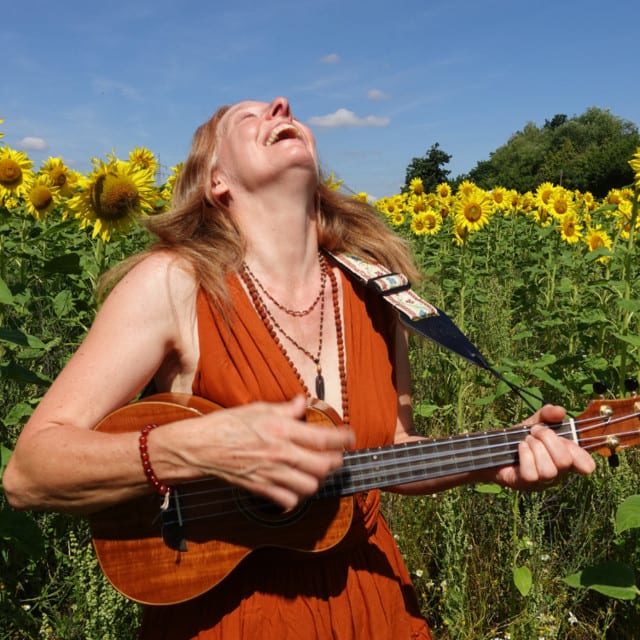
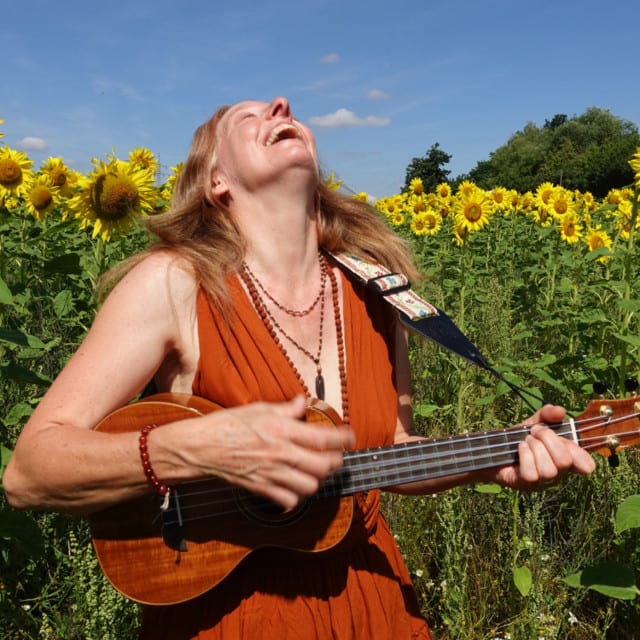
Shankari Susanne Hill makes modern mantra music for heart and soul. Her songs are lively and touching, with what she describes as a sunny lightness. She sings mantras, the ancient texts she calls full of peace, depth and aliveness, and accompanies herself on ukulele and harmonium.
Shankari Susanne Hill makes modern mantra music for heart and soul. Her songs are lively and touching, with what she describes as a sunny lightness. She sings mantras, the ancient texts she calls full of peace, depth and aliveness, and accompanies herself on ukulele and harmonium.
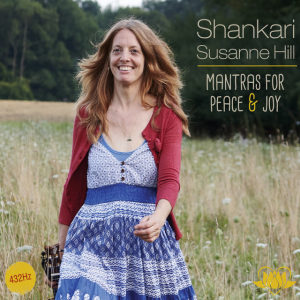
Her aim is to touch the listener's heart and bring them to singing, smiling, dancing or simply pausing. Her album Mantras for Peace & Joy brings together mantras with a groovy sound, moving strings and a touch of Ireland. It moves between deep stillness and music made for dancing.
Shankari also teaches. She offers mantra ukulele courses, seminars and one-to-one lessons, online and in person, for people who want to accompany their own singing, a singing circle or a yoga class. Her courses are open to complete beginners and need no musical background. She also accompanies yoga classes with mantra music and sound, so that participants can sink more deeply into relaxation.
In her own words, music can heal, connect and remind. She is glad to guide those who feel called to pass that on.
よくある質問
Questions
Shankari Susanne Hill is a contemporary mantra singer and musician who brings ancient Sanskrit chants into a modern musical context, built on the bhakti tradition of devotional singing. She sings and plays ukulele, harmonium, and piano, crafting what she describes as "modern mantra music for heart and soul"—lively and touching, with what listeners often call a sunny lightness. What distinguishes her work is the pragmatic belief at its core: that music can heal, connect, and remind people of something essential in themselves. She's not presenting mantras as abstract spiritual concepts but as living texts—thousands of years old, full of peace, depth, and vitality—that can be sung, danced to, and incorporated into daily life. Her albums like Mantras for Peace & Joy (2022) pair traditional mantra content with groovy, accessible arrangements that invite participation rather than passive listening. People care about her work because she makes the ancient accessible without diluting it, creating spaces where both yoga practitioners and curious newcomers can enter the practice of mantra singing together.
Shankari Susanne Hill's work sits within the bhakti tradition, one of Hinduism's oldest devotional paths that emphasizes the heart's direct experience of the divine through singing, dancing, and repetition of sacred sound. Bhakti has historically been a decentralizing force in South Asian spirituality—it moves the sacred out of temples and elite spaces and into the mouths and hearts of ordinary people, which is precisely what Shankari's teaching and music embody. The use of mantras—sacred syllables and phrases drawn from Sanskrit texts—connects her work to lineages that stretch back millennia, though the specific pedagogical lineage and teachers informing her approach aren't detailed in her public materials. What's clear from her albums and teaching is that she respects the integrity of traditional mantra content while deliberately updating its musical context through contemporary arrangements, strings, and world music influences. This positions her within a growing lineage of modern bhakti practitioners who are neither rejecting tradition nor treating it as a museum piece, but activating it for 21st-century seekers. The work is grounded in the understanding that mantra—sacred sound—has transformative properties when sung with intention.
Start with her 2022 album Mantras for Peace & Joy—it's her most recent full-length work and serves as an ideal entry point precisely because it bridges accessibility and depth. The album pairs thirteen powerful mantras with groovy, contemporary production; moving strings; and what Shankari describes as "a touch of Ireland," creating arrangements that feel both rooted in bhakti tradition and immediately welcoming to ears trained on Western music. The production is warm rather than austere, and the album's structure moves between deep stillness and danceable energy, making it suitable for both meditation and active listening. From there, check her YouTube channel to see her teaching and performance style in action—watching her sing and play ukulele or harmonium gives a much clearer sense of the bhakti flow her music carries than audio alone can convey. If you're drawn to mantra singing as a practice rather than just listening, her website (forheartnsoul.com) details her courses in accompanying mantras on ukulele, singing, and harmonium, all explicitly designed to need no prior musical background. The progression from listening to Mantras for Peace & Joy to learning an instrument alongside her is smooth and intentional.
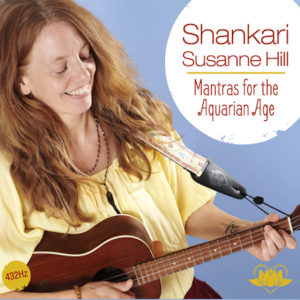
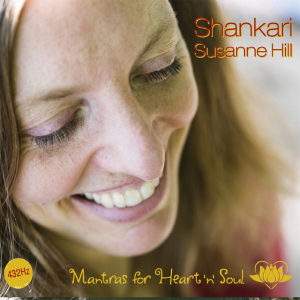
Where many contemporary mantra practitioners mine tradition for ambient or purely meditative material, Shankari Susanne Hill places the body and joy at the center—her albums are explicitly "made to be joined," inviting singing along, dancing, and participation rather than passive consumption. This is deeply rooted in bhakti philosophy, but her execution is distinctive: the inclusion of ukulele as a primary instrument (alongside harmonium and piano) creates a tonal palette that's warmer and more colloquial than the classical Indian instruments that dominate much modern mantra music, making the ancient practice feel less exotic and more accessible without condescension. Her albums like Mantras For Heart'n'Soul (2019) and Mantras For The Aquarian Age (2020) demonstrate a commitment to musical craft—there's production sophistication, thoughtful arrangements with strings and groovy elements—that elevates the listening experience beyond devotional rawness. Her teaching, moreover, is explicitly beginner-friendly and designed for people who want to play and sing for themselves, their singing circle, or their yoga class, not for aspiring professional musicians. The recent release of dance versions of tracks like "Karmagroove" and "Ek Ong Kar" (both 2025) shows her willingness to experiment and meet listeners where they are energetically. She's rare in the contemporary mantra space for combining technical musicianship, genuine bhakti sensibility, and radical approachability.
Her work isn't for listeners seeking purely meditative, sparse, or minimalist mantra music—if you're looking for unadorned Sanskrit chanting or the austere beauty of traditional Vedic recitation, the contemporary production, groovy arrangements, and "touch of Ireland" in Mantras for Peace & Joy will feel ornamental rather than essential. The emphasis on participatory singing and dancing also means her music isn't designed for background listening in the way ambient spiritual music often is; it asks something of the listener—attention, perhaps vocalization, certainly engagement. Anyone seeking the sound of classical Indian instruments (sitar, sarangi, tabla) as the primary palette won't find it here; the ukulele and harmonium approach is deliberate but represents a clear aesthetic choice that won't resonate with purists of Indian classical sound. Her teaching, while beginner-friendly, requires active participation and commitment—she's not offering passive transmission of wisdom or pre-recorded lectures for consumption, but actual skills training in singing and instrumental accompaniment. Finally, for those wary of bhakti or mantra practice on religious or cultural grounds, her work won't offer much; she's neither diluting nor secularizing the tradition, but working authentically within it. The work is genuinely not for everyone, and that specificity is part of what makes it compelling for those it does reach.
Her primary web presence is her website, forheartnsoul.com, which should list any upcoming concerts, singing circles, retreats, or teaching offerings. She maintains an active YouTube channel (youtube.com/channel/UCCmFlixQGmo4toepbiUDu0Q) where she shares performance videos and teaching content, and checking there regularly will keep you informed about new material and announcements. Spotify hosts her full discography and is the primary platform where her albums are streamed—follow her artist profile there to receive notifications when she releases new music, which based on her recent singles "Karmagroove (Dance Version)" and "Ek Ong Kar (Dance Version)" (both 2025) suggests she's actively creating. Her teaching offerings, both online and in-person courses in ukulele, singing, and harmonium accompaniment, are available through her website and typically updated there. While there are no upcoming tour dates currently available in our data, her website and YouTube channel are the most reliable sources for learning about live performances, retreat dates, and new course offerings. Given her relatively grassroots presence (223 Spotify followers suggests she operates outside major label infrastructure), direct engagement through her website and YouTube is more reliable than streaming platform algorithms.
Shankari Susanne Hill's sound is built on the clean, accessible alto voice of a singer trained in bhakti singing traditions, paired primarily with ukulele, harmonium, and piano—an instrumentation that immediately signals a departure from the classical Indian music world toward something more contemporary and world-influenced. Her 2022 album Mantras for Peace & Joy exemplifies the sonic signature: warm, acoustic arrangements with moving strings and what she describes as "a touch of Ireland," creating a palette that's neither purely traditional nor entirely Western pop but genuinely hybrid. The production is clean and intentional, not sparse or lo-fi, but also not slick or over-produced; there's room for the voice and instruments to breathe. Her mantras are sung with conviction and clarity, meant to be understood and joined by listeners, not merely admired. The pacing deliberately moves between deep stillness—moments where mantras are sung nearly alone—and danceable energy, sometimes within the same track. What surprises newcomers is that despite the contemporary production and Western instruments, there's no dilution of the Sanskrit pronunciation or mantra content; the ancient and modern sit together as equals. The overall effect is intimate, inviting, and designed for singing along rather than passive consumption.
Her most accessible entry point is Mantras for Peace & Joy (2022), the most recent full-length album and arguably her most polished work. It's thirteen tracks of mantras paired with groovy production and contemporary arrangements—described as moving between deep stillness and danceable energy, with the explicit intention that listeners will sing along. Before that, Mantras For Heart'n'Soul (2019) established much of her core approach, also with thirteen tracks and a clear focus on the accessibility and participatory nature of bhakti singing. Mantras For The Aquarian Age (2020) arrived as a middle-ground work, consolidating her voice and approach during the pandemic period. These three albums form her essential discography and showcase a consistent artistic vision across six years. Her more recent singles, "Karmagroove (Dance Version)" and "Ek Ong Kar (Dance Version)" (both 2025), point toward an experimental direction—remixing her material into explicitly danceable forms—and suggest she's continuing to evolve. If pressed to recommend a single album, start with Mantras for Peace & Joy; if you want to understand her development over time, the progression from Heart'n'Soul through The Aquarian Age to Peace & Joy shows an artist refining craft and deepening her approach.
Her core instrumental palette consists of voice (alto, trained in bhakti tradition), ukulele, harmonium, and piano—a deliberately curated set that moves away from classical Indian music's traditional instruments toward something more accessible and hybrid. The ukulele is her signature choice, appearing across her albums and central to her teaching; the harmonium (a hand-pumped keyboard essential to bhakti and Sikh devotional music) provides grounding and traditional continuity; the piano offers harmonic depth and Western musical legitimacy. Her albums incorporate moving strings arrangements, suggesting either orchestral collaboration or sophisticated production involving string musicians, though specific collaborators and producers aren't detailed in available materials. The production quality on Mantras for Peace & Joy and prior albums suggests professional engineering and possibly session musicians, but her teaching focuses specifically on the voice and these three instruments as sufficient for both personal practice and community circle leading. The absence of tabla, sitar, or other classical Indian percussion is deliberate—it signals her positioning outside the Indian classical music world and toward contemporary practitioners seeking bhakti practice without the learning curve of traditional Indian musical forms.
Her albums are explicitly designed with multiple use cases: Mantras for Peace & Joy is structured to move between deep stillness and danceable energy, meaning different tracks serve different purposes—some sections are ideal for meditation or yoga asana practice, while others are designed for active engagement like singing or dancing. The album's full thirteen-track arc is meant for singing along, but individual tracks would naturally suit yoga class accompaniment, particularly the songs in the deeper, stiller sections. She specifically mentions in her bio that she "accompanies yoga classes with mantras and sound, so that students can sink more deeply into relaxation," indicating that she performs this work live and understands which mantras and arrangements support contemplative practice. Without detailed track-by-track information, we can't specify particular songs, but her three full albums (Heart'n'Soul, The Aquarian Age, Peace & Joy) are all structured around mantra content that's inherently tied to specific intentions—peace, joy, spiritual advancement through the Aquarian Age. Anyone using her music for ceremony, meditation, or yoga class accompaniment should explore her full albums and likely reach out through her website to ask about specific track recommendations for their particular practice context.


ご本人ですか? このページを登録 ›
There's more where this came from.
BrightStar is the global directory of artists, teachers, and healers in the wellness and spiritual movement. Find your next experience — or add yourself.
Discover More Artists
Browse 14,000+ curated profiles across kirtan, yoga, meditation, and beyond.
Explore directory →Find an Event Near You
Kirtan, retreats, sound baths, breathwork, ceremonies — happening this week.
Browse events →Add Your Profile
Are you an artist, teacher, or healer? Get listed — free, AI-assisted, live in minutes.
Get started →