BrightStar
BlogMes billets
BlogMes billets
Saved events
Aide et contactS'inscrireConnexion
Événements
  • Parcourir tous les Événements
  • Yoga
  • Méditation
  • Breathwork
  • Qi gong
  • Musique sacrée
  • Musiques du monde
  • Musique médecine
  • Soins sonores
  • Danse extatique
  • Cérémonie
  • Médecine des plantes
  • Soin énergétique
  • Satsang et sagesse
  • Tantra
  • Retraites
  • Toutes les catégories →
Destinations
  • Bali
  • Sedona
  • Los Angeles
  • Costa Rica
  • Tulum
  • Byron Bay
  • San Francisco
  • Austin
  • New York
  • San Diego
  • Denver
  • Seattle
  • Portland
  • Miami
  • London
  • Maui
  • Boulder
  • Toutes les villes →
Plateforme
  • Pour les organisateurs
  • Rejoignez le mouvement
  • Sell Globally
  • Pour les créateurs
  • Pour les équipes
  • Pour les écrivains
  • Pour les enseignants
  • Pour les artistes de kirtan
  • Pour les studios
  • Pour les festivals
  • Pour les centres de retraite
  • Pour les associations
  • Ambassadeur de marque
  • Billetterie gratuite
  • Pro
  • Amplify
  • L'écosystème
Fonctionnalités

Billetterie et achat

  • Ticket categories
  • Assigned seating
  • Custom questions
  • Coupon codes
  • Smart pricing
  • Ticket sharing
  • Waitlist
  • Flexible refunds
  • Digital waivers
  • Tip jar
  • Donations and sliding scale
  • Embed widget
  • Mindful checkout
  • Recurring events
  • Private sessions
  • Online courses
  • Summits
  • Rooms and stays
  • Ticket scanner

Marketing et croissance

  • Abandoned cart recovery
  • Visitor recovery
  • Upsells and add-ons
  • Affiliate engine
  • Upsell affiliate network
  • Brand ambassador
  • Meta retargeting
  • Verified buyer network
  • Outbound email marketing
  • Email sequences
  • SMS and WhatsApp
  • Event upsell network
  • Direct mail campaigns
  • SEO engine
  • Syndication
  • Event sharing
  • Custom event pages
  • Artist profiles
  • Link in bio
  • Event blog
  • Blog newsletter

Paiements

  • Payments, powered by Stripe
  • Buy now, pay later
  • Apple Wallet
  • Multi currency

Données et opérations

  • Team access
  • Message center
  • Reports
  • Analytics reporting
  • Performance reporting
  • Customer data
  • Integrations
  • Switch from another platform

IA

  • Assistant
  • AI FAQ assistant
  • Toutes les fonctionnalités →
Entreprise
  • À propos
  • Questions fréquentes
  • Contact
  • Blog
  • Glossaire
  • Guides
  • Inspiration
  • Centre d'aide
  • Documentation API
  • Ressources de marque
  • Presse
  • Conditions d'utilisation
  • Politique de confidentialité

Événements

  • Parcourir tous les Événements
  • Yoga
  • Méditation
  • Breathwork
  • Qi gong
  • Musique sacrée
  • Musiques du monde
  • Musique médecine

Destinations

  • Bali
  • Sedona
  • Los Angeles
  • Costa Rica
  • Tulum
  • Byron Bay
  • San Francisco
  • Austin

Plateforme

  • Pour les organisateurs
  • Rejoignez le mouvement
  • Sell Globally
  • Pour les créateurs
  • Pour les équipes
  • Pour les écrivains
  • Pour les enseignants
  • Pour les artistes de kirtan

Fonctionnalités

  • Réseau communautaire
  • Récupération des paniers abandonnés
  • Catégories de billets
  • Événements récurrents
  • Places assignées
  • Système d'affiliation
  • Liste d'attente / Notifier
  • Toutes les fonctionnalités →

Entreprise

  • À propos
  • Questions fréquentes
  • Contact
  • Blog
  • Glossaire
  • Guides
  • Conditions d'utilisation
  • Politique de confidentialité
Lire la suite

Événements

  • Soins sonores
  • Danse extatique
  • Cérémonie
  • Médecine des plantes
  • Soin énergétique
  • Satsang et sagesse
  • Tantra
  • Retraites
  • Toutes les catégories →

Destinations

  • New York
  • San Diego
  • Denver
  • Seattle
  • Portland
  • Miami
  • London
  • Maui
  • Boulder
  • Toutes les villes →

Plateforme

  • Pour les studios
  • Pour les festivals
  • Pour les centres de retraite
  • Pour les associations
  • Ambassadeur de marque
  • Billetterie gratuite
  • Pro
  • Amplify
  • L'écosystème

Entreprise

  • Inspiration
  • Centre d'aide
  • Documentation API
  • Ressources de marque
  • Presse

Billetterie et achat

  • Ticket categories
  • Assigned seating
  • Custom questions
  • Coupon codes
  • Smart pricing
  • Ticket sharing
  • Waitlist
  • Flexible refunds
  • Digital waivers
  • Tip jar
  • Donations and sliding scale
  • Embed widget
  • Mindful checkout
  • Recurring events
  • Private sessions
  • Online courses
  • Summits
  • Rooms and stays
  • Ticket scanner

Marketing et croissance

  • Abandoned cart recovery
  • Visitor recovery
  • Upsells and add-ons
  • Affiliate engine
  • Upsell affiliate network
  • Brand ambassador
  • Meta retargeting
  • Verified buyer network
  • Outbound email marketing
  • Email sequences
  • SMS and WhatsApp
  • Event upsell network
  • Direct mail campaigns
  • SEO engine
  • Syndication
  • Event sharing
  • Custom event pages
  • Artist profiles
  • Link in bio
  • Event blog
  • Blog newsletter

Paiements

  • Payments, powered by Stripe
  • Buy now, pay later
  • Apple Wallet
  • Multi currency

Données et opérations

  • Team access
  • Message center
  • Reports
  • Analytics reporting
  • Performance reporting
  • Customer data
  • Integrations
  • Switch from another platform

IA

  • Assistant
  • AI FAQ assistant
Téléchargez l'app
Télécharger dans l'App StoreDisponible surGoogle Play
© 2026 BrightStar. Tous droits réservés. BrightStar Selection · Crédits photo · Journal des modifications ·
Teaching on virtue
“Waste no more time arguing about what a good man should be. Be one.”
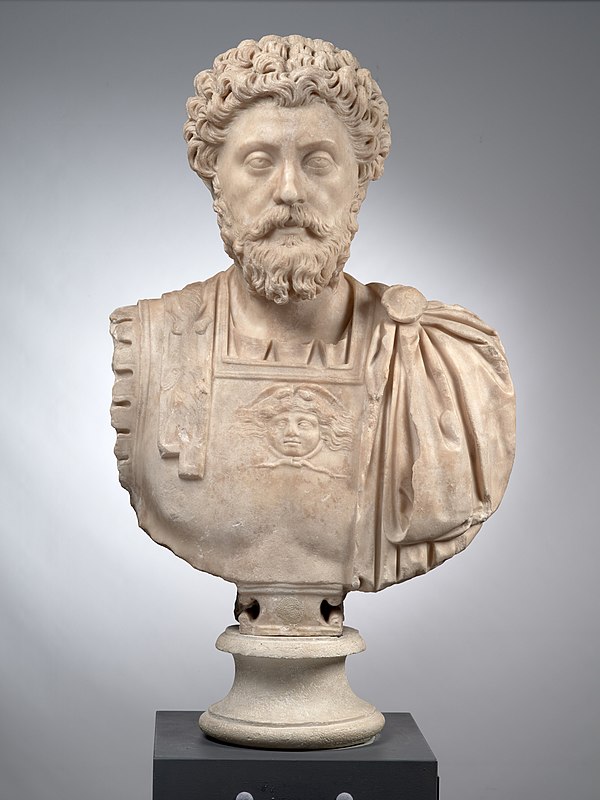
Marcus Aurelius
Marcus Aurelius
Lecture · 1 sections

Becoming the Good: The Call to Action in Stoicism

Marcus Aurelius, in his succinct yet profound statement, "Waste no more time arguing about what a good man should be. Be one," invites us to transcend the realm of theoretical discourse and step into the arena of action. This call to embody virtue rather than merely discuss it resonates deeply in a world often mired in debate and indecision. The stakes are high; our character and the essence of our humanity are forged not in idle conversation but in the choices we make and the lives we lead.

In a society that frequently prioritizes opinion over action, Aurelius's words serve as a clarion call to personal responsibility. The essence of Stoicism, which emphasizes the importance of virtue and moral integrity, is encapsulated in this quote. It challenges us to reflect on our own lives and consider how often we find ourselves caught in the web of speculation about what constitutes goodness, rather than actively embodying it. This shift from contemplation to action is not merely a philosophical exercise; it is a transformative practice that can lead to profound personal and communal change.

The image / the metaphor

At the heart of Aurelius's quote lies a vivid imagery that contrasts the futility of argument with the potency of action. The phrase "waste no more time" evokes a sense of urgency, suggesting that deliberation without implementation is a drain on our potential. The verbs "arguing" and "be" create a dichotomy between passive discourse and active existence, urging us to move beyond mere words into the realm of lived experience. This imagery is not just about doing; it is about being—about embodying the very virtues we aspire to uphold.

Diving deeper into the metaphor, we find that Aurelius is not merely advocating for action in a general sense, but for a specific kind of action rooted in virtue. The imperative to "be one" suggests a transformation of self, where our identity is aligned with our values. It implies that goodness is not an abstract concept to be debated but a tangible quality to be manifested in our daily lives. This metaphor invites us to consider how our actions reflect our character and how, in striving to "be one," we can influence the world around us.

In the speaker's tradition

Marcus Aurelius's Stoicism is steeped in the understanding that virtue is the highest good, a concept that aligns closely with the idea of dharma in Eastern philosophies, where one's duty and righteousness guide actions. Just as dharma emphasizes living in accordance with one's true nature and responsibilities, Aurelius's exhortation to "be one" calls us to align our actions with our moral compass. This connection highlights a universal truth across spiritual traditions: that the essence of a good life is found in the practice of virtue, not in its mere discussion.

In his seminal work, "Meditations," Aurelius reflects on the nature of the self and the importance of living in accordance with reason and virtue. He writes, "You have power over your mind—not outside events. Realize this, and you will find strength." This insight complements his quote, reinforcing the notion that our internal state and choices define our character. The Stoic practice of self-examination and mindfulness serves as a foundation for the active embodiment of virtue, encouraging us to cultivate a life that reflects our highest ideals.

Living the teaching

Consider a modern scenario where this teaching can be applied: a workplace filled with gossip and negativity. Employees may spend hours discussing the shortcomings of their colleagues or the inefficiencies of management, yet little is done to foster a more positive environment. Aurelius's call to action encourages individuals to stop debating what a good workplace should look like and instead take initiative—perhaps by offering constructive feedback, supporting a colleague, or fostering open communication. In this way, the act of "being" a good employee transforms the culture of the workplace, demonstrating that individual actions can ripple outward to create change.

In the realm of personal relationships, Aurelius's wisdom can also be profoundly impactful. Imagine a situation where misunderstandings and conflicts arise between friends or partners. Instead of getting caught in a cycle of blame or discussion about what a good friend or partner should do, one can choose to embody the qualities of patience, understanding, and love. By actively listening and responding with compassion, we not only resolve conflicts but also strengthen the bonds of our relationships. This practice of living the teaching emphasizes that our character is revealed in our actions, particularly in moments of difficulty.

A reflection

As we contemplate Marcus Aurelius's powerful exhortation, we are invited to reflect on our own lives: In what areas are we caught in the cycle of debate rather than action? What does it mean for us to "be" the virtues we admire? This contemplation can serve as a guiding question, prompting us to examine our choices and the alignment of our actions with our values. In a world that often prioritizes talk over action, how can we embody the goodness we seek, transforming our intentions into tangible expressions of virtue?

Marcus Aurelius

Marcus Aurelius

Artiste

Roman Emperor and Stoic philosopher. His private Meditations remain one of the most influential works of practical philosophy.

Voir le profil
Explorer les thèmes
virtueactioncharacter
Questions fréquemment posées

Questions fréquemment posées

Aurelius emphasizes the importance of action over debate, suggesting that discussing the nature of goodness is futile if it does not lead to embodying those virtues. He calls for a shift from theoretical discussions to practical applications of virtue in our daily lives.

You can apply this teaching by identifying areas in your life where you often discuss ideals without acting on them. Start small by taking concrete steps to embody those ideals, whether in your workplace, relationships, or community involvement.

Yes, the emphasis on action and virtue is a central theme in Stoicism. Texts like Epictetus's 'Enchiridion' and Seneca's letters also stress the importance of living in accordance with one's values rather than merely discussing them.

Virtue in Stoicism refers to the inherent qualities that define a good character, such as wisdom, courage, and justice, while morality often encompasses societal norms and rules. Aurelius encourages us to focus on personal virtue as the foundation for ethical living.

Mindfulness and self-reflection are key practices that support living this teaching. Regularly examining your thoughts and actions can help you align them with your values, making it easier to embody the virtues you aspire to.

Lead by example. By embodying the virtues you wish to see in others, you create an environment that encourages similar behavior. Sharing your experiences and insights in a humble manner can inspire others without coming across as preachy.

Related Quotes

Voir tout
Stop Running From Suffering: How Craving Keeps You Trapped
Inspiration

Stop Running From Suffering: How Craving Keeps You Trapped

The Lotus Principle: Growing Through Life's Mud
Inspiration

The Lotus Principle: Growing Through Life's Mud

The Science Behind Psilocybin Microdosing: 25,000-Person Study
Inspiration

The Science Behind Psilocybin Microdosing: 25,000-Person Study

Tout voirRelated Quotes→

Poursuis ton chemin

Plus de sagesse et de rassemblements dans tout l’annuaire BrightStar.

Plus d’articles

Parcours toute la bibliothèque d’enseignements, d’entretiens et de guides.

Retour à tous les articles →

Enseignants et artistes

Découvre les lignées, les musiciens et les guides du monde conscient.

Explorer les artistes →

Trouver un événement

Kirtan, retraites, bains sonores, breathwork, festivals — bientôt près de chez toi.

Parcourir les événements →