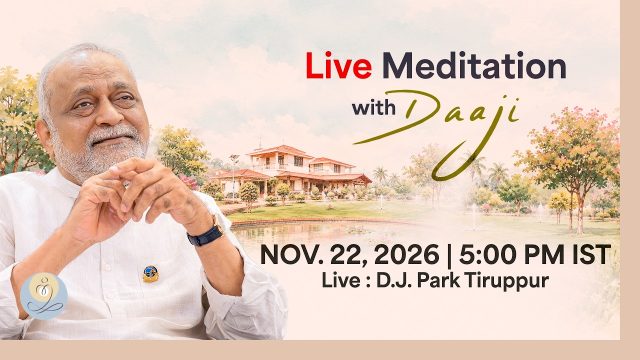
At the International Pilot and Aerospace Association Conference (IPAAC) 2026 in Hyderabad, a spiritual teacher addressed a room full of flight professionals with an unexpected metaphor: the turbulence you encounter at 35,000 feet mirrors the turbulence of inner life. The audience knew turbulence intimately. What they were invited to discover was how to meet it not with reaction, but with reflection.
The core invitation was deceptively simple: silence. Not the absence of sound, but the presence of depth—a widening of consciousness that happens when we turn attention inward rather than outward. For a profession built on external vigilance and split-second decisions, the offer to slow down and dive deeper ran counter to the culture of aviation itself. And yet it was precisely because these professionals understood the metaphor of flight that the teaching landed with unusual force.
WhatIsThisFragileCargoWeCarry?
The opening gambit was a sticker—a simple "fragile cargo" label meant for airplane shipments. Daaji held it up and reflected on the irony: we treat physical packages with care and warning, yet we move through life barely acknowledging the precious life force we carry within ourselves. "We all carry very fragile cargo within us. And remain we often remain grateful. We often ignore that entity. We have never even said thanks to that fragile cargo we carry within ourselves."
This was not abstract theology. He grounded it in a visceral moment: the birth of a child. A doctor's frantic work to resuscitate a baby who refuses to cry. The sudden clarity that life itself—that animating force, the breath, the heartbeat—is not guaranteed. "That life force is within us. It is not outside us. It is not in Himalayas or Dwarka or Amritsar or in Gurudwaras. It's in our heart."
The teaching pivot here was radical: gratitude and meditation are not separate practices. Gratitude is the entry point to meditation because it reorients us toward what is closest and most alive within us. We spend lifetimes searching outside—in holy places, in gurus, in other people—when the entity we seek is intimate and immediate. "It's like you have your wife at home and you keep going to mall searching for your wife then then she'll smack you on your head and say oh why are you looking?"
ExpandingConsciousnessinTwoDirections
A core teaching emerged: consciousness expands not in one direction, but two. Upward, toward what Daaji called "super consciousness"—states beyond ordinary awareness. And downward, into what psychology might call the subconscious—deeper, slower, subtler layers of being. The work is to widen this bandwidth consciously, day after day, until we can move between these states at will.
"We try to have our attention focused towards the heart," he explained. The technique itself was simple: recognize that the purest love we seek in the world—unconditional, without transaction—already exists within us. It is available through attention to the heart, through meditative practice, through the slow accumulation of inner experience.
This distinction mattered for the aviation audience particularly. They understood altitude. They understood cruising altitude—the normal operating range. The teaching invited them to go beyond it: "You all are familiar with our normal available consciousness. But to cross from normal to super normal, super consciousness, it requires efforts day after day and we should be able to stay there at will."
TurbulenceasaTeacher
The metaphor crystallized toward the end. Life throws turbulence—inward and outward. Pilots know what to do in turbulent air: slow down, adjust course slightly, ride it out with patience. The same logic applies to inner turbulence, to difficulty, to pain. The natural response is to react—to tighten, to push back, to escape. The meditative response is different: reflect.
"All the frictions and turbulences in life. You have experienced all sorts of turbulence outward and inward also. What do we do when there is turbulence mid air? You slow down a bit. Try to change the direction a bit perhaps. Life also throws many sorts of turbulences. We need to slow down then reflect within instead of reacting."
This is the paradox of meditation for people under pressure: meditation is not an escape from intensity. It is the capacity to hold intensity with greater spaciousness. Joy becomes sharper. Pain becomes sharper. But the resilience to meet both deepens. "Joy will be intense. Your pain will also be intense at the same time. It's a double edge sword. We can have one without the other. But we will learn greater the capacity of withholding or encountering these turbulences in life."
MeditationasanExperiment
Throughout, there was an emphasis on direct experience over belief. "I wish you don't believe in my words. I like you to experiment it and prove it to yourself day after day with each meditation and see how you can expand consciousness." This was not an ask to convert, but to investigate. To sit. To notice. To allow consciousness itself to become the teacher.
The practical entry point was always the same: attention to the heart, gratitude for the life within, silence. Not enforced silence—the busy mind's frantic quieting—but the silence that opens when we stop searching outward and begin to feel inward. The meditation interval that followed was an invitation to that felt experience, not a lecture about it.
Wheretogofromhere
For those working in high-stress professions—aviation or otherwise—the teaching offers a usable model: turbulence is information, not failure. When external pressure mounts, the meditative response is not to white-knuckle through it, but to slow the system, reflect, and move from reaction to response. This cannot be rushed. Like expanding consciousness itself, it requires consistent practice, day after day, until the capacity becomes natural. The life within you—that fragile cargo—already contains everything needed. The meditation is simply the practice of turning toward it, again and again.
Meditation builds capacity to slow down and reflect rather than react when turbulence—internal or external—strikes. By practicing attention to the heart and inner silence, you develop resilience to hold intense experiences (both joy and difficulty) without being overwhelmed by them.
Consciousness expands in two directions: upward toward super consciousness (expanded states beyond ordinary awareness) and downward into subconscious depths. Regular meditation practice widens this bandwidth, allowing you to access states beyond normal consciousness and to stay there at will.
Gratitude reorients attention inward, toward the life force that animates you—the entity that has sustained you since birth. By acknowledging and appreciating this 'fragile cargo' within, you shift from seeking wholeness outside yourself to recognizing it already lives in your heart.
Instead of reacting with tension or escape, slow down and reflect inward, as pilots do when encountering turbulent air. This meditative pause allows you to shift from automatic reaction to conscious response, and helps you develop greater capacity to encounter challenges without being destabilized.
Yes—meditation sharpens experience in both directions. It's described as a double-edged sword: you cannot access deeper joy without also accessing deeper feeling across all emotions. But expanded consciousness gives you greater capacity to hold and move through both without fragmentation.
The life force and unconditional love you seek are within your own heart, not in external locations or through external gurus. Turning attention inward, particularly toward the heart, reveals what has been present since your birth—this is the beginning of genuine meditation.