BrightStar
BlogMes billets
BlogMes billets
Saved events
Aide et contactS'inscrireConnexion
Événements
  • Parcourir tous les Événements
  • Yoga
  • Méditation
  • Breathwork
  • Qi gong
  • Musique sacrée
  • Musiques du monde
  • Musique médecine
  • Soins sonores
  • Danse extatique
  • Cérémonie
  • Médecine des plantes
  • Soin énergétique
  • Satsang et sagesse
  • Tantra
  • Retraites
  • Toutes les catégories →
Destinations
  • Bali
  • Sedona
  • Los Angeles
  • Costa Rica
  • Tulum
  • Byron Bay
  • San Francisco
  • Austin
  • New York
  • San Diego
  • Denver
  • Seattle
  • Portland
  • Miami
  • London
  • Maui
  • Boulder
  • Toutes les villes →
Plateforme
  • Pour les organisateurs
  • Rejoignez le mouvement
  • Sell Globally
  • Pour les créateurs
  • Pour les équipes
  • Pour les écrivains
  • Pour les enseignants
  • Pour les artistes de kirtan
  • Pour les studios
  • Pour les festivals
  • Pour les centres de retraite
  • Pour les associations
  • Ambassadeur de marque
  • Billetterie gratuite
  • Pro
  • Amplify
  • L'écosystème
Fonctionnalités

Billetterie et achat

  • Ticket categories
  • Assigned seating
  • Custom questions
  • Coupon codes
  • Smart pricing
  • Ticket sharing
  • Waitlist
  • Flexible refunds
  • Digital waivers
  • Tip jar
  • Donations and sliding scale
  • Embed widget
  • Mindful checkout
  • Recurring events
  • Private sessions
  • Online courses
  • Summits
  • Rooms and stays
  • Ticket scanner

Marketing et croissance

  • Abandoned cart recovery
  • Visitor recovery
  • Upsells and add-ons
  • Affiliate engine
  • Upsell affiliate network
  • Brand ambassador
  • Meta retargeting
  • Verified buyer network
  • Outbound email marketing
  • Email sequences
  • SMS and WhatsApp
  • Event upsell network
  • Direct mail campaigns
  • SEO engine
  • Syndication
  • Event sharing
  • Custom event pages
  • Artist profiles
  • Link in bio
  • Event blog
  • Blog newsletter

Paiements

  • Payments, powered by Stripe
  • Buy now, pay later
  • Apple Wallet
  • Multi currency

Données et opérations

  • Team access
  • Message center
  • Reports
  • Analytics reporting
  • Performance reporting
  • Customer data
  • Integrations
  • Switch from another platform

IA

  • Assistant
  • AI FAQ assistant
  • Toutes les fonctionnalités →
Entreprise
  • À propos
  • Questions fréquentes
  • Contact
  • Blog
  • Glossaire
  • Guides
  • Inspiration
  • Centre d'aide
  • Documentation API
  • Ressources de marque
  • Presse
  • Conditions d'utilisation
  • Politique de confidentialité

Événements

  • Parcourir tous les Événements
  • Yoga
  • Méditation
  • Breathwork
  • Qi gong
  • Musique sacrée
  • Musiques du monde
  • Musique médecine

Destinations

  • Bali
  • Sedona
  • Los Angeles
  • Costa Rica
  • Tulum
  • Byron Bay
  • San Francisco
  • Austin

Plateforme

  • Pour les organisateurs
  • Rejoignez le mouvement
  • Sell Globally
  • Pour les créateurs
  • Pour les équipes
  • Pour les écrivains
  • Pour les enseignants
  • Pour les artistes de kirtan

Fonctionnalités

  • Réseau communautaire
  • Récupération des paniers abandonnés
  • Catégories de billets
  • Événements récurrents
  • Places assignées
  • Système d'affiliation
  • Liste d'attente / Notifier
  • Toutes les fonctionnalités →

Entreprise

  • À propos
  • Questions fréquentes
  • Contact
  • Blog
  • Glossaire
  • Guides
  • Conditions d'utilisation
  • Politique de confidentialité
Lire la suite

Événements

  • Soins sonores
  • Danse extatique
  • Cérémonie
  • Médecine des plantes
  • Soin énergétique
  • Satsang et sagesse
  • Tantra
  • Retraites
  • Toutes les catégories →

Destinations

  • New York
  • San Diego
  • Denver
  • Seattle
  • Portland
  • Miami
  • London
  • Maui
  • Boulder
  • Toutes les villes →

Plateforme

  • Pour les studios
  • Pour les festivals
  • Pour les centres de retraite
  • Pour les associations
  • Ambassadeur de marque
  • Billetterie gratuite
  • Pro
  • Amplify
  • L'écosystème

Entreprise

  • Inspiration
  • Centre d'aide
  • Documentation API
  • Ressources de marque
  • Presse

Billetterie et achat

  • Ticket categories
  • Assigned seating
  • Custom questions
  • Coupon codes
  • Smart pricing
  • Ticket sharing
  • Waitlist
  • Flexible refunds
  • Digital waivers
  • Tip jar
  • Donations and sliding scale
  • Embed widget
  • Mindful checkout
  • Recurring events
  • Private sessions
  • Online courses
  • Summits
  • Rooms and stays
  • Ticket scanner

Marketing et croissance

  • Abandoned cart recovery
  • Visitor recovery
  • Upsells and add-ons
  • Affiliate engine
  • Upsell affiliate network
  • Brand ambassador
  • Meta retargeting
  • Verified buyer network
  • Outbound email marketing
  • Email sequences
  • SMS and WhatsApp
  • Event upsell network
  • Direct mail campaigns
  • SEO engine
  • Syndication
  • Event sharing
  • Custom event pages
  • Artist profiles
  • Link in bio
  • Event blog
  • Blog newsletter

Paiements

  • Payments, powered by Stripe
  • Buy now, pay later
  • Apple Wallet
  • Multi currency

Données et opérations

  • Team access
  • Message center
  • Reports
  • Analytics reporting
  • Performance reporting
  • Customer data
  • Integrations
  • Switch from another platform

IA

  • Assistant
  • AI FAQ assistant
Téléchargez l'app
Télécharger dans l'App StoreDisponible surGoogle Play
© 2026 BrightStar. Tous droits réservés. BrightStar Selection · Crédits photo · Journal des modifications ·
Inspiration

Karma and Dharma: How Destiny and Duty Intersect

Ram Dass
Ram Dass
Mar 28, 2026
6 min de lecture

Source : Be Here Now Network

Karma—the law of cause and effect—and dharma—righteous duty or life purpose—are not separate forces but deeply interconnected aspects of spiritual life. Rather than viewing karma as fate that binds us, and dharma as obligation we must fulfill, these teachings reveal a dynamic relationship: our dharma emerges from understanding the karmic patterns we inhabit, and fulfilling our dharma with conscious intention transforms how karma unfolds in our lives. This confluence dissolves the victim mentality that can accompany karma teachings and invites us into active, aligned participation with the unfolding of consciousness.

Lecture · 5 sections

What Is Karma Beyond Punishment and Reward?

In Western spiritual contexts, karma often gets reduced to a cosmic accounting system—you reap what you sow, bad actions bring bad results, good actions bring good results. While there is truth in this understanding of cause and effect, it misses the nuance that shapes genuine spiritual practice.

Karma is not primarily about punishment. Rather, it describes the natural consequence-stream that arises from our actions, thoughts, and intentions. When you act with greed, anger, or delusion, you create patterns in consciousness—both in the world around you and within your own mind. These patterns become habitual grooves that shape perception and future action. Conversely, actions rooted in compassion, clarity, and wisdom generate ripples of openness and ease. The spiritual teachers point to this as the self-perpetuating nature of karma: not a judge keeping score, but a law of nature as reliable as gravity.

The key insight is that karma is not fixed or inescapable. It is the product of consciousness meeting circumstance, and because consciousness itself is the fundamental agent, karma remains responsive to change in consciousness. This is where dharma enters the picture.

How Does Dharma Function as Sacred Duty?

Dharma translates roughly as "duty," "righteousness," or "life purpose." In Hindu and yogic philosophy, dharma is what keeps the cosmos in order—it is the principle of right action aligned with truth. But dharma is not abstract; it manifests as your specific calling in this lifetime, given your particular gifts, circumstances, and evolutionary moment.

Dharma is not what you think you should do based on social expectation or ego ambition. Rather, it emerges when you inquire: What is the right action here, now, in service of awakening—both my own and others'? Dharma is action taken not for personal gain but in service of the whole. This shifts the entire orientation from self-centered concern to what spiritual teachers call "seva"—selfless service.

When you live in dharma, you are not bracing against the world or trying to protect yourself. You are in alignment with something larger than your separate self. This alignment itself becomes a transformative force.

What Does the Confluence of Karma and Dharma Mean?

The two operate in dynamic relationship. Your current karmic situation—the circumstances you find yourself in, your conditioning, your patterns—is not random. It is the inheritance of previous actions and consciousness. But within that karmic field, your dharma is always available. Dharma is the conscious choice point in the midst of karma.

Think of it this way: karma is the material you have to work with. Dharma is how you work with it. If you are born into poverty, that is karma. But whether you respond with bitterness or use that experience to cultivate compassion and service—that is dharma. If you carry anger from past hurt, that is karma. But whether you let that anger rigidify into hatred or use it as fuel to understand suffering and help others—that is dharma.

The confluence dissolves the fatalism that can accompany karma teaching. Many people hear "karma" and feel resigned—"This is what I deserve, what I was dealt." But dharma restores agency. Within your karmic inheritance, you have the freedom and responsibility to respond consciously. This is the revolutionary teaching: you are not a victim of karma; you are a conscious participant in transforming it through right action and right intention.

Moreover, when you fulfill your dharma—when you act with integrity, clarity, and service—you create karma that loosens your identification with the separate self. You generate what might be called "liberating karma" because the action itself is aligned with truth. Over time, this burns away the conditioning that kept you trapped in unconscious patterns.

How Does This Change How You Live?

The practical consequence is that you stop living defensively. Instead of trying to arrange circumstances so you feel safe, or trying to prevent bad karma from catching up with you, you shift into alignment with your dharma. You ask: What is the most truthful, most loving, most awakened response available to me right now?

This is not about pushing yourself into martyrdom or exhaustion. True dharma is sustainable because it arises from your deepest nature, not from ego's demands. When you are in dharma, there is less friction. Even difficulty feels purposeful rather than oppressive.

The teachings also point to this: as you live in dharma, karma itself begins to feel less binding. This does not mean consequences disappear. Rather, you develop the capacity to move through consequences without being crushed by them. You see clearly that the consequence itself contains intelligence and teaching. The separation between "good karma" and "bad karma" dissolves. All of it is grist for the mill of awakening.

Where to Go From Here

To explore this confluence in your own life, begin with inquiry: In my current situation, what is my dharma? Not what should I be doing, but what is the most awakened, most truthful, most loving action available to me? Notice how your body responds when you ask this. Dharma often comes with a sense of rightness, of alignment, even if the action itself is difficult.

Then observe: as you move toward your dharma, how does your relationship to karma shift? Do you feel less victimized by circumstance? More able to work with what arises? Does fulfilling your duty in service generate a different quality of karma than actions motivated by self-protection?

The teaching invites you into active participation with consciousness itself—not as someone karma happens to, but as someone who, through conscious action in alignment with dharma, is actively transforming the karmic field. This is the heart of the spiritual path: recognizing that you are not trapped, but free to choose alignment with truth.

Commentaires

Chargement de la conversation…

L'artiste de cet article

Ram Dass

Ram Dass

Spiritual Teacher

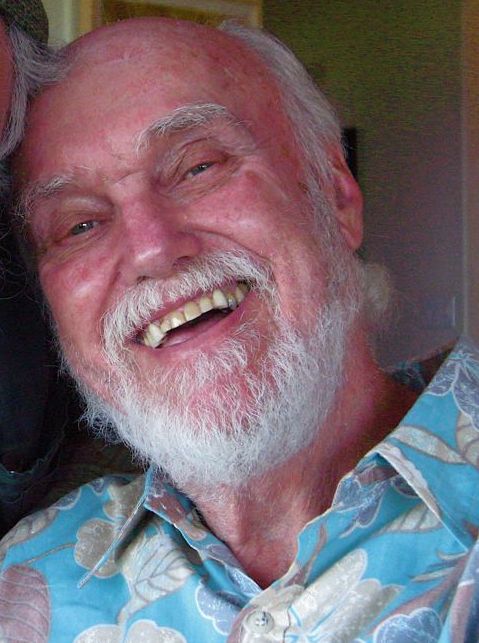
Ram Dass (born Richard Alpert, 1931-2019) was an American spiritual teacher, psychologist, and author whose 1971 book Be Here Now helped popularize Eastern spirituality in the West. A Harvard psychologist turned Hindu devotee, he bridged psychedelic research, yoga, and conscious living for millions.

Voir le profil
Explorer les thèmes
Karma dharmaDharma dutySpiritual actionConsciousnessKarma consequences
Questions fréquemment posées

Questions fréquemment posées

Karma is not predetermined fate but the consequence of previous actions and consciousness. While karma describes the patterns you inherit or create, dharma—your conscious response to those patterns—remains available. You are not trapped by karma but can transform it through aligned action.

Living in dharma means responding to each moment with the most truthful, loving, and awakened action available to you—not for personal gain but in service of the whole. It is alignment with your deepest nature and with truth itself, which arises through honest inquiry into what the moment calls for.

Yes. When you fulfill your dharma through conscious, aligned action, you generate karma that loosens identification with the separate self. This 'liberating karma' gradually burns away conditioning. However, past karma does not disappear; rather, you develop capacity to move through its consequences without being crushed by them.

Dharma emerges through honest inquiry: What is the most truthful, most loving response available to me right now? It is not about ego ambition or social expectation but about what aligns with awakening. Dharma often comes with a sense of rightness and alignment, even if the action is difficult.

Dharma can involve duty, but it is not the same as obligation or 'should.' True dharma arises from alignment with your deepest nature, so it feels sustainable and purposeful rather than burdensome. It is righteous action taken in service of the whole, not forced compliance with external demands.

Karma describes the consequences of past actions, but it does not eliminate free will. Even within a karmic inheritance, you have the freedom to choose conscious response. This choice point—your dharma—is where free will and karma meet. You are not a victim of karma but a conscious participant in transforming it.

Vous pourriez aussi aimer

Voir tout
Love People As They Are: Responsive vs. Reactive
Inspire

Love People As They Are: Responsive vs. Reactive

Learn how to love people unconditionally by shifting from reactive patterns to responsive presence, keeping your heart open in the face of s…

9 min read
Freedom Without Connection: Why Liberation Feels Empty
Inspire

Freedom Without Connection: Why Liberation Feels Empty

External freedom without spiritual connection leaves the heart hollow. Explore why liberation requires more than just the absence of constra…

7 min read
First Meeting with a Living Guru: Recognition and Transformation
Inspire

First Meeting with a Living Guru: Recognition and Transformation

Krishna Das reflects on his first encounters with his teacher Maharaj-ji and Ram Dass, describing the moment he recognized something real ab…

7 min read
Rumi's Teaching Story: Presence and Spiritual Wisdom
Inspire

Rumi's Teaching Story: Presence and Spiritual Wisdom

Ram Dass shares a timeless Rumi story on presence and spiritual awakening. A brief but potent lesson in mindfulness and the heart's capacity…

6 min read
Tout voirVous pourriez aussi aimer→

Poursuis ton chemin

Plus de sagesse et de rassemblements dans tout l’annuaire BrightStar.

Plus d’articles

Parcours toute la bibliothèque d’enseignements, d’entretiens et de guides.

Retour à tous les articles →

Enseignants et artistes

Découvre les lignées, les musiciens et les guides du monde conscient.

Explorer les artistes →

Trouver un événement

Kirtan, retraites, bains sonores, breathwork, festivals — bientôt près de chez toi.

Parcourir les événements →