BrightStar
BlogMes billets
BlogMes billets
Saved events
Aide et contactS'inscrireConnexion
Événements
  • Parcourir tous les Événements
  • Yoga
  • Méditation
  • Breathwork
  • Qi gong
  • Musique sacrée
  • Musiques du monde
  • Musique médecine
  • Soins sonores
  • Danse extatique
  • Cérémonie
  • Médecine des plantes
  • Soin énergétique
  • Satsang et sagesse
  • Tantra
  • Retraites
  • Toutes les catégories →
Destinations
  • Bali
  • Sedona
  • Los Angeles
  • Costa Rica
  • Tulum
  • Byron Bay
  • San Francisco
  • Austin
  • New York
  • San Diego
  • Denver
  • Seattle
  • Portland
  • Miami
  • London
  • Maui
  • Boulder
  • Toutes les villes →
Plateforme
  • Pour les organisateurs
  • Rejoignez le mouvement
  • Sell Globally
  • Pour les créateurs
  • Pour les équipes
  • Pour les écrivains
  • Pour les enseignants
  • Pour les artistes de kirtan
  • Pour les studios
  • Pour les festivals
  • Pour les centres de retraite
  • Pour les associations
  • Ambassadeur de marque
  • Billetterie gratuite
  • Pro
  • Amplify
  • L'écosystème
Fonctionnalités

Billetterie et achat

  • Ticket categories
  • Assigned seating
  • Custom questions
  • Coupon codes
  • Smart pricing
  • Ticket sharing
  • Waitlist
  • Flexible refunds
  • Digital waivers
  • Tip jar
  • Donations and sliding scale
  • Embed widget
  • Mindful checkout
  • Recurring events
  • Private sessions
  • Online courses
  • Summits
  • Rooms and stays
  • Ticket scanner

Marketing et croissance

  • Abandoned cart recovery
  • Visitor recovery
  • Upsells and add-ons
  • Affiliate engine
  • Upsell affiliate network
  • Brand ambassador
  • Meta retargeting
  • Verified buyer network
  • Outbound email marketing
  • Email sequences
  • SMS and WhatsApp
  • Event upsell network
  • Direct mail campaigns
  • SEO engine
  • Syndication
  • Event sharing
  • Custom event pages
  • Artist profiles
  • Link in bio
  • Event blog
  • Blog newsletter

Paiements

  • Payments, powered by Stripe
  • Buy now, pay later
  • Apple Wallet
  • Multi currency

Données et opérations

  • Team access
  • Message center
  • Reports
  • Analytics reporting
  • Performance reporting
  • Customer data
  • Integrations
  • Switch from another platform

IA

  • Assistant
  • AI FAQ assistant
  • Toutes les fonctionnalités →
Entreprise
  • À propos
  • Questions fréquentes
  • Contact
  • Blog
  • Glossaire
  • Guides
  • Inspiration
  • Centre d'aide
  • Documentation API
  • Ressources de marque
  • Presse
  • Conditions d'utilisation
  • Politique de confidentialité

Événements

  • Parcourir tous les Événements
  • Yoga
  • Méditation
  • Breathwork
  • Qi gong
  • Musique sacrée
  • Musiques du monde
  • Musique médecine

Destinations

  • Bali
  • Sedona
  • Los Angeles
  • Costa Rica
  • Tulum
  • Byron Bay
  • San Francisco
  • Austin

Plateforme

  • Pour les organisateurs
  • Rejoignez le mouvement
  • Sell Globally
  • Pour les créateurs
  • Pour les équipes
  • Pour les écrivains
  • Pour les enseignants
  • Pour les artistes de kirtan

Fonctionnalités

  • Réseau communautaire
  • Récupération des paniers abandonnés
  • Catégories de billets
  • Événements récurrents
  • Places assignées
  • Système d'affiliation
  • Liste d'attente / Notifier
  • Toutes les fonctionnalités →

Entreprise

  • À propos
  • Questions fréquentes
  • Contact
  • Blog
  • Glossaire
  • Guides
  • Conditions d'utilisation
  • Politique de confidentialité
Lire la suite

Événements

  • Soins sonores
  • Danse extatique
  • Cérémonie
  • Médecine des plantes
  • Soin énergétique
  • Satsang et sagesse
  • Tantra
  • Retraites
  • Toutes les catégories →

Destinations

  • New York
  • San Diego
  • Denver
  • Seattle
  • Portland
  • Miami
  • London
  • Maui
  • Boulder
  • Toutes les villes →

Plateforme

  • Pour les studios
  • Pour les festivals
  • Pour les centres de retraite
  • Pour les associations
  • Ambassadeur de marque
  • Billetterie gratuite
  • Pro
  • Amplify
  • L'écosystème

Entreprise

  • Inspiration
  • Centre d'aide
  • Documentation API
  • Ressources de marque
  • Presse

Billetterie et achat

  • Ticket categories
  • Assigned seating
  • Custom questions
  • Coupon codes
  • Smart pricing
  • Ticket sharing
  • Waitlist
  • Flexible refunds
  • Digital waivers
  • Tip jar
  • Donations and sliding scale
  • Embed widget
  • Mindful checkout
  • Recurring events
  • Private sessions
  • Online courses
  • Summits
  • Rooms and stays
  • Ticket scanner

Marketing et croissance

  • Abandoned cart recovery
  • Visitor recovery
  • Upsells and add-ons
  • Affiliate engine
  • Upsell affiliate network
  • Brand ambassador
  • Meta retargeting
  • Verified buyer network
  • Outbound email marketing
  • Email sequences
  • SMS and WhatsApp
  • Event upsell network
  • Direct mail campaigns
  • SEO engine
  • Syndication
  • Event sharing
  • Custom event pages
  • Artist profiles
  • Link in bio
  • Event blog
  • Blog newsletter

Paiements

  • Payments, powered by Stripe
  • Buy now, pay later
  • Apple Wallet
  • Multi currency

Données et opérations

  • Team access
  • Message center
  • Reports
  • Analytics reporting
  • Performance reporting
  • Customer data
  • Integrations
  • Switch from another platform

IA

  • Assistant
  • AI FAQ assistant
Téléchargez l'app
Télécharger dans l'App StoreDisponible surGoogle Play
© 2026 BrightStar. Tous droits réservés. BrightStar Selection · Crédits photo · Journal des modifications ·
Inspiration

Inner Refuge of Calm: Finding Stillness Within

Tara Brach
Tara Brach
Sep 9, 2026
7 min de lecture

Source : Tara Brach

À regarder · 9
The breath comes first. Long and deep, filling the chest and lungs, followed by a slow exhalation—not merely a physical act but an invitation to release. This is where the journey begins: in the recognition that beneath the surface of our daily lives, beneath the thoughts that scatter and the emotions that arise unbidden, there exists a presence steady enough to hold whatever moves through us. It is the work of finding what Tara Brach calls an "inner refuge of calm," a depth that persists like the ocean floor while waves move across the surface.

The meditation practice unfolds methodically, a careful descent from the outer edges of attention toward an interior stillness. The invitation is not to force or construct this calm but to discover it already present, waiting beneath the noise. The body becomes the first teacher. Beginning with the brow—letting it smooth, releasing the tiny muscles that hold tension—the practice moves through the jaw, shoulders, chest, and belly with patient awareness. Each exhalation becomes a small act of release, a "letting go" repeated with gentle insistence until the whole body softens into what Brach describes as a "relaxed, awake presence."

Lecture · 6 sections

How Does the Breath Anchor Presence?

The breath serves as both anchor and raft. Unlike a meditation practice that demands control of the breath, this approach invites simple resting in its natural rhythm. The breath rises and falls; attention follows. When the mind wanders—and it will—the instruction is to notice that wandering without judgment and gently return. This returning matters more than the concentration itself. Each time attention drifts into thoughts of past or future, into mental commentary, and the practitioner notices and comes back to the immediate sensations of the moment, something deepens. Brach frames it as "deepening the pathway home," suggesting that presence is not foreign territory to be discovered but a familiar ground we are learning to recognize again.

The breath, in this sense, becomes a landmark. When lost, it brings us back. The physical sensations of breathing—the fill of the lungs, the release of tension on the exhale—are immediate, verifiable, impossible to argue with. They are always here, waiting for attention to return.

What Happens When Difficult Emotions Arise?

The meditation's most radical instruction comes midway: when something disturbing arises—physical discomfort, a strong emotion, an unwelcome memory—the practice does not advocate pushing it away or analyzing it. Instead, Brach teaches that you can "simply name that," acknowledging what has appeared. The emotional or physical wave is met not with resistance but with a quiet "yes." Not yes to liking it, not yes to wanting it to stay, but yes to acknowledgment: this is here now. This wave is moving through the ocean of the self.

This distinction matters. Presence that is contingent on feeling good is fragile presence. It will shatter the moment anything uncomfortable arrives. But a presence spacious enough to include disturbance—to let it come and let it go while remaining unmoved—is altogether different. It is the presence of the ocean, which does not resist the wave.

The Metaphor of Ocean and Wave

The ocean metaphor that frames this entire practice is not decorative. It is structural. The surface of the ocean churns with activity: waves rise and fall, currents shift, weather changes the light and temperature. Yet the depth below remains fundamentally untroubled. It is vast enough to hold all the surface movement without being defined by it. Human consciousness, in this framing, has the same capacity. The thoughts, emotions, and sensations that occupy our awareness are the surface. But we can learn to rest in the depth, which is still and spacious and can include everything.

What makes this metaphor practical rather than merely poetic is the instruction that follows: from this inner refuge of calm, you can sense "whatever prayer or blessing you'd like to offer to yourself, to your own life." The presence discovered in meditation is not meant to be hoarded or withdrawn into private tranquility. It opens outward. From that still center, Brach invites practitioners to "whisper that blessing to yourself" and to extend it further, to "our world." The stillness discovered inward becomes the ground for compassion outward.

What Does It Mean to "Relax With What's Right Here"?

In the final movement of the meditation, Brach releases even the structure of the practice itself. The invitation shifts from specific instructions—soften the shoulders, observe the breath—to something more radical: "let go of any controlling and simply have the intention to relax with what's right here." There is a difference between trying to achieve a state and allowing a state to emerge. Control is subtle; it can masquerade as meditation. But control is also tension. The deepest relaxation comes when we stop trying.

This is the practice's central paradox: the harder you grasp at calm, the more elusive it becomes. But when you stop reaching for it and instead allow yourself to rest with whatever is actually present—restlessness, clarity, pain, peace, boredom, joy—the refuge reveals itself. It was always there, not as a destination to arrive at but as the ground you are already standing on.

How Can This Practice Support Daily Life?

Brach teaches that this meditation offers "practices for relaxation, mindfulness, emotional regulation and returning to presence in times of stress or uncertainty." The skills cultivated in twenty minutes of sitting translate into the texture of waking life. When stress arises—a difficult conversation, bad news, uncertainty about the future—the pathway home is not a new invention. It has been practiced. The breath is still available. The body can still soften. The vastness that held previous waves of emotion can hold new ones.

The practice also addresses a common misconception: that meditation requires us to stop having thoughts, to achieve a mind like clear glass with nothing in it. Instead, Brach's approach normalizes that thoughts will arise. The mind will drift. That is not failure. Noticing the drift and returning is the work. In this way, every moment when you notice you've been lost is a success, a strengthening of the muscle of presence.

The inner refuge is not fragile. It does not depend on perfect conditions—a quiet room, a particular time of day, the absence of discomfort. It is accessible because it is not separate from you. It is not something to construct or achieve but something to recognize and return to, again and again, until the return itself becomes the home.

Where to go from here

This meditation works best not as a one-time listening but as a practice revisited over weeks or months, allowing the body and nervous system to deepen into genuine relaxation rather than performative calm. Many practitioners find that even five minutes with the breath and body, drawing on the principles explored here—naming what arises, allowing it to pass, returning to the anchor of the breath—can shift the entire tone of a day. You might begin with this full guided meditation and, over time, internalize its rhythm so that even a few conscious breaths carry the same quality of refuge. The blessing offered at the close—whispered to yourself and extended to the world—is not ceremonial. It is a recognition that the stillness you discover inward is already connected to everything and everyone around you.

]]>

Commentaires

Chargement de la conversation…

Transcript

[0:09] [music]

[0:16] Take some moments if you will to find a

[0:18] sitting posture that's comfortable,

[0:21] that's relaxed,

[0:23] also alert.

[0:26] Let yourself settle.

[0:29] Turning the attention inward and just

[0:31] noticing the life of the moment,

[0:38] closing your eyes,

[0:41] and taking these first few moments,

[0:44] we'll be breathing together a long deep

[0:47] breath. Inhaling slowly and deeply,

[0:51] filling the lungs.

[0:58] And that slow outreath where you

[1:00] actually feel a letting go, a releasing.

[1:07] And again, a nice full deep inb breath

[1:09] filling the chest and the lungs.

[1:19] A slow outreath.

[1:21] Letting go.

[1:23] Letting go.

[1:26] And again inhaling deeply [snorts]

[1:35] with the outreath. Sense that you can

[1:37] release tension softening down the

[1:40] length of your body.

[1:42] Letting go. Letting go.

[1:46] And again inhaling deeply.

[1:54] Slow even out breath releasing

[1:59] letting go.

[2:01] And now as the breath resumes in its

[2:04] natural rhythm,

[2:08] just sense that you can observe the

[2:11] breath.

[2:14] Observe the body

[2:18] and sense a growing presence that's

[2:20] right here.

[2:29] Bringing that presence

[2:33] right here in this body as a way of

[2:37] deepening, letting go.

[2:40] You might bring the attention to the

[2:42] brow and let the brow be smooth.

[2:46] Softening the eyes.

[2:51] Sensing with the outreath that you can

[2:53] let go of any tightness or tension you

[2:56] might be holding.

[3:04] Letting the jaw be unhinged. Slight

[3:07] smile at the lips. Feeling

[3:13] all the little micro muscles around the

[3:15] face softening

[3:17] so that with each outreath now

[3:20] there's a sense of releasing

[3:23] tension in the face.

[3:37] allowing the shoulders to fall away from

[3:40] the neck

[3:44] and letting the awareness fill the

[3:46] shoulders.

[3:49] So that with each outreath you continue

[3:52] to sense a kind of letting go,

[3:55] a softening, a loosening,

[3:59] a dissolving.

[4:15] Let the hands rest in a very easy and

[4:18] effortless way.

[4:24] And now softening the hands.

[4:29] Softening again.

[4:33] and feeling from the inside out

[4:38] whatever is there vibrating, tingling.

[4:45] Continuing to release tension with the

[4:47] outreath.

[4:58] Let there be an openness to the chest.

[5:04] And as you continue to feel and breathe

[5:07] with what's here,

[5:09] sense that with the outreath, you can

[5:11] release any tightness or tension

[5:15] in the area of the heart.

[5:30] Aware of the upper back

[5:33] with the exhale.

[5:35] Loosening, softening, relaxing.

[5:49] Feeling the midsection of the body.

[5:52] Letting this next breath be received in

[5:55] a softening belly.

[6:03] And this one again.

[6:10] And again.

[6:13] So that as you breathe, you can feel

[6:16] the belly softening, relaxing, opening.

[6:34] Aware of the mid back. And again with

[6:36] the outreath releasing tightness or

[6:39] tension

[6:50] and the lower back.

[7:00] the pelvic region.

[7:08] Relaxing down through the legs.

[7:18] Relaxing the feet.

[7:25] And so that if you widen the attention

[7:28] now you can feel this whole body

[7:31] simultaneously

[7:34] as a field of sensation

[7:39] and still sensing with the outbreath

[7:41] that there can be a releasing on the

[7:43] most subtle levels.

[8:02] Resting in a relaxed

[8:05] open presence.

[8:09] Feeling

[8:14] the movement and change of sensations,

[8:21] sounds.

[8:32] Listening to and feeling the moment.

[8:41] with a deeply relaxed presence.

[9:34] You might find that this presence is

[9:37] more steady and stable

[9:40] if you let the attention rest in the

[9:43] foreground with the movement of the

[9:45] breath.

[9:52] No need to control the breath.

[9:55] Just simply resting

[10:00] in the arising,

[10:02] passing of the breath

[10:07] like a raft in the waves.

[10:12] resting.

[10:47] And when the attention naturally drifts

[10:49] off into

[10:51] thoughts of the future or the past, some

[10:54] mental commentary,

[10:57] when you notice that,

[10:59] gently open the attention back so that

[11:02] you're right here

[11:05] listening to the sounds,

[11:12] feeling the sensations of the moment,

[11:20] and resting

[11:22] with the gentle movement of the breath.

[11:52] Noticing from this inner refuge of calm

[11:58] that if something disturbing arises,

[12:03] perhaps physical discomfort,

[12:08] some strong emotion arises

[12:13] that you can simply name that.

[12:17] Name what arises

[12:20] and you might sense energetically that

[12:22] you can say yes to whatever wave is

[12:24] here.

[12:29] Yes. Meaning acknowledging that this

[12:32] moment, this wave is here,

[12:36] letting it come, letting it go.

[12:43] Still in the deepest way, sensing that

[12:46] inner refuge of calm

[12:51] like resting and being the whole ocean

[12:54] with its depth and vastness.

[12:58] That can include the surface ripples.

[14:24] Each time you notice that the mind is

[14:27] drifted, that you've been lost,

[14:32] and gently arrive back here, you're

[14:34] deepening the pathway home.

[14:42] Sense the possibility of re-reing back

[14:46] home.

[14:50] Re-reelaxing through the body wherever

[14:53] there may be holding. You might sense

[14:56] what wants to let go right now.

[15:10] Re-reaxing the heart.

[15:20] Resting again in the gentle movement of

[15:23] the breath.

[16:52] And for these last moments, explore what

[16:55] happens if you let go of any controlling

[17:01] and simply have the intention to relax

[17:05] with what's right here.

[18:19] And from this presence

[18:22] that's right here, this inner refuge of

[18:25] calm,

[18:27] sense whatever prayer or blessing you'd

[18:31] like to offer to yourself, to your own

[18:34] life.

[18:38] And with kindness and care,

[18:40] just whisper that blessing to yourself

[18:57] and feeling the shared heart space that

[18:59] includes our world.

[19:02] Offering whatever prayer resonates to

[19:06] you in these moments.

[19:26] >> [music]

Tara Brach

Tara Brach

Artiste

American psychologist and meditation teacher, founder of the Insight Meditation Community of Washington (IMCW). Her teaching weaves Theravada Buddhism with Western psychology, centered on radical acceptance, self-compassion, and the RAIN practice (Recognize, Allow, Investigate, Nurture). Her dharma talks are downloaded over 3 million times each month.

Voir le profil
Explorer les thèmes
Meditation practiceBreath awarenessInner stillnessEmotional regulationPresence
Questions fréquemment posées

Questions fréquemment posées

Rather than fighting the mind's tendency to drift, the practice teaches you to notice when you've wandered into thoughts or mental commentary and gently return your attention to the breath, sounds, or sensations of the present moment. Each time you notice and return, you're strengthening the pathway of presence—and these moments of return are the actual practice, not failures of it.

Instead of resisting or trying to push away what arises, simply acknowledge it by naming it—'sadness,' 'discomfort,' 'tension'—and sense that you can say yes to it, meaning you recognize it's here without judgment. Like a wave moving through an ocean, you can let it come and let it go while remaining in the deeper, more spacious part of yourself.

This practice doesn't aim for a blank mind. Thoughts will arise; that's normal. Instead, it cultivates the ability to observe thoughts and sensations without being controlled by them, resting in a relaxed, awake presence that can include whatever moves through it—much like the ocean holds both its depths and its surface waves.

While the full guided meditation is about 20 minutes, many practitioners benefit from even shorter periods of conscious breathing and body awareness using these same principles. The quality of presence matters more than duration; regular practice, even brief, helps anchor you in this inner refuge during daily life.

Yes. By practicing these techniques regularly, you strengthen your ability to recognize and return to your inner refuge of calm. Over time, when real stress arises in daily life, you can draw on the same skills—steady breath, body softening, naming what you're experiencing—to access presence even in difficult moments.

It refers to a deep, spacious presence within you that remains steady beneath the movement of emotions and thoughts. Like the calm depths of an ocean beneath surface waves, this refuge is always accessible; it doesn't depend on external conditions or feeling a particular way. It's a ground of being you can learn to recognize and return to.

The blessing at the close is not ceremonial but a natural expression of the practice. From the stillness and presence discovered inward, the meditation invites you to extend compassion first to yourself, then to others and the world. The inner refuge connects you to everything; presence inward naturally opens to care outward.

Vous pourriez aussi aimer

Voir tout
The Heart Space Where All Is Welcome: A Guided Meditation
Inspire

The Heart Space Where All Is Welcome: A Guided Meditation

Tara Brach's guided meditation starts with a smile spreading across an open sky. Here is how its softening, expanding awareness and return t…

9 min read
Living, Loving Awareness: A Guided Path Home
Inspire

Living, Loving Awareness: A Guided Path Home

Discover how embodied attention opens to boundless awareness—a guided practice that reveals the living presence already within and around yo…

7 min read
Soften Every Muscle: Body Scan Meditation for Sleep
Inspire

Soften Every Muscle: Body Scan Meditation for Sleep

Chibs Okereke's head-to-toe body scan asks listeners to soften one muscle at a time. Here is how the breath, jaw, shoulders and back let go,…

9 min read
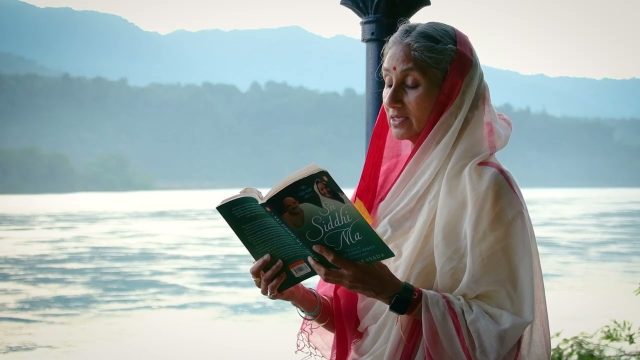
Ganga Is a Mother to Us All: A Story From Sri Siddhi Ma
Inspire

Ganga Is a Mother to Us All: A Story From Sri Siddhi Ma

A holy dip at Har Ki Pauri turns into a revelation in Sri Siddhi Ma. Nina Rao reads Jaya Prasada's Ganga passage beside the river.…

9 min read
Tout voirVous pourriez aussi aimer→

Poursuis ton chemin

Plus de sagesse et de rassemblements dans tout l’annuaire BrightStar.

Plus d’articles

Parcours toute la bibliothèque d’enseignements, d’entretiens et de guides.

Retour à tous les articles →

Enseignants et artistes

Découvre les lignées, les musiciens et les guides du monde conscient.

Explorer les artistes →

Trouver un événement

Kirtan, retraites, bains sonores, breathwork, festivals — bientôt près de chez toi.

Parcourir les événements →