BrightStar
BlogMes billets
BlogMes billets
Saved events
Aide et contactS'inscrireConnexion
Événements
  • Parcourir tous les Événements
  • Yoga
  • Méditation
  • Breathwork
  • Qi gong
  • Musique sacrée
  • Musiques du monde
  • Musique médecine
  • Soins sonores
  • Danse extatique
  • Cérémonie
  • Médecine des plantes
  • Soin énergétique
  • Satsang et sagesse
  • Tantra
  • Retraites
  • Toutes les catégories →
Destinations
  • Bali
  • Sedona
  • Los Angeles
  • Costa Rica
  • Tulum
  • Byron Bay
  • San Francisco
  • Austin
  • New York
  • San Diego
  • Denver
  • Seattle
  • Portland
  • Miami
  • London
  • Maui
  • Boulder
  • Toutes les villes →
Plateforme
  • Pour les organisateurs
  • Rejoignez le mouvement
  • Sell Globally
  • Pour les créateurs
  • Pour les équipes
  • Pour les écrivains
  • Pour les enseignants
  • Pour les artistes de kirtan
  • Pour les studios
  • Pour les festivals
  • Pour les centres de retraite
  • Pour les associations
  • Ambassadeur de marque
  • Billetterie gratuite
  • Pro
  • Amplify
  • L'écosystème
Fonctionnalités

Billetterie et achat

  • Ticket categories
  • Assigned seating
  • Custom questions
  • Coupon codes
  • Smart pricing
  • Ticket sharing
  • Waitlist
  • Flexible refunds
  • Digital waivers
  • Tip jar
  • Donations and sliding scale
  • Embed widget
  • Mindful checkout
  • Recurring events
  • Private sessions
  • Online courses
  • Summits
  • Rooms and stays
  • Ticket scanner

Marketing et croissance

  • Abandoned cart recovery
  • Visitor recovery
  • Upsells and add-ons
  • Affiliate engine
  • Upsell affiliate network
  • Brand ambassador
  • Meta retargeting
  • Verified buyer network
  • Outbound email marketing
  • Email sequences
  • SMS and WhatsApp
  • Event upsell network
  • Direct mail campaigns
  • SEO engine
  • Syndication
  • Event sharing
  • Custom event pages
  • Artist profiles
  • Link in bio
  • Event blog
  • Blog newsletter

Paiements

  • Payments, powered by Stripe
  • Buy now, pay later
  • Apple Wallet
  • Multi currency

Données et opérations

  • Team access
  • Message center
  • Reports
  • Analytics reporting
  • Performance reporting
  • Customer data
  • Integrations
  • Switch from another platform

IA

  • Assistant
  • AI FAQ assistant
  • Toutes les fonctionnalités →
Entreprise
  • À propos
  • Questions fréquentes
  • Contact
  • Blog
  • Glossaire
  • Guides
  • Inspiration
  • Centre d'aide
  • Documentation API
  • Ressources de marque
  • Presse
  • Conditions d'utilisation
  • Politique de confidentialité

Événements

  • Parcourir tous les Événements
  • Yoga
  • Méditation
  • Breathwork
  • Qi gong
  • Musique sacrée
  • Musiques du monde
  • Musique médecine

Destinations

  • Bali
  • Sedona
  • Los Angeles
  • Costa Rica
  • Tulum
  • Byron Bay
  • San Francisco
  • Austin

Plateforme

  • Pour les organisateurs
  • Rejoignez le mouvement
  • Sell Globally
  • Pour les créateurs
  • Pour les équipes
  • Pour les écrivains
  • Pour les enseignants
  • Pour les artistes de kirtan

Fonctionnalités

  • Réseau communautaire
  • Récupération des paniers abandonnés
  • Catégories de billets
  • Événements récurrents
  • Places assignées
  • Système d'affiliation
  • Liste d'attente / Notifier
  • Toutes les fonctionnalités →

Entreprise

  • À propos
  • Questions fréquentes
  • Contact
  • Blog
  • Glossaire
  • Guides
  • Conditions d'utilisation
  • Politique de confidentialité
Lire la suite

Événements

  • Soins sonores
  • Danse extatique
  • Cérémonie
  • Médecine des plantes
  • Soin énergétique
  • Satsang et sagesse
  • Tantra
  • Retraites
  • Toutes les catégories →

Destinations

  • New York
  • San Diego
  • Denver
  • Seattle
  • Portland
  • Miami
  • London
  • Maui
  • Boulder
  • Toutes les villes →

Plateforme

  • Pour les studios
  • Pour les festivals
  • Pour les centres de retraite
  • Pour les associations
  • Ambassadeur de marque
  • Billetterie gratuite
  • Pro
  • Amplify
  • L'écosystème

Entreprise

  • Inspiration
  • Centre d'aide
  • Documentation API
  • Ressources de marque
  • Presse

Billetterie et achat

  • Ticket categories
  • Assigned seating
  • Custom questions
  • Coupon codes
  • Smart pricing
  • Ticket sharing
  • Waitlist
  • Flexible refunds
  • Digital waivers
  • Tip jar
  • Donations and sliding scale
  • Embed widget
  • Mindful checkout
  • Recurring events
  • Private sessions
  • Online courses
  • Summits
  • Rooms and stays
  • Ticket scanner

Marketing et croissance

  • Abandoned cart recovery
  • Visitor recovery
  • Upsells and add-ons
  • Affiliate engine
  • Upsell affiliate network
  • Brand ambassador
  • Meta retargeting
  • Verified buyer network
  • Outbound email marketing
  • Email sequences
  • SMS and WhatsApp
  • Event upsell network
  • Direct mail campaigns
  • SEO engine
  • Syndication
  • Event sharing
  • Custom event pages
  • Artist profiles
  • Link in bio
  • Event blog
  • Blog newsletter

Paiements

  • Payments, powered by Stripe
  • Buy now, pay later
  • Apple Wallet
  • Multi currency

Données et opérations

  • Team access
  • Message center
  • Reports
  • Analytics reporting
  • Performance reporting
  • Customer data
  • Integrations
  • Switch from another platform

IA

  • Assistant
  • AI FAQ assistant
Téléchargez l'app
Télécharger dans l'App StoreDisponible surGoogle Play
© 2026 BrightStar. Tous droits réservés. BrightStar Selection · Crédits photo · Journal des modifications ·
Inspiration

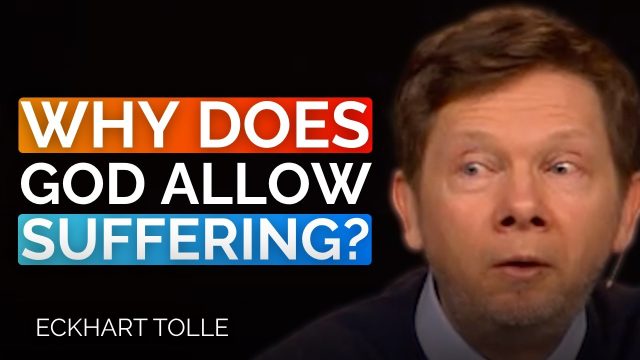
God Beyond the Sky: Rethinking Divine Nature

Eckhart Tolle
Eckhart Tolle
May 25, 2026
6 min de lecture

Source : Eckhart Tolle

The conventional image of God as an external authority figure watching humanity from above, dispensing judgment and deciding who suffers, is a fundamental misunderstanding that obscures the nature of divinity. Instead, suffering operates as the mechanism through which consciousness itself awakens and evolves. This perspective shifts the theological focus from an external God to the intrinsic process of consciousness emerging from pain—what might be understood as the birth pangs of awareness coming into being.

Lecture · 6 sections

What Does "God Is Not Who You Think He Is" Mean?

Most religious and cultural traditions have inherited an image of God as a supreme being situated somewhere external to existence—"above" in a spatial or hierarchical sense—observing human behavior, weighing moral choices, and determining who experiences suffering as punishment or trial. This anthropomorphic conception, while deeply ingrained in religious language and imagery, may represent a profound misalignment with the actual nature of the divine.

The teaching presented here invites a radical reorientation: the divine is not separate from existence, not observing from a removed position, and certainly not engaged in the calculus of deciding which humans deserve pain. Instead, divinity manifests as the underlying intelligence and consciousness woven through all existence. From this vantage point, God is not a figure but a presence—not a judge but an intrinsic principle of being.

How Does Suffering Function as Awakening?

Conventional theodicy—the attempt to reconcile an all-powerful, all-good God with the presence of suffering—has long struggled with a logical contradiction: if God is omnipotent and benevolent, why does suffering exist? The traditional answers (free will, spiritual lessons, divine mystery) often leave the questioner unsatisfied, because they continue to assume a God who "decides" to permit suffering as part of a plan.

The perspective offered here bypasses that contradiction by reframing suffering's role entirely. Suffering is not a decision made by an external being; it is a transformation mechanism. When consciousness exists in a state of contraction, denial, or unconsciousness, suffering arises as a natural consequence—not as punishment, but as pressure toward awakening. Just as a seed must break open and strain through soil to become a plant, consciousness must pass through suffering to expand into fuller awareness. The pain is intrinsic to the process, not imposed from without.

This interpretation draws on the metaphor of "birth pangs"—a apt image because birth is neither punishment nor random cruelty. It is the necessary passage through discomfort that brings a new being into the world. Similarly, suffering can be understood as the birth pangs through which consciousness—individual and collective—comes into fuller being, into greater awareness and presence.

Why Do People Cling to the Sky-God Image?

The image of God as an external authority watching from above reflects and reinforces certain human psychological patterns: the need for external validation, the desire for a cosmic parent figure, the wish that someone "in charge" will make things fair and orderly. This conception also mirrors social structures of power and hierarchy that have dominated human civilization—kings, emperors, judges—all situated above and apart from ordinary life, making decisions that affect the masses below.

For many, this God-image provides comfort: if a supreme being is in control, then chaos and meaninglessness are ruled out. Someone is watching; someone cares. Even suffering takes on meaning if it comes from an intelligent source rather than unfolding randomly. The sky-god offers theodicy through mystery—we may not understand God's plan, but we trust it exists.

Yet this same image, when taken literally and exclusively, can also become a barrier to direct encounter with the sacred. It externalizes the divine, placing it outside reach and making it something to believe in (or rebel against) rather than something to be realized through direct consciousness.

What Is the Alternative Understanding of the Divine?

If God is not a figure watching from above, what is God? One way to articulate this shift is to recognize that divinity is immanent—present within and as the fabric of existence itself, including consciousness. The divine is not separate from creation but inseparable from it. It manifests as the order underlying natural laws, the awareness within all sentient beings, and the evolutionary impulse that drives consciousness toward greater complexity and awakening.

From this perspective, to "know God" is not to believe correct doctrines about an external being, but to awaken to the divine presence already here—in this moment, in this breath, in the awareness that is reading these words. God is the ground of being itself, not a character with intentions and plans that must be guessed at from afar.

This does not mean the sacred is merely impersonal or mechanical. Consciousness—the most intimate and direct aspect of existence—may itself be the manifestation of divinity. When humans experience love, compassion, truth, or beauty, they may be touching the face of God directly, not receiving messages about God from above.

How Can Suffering Be Redemptive Without a Savior God?

If suffering is the birth pangs of consciousness rather than punishment or trial imposed by a higher power, then its redemptive potential shifts. Suffering becomes redemptive not because God is teaching a lesson, but because suffering forces consciousness out of denial and contraction into deeper awareness. Pain that breaks through numbness, grief that cracks open a hardened heart, confusion that destabilizes false certainty—all of these can serve as gateways to fuller being.

This places responsibility on consciousness itself: not "God will save me" but "I am awakening through this." The redemption is not external rescue but internal transformation—the same transformation that was always available but could only be accessed through the pressure of suffering itself. It reframes the human relationship to pain as potentially one of recognition rather than resentment—not welcoming suffering, but understanding its function when it arrives.

Where to Go From Here

This teaching invites several practices and reflections. First, examine which images of God or the divine you inherited or still carry. Notice whether they are based on direct experience or on borrowed concepts. Second, when encountering suffering—your own or others'—inquire whether there might be an awakening happening beneath the surface. Not to bypass legitimate grief or anger, but to look for the edge of expansion within the contraction. Third, explore moments of genuine presence, love, or consciousness in your own life. These may be your most direct encounters with divinity—not as belief, but as lived reality. Finally, consider that the question "Why does God allow suffering?" may dissolve once you release the premise that God is an external figure making decisions. In its place may come a deeper question: "What is consciousness awakening through my suffering, and how does that awakening serve not just me but the world?"
Commentaires

Chargement de la conversation…

L'artiste de cet article

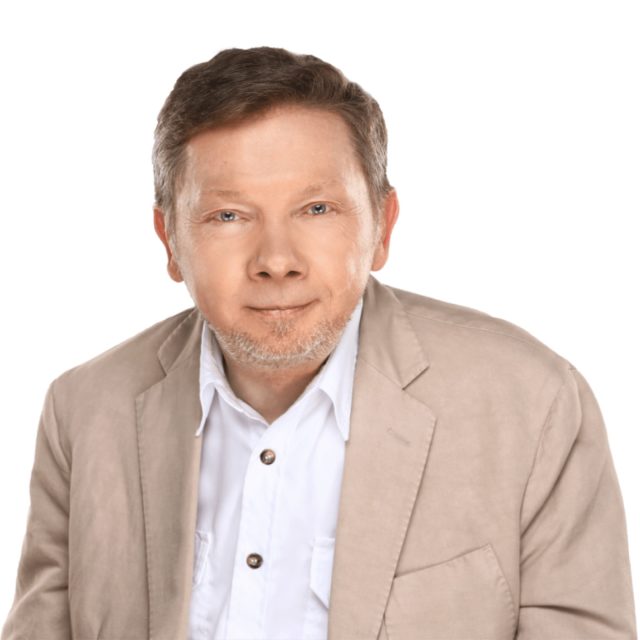
Eckhart Tolle

Eckhart Tolle

Spiritual Teacher

Eckhart Tolle is a spiritual teacher and author whose bestsellers The Power of Now and A New Earth have introduced millions to living in the present moment, and who sees awakened Presence as the essential next step in human evolution.

Voir le profil
Explorer les thèmes
God consciousnessSuffering awakeningSpiritual consciousnessDivine natureInner awakening
Questions fréquemment posées

Questions fréquemment posées

The teaching suggests God is not a separate being watching from above, but rather the ground of consciousness and being itself—present within and as existence rather than external to it. This reframes the question from belief in an external figure to direct realization of the divine presence already woven through all awareness.

This reframes the premise: God is not a figure 'allowing' suffering as a decision. Instead, suffering itself is the mechanism through which consciousness awakens and expands. It is the birth pangs of awakening rather than something decided by an external being.

Rather than rejecting childhood beliefs outright, you might recognize them as earlier stages of understanding—like learning to see in different light. The sky-god image served a purpose in your development, but deeper experience may reveal a more intimate and immanent divine reality.

Not that suffering is good, but that it can serve as a gateway to awakening when consciousness is ready. You need not passively accept unnecessary suffering, but understanding suffering's potential function—when it does arrive—can shift how you relate to it and what you discover within it.

Prayer might be understood less as petition to an external authority and more as deepening alignment with the divine consciousness that already permeates existence. It becomes a way of opening to what is already present rather than asking an absent God to intervene.

By turning attention to moments of genuine presence, love, awareness, or beauty in your own life—these are direct encounters with the sacred. Rather than seeking God elsewhere, recognize the divine already manifesting through consciousness itself, available through direct experience rather than belief.

Yes—morality arises from consciousness itself. When you awaken to the interconnectedness of all beings and the reality of consciousness, compassion and ethics flow naturally, not from fear of judgment but from understanding the unity underlying separate forms.

Vous pourriez aussi aimer

Voir tout
God, Suffering, and the One Life Across Traditions
Inspire

God, Suffering, and the One Life Across Traditions

Eckhart Tolle explores how Islam, Buddhism, and Greek philosophy all point to the same ultimate reality—and why the problem of suffering dis…

7 min read
Why Humanity Cannot Sit in Silence: Disconnection from Being
Inspire

Why Humanity Cannot Sit in Silence: Disconnection from Being

The root of human conflict lies in disconnection from the being dimension—the inability to find peace when alone. When disconnected from bei…

7 min read
The Heart Space Where All Is Welcome: A Guided Meditation
Inspire

The Heart Space Where All Is Welcome: A Guided Meditation

Tara Brach's guided meditation starts with a smile spreading across an open sky. Here is how its softening, expanding awareness and return t…

9 min read
Medicine Buddha Practice: Feeling Beneath the Thinking
Inspire

Medicine Buddha Practice: Feeling Beneath the Thinking

Lama Rod Owens opens a Monday-night Medicine Buddha session six years into the practice, teaching how to feel an experience instead of think…

10 min read
Tout voirVous pourriez aussi aimer→

Poursuis ton chemin

Plus de sagesse et de rassemblements dans tout l’annuaire BrightStar.

Plus d’articles

Parcours toute la bibliothèque d’enseignements, d’entretiens et de guides.

Retour à tous les articles →

Enseignants et artistes

Découvre les lignées, les musiciens et les guides du monde conscient.

Explorer les artistes →

Trouver un événement

Kirtan, retraites, bains sonores, breathwork, festivals — bientôt près de chez toi.

Parcourir les événements →