BrightStar
BlogMes billets
BlogMes billets
Saved events
Aide et contactS'inscrireConnexion
Événements
  • Parcourir tous les Événements
  • Pour les chercheurs
  • Yoga
  • Méditation
  • Breathwork
  • Qi gong
  • Musique sacrée
  • Musiques du monde
  • Musique médecine
  • Soins sonores
  • Danse extatique
  • Cérémonie
  • Médecine des plantes
  • Soin énergétique
  • Satsang et sagesse
  • Tantra
  • Retraites
  • Toutes les catégories →
Destinations
  • Bali
  • Sedona
  • Los Angeles
  • Costa Rica
  • Tulum
  • Byron Bay
  • San Francisco
  • Austin
  • New York
  • San Diego
  • Seattle
  • Portland
  • Miami
  • London
  • Maui
  • Boulder
  • Oakland
  • Toutes les villes →
Plateforme
  • Pour les organisateurs
  • Rejoignez le mouvement
  • Sell Globally
  • Pour les créateurs
  • Pour les équipes
  • Pour les écrivains
  • Pour les enseignants
  • Pour les artistes de kirtan
  • Pour les studios
  • Pour les festivals
  • Pour les centres de retraite
  • Pour les associations
  • Ambassadeur de marque
  • Billetterie gratuite
  • Elevate
  • Amplify
  • L'écosystème
Fonctionnalités

Billetterie et achat

  • Ticket categories
  • Assigned seating
  • Custom questions
  • Coupon codes
  • Smart pricing
  • Ticket sharing
  • Waitlist
  • Flexible refunds
  • Digital waivers
  • Tip jar
  • Donations and sliding scale
  • Embed widget
  • Mindful checkout
  • Recurring events
  • Private sessions
  • Online courses
  • Summits
  • Rooms and stays
  • Ticket scanner

Marketing et croissance

  • Abandoned cart recovery
  • Visitor recovery
  • Upsells and add-ons
  • Affiliate engine
  • Upsell affiliate network
  • Brand ambassador
  • Meta retargeting
  • Verified buyer network
  • Outbound email marketing
  • Email sequences
  • SMS and WhatsApp
  • Event upsell network
  • Direct mail campaigns
  • SEO engine
  • Syndication
  • Event sharing
  • Custom event pages
  • Artist profiles
  • Link in bio
  • Event blog
  • Blog newsletter

Paiements

  • Payments, powered by Stripe
  • Buy now, pay later
  • Apple Wallet
  • Multi currency

Données et opérations

  • Team access
  • Message center
  • Reports
  • Analytics reporting
  • Performance reporting
  • Customer data
  • Integrations
  • Switch from another platform

IA

  • Assistant
  • AI FAQ assistant
  • Toutes les fonctionnalités →
Entreprise
  • À propos
  • Questions fréquentes
  • Contact
  • Blog
  • Glossaire
  • Guides
  • Inspiration
  • Centre d'aide
  • Documentation API
  • Ressources de marque
  • Presse
  • Conditions d'utilisation
  • Politique de confidentialité

Événements

  • Parcourir tous les Événements
  • Pour les chercheurs
  • Yoga
  • Méditation
  • Breathwork
  • Qi gong
  • Musique sacrée
  • Musiques du monde

Destinations

  • Bali
  • Sedona
  • Los Angeles
  • Costa Rica
  • Tulum
  • Byron Bay
  • San Francisco
  • Austin

Plateforme

  • Pour les organisateurs
  • Rejoignez le mouvement
  • Sell Globally
  • Pour les créateurs
  • Pour les équipes
  • Pour les écrivains
  • Pour les enseignants
  • Pour les artistes de kirtan

Fonctionnalités

  • Réseau communautaire
  • Récupération des paniers abandonnés
  • Catégories de billets
  • Événements récurrents
  • Places assignées
  • Système d'affiliation
  • Liste d'attente / Notifier
  • Toutes les fonctionnalités →

Entreprise

  • À propos
  • Questions fréquentes
  • Contact
  • Blog
  • Glossaire
  • Guides
  • Conditions d'utilisation
  • Politique de confidentialité
Lire la suite

Événements

  • Musique médecine
  • Soins sonores
  • Danse extatique
  • Cérémonie
  • Médecine des plantes
  • Soin énergétique
  • Satsang et sagesse
  • Tantra
  • Retraites
  • Toutes les catégories →

Destinations

  • New York
  • San Diego
  • Seattle
  • Portland
  • Miami
  • London
  • Maui
  • Boulder
  • Oakland
  • Toutes les villes →

Plateforme

  • Pour les studios
  • Pour les festivals
  • Pour les centres de retraite
  • Pour les associations
  • Ambassadeur de marque
  • Billetterie gratuite
  • Elevate
  • Amplify
  • L'écosystème

Entreprise

  • Inspiration
  • Centre d'aide
  • Documentation API
  • Ressources de marque
  • Presse

Billetterie et achat

  • Ticket categories
  • Assigned seating
  • Custom questions
  • Coupon codes
  • Smart pricing
  • Ticket sharing
  • Waitlist
  • Flexible refunds
  • Digital waivers
  • Tip jar
  • Donations and sliding scale
  • Embed widget
  • Mindful checkout
  • Recurring events
  • Private sessions
  • Online courses
  • Summits
  • Rooms and stays
  • Ticket scanner

Marketing et croissance

  • Abandoned cart recovery
  • Visitor recovery
  • Upsells and add-ons
  • Affiliate engine
  • Upsell affiliate network
  • Brand ambassador
  • Meta retargeting
  • Verified buyer network
  • Outbound email marketing
  • Email sequences
  • SMS and WhatsApp
  • Event upsell network
  • Direct mail campaigns
  • SEO engine
  • Syndication
  • Event sharing
  • Custom event pages
  • Artist profiles
  • Link in bio
  • Event blog
  • Blog newsletter

Paiements

  • Payments, powered by Stripe
  • Buy now, pay later
  • Apple Wallet
  • Multi currency

Données et opérations

  • Team access
  • Message center
  • Reports
  • Analytics reporting
  • Performance reporting
  • Customer data
  • Integrations
  • Switch from another platform

IA

  • Assistant
  • AI FAQ assistant
Téléchargez l'app
Télécharger dans l'App StoreDisponible surGoogle Play
© 2026 BrightStar. Tous droits réservés. BrightStar Selection · Crédits photo · Journal des modifications ·
Inspiration

Ecstasy Beyond Definitions: What It Actually Is

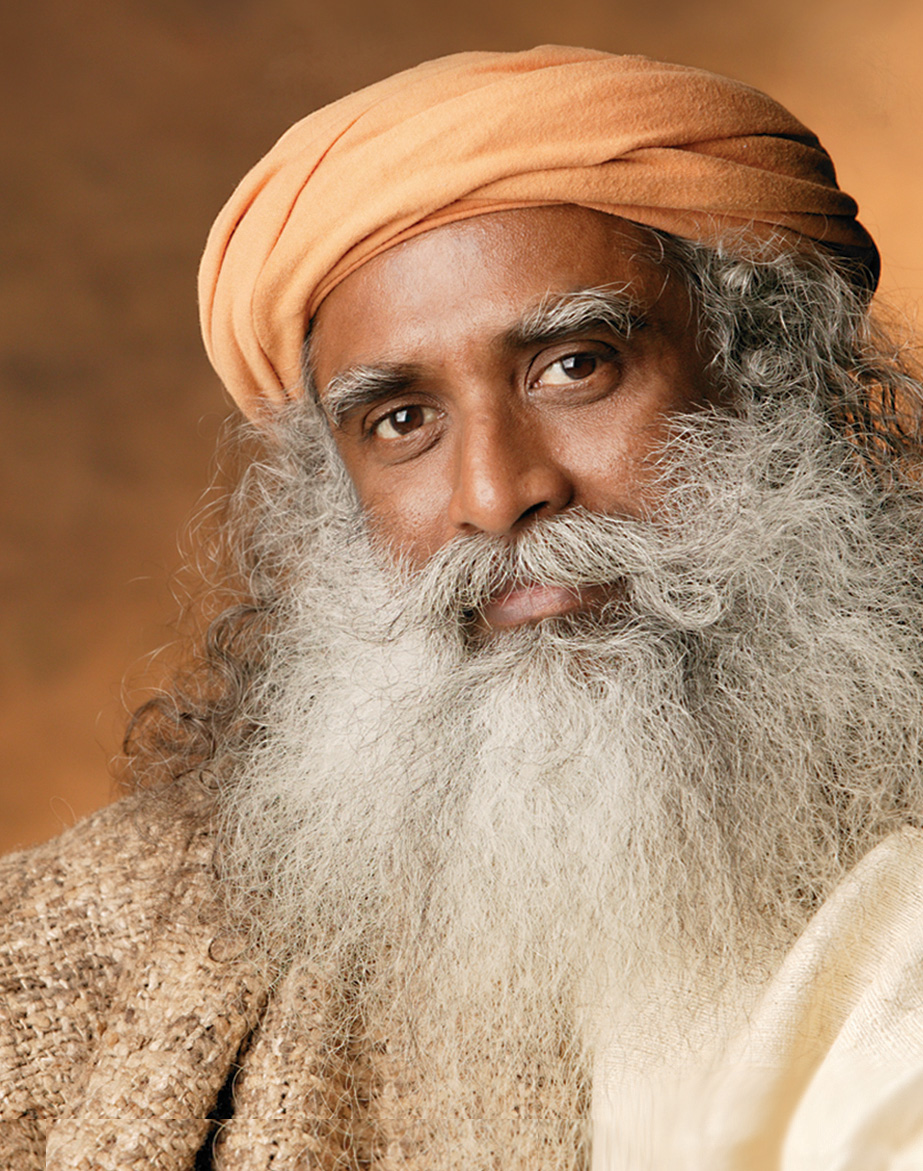
Sadhguru
Sadhguru
Jan 8, 2026
7 min de lecture

Source : Sadhguru

Ecstasy is commonly misunderstood as an emotion, peak experience, or temporary high. In reality, ecstasy represents a fundamental shift in how consciousness perceives reality—a state where the boundaries between observer and observed dissolve, and one's sense of existence expands beyond the ordinary limitations of the individual self. This is not a feeling that comes and goes, but a stable reorganization of perception available through sustained inner work.

Lecture · 7 sections

Why Ecstasy Cannot Be Defined Conventionally

The first barrier to understanding ecstasy is language itself. When we use words like "bliss," "joy," or "happiness," we point to emotional states—temporary fluctuations in the nervous system that arise and fade. Ecstasy occupies a different dimension entirely. It is not an emotion; it does not require an external stimulus, and it does not diminish with familiarity or time. The moment you try to contain ecstasy within conventional definitions, you miss its essential nature.

Many spiritual seekers pursue ecstasy as though hunting for an experience—something that will feel extraordinary, memorable, or dramatically different from ordinary consciousness. This pursuit is itself a misunderstanding. True ecstasy has no particular feeling attached to it. It is not euphoric in the way drug-induced states are, nor is it dependent on external circumstances or internal emotional triggers. The confusion arises because ecstasy is being sought in the wrong place: in sensation, in emotion, in experience. But ecstasy exists prior to all of these.

The Dissolution of the Observer-Observed Boundary

At the core of ecstasy lies a perceptual shift. In ordinary consciousness, there is a clear separation between the one who perceives and that which is perceived. You are here; the world is there. This split is so fundamental to human perception that we rarely question whether it is actually real or merely habitual. Ecstasy begins when this artificial boundary begins to dissolve.

When the sense of separation collapses, something remarkable occurs: there is no longer anyone to experience ecstasy. The very structure of experience—which requires a subject and an object—is transcended. What remains is pure awareness, prior to the division into experiencer and experienced. This is why ecstasy cannot be described as a feeling: there is no one left to have it. There is only existence itself, aware of itself, without the mediating layer of a separate self.

This dissolution is not violent or sudden in the lasting state. It is not a loss of consciousness but rather an expansion of it. The individual self does not vanish entirely during daily functioning; instead, it is recognized as a temporary formation within a much vaster awareness. The boundaries of the body and mind are no longer experienced as hard limits. One's sense of "I" becomes increasingly porous, inclusive, and boundless.

Why Peak Experiences Are Not Ecstasy

Peak experiences—moments of intense beauty, connection, or insight—are often mistaken for ecstasy. A sunset, a moment of creative inspiration, falling in love, or a sudden realization can feel transcendent. These moments are valuable, but they are not ecstasy. They still require an experiencer, an event, a circumstance. They depend on external or internal conditions. Most importantly, they fade. When the sun sets, the experience ends. When the love object changes or leaves, the feeling vanishes.

Ecstasy, by contrast, is independent of circumstance. It does not require pleasant conditions or favorable events. A person in ecstasy could be sitting alone in silence or moving through ordinary daily life; the ecstatic state persists because it is not dependent on what is happening externally or in the mind. This stability is one of its defining characteristics and one of the reasons it has been called the most desirable human state in many wisdom traditions.

Ecstasy as Perception, Not Possession

A critical shift in understanding is recognizing ecstasy not as something you achieve or possess, but as a fundamental reorganization of perception. You do not gain ecstasy. Rather, you remove the obstacles that prevent the natural, unobstructed flow of awareness. These obstacles are primarily mental: the constant narrative, the sense of self-importance, the contraction around fear and desire, the habit of evaluating everything as good or bad, mine or not mine.

The spiritual work, then, is not about reaching for something transcendent or distant, but about dismantling the psychological structures that create the illusion of separation. When these structures relax, what was always present becomes apparent. This is why ecstasy has been described in many traditions as a return home, an awakening to what you already are, rather than the achievement of something new.

Different contemplative paths offer different methods to work with this: meditation to quiet the mind, devotion to dissolve the boundary between self and other, inquiry into the nature of consciousness itself, or practices that work directly with the body's subtle energy systems. All authentic paths, however, are working toward the same shift—a fundamental reorganization of identity and perception.

The Paradox of Describing the Indescribable

Language inevitably fails when pointing to ecstasy because language operates within duality—subject and object, this and that, yes and no. Ecstasy exists beyond this structure. Words can only create a map, and the map is not the territory. Yet the maps matter. They orient the seeker in the right direction and help clarify common misconceptions.

One of the most important clarifications is this: ecstasy is not an altered state of consciousness. It is not abnormal or pathological. It is, in fact, the natural state of consciousness freed from the artificial constraints of the conditioned mind. From the perspective of someone in ecstasy, ordinary waking consciousness—full of worry, self-concern, and the sense of being a separate individual struggling against the world—would appear distorted, constrained, and fundamentally deluded.

The Role of Inner Engineering

If ecstasy is the natural state once obstacles are removed, then the work becomes clear: creating the inner conditions for its emergence. This is not about adding something but about subtracting, releasing, and dismantling. It requires attention to how the body holds tension, how the mind creates narratives, how emotions are generated by patterns of thought, and how identity is constructed through constant self-reference.

The body is particularly important in this work because the sense of being a separate individual is anchored largely in the body. Practices that increase sensitivity to the body—genuine meditation, pranayama (breathing techniques), or contemplative movement—can reveal how contracted and defended the body-mind typically is. As this armor loosens, the natural expansion of awareness becomes possible.

Devotion and love also play crucial roles. When the heart is genuinely open and the boundaries of the self-protective ego have softened through love for something larger than oneself—whether that is truth, beauty, God, or simply existence itself—the distinction between self and other naturally weakens. Ecstasy emerges in this weakening of boundaries.

Where to Go From Here

If this understanding resonates, the first step is honest self-inquiry: What am I actually seeking? Am I chasing experiences and emotions, or am I willing to look at the fundamental structures of my consciousness and perception? Am I open to the possibility that what I am looking for is not distant or difficult to achieve, but is obscured only by habitual patterns I can learn to recognize and release?

Secondly, choose a practice or path that aligns with your temperament. This might be meditation, which works directly with the mind; devotion or kirtan, which works through the opening of the heart; or intellectual inquiry, which works through direct questioning of assumptions about reality and self. The specific path matters less than genuine commitment and regular practice.

Finally, recognize that ecstasy is not the goal of a separate self trying to achieve something; it is the natural outcome of a life aligned with truth. The moment you stop living from false assumptions about who you are and what the world is, the boundaries that create the illusion of separation begin to dissolve on their own. In that dissolution, ecstasy reveals itself as what was always here—the fundamental nature of existence itself.

Commentaires

Chargement de la conversation…

L'artiste de cet article

Sadhguru

Sadhguru

Teacher

A modern mystic and spiritual leader who founded the Isha Foundation, blending ancient yogic wisdom with contemporary life to foster inner transformation and environmental sustainability globally.

Voir le profil
Explorer les thèmes
EcstasyConsciousnessPerceptionMeditationSelf inquiry
Questions fréquemment posées

Questions fréquemment posées

Peak experiences are temporary emotional or spiritual highs tied to external circumstances—a beautiful moment, creative insight, or falling in love. Ecstasy, by contrast, is independent of circumstances and does not fluctuate based on what is happening around you. It is a stable reorganization of perception, not a feeling that comes and goes.

No. Ecstasy is not an emotion; emotions are temporary mental states dependent on internal thoughts and external triggers. Ecstasy is a shift in perception itself—a dissolution of the boundary between observer and observed. It exists prior to the structure of emotion and does not have a particular feeling attached to it.

Ecstasy is the natural state of consciousness when artificial psychological barriers are removed. It is not rare or special; it is what remains when the habitual contractions of mind and ego relax. Anyone willing to do sustained inner work—through meditation, inquiry, devotion, or other genuine practices—can access it.

Ecstasy is not achieved through forcing; it emerges when obstacles are removed. Practices like meditation quiet the mind, devotion opens the heart and dissolves ego boundaries, and inquiry questions the assumptions that create a sense of separation. The work is primarily subtractive—releasing tension, softening defenses, and dismantling false beliefs about self.

From the perspective of someone in ecstasy, the ordinary contracted and fearful human consciousness appears distorted and limited. Ecstasy is not abnormal or altered; ordinary consciousness constrained by worry and self-concern is the distortion. Ecstasy is what consciousness is like when freed from these artificial limitations.

The sense of being a separate individual is anchored in the body through habitual tension and contraction. As you develop sensitivity to the body through practices like meditation or pranayama, you can recognize and gradually release this armor. As the body relaxes and softens, the natural expansion of awareness toward ecstasy becomes possible.

Stable ecstasy is not something that comes and goes because it is not dependent on conditions. However, the clarity and fullness of it can fluctuate based on whether you are reinforcing the old patterns that create contraction. Sustained practice and alignment with truth is what allows the ecstatic state to become increasingly stable and permanent.

Vous pourriez aussi aimer

Voir tout
Mind as Vehicle: Are You Driving Consciously?
Inspire

Mind as Vehicle: Are You Driving Consciously?

Explore how the mind functions like a vehicle requiring skilled operation. Learn why unconscious mental habits create suffering and how awar…

9 min read
Sleep Hours and Spiritual Practice: What Yogis Actually Need
Inspire

Sleep Hours and Spiritual Practice: What Yogis Actually Need

Sadhguru reveals his personal sleep patterns and explains why the typical 8-hour prescription doesn't apply to those with disciplined yogic …

8 min read
Sacred Feminine Power: Chanting Devi Beyond the Mat
Inspire

Sacred Feminine Power: Chanting Devi Beyond the Mat

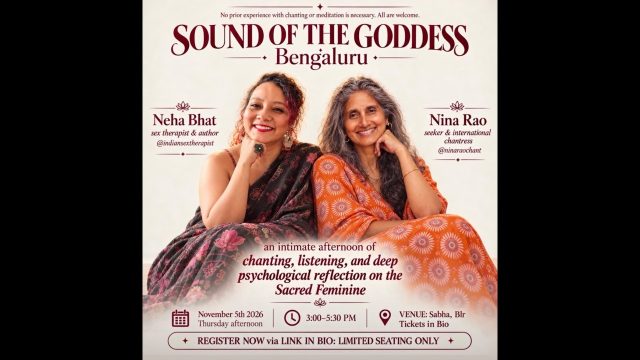
An in-person gathering in Bengaluru merges ancient devotional chanting with modern psychotherapy to explore how the Goddess archetype illumi…

8 min read
Zâhid Bizi Ta'n Eyleme: 400 Years of Turkish Devotion Reborn
Inspire

Zâhid Bizi Ta'n Eyleme: 400 Years of Turkish Devotion Reborn

Sami Yusuf performs a 16th-century Turkish spiritual masterpiece with a 50-piece ensemble, honoring four centuries of tradition while forgin…

6 min read
Tout voirVous pourriez aussi aimer→

Poursuis ton chemin

Plus de sagesse et de rassemblements dans tout l’annuaire BrightStar.

Plus d’articles

Parcours toute la bibliothèque d’enseignements, d’entretiens et de guides.

Retour à tous les articles →

Enseignants et artistes

Découvre les lignées, les musiciens et les guides du monde conscient.

Explorer les artistes →

Trouver un événement

Kirtan, retraites, bains sonores, breathwork, festivals — bientôt près de chez toi.

Parcourir les événements →