BrightStar
BlogMes billets
BlogMes billets
Saved events
Aide et contactS'inscrireConnexion
Événements
  • Parcourir tous les Événements
  • Yoga
  • Méditation
  • Breathwork
  • Qi gong
  • Musique sacrée
  • Musiques du monde
  • Musique médecine
  • Soins sonores
  • Danse extatique
  • Cérémonie
  • Médecine des plantes
  • Soin énergétique
  • Satsang et sagesse
  • Tantra
  • Retraites
  • Toutes les catégories →
Destinations
  • Bali
  • Sedona
  • Los Angeles
  • Costa Rica
  • Tulum
  • Byron Bay
  • San Francisco
  • Austin
  • New York
  • San Diego
  • Denver
  • Seattle
  • Portland
  • Miami
  • London
  • Maui
  • Boulder
  • Toutes les villes →
Plateforme
  • Pour les organisateurs
  • Rejoignez le mouvement
  • Sell Globally
  • Pour les créateurs
  • Pour les équipes
  • Pour les écrivains
  • Pour les enseignants
  • Pour les artistes de kirtan
  • Pour les studios
  • Pour les festivals
  • Pour les centres de retraite
  • Pour les associations
  • Ambassadeur de marque
  • Billetterie gratuite
  • Pro
  • Amplify
  • L'écosystème
Fonctionnalités

Billetterie et achat

  • Ticket categories
  • Assigned seating
  • Custom questions
  • Coupon codes
  • Smart pricing
  • Ticket sharing
  • Waitlist
  • Flexible refunds
  • Digital waivers
  • Tip jar
  • Donations and sliding scale
  • Embed widget
  • Mindful checkout
  • Recurring events
  • Private sessions
  • Online courses
  • Summits
  • Rooms and stays
  • Ticket scanner

Marketing et croissance

  • Abandoned cart recovery
  • Visitor recovery
  • Upsells and add-ons
  • Affiliate engine
  • Upsell affiliate network
  • Brand ambassador
  • Meta retargeting
  • Verified buyer network
  • Outbound email marketing
  • Email sequences
  • SMS and WhatsApp
  • Event upsell network
  • Direct mail campaigns
  • SEO engine
  • Syndication
  • Event sharing
  • Custom event pages
  • Artist profiles
  • Link in bio
  • Event blog
  • Blog newsletter

Paiements

  • Payments, powered by Stripe
  • Buy now, pay later
  • Apple Wallet
  • Multi currency

Données et opérations

  • Team access
  • Message center
  • Reports
  • Analytics reporting
  • Performance reporting
  • Customer data
  • Integrations
  • Switch from another platform

IA

  • Assistant
  • AI FAQ assistant
  • Toutes les fonctionnalités →
Entreprise
  • À propos
  • Questions fréquentes
  • Contact
  • Blog
  • Glossaire
  • Guides
  • Inspiration
  • Centre d'aide
  • Documentation API
  • Ressources de marque
  • Presse
  • Conditions d'utilisation
  • Politique de confidentialité

Événements

  • Parcourir tous les Événements
  • Yoga
  • Méditation
  • Breathwork
  • Qi gong
  • Musique sacrée
  • Musiques du monde
  • Musique médecine

Destinations

  • Bali
  • Sedona
  • Los Angeles
  • Costa Rica
  • Tulum
  • Byron Bay
  • San Francisco
  • Austin

Plateforme

  • Pour les organisateurs
  • Rejoignez le mouvement
  • Sell Globally
  • Pour les créateurs
  • Pour les équipes
  • Pour les écrivains
  • Pour les enseignants
  • Pour les artistes de kirtan

Fonctionnalités

  • Réseau communautaire
  • Récupération des paniers abandonnés
  • Catégories de billets
  • Événements récurrents
  • Places assignées
  • Système d'affiliation
  • Liste d'attente / Notifier
  • Toutes les fonctionnalités →

Entreprise

  • À propos
  • Questions fréquentes
  • Contact
  • Blog
  • Glossaire
  • Guides
  • Conditions d'utilisation
  • Politique de confidentialité
Lire la suite

Événements

  • Soins sonores
  • Danse extatique
  • Cérémonie
  • Médecine des plantes
  • Soin énergétique
  • Satsang et sagesse
  • Tantra
  • Retraites
  • Toutes les catégories →

Destinations

  • New York
  • San Diego
  • Denver
  • Seattle
  • Portland
  • Miami
  • London
  • Maui
  • Boulder
  • Toutes les villes →

Plateforme

  • Pour les studios
  • Pour les festivals
  • Pour les centres de retraite
  • Pour les associations
  • Ambassadeur de marque
  • Billetterie gratuite
  • Pro
  • Amplify
  • L'écosystème

Entreprise

  • Inspiration
  • Centre d'aide
  • Documentation API
  • Ressources de marque
  • Presse

Billetterie et achat

  • Ticket categories
  • Assigned seating
  • Custom questions
  • Coupon codes
  • Smart pricing
  • Ticket sharing
  • Waitlist
  • Flexible refunds
  • Digital waivers
  • Tip jar
  • Donations and sliding scale
  • Embed widget
  • Mindful checkout
  • Recurring events
  • Private sessions
  • Online courses
  • Summits
  • Rooms and stays
  • Ticket scanner

Marketing et croissance

  • Abandoned cart recovery
  • Visitor recovery
  • Upsells and add-ons
  • Affiliate engine
  • Upsell affiliate network
  • Brand ambassador
  • Meta retargeting
  • Verified buyer network
  • Outbound email marketing
  • Email sequences
  • SMS and WhatsApp
  • Event upsell network
  • Direct mail campaigns
  • SEO engine
  • Syndication
  • Event sharing
  • Custom event pages
  • Artist profiles
  • Link in bio
  • Event blog
  • Blog newsletter

Paiements

  • Payments, powered by Stripe
  • Buy now, pay later
  • Apple Wallet
  • Multi currency

Données et opérations

  • Team access
  • Message center
  • Reports
  • Analytics reporting
  • Performance reporting
  • Customer data
  • Integrations
  • Switch from another platform

IA

  • Assistant
  • AI FAQ assistant
Téléchargez l'app
Télécharger dans l'App StoreDisponible surGoogle Play
© 2026 BrightStar. Tous droits réservés. BrightStar Selection · Crédits photo · Journal des modifications ·
Inspiration

Why Simplicity Matters: Ram Dass on Life Beyond Complexity

Ram Dass
Ram Dass
Feb 24, 2026
6 min de lecture

Source : Be Here Now Network

In a conversation with Daniel Goleman on the Here & Now Podcast, Ram Dass teaches that simplicity is not deprivation but liberation—a direct antidote to the complexity and overstimulation that pulls consciousness away from the present moment. Rather than viewing a simple life as sacrifice, he reframes it as a deliberate choice to reduce friction between intention and living, creating more room for awareness, connection, and spiritual maturation.

Lecture · 8 sections

What Makes Simplicity Difficult in Modern Life?

The contemporary world is architected around complexity and accumulation. Consumer culture, digital platforms, and social comparison have made simplicity feel countercultural, even suspicious. People are taught that more is better: more possessions, more options, more stimulation, more choices. This bombardment of complexity creates a constant state of mental fragmentation—the mind is pulled in multiple directions, evaluating, wanting, comparing.

Ram Dass's teaching suggests that simplicity addresses this directly. By reducing the number of objects, commitments, and mental categories we maintain, we reduce the cognitive load required to manage daily life. This freed attention can then turn toward what matters: presence, awareness, and connection with others.

How Does Simplicity Connect to Spiritual Practice?

In traditional spiritual paths—whether Hindu, Buddhist, Christian monastic, or Sufi—simplicity has long been recognized as a discipline. Monks and nuns take vows of poverty not out of self-punishment but as a deliberate removal of distraction. When you own less, you think about possessions less. When you eat simply, meals become meditation rather than performance. When your schedule is uncluttered, you have space for deeper work.

Ram Dass teaches that simplicity is pragmatic: it's a tool for consciousness. The goal is not simplicity for its own sake, but simplicity as a means to inner clarity. By removing the noise of excess, we create conditions where awareness can deepen and the mind can settle into its natural state—what he might call presence or the "here and now" that the podcast's name references.

Why Is Simplicity Often Seen as Loss Rather Than Gain?

The mind habitually equates having with being. We've internalized the equation: more possessions = more identity, more status, more worth. Letting go of things triggers a subtle anxiety—am I becoming less if I own less? Will people respect me less?

Ram Dass's wisdom inverts this equation. True richness, he suggests, is measured in freedom, presence, and love—not in objects or status markers. A person living simply but consciously is, in his framework, wealthier than someone drowning in possessions but absent from their own life. The gain comes from what becomes available when the mind is no longer occupied with managing excess.

This is not asceticism born from shame or denial. It's a joyful recognition that simplicity itself can be a delight. The taste of simple food, the beauty of a bare room, the clarity that comes from an uncluttered schedule—these are pleasures that complexity obscures.

How Can Someone Begin to Practice Simplicity?

Simplicity doesn't require dramatic gesture. It begins with intention and honest observation. Where do you feel pulled in multiple directions? Where does complexity create friction in your life? Some natural entry points include:

  • Physical space: Removing objects that no longer serve you. This is both practical and meditative—each decision to keep or release is an act of presence.
  • Schedule: Saying no to commitments that don't align with your values. This is harder than object removal because it involves disappointing others, but it protects your attention.
  • Diet: Eating fewer types of foods, or eating without distraction. This simplifies both preparation and consumption, making meals more present and nourishing.
  • Digital life: Reducing notifications, unfollowing accounts that trigger comparison, limiting screen time. This is contemporary asceticism—protecting your mind from designed distraction.

The practice is gentle and gradual. There's no timeline. Ram Dass's teaching is not about achieving some perfect state of minimal living but about noticing when simplicity serves you and when complexity becomes burden.

What Is the Delight in Simplicity?

The podcast episode title—"The Delight of Simplicity"—is crucial. This is not a grim teaching about renunciation. Ram Dass is pointing toward actual happiness that arises when life becomes simpler. A person with few possessions but a quiet mind may experience more joy than someone surrounded by luxury but perpetually stressed.

This delight has several dimensions. First, there's the relief of released mental energy. When you stop managing excess, that energy becomes available for creativity, love, or spiritual practice. Second, there's the sensory clarity that simplicity brings. When you eat one simple meal, you taste it fully. When your space is spare, you notice light and space. When your schedule is open, you notice the present moment.

Third, simplicity often creates connection. Many people drawn to simple living report that it brings them closer to others—to community, to shared meals, to unhurried conversation. The complexity of individual accumulation is replaced by the richness of relationship.

How Does Simplicity Support the "Here and Now"?

Ram Dass's core teaching has always been about presence—being fully here, now, with what is. Simplicity serves this by removing the gravitational pull of the past (regret about what you've accumulated) and future (anxiety about maintaining or acquiring more). When your life is simple, your nervous system relaxes. When your nervous system is relaxed, presence becomes natural.

This is why simplicity and awakening often travel together in spiritual traditions. The mind cannot be fully present while managing the mental load of complexity. By simplifying the external world, we simplify the internal world, creating conditions where awareness can expand and deepen.

Is Simplicity a Luxury Only Some Can Afford?

This is a fair question. Not everyone has the freedom to dramatically simplify. Economic necessity, family responsibility, and health requirements sometimes require complexity. Ram Dass's teaching is not that everyone should live in poverty but that wherever you are, simplicity can be a direction—a principle applied proportionally.

Someone with limited income may already be practicing simplicity. Someone wealthy might intentionally choose to live simply as a spiritual practice. The teaching is about conscious choice, not circumstance. Even in complexity, you can notice areas where simplification is possible and see what opens up.

Where to Go From Here

If Ram Dass's teaching on simplicity resonates, the next step is direct observation. Notice where complexity creates friction in your own life. Choose one small area—a shelf, a time block, a digital habit—and experiment with simplification. Pay attention to what happens internally. Does your mind become quieter? Does presence become easier? Does joy emerge?

Simplicity is not a fixed destination but an ongoing practice of alignment. As you simplify, you learn what you actually need and what you thought you needed. Over time, you discover that the delight Ram Dass points to is not in the simplicity itself but in the freedom and awareness that simplicity makes possible. This is the real teaching: simplicity is a gateway, not a goal.

Commentaires

Chargement de la conversation…

L'artiste de cet article

Ram Dass

Ram Dass

Spiritual Teacher

Ram Dass (born Richard Alpert, 1931-2019) was an American spiritual teacher, psychologist, and author whose 1971 book Be Here Now helped popularize Eastern spirituality in the West. A Harvard psychologist turned Hindu devotee, he bridged psychedelic research, yoga, and conscious living for millions.

Voir le profil
Explorer les thèmes
SimplicityMinimalismPresenceSpiritual practiceConsciousness
Questions fréquemment posées

Questions fréquemment posées

Simplicity reduces mental clutter and the energy spent managing excess, freeing attention for presence and awareness. By removing distractions from your environment and schedule, your nervous system relaxes and consciousness can naturally expand toward what spiritual teachers call 'here and now' awareness.

Yes, but simplicity is a recognized tool in spiritual traditions because it removes friction between intention and practice. What matters is conscious choice rather than the absolute number of possessions. The teaching is about aligning your external life with your inner values, not judgment about what you own.

The mind equates having with identity and security. Letting go triggers subtle anxiety about loss of worth or status. Additionally, consumer culture trains us to see accumulation as success. Simplicity requires reframing value from possessions to presence, freedom, and awareness.

Begin with observation rather than dramatic action. Notice where complexity creates stress or scattered attention in your life. Then choose one small area—a shelf, your schedule, or social media—and experiment with removal or reduction, paying attention to internal shifts.

No. Simplicity is a conscious choice about what serves your life and values. It's not about suffering but about removing what doesn't add real value, freeing resources—mental, financial, and temporal—for what matters most: presence, connection, and spiritual practice.

Fewer possessions and commitments mean less mental load and fewer decisions to manage daily. This reduces decision fatigue and anxiety, allowing your mind to settle into its natural state of clarity and presence rather than being constantly pulled toward managing and evaluating excess.

Vous pourriez aussi aimer

Voir tout
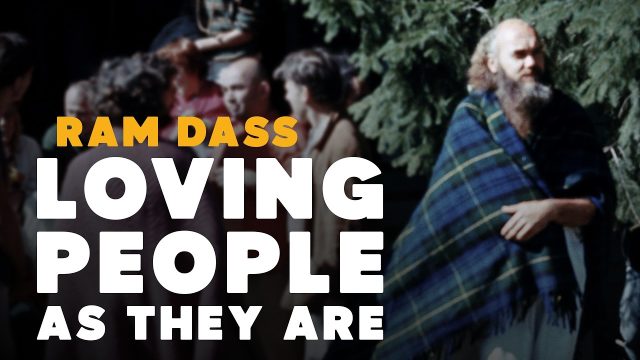
Love People As They Are: Responsive vs. Reactive
Inspire

Love People As They Are: Responsive vs. Reactive

Learn how to love people unconditionally by shifting from reactive patterns to responsive presence, keeping your heart open in the face of s…

9 min read
Freedom Without Connection: Why Liberation Feels Empty
Inspire

Freedom Without Connection: Why Liberation Feels Empty

External freedom without spiritual connection leaves the heart hollow. Explore why liberation requires more than just the absence of constra…

7 min read
First Meeting with a Living Guru: Recognition and Transformation
Inspire

First Meeting with a Living Guru: Recognition and Transformation

Krishna Das reflects on his first encounters with his teacher Maharaj-ji and Ram Dass, describing the moment he recognized something real ab…

7 min read
Rumi's Teaching Story: Presence and Spiritual Wisdom
Inspire

Rumi's Teaching Story: Presence and Spiritual Wisdom

Ram Dass shares a timeless Rumi story on presence and spiritual awakening. A brief but potent lesson in mindfulness and the heart's capacity…

6 min read
Tout voirVous pourriez aussi aimer→

Poursuis ton chemin

Plus de sagesse et de rassemblements dans tout l’annuaire BrightStar.

Plus d’articles

Parcours toute la bibliothèque d’enseignements, d’entretiens et de guides.

Retour à tous les articles →

Enseignants et artistes

Découvre les lignées, les musiciens et les guides du monde conscient.

Explorer les artistes →

Trouver un événement

Kirtan, retraites, bains sonores, breathwork, festivals — bientôt près de chez toi.

Parcourir les événements →