BrightStar
BlogMes billets
BlogMes billets
Saved events
Aide et contactS'inscrireConnexion
Événements
  • Parcourir tous les Événements
  • Yoga
  • Méditation
  • Breathwork
  • Qi gong
  • Musique sacrée
  • Musiques du monde
  • Musique médecine
  • Soins sonores
  • Danse extatique
  • Cérémonie
  • Médecine des plantes
  • Soin énergétique
  • Satsang et sagesse
  • Tantra
  • Retraites
  • Toutes les catégories →
Destinations
  • Bali
  • Sedona
  • Los Angeles
  • Costa Rica
  • Tulum
  • Byron Bay
  • San Francisco
  • Austin
  • New York
  • San Diego
  • Denver
  • Seattle
  • Portland
  • Miami
  • London
  • Maui
  • Boulder
  • Toutes les villes →
Plateforme
  • Pour les organisateurs
  • Rejoignez le mouvement
  • Sell Globally
  • Pour les créateurs
  • Pour les équipes
  • Pour les écrivains
  • Pour les enseignants
  • Pour les artistes de kirtan
  • Pour les studios
  • Pour les festivals
  • Pour les centres de retraite
  • Pour les associations
  • Ambassadeur de marque
  • Billetterie gratuite
  • Pro
  • Amplify
  • L'écosystème
Fonctionnalités

Billetterie et achat

  • Ticket categories
  • Assigned seating
  • Custom questions
  • Coupon codes
  • Smart pricing
  • Ticket sharing
  • Waitlist
  • Flexible refunds
  • Digital waivers
  • Tip jar
  • Donations and sliding scale
  • Embed widget
  • Mindful checkout
  • Recurring events
  • Private sessions
  • Online courses
  • Summits
  • Rooms and stays
  • Ticket scanner

Marketing et croissance

  • Abandoned cart recovery
  • Visitor recovery
  • Upsells and add-ons
  • Affiliate engine
  • Upsell affiliate network
  • Brand ambassador
  • Meta retargeting
  • Verified buyer network
  • Outbound email marketing
  • Email sequences
  • SMS and WhatsApp
  • Event upsell network
  • Direct mail campaigns
  • SEO engine
  • Syndication
  • Event sharing
  • Custom event pages
  • Artist profiles
  • Link in bio
  • Event blog
  • Blog newsletter

Paiements

  • Payments, powered by Stripe
  • Buy now, pay later
  • Apple Wallet
  • Multi currency

Données et opérations

  • Team access
  • Message center
  • Reports
  • Analytics reporting
  • Performance reporting
  • Customer data
  • Integrations
  • Switch from another platform

IA

  • Assistant
  • AI FAQ assistant
  • Toutes les fonctionnalités →
Entreprise
  • À propos
  • Questions fréquentes
  • Contact
  • Blog
  • Glossaire
  • Guides
  • Inspiration
  • Centre d'aide
  • Documentation API
  • Ressources de marque
  • Presse
  • Conditions d'utilisation
  • Politique de confidentialité

Événements

  • Parcourir tous les Événements
  • Yoga
  • Méditation
  • Breathwork
  • Qi gong
  • Musique sacrée
  • Musiques du monde
  • Musique médecine

Destinations

  • Bali
  • Sedona
  • Los Angeles
  • Costa Rica
  • Tulum
  • Byron Bay
  • San Francisco
  • Austin

Plateforme

  • Pour les organisateurs
  • Rejoignez le mouvement
  • Sell Globally
  • Pour les créateurs
  • Pour les équipes
  • Pour les écrivains
  • Pour les enseignants
  • Pour les artistes de kirtan

Fonctionnalités

  • Réseau communautaire
  • Récupération des paniers abandonnés
  • Catégories de billets
  • Événements récurrents
  • Places assignées
  • Système d'affiliation
  • Liste d'attente / Notifier
  • Toutes les fonctionnalités →

Entreprise

  • À propos
  • Questions fréquentes
  • Contact
  • Blog
  • Glossaire
  • Guides
  • Conditions d'utilisation
  • Politique de confidentialité
Lire la suite

Événements

  • Soins sonores
  • Danse extatique
  • Cérémonie
  • Médecine des plantes
  • Soin énergétique
  • Satsang et sagesse
  • Tantra
  • Retraites
  • Toutes les catégories →

Destinations

  • New York
  • San Diego
  • Denver
  • Seattle
  • Portland
  • Miami
  • London
  • Maui
  • Boulder
  • Toutes les villes →

Plateforme

  • Pour les studios
  • Pour les festivals
  • Pour les centres de retraite
  • Pour les associations
  • Ambassadeur de marque
  • Billetterie gratuite
  • Pro
  • Amplify
  • L'écosystème

Entreprise

  • Inspiration
  • Centre d'aide
  • Documentation API
  • Ressources de marque
  • Presse

Billetterie et achat

  • Ticket categories
  • Assigned seating
  • Custom questions
  • Coupon codes
  • Smart pricing
  • Ticket sharing
  • Waitlist
  • Flexible refunds
  • Digital waivers
  • Tip jar
  • Donations and sliding scale
  • Embed widget
  • Mindful checkout
  • Recurring events
  • Private sessions
  • Online courses
  • Summits
  • Rooms and stays
  • Ticket scanner

Marketing et croissance

  • Abandoned cart recovery
  • Visitor recovery
  • Upsells and add-ons
  • Affiliate engine
  • Upsell affiliate network
  • Brand ambassador
  • Meta retargeting
  • Verified buyer network
  • Outbound email marketing
  • Email sequences
  • SMS and WhatsApp
  • Event upsell network
  • Direct mail campaigns
  • SEO engine
  • Syndication
  • Event sharing
  • Custom event pages
  • Artist profiles
  • Link in bio
  • Event blog
  • Blog newsletter

Paiements

  • Payments, powered by Stripe
  • Buy now, pay later
  • Apple Wallet
  • Multi currency

Données et opérations

  • Team access
  • Message center
  • Reports
  • Analytics reporting
  • Performance reporting
  • Customer data
  • Integrations
  • Switch from another platform

IA

  • Assistant
  • AI FAQ assistant
Téléchargez l'app
Télécharger dans l'App StoreDisponible surGoogle Play
© 2026 BrightStar. Tous droits réservés. BrightStar Selection · Crédits photo · Journal des modifications ·
Inspiration

Warmheartedness as the Source of Inner Strength and Trust

Dalai Lama
Dalai Lama
Nov 27, 2026
8 min de lecture

Source : Dalai Lama

À regarder · 6

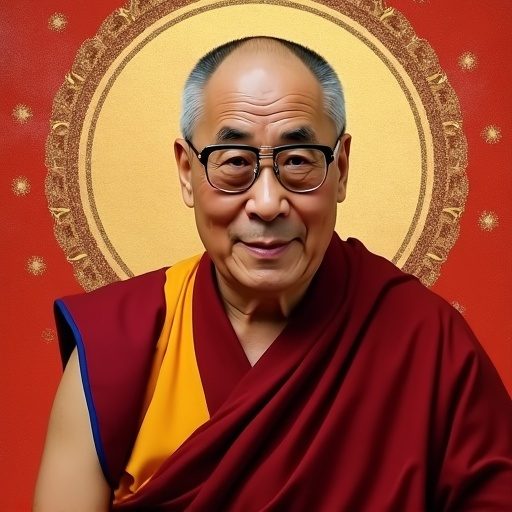
Asked how he keeps his hope and strength through difficult times, the Dalai Lama does not reach for a doctrine or a list of techniques. He reaches for a single quality, warmheartedness, and argues that it sits underneath willpower and determination the way a foundation sits under a building. In a clip of barely a minute and a half, drawn from a conversation recorded on June 1, 2018, he connects three things that are usually kept apart: the inner strength a person draws on in hard times, the honesty with which they do their work, and the trust that friendship rests on. His claim is that all three grow from the same root, and that the root is not money, power, or education but a mind turned toward the well-being of others.

Lecture · 7 sections

What is the moment, and what is actually being asked?

The exchange opens with a plain question, put with the frankness of someone who already knows the subject's life: "Your holiness, you have encountered many adversities in your life." The question that follows is the interesting one: how have you maintained your sense of hope and strength during these difficult times? Notice what the question assumes. Hope is not treated as a default setting that a person simply has. It is something maintained, worked at, kept alive. The questioner is asking about method.

The answer does not describe a method in the ordinary sense. It describes where the method begins. That reframing is the heart of the clip, and it is why a reader who only skims it will miss most of what is there.

Why does warmheartedness come before willpower?

Willpower and determination are the qualities most people reach for when they ask how to endure hardship. The Dalai Lama names them, then places something beneath them. In the video, at about the 11-second mark, he says:

"I think foundation of willpower, determination is warmheartedness. Not self-centered attitude."
— the Dalai Lama, in a video recorded June 1, 2018 (0:11)

He is not dismissing willpower. He is saying that willpower has a foundation, and that the foundation determines what the willpower is for. A will that serves a self-centered aim is still a will; the clip suggests that its strength is brittle in a particular way, because it is organized around protecting one's own position. A will that rests on warmheartedness is pointed outward, toward the good of others, and the clip's argument is that this orientation is what makes it sturdy.

Read this way, the sentence is less a platitude about kindness than a claim about structure. Warmheartedness is not one virtue among several that help a person endure. It is the thing the others stand on.

How does a self-centered mind produce fear?

The Dalai Lama's reasoning here is compact, and it has a clear sequence. First, he asks the listener to "think about the well-being of sentient being." Then he says that this view "brings inner strength, self-confidence." The contrast follows: "too much self-centered attitude, then you see some anxiety, fear." The clip is at its most psychologically precise in this stretch, around the 29-second and 38-second marks.

The logic can be stated plainly. When a person's attention is concentrated almost entirely on the self, every difficulty becomes a question about that self: whether it will be harmed, whether it will be diminished, whether it will be seen to fail. Each event is weighed against one's own security, and so each event carries the possibility of loss. When attention widens to include the welfare of other beings, the stakes are shared rather than private. The Dalai Lama does not say that difficulty disappears. He says that the mind which is oriented toward others is the one that has inner strength, and the one that is oriented toward itself is the one that fills with anxiety and fear.

This is an interpretation of his words rather than a quotation of his method, but it follows directly from the sequence he sets out. The clip gives no step-by-step procedure for moving from one state to the other. It makes a claim about which state produces which result, and leaves the listener to test it.

What does compassion have to do with honest work?

The clip then moves from the inner condition to the outer one. "So the more compassionate mind is really bring inner strength," he says, and then he draws the consequence for work: "With inner strength, you can carry your work transparently, honestly, truthfully." The sequence is compassion, then inner strength, then work done openly and truthfully. Each step is presented as following from the last.

Then comes the image that gives the clip its sharpest edge. At about the 58-second mark he says: "Too much self-centered attitude, then uh artificial smile also come." The phrase is worth lingering on. An artificial smile is a face arranged to manage how one is perceived, a gesture that is not quite continuous with what the person actually feels. It is what a mind produces when it is busy protecting an image. The Dalai Lama's point is that self-centeredness does not stay private. It leaks into how a person presents themselves to others, and others tend to notice the difference between warmth that is real and warmth that is performed.

The word he uses for the alternative is "truthful," followed by "transparent." Transparency here does not mean disclosing everything. It means that what a person shows and what a person is are not two different things.

Why does trust, not money or power, hold friendship together?

The final movement of the clip widens the frame from the individual to the human community. "We social animal," the Dalai Lama says, and "individual's life very much depend on friendship." Around the 87-second mark he states the principle that the whole argument has been building toward: "Friend friendship develop entirely on the basis of trust, not money, not power, not just a mere education, but warmheartedness."

Notice the list. Money, power, and education are three of the things societies most often treat as sources of standing and security. He names all three and sets them aside as the basis of friendship. What remains is trust, and trust, in his account, is the product of warmheartedness. This links back to the opening: a person who is warm and transparent is the kind of person others can trust, and trust is what allows friendship to form and last. The chain runs from inner condition, to visible conduct, to the bonds that sustain a life.

"We social animal uh individual's life very much depend on friendship."
— the Dalai Lama, in a video recorded June 1, 2018 (1:15)

Quotes here are lightly trimmed of the verbal fillers that appear in the auto-generated transcript; the wording is otherwise as spoken.

What does this look like as a practice of attention?

The clip does not prescribe exercises, and it would be a distortion to invent them for the speaker. But his logic suggests questions a reader can carry into ordinary days. When a person feels anxiety or fear rising, the Dalai Lama's framing asks where the attention has narrowed: is it fixed on how one is being seen, what one is losing, what one might fail to protect? When a person is about to present their work, the framing asks whether they are aiming to be transparent and truthful or to produce a performance. When a person is trying to build a friendship, it asks whether trust is being earned through honesty and warmth, or whether money, status, or credentials are being offered in its place.

These are not instructions from the clip. They are the questions the clip raises when taken seriously, and they are arguably harder to answer honestly than the question of how to feel strong.

Where to go from here

The clip is short enough to watch several times, and each viewing tends to surface a different thread: the opening question about adversity, the structural claim about willpower and its foundation, the blunt observation about the artificial smile, the closing list of what friendship does not rest on. Reading it alongside the question that prompted it, how one keeps hope alive, gives it a practical edge. The Dalai Lama answered that question not with a technique but with a claim about where strength comes from, and the most useful next step is to test that claim against one's own experience of fear, work, and friendship. The clip makes the argument; the rest is observation.
Commentaires

Chargement de la conversation…

Transcript

[0:00] Your holiness, you have encountered many

[0:02] adversities in your life.

[0:05] Can you share how you have maintained

[0:07] your sense of hope and strength during

[0:09] these difficult times?

[0:11] >> I think foundation

[0:12] of

[0:14] willpower,

[0:16] determination

[0:18] is

[0:19] warmheartedness.

[0:22] Not self-centered attitude.

[0:25] Think

[0:26] about the well-being of

[0:28] sentient being.

[0:29] That view brings inner strength,

[0:32] self-confidence.

[0:34] Uh too much self-centered attitude, then

[0:38] you see some anxiety, fear.

[0:43] So the more compassionate mind

[0:46] is really bring

[0:48] inner strength.

[0:49] With inner strength, you can carry your

[0:52] work

[0:53] transparently,

[0:54] honestly, truthfully.

[0:58] Too much self-centered attitude, then uh

[1:01] artificial smile also come.

[1:06] Uh

[1:07] so truthful

[1:09] uh

[1:10] transparent, that brings trust

[1:13] from other.

[1:15] We social animal

[1:17] uh

[1:20] individual's life very much depend on

[1:25] friendship.

[1:27] Friend friendship

[1:29] develop entirely on the basis of trust,

[1:33] not money, not power,

[1:35] not just a mere education,

[1:37] but warmheartedness.

Dalai Lama

Dalai Lama

Artiste

Spiritual leader of Tibetan Buddhism and Nobel Peace Prize laureate (1989). Born Lhamo Thondup in 1935, recognized at age two as the reincarnation of the 13th Dalai Lama, he fled into exile in 1959 after the Chinese occupation of Tibet. From his seat in Dharamshala, India, he has worked tirelessly for nonviolence, interfaith dialogue, and the cause of the Tibetan people, becoming one of the most beloved spiritual teachers of our time. His books — including The Art of Happiness, Ethics for the New Millennium, and The Book of Joy — have brought Tibetan Buddhist wisdom to a global audience.

Voir le profil
Explorer les thèmes
WarmheartednessInner strengthDalai lamaCompassionTrust and friendship
Questions fréquemment posées

Questions fréquemment posées

In the clip, the Dalai Lama says that warmheartedness is the foundation of willpower and determination, not a self-centered attitude. He argues that thinking about the well-being of sentient beings brings inner strength and self-confidence. The clip is from a recording made June 1, 2018.

He says that too much self-centered attitude causes anxiety and fear, while a more compassionate mind brings inner strength. The clip presents this as a contrast between two states of mind rather than as a detailed step-by-step method. The listener is left to consider which state produces which result.

He states that friendship develops entirely on the basis of trust, and that trust comes from warmheartedness rather than money, power, or a mere education. He notes that people are social animals whose lives depend very much on friendship. Honest, transparent conduct is what earns the trust others place in a person.

He says that too much self-centered attitude leads to an artificial smile, a face that does not match what a person actually feels. Such self-centeredness makes a person less truthful and transparent in their work and relationships. Warmth that is real is contrasted with warmth that is performed.

No, the Dalai Lama does not say willpower is unimportant. He says that willpower and determination have warmheartedness as their foundation, which shapes what the willpower is for. The clip frames compassion as the base that the other qualities rest on.

The video runs about one minute and thirty-nine seconds. The published description states that it was originally recorded on June 1, 2018, in response to a question about how he keeps hope and strength through difficult times.

Vous pourriez aussi aimer

Voir tout
What Is Real Happiness? A Deeper Understanding Beyond Pleasure
Inspire

What Is Real Happiness? A Deeper Understanding Beyond Pleasure

His Holiness the Dalai Lama redefines happiness not as fleeting pleasure but as a profound sense of satisfaction that sustains us even throu…

5 min read
What Real Happiness Actually Means Beyond Pleasure
Inspire

What Real Happiness Actually Means Beyond Pleasure

The Dalai Lama reframes happiness as deep satisfaction rather than pleasure, arguing that meaning emerges through struggle and that hope sus…

5 min read
Voice Temple Kirtan in Pisac: A Farewell Night of Call and Response
Inspire

Voice Temple Kirtan in Pisac: A Farewell Night of Call and Response

Franko Heke's five-minute highlight reel from a Voice Temple kirtan at Kula Café in Pisac, Peru. What the footage shows and what the call-an…

6 min read
Sacred Kirtan at Radha Madan Mohan Temple, Vrindavan
Inspire

Sacred Kirtan at Radha Madan Mohan Temple, Vrindavan

A 31-second glimpse of sacred kirtan sung at Sri Sri Radha Madan Mohan temple in Vrindavan. Here is what the practice is and why its setting…

2 min read
Tout voirVous pourriez aussi aimer→

Poursuis ton chemin

Plus de sagesse et de rassemblements dans tout l’annuaire BrightStar.

Plus d’articles

Parcours toute la bibliothèque d’enseignements, d’entretiens et de guides.

Retour à tous les articles →

Enseignants et artistes

Découvre les lignées, les musiciens et les guides du monde conscient.

Explorer les artistes →

Trouver un événement

Kirtan, retraites, bains sonores, breathwork, festivals — bientôt près de chez toi.

Parcourir les événements →