BrightStar
BlogMes billets
BlogMes billets
Saved events
Aide et contactS'inscrireConnexion
Événements
  • Parcourir tous les Événements
  • Yoga
  • Méditation
  • Breathwork
  • Qi gong
  • Musique sacrée
  • Musiques du monde
  • Musique médecine
  • Soins sonores
  • Danse extatique
  • Cérémonie
  • Médecine des plantes
  • Soin énergétique
  • Satsang et sagesse
  • Tantra
  • Retraites
  • Toutes les catégories →
Destinations
  • Bali
  • Sedona
  • Los Angeles
  • Costa Rica
  • Tulum
  • Byron Bay
  • San Francisco
  • Austin
  • New York
  • San Diego
  • Denver
  • Seattle
  • Portland
  • Miami
  • London
  • Maui
  • Boulder
  • Toutes les villes →
Plateforme
  • Pour les organisateurs
  • Rejoignez le mouvement
  • Sell Globally
  • Pour les créateurs
  • Pour les équipes
  • Pour les écrivains
  • Pour les enseignants
  • Pour les artistes de kirtan
  • Pour les studios
  • Pour les festivals
  • Pour les centres de retraite
  • Pour les associations
  • Ambassadeur de marque
  • Billetterie gratuite
  • Pro
  • Amplify
  • L'écosystème
Fonctionnalités

Billetterie et achat

  • Ticket categories
  • Assigned seating
  • Custom questions
  • Coupon codes
  • Smart pricing
  • Ticket sharing
  • Waitlist
  • Flexible refunds
  • Digital waivers
  • Tip jar
  • Donations and sliding scale
  • Embed widget
  • Mindful checkout
  • Recurring events
  • Private sessions
  • Online courses
  • Summits
  • Rooms and stays
  • Ticket scanner

Marketing et croissance

  • Abandoned cart recovery
  • Visitor recovery
  • Upsells and add-ons
  • Affiliate engine
  • Upsell affiliate network
  • Brand ambassador
  • Meta retargeting
  • Verified buyer network
  • Outbound email marketing
  • Email sequences
  • SMS and WhatsApp
  • Event upsell network
  • Direct mail campaigns
  • SEO engine
  • Syndication
  • Event sharing
  • Custom event pages
  • Artist profiles
  • Link in bio
  • Event blog
  • Blog newsletter

Paiements

  • Payments, powered by Stripe
  • Buy now, pay later
  • Apple Wallet
  • Multi currency

Données et opérations

  • Team access
  • Message center
  • Reports
  • Analytics reporting
  • Performance reporting
  • Customer data
  • Integrations
  • Switch from another platform

IA

  • Assistant
  • AI FAQ assistant
  • Toutes les fonctionnalités →
Entreprise
  • À propos
  • Questions fréquentes
  • Contact
  • Blog
  • Glossaire
  • Guides
  • Inspiration
  • Centre d'aide
  • Documentation API
  • Ressources de marque
  • Presse
  • Conditions d'utilisation
  • Politique de confidentialité

Événements

  • Parcourir tous les Événements
  • Yoga
  • Méditation
  • Breathwork
  • Qi gong
  • Musique sacrée
  • Musiques du monde
  • Musique médecine

Destinations

  • Bali
  • Sedona
  • Los Angeles
  • Costa Rica
  • Tulum
  • Byron Bay
  • San Francisco
  • Austin

Plateforme

  • Pour les organisateurs
  • Rejoignez le mouvement
  • Sell Globally
  • Pour les créateurs
  • Pour les équipes
  • Pour les écrivains
  • Pour les enseignants
  • Pour les artistes de kirtan

Fonctionnalités

  • Réseau communautaire
  • Récupération des paniers abandonnés
  • Catégories de billets
  • Événements récurrents
  • Places assignées
  • Système d'affiliation
  • Liste d'attente / Notifier
  • Toutes les fonctionnalités →

Entreprise

  • À propos
  • Questions fréquentes
  • Contact
  • Blog
  • Glossaire
  • Guides
  • Conditions d'utilisation
  • Politique de confidentialité
Lire la suite

Événements

  • Soins sonores
  • Danse extatique
  • Cérémonie
  • Médecine des plantes
  • Soin énergétique
  • Satsang et sagesse
  • Tantra
  • Retraites
  • Toutes les catégories →

Destinations

  • New York
  • San Diego
  • Denver
  • Seattle
  • Portland
  • Miami
  • London
  • Maui
  • Boulder
  • Toutes les villes →

Plateforme

  • Pour les studios
  • Pour les festivals
  • Pour les centres de retraite
  • Pour les associations
  • Ambassadeur de marque
  • Billetterie gratuite
  • Pro
  • Amplify
  • L'écosystème

Entreprise

  • Inspiration
  • Centre d'aide
  • Documentation API
  • Ressources de marque
  • Presse

Billetterie et achat

  • Ticket categories
  • Assigned seating
  • Custom questions
  • Coupon codes
  • Smart pricing
  • Ticket sharing
  • Waitlist
  • Flexible refunds
  • Digital waivers
  • Tip jar
  • Donations and sliding scale
  • Embed widget
  • Mindful checkout
  • Recurring events
  • Private sessions
  • Online courses
  • Summits
  • Rooms and stays
  • Ticket scanner

Marketing et croissance

  • Abandoned cart recovery
  • Visitor recovery
  • Upsells and add-ons
  • Affiliate engine
  • Upsell affiliate network
  • Brand ambassador
  • Meta retargeting
  • Verified buyer network
  • Outbound email marketing
  • Email sequences
  • SMS and WhatsApp
  • Event upsell network
  • Direct mail campaigns
  • SEO engine
  • Syndication
  • Event sharing
  • Custom event pages
  • Artist profiles
  • Link in bio
  • Event blog
  • Blog newsletter

Paiements

  • Payments, powered by Stripe
  • Buy now, pay later
  • Apple Wallet
  • Multi currency

Données et opérations

  • Team access
  • Message center
  • Reports
  • Analytics reporting
  • Performance reporting
  • Customer data
  • Integrations
  • Switch from another platform

IA

  • Assistant
  • AI FAQ assistant
Téléchargez l'app
Télécharger dans l'App StoreDisponible surGoogle Play
© 2026 BrightStar. Tous droits réservés. BrightStar Selection · Crédits photo · Journal des modifications ·
Inspiration

Improvising Mantra: How Friday Night Songs Keep Changing

Wah!
Wah!
Nov 24, 2026
9 min de lecture

Source : Everything Wah!

À regarder · 6

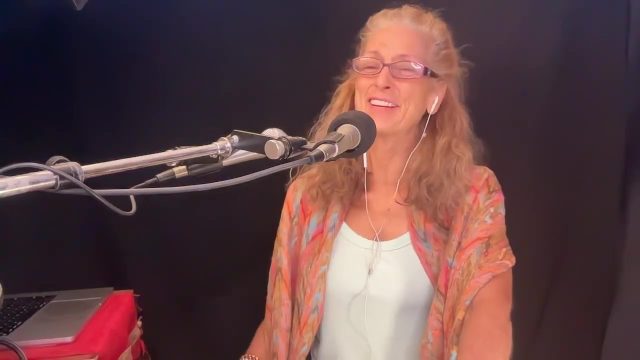
A woman sits with the sound of a song she has sung a hundred times, and she bends it toward the room in front of her. In a short clip from the Everything Wah! channel, the singer and composer known as Wah! explains the principle behind that habit: the same mantra, the same song, but never quite the same performance. Her account runs about three minutes, and it is a compact look at how a lifetime of improvisation becomes a practice of devotion, and how that practice produced a new set of songs for a community that gathers online every Friday night.

Lecture · 7 sections

Where does an improviser come from in a family of classical players?

The clip opens with a family history that explains almost everything that follows. "I come from a family of musicians," Wah! says in the video (0:00). "I started violin when I was two years old." Her mother was a professional violinist and her father was a jazz lover, so music was not a special occasion in that house. It was the air.

The useful part of her story is the distinction she draws between herself and her mother. Her mother worked from classical repertoire: pieces that were "prepared and studied and memorized," and then performed. Wah! describes her own path differently. She moved toward the improvisational side of music and studied jazz, Indian music and African music, traditions that share a habit of building a performance in real time from a framework rather than from a fixed score.

"Music was always part of my life. But the difference, for example, between me and my mom is that my mom had classical music." (Wah!, in her Everything Wah! video, 0:20)

That contrast is worth dwelling on, because it is not a judgment of either approach. A classical violinist's memorized repertoire is an achievement of discipline and fidelity to a written or learned work. An improviser's achievement is different: the ability to make the work live again every time it is played. Wah! is describing herself as the second kind of musician, and the rest of the clip shows what that choice means for a devotional song-leader.

What is raga-based thinking, and why does it matter for chanting?

At 0:57 Wah! names the frameworks she works from: "theme oriented, raga oriented, mood oriented." For readers outside Indian classical music, a raga is not a melody in the Western sense. It is closer to a set of rules and moods: a selection of notes, characteristic phrases, and an emotional color that a skilled musician develops across a performance. Ragas are traditionally associated with particular moods and, in many classical systems, with times of day or seasons. Working inside a raga means the performer is not reciting a tune; they are choosing where to go within a known emotional territory.

That is the key to what she says next: "You create them in the moment." The mantra or song is the anchor, and the improvisation happens inside it. Jazz players will recognize the same logic from chord changes, where the harmonic map is fixed but each soloist finds new lines across it. Wah! is applying that way of thinking to devotional chant, where the words repeat and the feeling can still move.

There is a subtle point here about repetition. Mantra practice relies on repetition, and repetition is often assumed to mean sameness. Wah!'s account suggests the opposite can be true: the words stay constant while the performer's attention, emphasis and phrasing change. A chant repeated for an hour can feel different in its last minutes than in its first, and a leader who listens to the room can carry that difference into the sound.

How do listeners hear the same song differently?

The clearest evidence Wah! offers comes from her audience, not from her own theory. "My friend Sheridan says," she recounts at 1:14, "I've heard that song so many times and yet tonight you played it differently or I got something different out of it." The story is small, but it captures the central experience of a live chant practice: familiar material that still surprises the person singing it and the person hearing it.

At 1:25 she names the mechanism directly and calls it her gift: "I might be doing the same mantras. I might be doing the same songs and yet I'm applying it differently to the moment. I'm emphasizing something different that I feel is relevant for where we are in our lives and in our world." Here the improvisational habit stops being a question of musical technique and becomes a question of attention. The emphasis shifts because the person chanting is paying attention to what the moment asks for.

That is the connective tissue between her training and her spiritual practice. A jazz improviser responds to the band, the room and the tune. A Friday night chant leader responds to people who are scattered across time zones, tired from their weeks, looking for something to hold on to. The improvisation is a way of listening.

Why did new songs come out of a practice built on repetition?

The emotional center of the clip is a single sentence at 1:49: "that's how all these new songs came forward was because we needed something just a little bit different." It explains why a practice that prizes familiar mantras would still add new material. Wah! does not frame the new songs as a marketing decision or a stylistic experiment. She frames them as a response to need, and the need is collective.

She then describes the purpose of the new collection in terms that are worth quoting in full at 2:19: "this is our new songs added to our collection of songs that we use for creating beautiful energy during this energetic shift on the earth." The phrase "energetic shift on the earth" is a spiritual framing rather than a technical one, and listeners should hear it as her own language for why the practice exists now. The video does not elaborate on the phrase, so it is best read as a statement of intention rather than a claim that can be tested.

The clip also includes the new chant itself. Wah! sings a sequence of Ram names, "Shri Ram," "Jai Ram," "Jai Jai Ram," with short musical interjections between phrases. In devotional Ram chanting, "Jai" is a word of praise or victory, and the repetition is meant to open the singer and the listener toward the name. The version here is patterned and call-like, and its phrasing shifts as it goes, which is the improvisational principle at work in the recording.

What is the community that these songs serve?

The video's description supplies the context the clip does not state on screen. It says Wah! has been running Friday night livestreams for six years, and that the new album IT'S FRIDAY NIGHT is meant to capture the energy of the global online community that has formed around them. The description also calls her "a founder of the yoga music niche" with a career spanning more than 25 years. The livestreams, according to the description, continue every Friday at 5:30 p.m. PT on Facebook and Instagram.

Those details change how the improvisation reads. A weekly livestream is a rare kind of musical room: the same time, the same people, and an audience that returns over years. A leader who needs to keep a six-year-old gathering alive has every reason to keep the songs moving, and the simplest way to do that is to find new material and new emphasis within the material already in use.

The album credits in the description add a practical note. The songs were composed and produced by Wah!, arranged in Ableton Live and recorded in Logic Pro, with mixing and mastering by Thomas Barquee. For a practice rooted in live breath and voice, the studio work is a way of carrying the livestream energy into recorded form without losing its improvised character, which is the same balance Wah! describes in her performance philosophy.

What can a reader take from a three-minute clip?

The clip is short, and it does not offer a full biography, a method, or a teaching sequence. What it does offer is a clear chain of ideas: a musical upbringing, a split between memorized and improvised music, a set of frameworks borrowed from several traditions, a principle that the same song can be played differently, and a motive for new songs that is rooted in listening to the moment. Each link is stated plainly by the speaker, and each is worth taking seriously on its own terms.

For musicians, the lesson is about the relationship between fixed material and live choice. For chant practitioners, the lesson is that repetition does not have to mean stagnation. For anyone who has ever found a familiar song suddenly open up in a room full of people, Wah!'s friend Sheridan has already described the experience, and Wah! has explained why it happens.

Where to go from here

To hear the principle in action, watch the full Friday night livestreams on Facebook or Instagram, where the songs are sung live and the improvisation happens in real time. To hear the recorded version of the new material, look for IT'S FRIDAY NIGHT on the streaming platforms linked in the video description. If you are new to raga, start with a basic introduction to the form and its mood-based structure before listening, since that vocabulary will make Wah!'s "theme oriented, raga oriented, mood oriented" comment easier to hear. And if you chant at home, try one familiar mantra this week and change only one thing: the emphasis, the tempo or the phrase you hold longest. Notice what the same words do when you listen differently.

Commentaires

Chargement de la conversation…

Transcript

[0:00] I come from a family of musicians. So

[0:04] there was always music in the house.

[0:06] I started violin when I was two years

[0:09] old.

[0:10] My mother was professional violinist. My

[0:13] father was a jazz lover.

[0:16] Music was always part of my life.

[0:20] But the difference, for example, between

[0:22] me and my mom

[0:24] is that my mom

[0:27] had classical music. So she had things

[0:29] that she had prepared and studied and

[0:32] memorized and she could perform.

[0:35] I on the other hand was more on the

[0:38] improvisational side.

[0:41] I studied jazz.

[0:43] I studied Indian music. I studied

[0:46] African music.

[0:48] These are all very

[0:51] theme oriented, raga oriented, mood

[0:54] oriented.

[0:57] You create them

[0:59] in the moment.

[1:00] And so whereas my mom couldn't

[1:02] improvise,

[1:04] I could not do the song the same way

[1:07] twice,

[1:08] [laughter]

[1:10] which is a lot of fun really on its

[1:13] Friday night.

[1:14] My friend Sheridan says,

[1:17] I've heard that song so many times and

[1:19] yet tonight

[1:21] you played it differently or I got

[1:23] something different out of it.

[1:25] So that's

[1:27] my nature. That's my gift is that

[1:30] I might be doing the same mantras. I

[1:33] might be doing the same songs and yet

[1:35] I'm applying it differently to the

[1:38] moment. I'm emphasizing something

[1:41] different that I feel is relevant

[1:44] for where we are in our lives

[1:48] and in our world.

[1:49] So that's kind of how everything morphs

[1:51] and changes and that's how all these new

[1:54] songs came forward

[1:56] was because we needed something just a

[1:58] little bit different.

[2:00] So this is our new songs added to our

[2:03] collection

[2:05] of songs that we use

[2:08] for creating beautiful energy during

[2:12] this energetic shift on the earth.

[2:19] [music] Shri Ram

[2:23] Jai [music]

[2:24] Ram

[2:27] Jai Jai [music]

[2:30] Ram

[2:35] Shri Ram [music]

[2:39] Jai Ram

[2:43] Jai Jai

[2:46] Ram

[2:51] Shri

[2:52] Ram

[2:54] [music]

[2:55] Jai

[2:58] [singing] Ram

[2:59] [music]

[3:01] Jai Jai Ram

Wah!

Wah!

Artiste

Wah! is a musician who brings healing through sound and yoga teachings, known as the first female to bring kirtan call-and-response chanting to the West in the 1990s.

Voir le profil
Explorer les thèmes
ImprovisationMantra chantingKirtanRagaRam naam
Questions fréquemment posées

Questions fréquemment posées

In the video she explains that her background is in improvisation, having studied jazz, Indian music and African music, unlike her mother who played memorized classical repertoire. She says she applies the same mantras and songs differently to each moment, emphasizing what feels relevant to where people are in their lives and the world.

A raga is a framework in Indian classical music made of selected notes, characteristic phrases and an associated mood, rather than a fixed melody. Wah! mentions working in raga-oriented and mood-oriented ways, which means the performer improvises inside a known emotional territory while the core words or song stay anchored.

Wah! says the new songs came forward because the community needed something a little bit different. She describes them as additions to the collection used to create beautiful energy during what she calls an energetic shift on the earth.

According to the video's description, the Friday night livestreams have run for six years and continue every Friday at 5:30 p.m. PT on Facebook and Instagram. The description ties the new album IT'S FRIDAY NIGHT to the energy of that global online community.

Ram is a central name of God in Hindu devotional tradition, and 'Jai' is a word of praise or victory, so the chant is a call of glory to Ram. In Wah!'s clip the phrase is repeated with musical interjections and shifting phrasing, which is an example of the improvisational approach she describes.

No, based on what Wah! describes, the words and mantras stay the same while the emphasis, phrasing and feeling change from one performance to the next. The improvisation happens inside the familiar material rather than replacing it.

Vous pourriez aussi aimer

Voir tout
Friday Night Kirtan: Soothing Intensity Through Sacred Mantra
Inspire

Friday Night Kirtan: Soothing Intensity Through Sacred Mantra

Every Friday, Wah! gathers a community in real-time kirtan—Sanskrit chant blended with harmonium and electronic production—to transform coll…

7 min read
Divine Feminine Rising: Wah! & MC Yogi's Mythic Collaboration
Inspire

Divine Feminine Rising: Wah! & MC Yogi's Mythic Collaboration

Wah! and MC Yogi channel global goddess archetypes in a "low-budget epic" exploring divine feminine power across cultures.…

6 min read
Voice Temple Kirtan in Pisac: A Farewell Night of Call and Response
Inspire

Voice Temple Kirtan in Pisac: A Farewell Night of Call and Response

Franko Heke's five-minute highlight reel from a Voice Temple kirtan at Kula Café in Pisac, Peru. What the footage shows and what the call-an…

6 min read
Medicine Buddha Practice: Feeling Beneath the Thinking
Inspire

Medicine Buddha Practice: Feeling Beneath the Thinking

Lama Rod Owens opens a Monday-night Medicine Buddha session six years into the practice, teaching how to feel an experience instead of think…

10 min read
Tout voirVous pourriez aussi aimer→

Poursuis ton chemin

Plus de sagesse et de rassemblements dans tout l’annuaire BrightStar.

Plus d’articles

Parcours toute la bibliothèque d’enseignements, d’entretiens et de guides.

Retour à tous les articles →

Enseignants et artistes

Découvre les lignées, les musiciens et les guides du monde conscient.

Explorer les artistes →

Trouver un événement

Kirtan, retraites, bains sonores, breathwork, festivals — bientôt près de chez toi.

Parcourir les événements →