

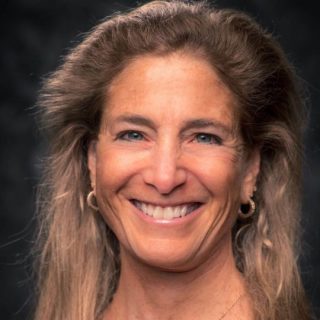
Susan Barr-Toman
Meditation Teacher
À propos
Susan Barr-Toman inspires people to discover and write their true stories with the tools of mindfulness. Her workshops begin with a meditation, move into writing prompts and freewriting, and are held in what she describes as a safe, supportive and fun environment, with pen and paper in hand.
Susan Barr-Toman inspires people to discover and write their true stories with the tools of mindfulness. Her workshops begin with a meditation, move into writing prompts and freewriting, and are held in what she describes as a safe, supportive and fun environment, with pen and paper in hand.
During her years at the Penn Program for Mindfulness, she developed and led mindful writing courses, including Building a Mindful Writing Practice, which is now the heart of her work. Separately, she taught college writing for over a decade, from first-year composition to MFA creative writing.
Her writing has been widely published in outlets including The Washington Post and the Los Angeles Review of Books. She is the author of the award-winning novel When Love Was Clean Underwear, and she earned her MFA at the Bennington College Writing Seminars.
Susan is available as a speaker, workshop leader and one-on-one coach. She also shares free mindful writing meditation recordings, writing prompts and essays on her site.
FAQ
Questions
Susan Barr-Toman is a novelist, essayist, and mindful writing teacher who helps people find and write their true stories by combining meditation with writing practice. Her workshops open with a brief meditation, move into writing prompts and freewriting, and ask participants to write by hand where possible, which slows the process enough for attention to surface before judgment does. Her background is unusually split between two worlds: she taught college writing for over a decade, from first-year composition through MFA creative writing, and during her years at the Penn Program for Mindfulness she developed the courses that now anchor her work, most notably Building a Mindful Writing Practice. Her essays have appeared in The Washington Post and the Los Angeles Review of Books, and her novel When Love Was Clean Underwear, which her bio describes as award-winning, was written after an MFA at Bennington College Writing Seminars. Readers and students tend to care because she treats the blank page as a place for the body and steady attention rather than only for performance. That focus separates her from most writing teachers, who treat meditation as a decorative add-on rather than as a working method.
Her work belongs to the secular mindfulness tradition as it was developed and taught at the Penn Program for Mindfulness, which was founded and directed by Michael Baime. Her public materials do not name a specific Buddhist school, teacher line, or contemplative lineage, so the most accurate frame is that she applies mindfulness training to creative writing rather than teaching meditation as a religious or devotional practice. The second strand of her lineage is academic: years of college composition teaching and an MFA in creative writing from Bennington College Writing Seminars shape how she structures prompts, critiques, and the progression from personal essay to memoir. Her chosen forms, including personal essay, memoir, flash creative nonfiction, and writing from the body, reflect a belief that lived experience is the raw material and that attention is what makes it usable. Newcomers sometimes expect a spiritual teacher in the Zen or Vipassana sense and are surprised by how workshop-like the sessions feel. Those expecting a formal ordination line or a named Asian lineage will find nothing of that kind in her published record.
The lowest-cost entry point is the free recorded mindful writing meditations she offers on Insight Timer, which let a newcomer test the method before committing to anything else. Those recordings carry the core structure of her workshops: a short settling meditation followed by an open invitation to write without self-editing. From there, Breath by Breath is the natural next step for readers who want the full argument, since it is her book about the intersection of meditation and writing and was praised by Michael Baime, founder and director of the Penn Program for Mindfulness, as beautifully written, heartfelt, and full of useful information. Readers more drawn to narrative should look at her novel When Love Was Clean Underwear, which shows her sensibility in fiction rather than instruction. For those who want guided practice with other students, the Building a Mindful Writing Practice course she developed at Penn is the format most closely associated with her teaching. A notebook and pen are worth having ready, since her method leans toward handwriting.
Most writing teachers who draw on mindfulness treat it as a warm-up, while Susan Barr-Toman builds the whole session around attention, with the meditation shaping what kind of writing emerges. Her method is also grounded in institutional experience: she spent years at the Penn Program for Mindfulness developing courses and, before that and alongside it, taught college writing from first-year composition to MFA creative writing. That combination means her sessions are structured the way a serious writing class is structured, with prompts, freewriting, and feedback, yet the emotional register is closer to a supportive studio than a workshop that trades in critique. Her specialties are concrete and narrow: personal essay, memoir, flash creative nonfiction, and writing from the body, which is a different emphasis from teachers who focus on fiction or poetry. The handwriting preference is another point of difference, since many online writing programs assume a keyboard. Her output as a published essayist and novelist also gives her credibility with students who want to write for publication, not only for self-discovery.
Her approach is not well suited to writers who want a purely craft-driven workshop with line-by-line critique, because the sessions begin with meditation and are described as safe, supportive, and fun rather than rigorous or combative. Readers looking for a traditional contemplative teacher with a formal lineage, a devotional framework, or extended silent retreat structure will find something more secular and writing-centered than they may expect. People who strongly prefer typing to handwriting may find the emphasis on writing by hand where possible an obstacle, especially in longer sessions. Those seeking a fast or productivity-focused system for producing large volumes of content will also be disappointed, since the method moves slowly and values attention over output. Her work is also most useful to people willing to write about their own lives; writers focused exclusively on invented fiction will find the personal essay, memoir, and writing from the body emphasis narrowing. Finally, anyone looking for a large public catalogue of recordings or performances will find her presence concentrated in written work, recorded meditations, and one-on-one coaching rather than in a broad media output.
The most reliable source is her official website, susanbarrtoman.com, which is where her offerings as a speaker, workshop leader, and one-on-one coach are listed. As of this profile, no upcoming events have been crawled, so there are no confirmed dates, cities, or venues to report, and anyone planning travel should confirm directly with her. Her free recorded mindful writing meditations on Insight Timer are the other place to watch, since new recordings or description changes there often signal shifts in what she is teaching. Students interested in her Building a Mindful Writing Practice material should check the website first, because course availability is not tracked in the data available here. Workshop and speaking engagements are typically arranged directly, so contacting her through the site is the practical route for booking. Following her on the platforms where she already publishes writing will also surface new essays, and the outlets that have carried her work, including The Washington Post and the Los Angeles Review of Books, are worth checking for new bylines.
Her sessions follow a consistent arc that begins with a brief meditation, moves into writing prompts, and then opens into freewriting. Her bio describes the environment as safe, supportive, and fun, and the Insight Timer description frames her approach as a mindful approach to the blank page, helping students open to their creativity without fear or judgment. The first few minutes are quiet and settling, which tends to surprise newcomers who expected a conventional writing class from the first prompt. Writing is done by hand where possible, so the room often has the rhythm of pens moving rather than keyboards, and the pace is set by the prompt rather than by a deadline. Feedback in her workshops is not the central event; the writing itself is, which suits students who find traditional critique paralyzing. Her style also reflects her college teaching background, since the prompts build in complexity and move students from personal essay toward memoir and flash creative nonfiction over time.
The central theme is the idea that people already hold their true stories and that the work is to find and write them with enough attention to avoid self-censorship. Her approach to that theme is practical: meditation is used to notice the urge to edit, judge, or perform, and freewriting is used to let the material arrive before the critic does. The genres she teaches recur across her work, including personal essay, memoir, flash creative nonfiction, and writing from the body, and the last of these signals a belief that the body holds memory and that writing can start from physical sensation rather than from plot or argument. Her own published work reflects the same concerns, from the novel When Love Was Clean Underwear to the book Breath by Breath, which addresses how meditation and writing inform each other. Another recurring thread is the blank page itself, framed not as an obstacle but as a space to be approached with curiosity. These themes also explain why her teaching appeals to people who want to write about difficult experiences without treating those experiences as material for performance.
The clearest independent resource in the available data is her set of free recorded mindful writing meditations on Insight Timer, which are designed to be used alone and offer a guided entry into her method. These recordings are the closest equivalent to lectures, though they are structured as practice rather than as talks on theory. Her written work is also a form of independent study, particularly Breath by Breath, which Michael Baime praised for being full of useful information, and her essays in The Washington Post and the Los Angeles Review of Books. No catalogue of lectures, podcasts, or recorded talks is listed in the data, so claims about additional material would be speculation. Students who want structured independent study can combine the Insight Timer recordings with her book and the course materials she developed at the Penn Program for Mindfulness, though the course itself may require enrollment. Anyone expecting a deep archive of spoken teaching should know that her published record is primarily written and practice-based.
No prior meditation experience is required to begin, because her workshops start with a brief meditation that is designed to be accessible to people who have never sat before. The free recorded mindful writing meditations on Insight Timer are also suitable for beginners, and they make a sensible first step for anyone uncertain whether a meditation-based approach suits them. Writing experience helps, but her teaching is aimed at helping people open to their creativity without fear or judgment, which suggests it is meant for hesitant writers as much as experienced ones. Readers with some background in personal essay or memoir will find the progression from prompts to freewriting familiar, and students with a foundation in college composition may recognize her structure from academic settings. Those who want a deep grounding in Buddhist or other contemplative traditions should understand that her teaching is secular and writing-centered, not a doctrinal path. Students seeking advanced literary craft instruction, especially at an MFA level, may find her sessions more foundational than they need.




C’est vous ? Revendiquer cette page ›
There's more where this came from.
BrightStar is the global directory of artists, teachers, and healers in the wellness and spiritual movement. Find your next experience — or add yourself.
Discover More Artists
Browse 14,000+ curated profiles across kirtan, yoga, meditation, and beyond.
Explore directory →Find an Event Near You
Kirtan, retreats, sound baths, breathwork, ceremonies — happening this week.
Browse events →Add Your Profile
Are you an artist, teacher, or healer? Get listed — free, AI-assisted, live in minutes.
Get started →