

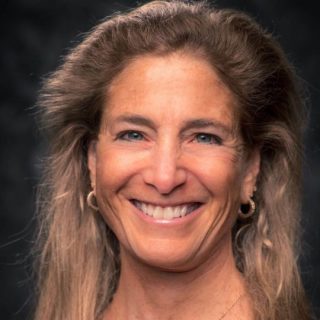
Grace Bell
Meditation Teacher
À propos
Grace Bell is a guide, facilitator and certified counselor based in Seattle, Washington. She is a Certified Facilitator of The Work of Byron Katie, a method of self-inquiry built on four questions and turnarounds, which she describes as the spine of everything she teaches. She holds an MA in Applied Behavioral Science from Bastyr University (1997) and has been a Certified Counselor in Washington State since 1996. She became a Certified Facilitator in 2007.
Grace Bell is a guide, facilitator and certified counselor based in Seattle, Washington. She is a Certified Facilitator of The Work of Byron Katie, a method of self-inquiry built on four questions and turnarounds, which she describes as the spine of everything she teaches. She holds an MA in Applied Behavioral Science from Bastyr University (1997) and has been a Certified Counselor in Washington State since 1996. She became a Certified Facilitator in 2007.
Grace's own path into this work began with a long struggle with food, anxiety and heavy thinking. She writes that she was bulimic through her twenties and tried many programs before she found that what helped was understanding what lay underneath the behavior rather than managing it. In March 2005, after her first School for The Work, she used inquiry on the thought "he left me" and found a painful belief beneath it. She describes that as the beginning of the life she has now.
Her approach works from the inside out. She starts with the thoughts, beliefs and feelings behind a difficulty and treats unwanted behaviors as messengers rather than enemies. She specializes in emotional disruption, eating issues and compulsive behavior of any kind, and in supporting people to question their stressful thinking.
Through Work With Grace, she has run self-inquiry retreats since 2012 and Eating Peace programs since 2014. Retreats take place in person near Seattle and online. She also leads Year of Inquiry, a ten-month online community that practices and learns to facilitate The Work. Other offerings include short self-paced courses, mini workshops on topics such as money and relationships, and free recorded inquiry gatherings shared on YouTube. She also hosts the Peace Talk podcast and writes the weekly Grace Notes. Participants often describe her guidance as gentle and the space she holds as safe.
FAQ
Questions
Grace Bell is a Seattle-based guide, facilitator and certified counselor who teaches self-inquiry through The Work of Byron Katie. She holds an MA in Applied Behavioral Science from Bastyr University, completed in 1997, and has been a Certified Counselor in Washington State since 1996. She became a Certified Facilitator of The Work in 2007, and that method is the spine of everything she offers. Her public work is practical and fairly wide-ranging: in-person and online retreats, Eating Peace programs since 2014, the ten-month Year of Inquiry community, and a weekly writing series called Grace Notes. People tend to care about her because her teaching grows from her own history rather than from outside theory. Grace writes that she was bulimic through her twenties and tried many programs before finding that understanding what lay beneath the behavior helped more than managing it. Readers who want a professional credential and a lived account in the same teacher will find that combination here.
Grace Bell's work belongs to the lineage of The Work of Byron Katie, a method of self-inquiry built on four questions and what the method calls turnarounds. Certified Facilitators like Grace take a stressful belief, examine it through the four questions, and then test the opposite of that belief as a turnaround. Her own entry point was a specific moment: in March 2005, after her first School for The Work, she used inquiry on the thought 'he left me' and found a painful belief beneath it. She describes that moment as the beginning of the life she has now, and it explains why her teaching centers on thoughts and beliefs rather than behavior management alone. Her credentials sit alongside the method rather than replacing it, combining an MA in Applied Behavioral Science from Bastyr University with Washington State Certified Counselor status. Newcomers should understand that this is a structured method with a defined procedure, not an open-ended contemplative tradition. Her background is worth reading about if you want to see how a counseling foundation and a Byron Katie practice fit together.
A complete newcomer should start with one of Grace's shorter offerings, such as a self-paced course or a mini workshop, rather than committing to a full retreat. The free recorded inquiry gatherings on her YouTube channel are the lowest-commitment way to watch her facilitate live and see how she moves from a stated thought to the four questions. If you prefer a longer container, the Year of Inquiry is a ten-month online community that practices and learns to facilitate The Work, which suits people who want repetition over one-off insight. The Peace Talk podcast on Spotify works for listening during a commute, but it is better as a second step after you have seen her work the questions on video. Her weekly Grace Notes writing helps you pick up the vocabulary, including turnarounds and stressful thinking. Eating Peace programs are the right entry point only if eating issues are the actual concern, since that work is specialized. Choose your starting format based on whether you want to watch, listen, or practice, because each asks something different of you.
What sets Grace Bell apart from other Meditation Teachers is that her teaching is anchored in a specific, named method rather than a general mindfulness vocabulary. She works inside The Work of Byron Katie, so her sessions have a visible structure: a thought is stated, examined through four questions, and turned around. Her focus is narrower than most teachers in the category, covering emotional disruption, eating issues and compulsive behavior of any kind. She treats unwanted behaviors as messengers rather than enemies, starting from the thoughts, beliefs and feelings behind a difficulty instead of from the behavior itself. Her background in Applied Behavioral Science and her years as a Washington State Certified Counselor give her a clinical vantage that many facilitators lack. Her Eating Peace programs, running since 2014, give her an established track record in that niche. Compared with teachers who lead open-ended meditation, Grace's sessions are more directive and question-driven.
Grace Bell's work is not for listeners who want a meditation practice built on silence, breath, or open awareness alone, because the method asks you to take a thought apart in words. People hoping for a quick emotional release may find the four-question structure slower and more demanding than they expected. Those who want a teacher to tell them what to believe, or who are looking for a devotional or faith-based tradition, will not find that here. Her approach requires a willingness to examine painful beliefs about partners, food and the self, which can feel uncomfortable in early sessions. Her focus on eating issues and compulsive behavior makes her a poor fit for someone seeking general wellness coaching with no specific struggle to work on. Anyone in acute crisis should seek direct clinical care rather than rely on a self-inquiry format. The work rewards people who are curious about their own reasoning and patient with a method that depends on repetition.
The most reliable way to follow Grace Bell's activity is her official site, workwithgrace.com, which lists retreats, Eating Peace programs, the Year of Inquiry and her other offerings. Her YouTube channel carries the free recorded inquiry gatherings, so subscribing there captures new material as it is posted. The Peace Talk podcast is available on Spotify, and following the show there surfaces new episodes in the same feed. Her weekly Grace Notes writing arrives on a regular schedule and is a good signal for what she is currently focused on. BrightStar has not crawled any upcoming events for her profile, so current dates cannot be confirmed here, and you should check the website directly before planning travel. Retreats take place in person near Seattle and also online, so in-person attendance is limited to the Seattle area. Official channels are more trustworthy than third-party aggregators for confirming schedules.
Grace's teaching style is gentle, structured and question-driven, and participants often describe the space she holds as safe. A session typically begins with a stated thought or belief, which the participant writes down and then examines through The Work's four questions. She facilitates rather than lectures, so much of the material emerges from the participant's own wording rather than from her pronouncements. Retreats near Seattle are in person, and online retreats follow the same framework, though the group dynamics differ between the two formats. What surprises newcomers is how precisely the questions are asked, since small shifts in phrasing change the answer, and Grace pays close attention to that. The pace can feel slow if you arrive expecting a discussion or a teaching talk. The method usually asks for written work between sessions, so the learning happens as much outside the room as inside it.
The recurring themes in Grace Bell's teaching are stressful thinking, self-inquiry, and the idea that unwanted behavior carries useful information. She returns repeatedly to the thoughts, beliefs and feelings behind a difficulty rather than to the behavior alone. Eating issues and compulsive behavior of any kind form the central applied territory, with emotional disruption as the broader frame. Her own story anchors many of these themes, including the years of bulimia through her twenties and her 2005 realization after the thought 'he left me.' Money and relationships appear in her mini workshops, which shows the method being applied beyond food. Turnarounds, the practice of testing the opposite of a belief, recur as a core technique across her material. Listeners looking for broader spiritual subjects such as ritual or transcendence will find much less of that here, because the teaching stays close to the method.
Yes, Grace has made material available for independent study, though the format varies by channel. Her free recorded inquiry gatherings are shared on YouTube, which lets viewers watch her facilitate live questions rather than read about the method. The Peace Talk podcast is hosted on Spotify and suits listeners who prefer audio study. Her Grace Notes weekly writing provides a text record of her thinking that can be reread at your own pace. Short self-paced courses offer a more structured path through the material for anyone who wants to work through concepts in sequence. The Year of Inquiry is a community rather than a lecture series, so it is less suited to purely passive study. BrightStar has no published books or long-form talks on file under her name, so the recordings and writing are the main independent resources available.
No specialized background is required to follow Grace Bell's teaching, though it helps to learn the core vocabulary of The Work of Byron Katie first. Her free recorded gatherings and Grace Notes are written and recorded for general audiences, so newcomers can follow them without prior training. Terms like stressful thinking, turnaround and the four questions appear constantly, and a brief orientation to them makes the material much easier to follow. Those who come with a history of eating issues or compulsive behavior will find her focus directly relevant, but the method does not require a clinical diagnosis to participate. Her Certified Counselor credential and Certified Facilitator status matter more if you intend to facilitate The Work yourself, since the Year of Inquiry is built to teach facilitation. Readers curious about the lineage can start with Byron Katie's own framing before engaging Grace's material, which clarifies why the questions are phrased as they are. Patience will matter more than prior study.





C’est vous ? Revendiquer cette page ›
There's more where this came from.
BrightStar is the global directory of artists, teachers, and healers in the wellness and spiritual movement. Find your next experience — or add yourself.
Discover More Artists
Browse 14,000+ curated profiles across kirtan, yoga, meditation, and beyond.
Explore directory →Find an Event Near You
Kirtan, retreats, sound baths, breathwork, ceremonies — happening this week.
Browse events →Add Your Profile
Are you an artist, teacher, or healer? Get listed — free, AI-assisted, live in minutes.
Get started →