BrightStar
BlogMis entradas
BlogMis entradas
Saved events
Ayuda y contactoRegistrarseIniciar sesión
Eventos
  • Ver Todos los Eventos
  • Yoga
  • Meditación
  • Respiración consciente
  • Qigong
  • Música sagrada
  • Música del mundo
  • Música medicina
  • Sanación con sonido
  • Danza extática
  • Ceremonia
  • Plantas medicinales
  • Sanación energética
  • Satsang y sabiduría
  • Tantra
  • Retiros
  • Todas las Categorías →
Destinos
  • Bali
  • Sedona
  • Los Angeles
  • Costa Rica
  • Tulum
  • Byron Bay
  • San Francisco
  • Austin
  • New York
  • San Diego
  • Denver
  • Seattle
  • Portland
  • Miami
  • London
  • Maui
  • Boulder
  • Todas las Ciudades →
Plataforma
  • Para organizadores
  • Únete al movimiento
  • Sell Globally
  • Para Creadores
  • Para equipos
  • Para Escritores
  • Para Maestros
  • Para Artistas de Kirtan
  • Para Estudios
  • Para Festivales
  • Para Centros de Retiros
  • Para Organizaciones Sin Fines de Lucro
  • Embajador de Marca
  • Entradas sin costo
  • Pro
  • Amplify
  • El ecosistema
Características

Venta de entradas y pago

  • Ticket categories
  • Assigned seating
  • Custom questions
  • Coupon codes
  • Smart pricing
  • Ticket sharing
  • Waitlist
  • Flexible refunds
  • Digital waivers
  • Tip jar
  • Donations and sliding scale
  • Embed widget
  • Mindful checkout
  • Recurring events
  • Private sessions
  • Online courses
  • Summits
  • Rooms and stays
  • Ticket scanner

Marketing y crecimiento

  • Abandoned cart recovery
  • Visitor recovery
  • Upsells and add-ons
  • Affiliate engine
  • Upsell affiliate network
  • Brand ambassador
  • Meta retargeting
  • Verified buyer network
  • Outbound email marketing
  • Email sequences
  • SMS and WhatsApp
  • Event upsell network
  • Direct mail campaigns
  • SEO engine
  • Syndication
  • Event sharing
  • Custom event pages
  • Artist profiles
  • Link in bio
  • Event blog
  • Blog newsletter

Pagos

  • Payments, powered by Stripe
  • Buy now, pay later
  • Apple Wallet
  • Multi currency

Datos y operaciones

  • Team access
  • Message center
  • Reports
  • Analytics reporting
  • Performance reporting
  • Customer data
  • Integrations
  • Switch from another platform

IA

  • Assistant
  • AI FAQ assistant
  • Todas las Características →
Empresa
  • Acerca de
  • Preguntas frecuentes
  • Contacto
  • Blog
  • Glosario
  • Guides
  • Inspiración
  • Centro de Ayuda
  • Documentación API
  • Recursos de Marca
  • Prensa
  • Términos de Servicio
  • Política de Privacidad

Eventos

  • Ver Todos los Eventos
  • Yoga
  • Meditación
  • Respiración consciente
  • Qigong
  • Música sagrada
  • Música del mundo
  • Música medicina

Destinos

  • Bali
  • Sedona
  • Los Angeles
  • Costa Rica
  • Tulum
  • Byron Bay
  • San Francisco
  • Austin

Plataforma

  • Para organizadores
  • Únete al movimiento
  • Sell Globally
  • Para Creadores
  • Para equipos
  • Para Escritores
  • Para Maestros
  • Para Artistas de Kirtan

Características

  • Red de la comunidad
  • Recuperación de Carritos
  • Categorías de Entradas
  • Eventos Recurrentes
  • Asientos Asignados
  • Motor de Afiliados
  • Lista de Espera / Notificar
  • Todas las Características →

Empresa

  • Acerca de
  • Preguntas frecuentes
  • Contacto
  • Blog
  • Glosario
  • Guides
  • Términos de Servicio
  • Política de Privacidad
Leer más

Eventos

  • Sanación con sonido
  • Danza extática
  • Ceremonia
  • Plantas medicinales
  • Sanación energética
  • Satsang y sabiduría
  • Tantra
  • Retiros
  • Todas las Categorías →

Destinos

  • New York
  • San Diego
  • Denver
  • Seattle
  • Portland
  • Miami
  • London
  • Maui
  • Boulder
  • Todas las Ciudades →

Plataforma

  • Para Estudios
  • Para Festivales
  • Para Centros de Retiros
  • Para Organizaciones Sin Fines de Lucro
  • Embajador de Marca
  • Entradas sin costo
  • Pro
  • Amplify
  • El ecosistema

Empresa

  • Inspiración
  • Centro de Ayuda
  • Documentación API
  • Recursos de Marca
  • Prensa

Venta de entradas y pago

  • Ticket categories
  • Assigned seating
  • Custom questions
  • Coupon codes
  • Smart pricing
  • Ticket sharing
  • Waitlist
  • Flexible refunds
  • Digital waivers
  • Tip jar
  • Donations and sliding scale
  • Embed widget
  • Mindful checkout
  • Recurring events
  • Private sessions
  • Online courses
  • Summits
  • Rooms and stays
  • Ticket scanner

Marketing y crecimiento

  • Abandoned cart recovery
  • Visitor recovery
  • Upsells and add-ons
  • Affiliate engine
  • Upsell affiliate network
  • Brand ambassador
  • Meta retargeting
  • Verified buyer network
  • Outbound email marketing
  • Email sequences
  • SMS and WhatsApp
  • Event upsell network
  • Direct mail campaigns
  • SEO engine
  • Syndication
  • Event sharing
  • Custom event pages
  • Artist profiles
  • Link in bio
  • Event blog
  • Blog newsletter

Pagos

  • Payments, powered by Stripe
  • Buy now, pay later
  • Apple Wallet
  • Multi currency

Datos y operaciones

  • Team access
  • Message center
  • Reports
  • Analytics reporting
  • Performance reporting
  • Customer data
  • Integrations
  • Switch from another platform

IA

  • Assistant
  • AI FAQ assistant
Descarga la app
Descárgalo en elApp StoreDisponible enGoogle Play
© 2026 BrightStar. Todos los derechos reservados. BrightStar Selection · Créditos fotográficos · Registro de cambios ·
Inspiration

Hurry Slowly: Mindfulness While Moving Fast

Eckhart Tolle
Eckhart Tolle
Oct 4, 2025
6 min de lectura

De Eckhart Tolle

Eckhart Tolle explores the counterintuitive principle of "hurry slowly"—the possibility of moving with speed and energy while remaining fully present and mindful. Rather than equating rushing with loss of awareness, Tolle suggests that conscious action can contain both momentum and presence simultaneously, dissolving the false choice between hurried disconnection and slow contemplation.

Leer · 7 secciones

What does "hurry slowly" really mean?

The phrase "hurry slowly" captures a paradox at the heart of conscious living. Most people assume that rushing inevitably creates a state of mental fragmentation—the autopilot mode where you move fast but lose awareness, reacting rather than choosing. Tolle points to a different possibility: you can accelerate your pace and intensity while maintaining inner presence and alertness.

This isn't about leisurely movement disguised as hurrying. Rather, it's about the quality of consciousness that accompanies action, regardless of speed. When you "hurry slowly," you bring full attention to each moment of motion, even when that motion is energetic or time-bound. The slowness refers to the depth of presence, not the external tempo.

How can you stay present while moving quickly?

The mechanism Tolle addresses is the gap between action and awareness. In normal rushed states, people operate on momentum—habit loops that run without conscious oversight. Your body moves, your mind spins ahead to the next task, and presence evaporates. The present moment becomes something you'll return to later, when life finally slows down.

To maintain mindfulness in motion requires a deliberate shift in attention: instead of letting speed override awareness, you anchor awareness within the speed. This means:

  • Noticing the physical sensations of movement as it happens, rather than thinking about the destination
  • Staying with your breath and body during active tasks, even when they feel urgent
  • Recognizing that presence is a choice available in every moment, not a luxury reserved for downtime
  • Allowing high energy to coexist with stillness—the inner quiet that doesn't depend on outer conditions

The key distinction is between reactive urgency and purposeful momentum. Reactive urgency comes from anxiety, ego, or the sense that something is wrong if you're not moving fast enough. It creates a state of internal contraction even while externally busy. Purposeful momentum, by contrast, flows from alignment—you move quickly because the task requires it, but your presence isn't negotiable.

Why do most people lose presence when they hurry?

The disconnect between speed and presence typically stems from identification with thinking. When you're rushing, your mind often projects into the future: I need to finish this, then that, then I'll finally relax. This future-focus pulls you out of the only place where life actually occurs—the present moment. Your body is here, but your consciousness is elsewhere.

Additionally, hurrying often involves resistance to what is. You're fighting the present moment, wishing it were already different, already finished, already solved. This resistance creates psychological friction that manifests as stress and scattered attention. The mind becomes noisy, reactive, and unreceptive.

Tolle's teaching suggests that presence is not inherently threatened by pace. What threatens presence is the mental story you tell about the pace—the judgment that "this is too fast" or "I can't be mindful while doing this." When you release that story, you discover that high-energy action can actually be deeply clarifying and present.

What's the relationship between presence and productivity?

There's a common misconception that mindfulness makes you slower, less effective, or unable to handle pressure. The opposite is often true. When you maintain presence while moving, you're actually more efficient because:

  • You're not wasting mental energy on resistance or anxiety about the pace
  • You're fully available to the task, which reduces errors and increases quality
  • You're not fragmenting your attention across multiple timelines—past regrets and future worries
  • Your intuition and problem-solving capacity remain accessible, rather than being clouded by reactive panic

The paradox is that by not fighting what is—by accepting the current pace rather than resisting it—you become more capable within that pace. Presence itself is a kind of power.

How does inner stillness support outer movement?

One of Tolle's central insights is that stillness and movement are not opposites. Stillness refers to a quality of consciousness—an absence of psychological reactivity and mental noise—while movement refers to physical action. You can have both simultaneously.

When you cultivate inner stillness—a quiet, open, aware presence—this becomes the foundation for cleaner action. You move without the static of worry, self-doubt, or compulsive thinking. The result is what might be called "effortless effort"—action that flows naturally because it's not being obstructed by internal resistance.

This is particularly relevant for people in high-demand situations: parents managing multiple responsibilities, professionals navigating complex workflows, caregivers responding to urgent needs. Rather than treating presence as a luxury only available during meditation retreats, "hurry slowly" offers a way to honor both the demands of life and the integrity of consciousness.

What practical shifts support hurrying slowly?

The transition from fragmented rushing to conscious momentum involves several shifts:

Breath awareness: Your breath is always available as an anchor to the present moment. Even during busy tasks, coming back to the breath every few minutes recalibrates your presence. You don't need long meditations—micro-moments of breath awareness throughout the day maintain continuity.

Sensing the body: Moving quickly can disconnect you from physical sensation. Intentionally noticing your feet on the ground, your hands moving, the posture of your spine—this reconnects you to the reality of the present moment, which is always embodied.

Releasing resistance: Notice when you're mentally fighting the pace or the task. This resistance is separate from the action itself. By releasing it, you can move at the same speed but without the internal struggle that erodes presence.

Trusting the moment: Much hurrying comes from not trusting that you can handle what's in front of you. When you approach the current task with full presence rather than anxiety, you often discover you're more capable than you believed.

Where to go from here

The teaching of "hurry slowly" invites you to experiment with presence during your normal, fast-paced life rather than waiting for calm conditions. Start by observing the difference between reactive rushing and conscious movement in small, repeated tasks—walking to your car, preparing a meal, responding to emails. Notice where you lose presence, and gently bring awareness back.

As you practice, you may discover that the quality of your engagement matters far more than the speed of your actions. A fast task done with full presence is qualitatively different from a slow task done on autopilot. This recognition itself can shift how you relate to the pace of modern life—not as an obstacle to presence, but as terrain within which presence can be cultivated.

Comentarios

Cargando la conversación…

El artista de esta historia

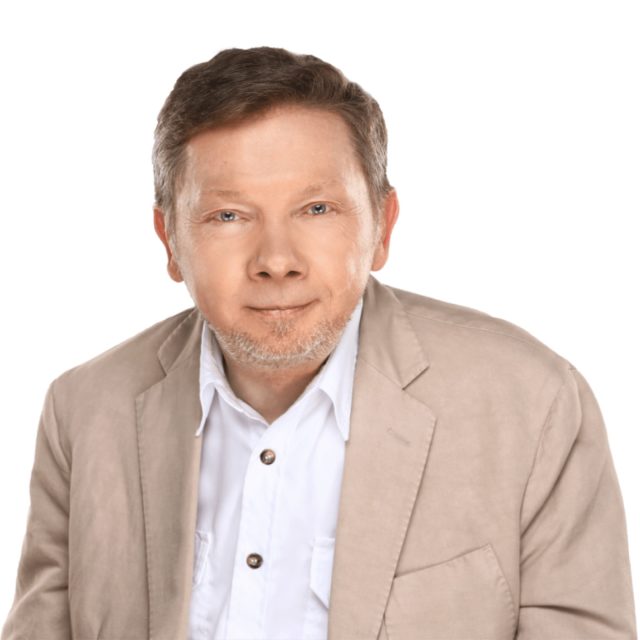
Eckhart Tolle

Eckhart Tolle

Spiritual Teacher

Eckhart Tolle is a spiritual teacher and author whose bestsellers The Power of Now and A New Earth have introduced millions to living in the present moment, and who sees awakened Presence as the essential next step in human evolution.

Ver perfil
Explorar temas
MindfulnessPresenceSpeed awarenessConsciousnessAttention
Preguntas Frecuentes

Preguntas Frecuentes

Yes. Mindfulness isn't about moving slowly—it's about the quality of consciousness you bring to action, regardless of pace. You can maintain full presence while moving quickly by anchoring awareness in the body and breath rather than letting your mind jump ahead to future concerns.

Anchor yourself in the present moment through body sensation, breath awareness, and acceptance of the current pace rather than resistance to it. The key is releasing the mental story that says you can't be present while busy, and noticing that inner stillness can coexist with outer movement.

No—the opposite. When you maintain presence while working, you eliminate the mental friction of resistance and anxiety, reduce errors through full attention, and access your intuition and problem-solving capacity more readily. You become more effective within the same pace.

Rushing usually involves resistance to the present moment—wishing you were already done, feeling scattered by anxiety about pace. Hurrying slowly means moving at the same speed but with full presence, acceptance, and inner calm rather than fragmentation.

Use micro-moments of breath awareness throughout the day, sense your body regularly (feet on ground, hands moving), and deliberately release mental resistance to tasks. You don't need long meditations—brief reconnections to the present scattered across your day maintain continuity of awareness.

Yes. Calmness isn't determined by external pace—it's the result of releasing psychological resistance and staying anchored in the present moment. Your body can move quickly while your inner state remains still, alert, and uncontracted.

También te puede gustar

Ver Todo
God Beyond the Sky: Rethinking Divine Nature
Inspire

God Beyond the Sky: Rethinking Divine Nature

God is not an external judge deciding human suffering. Suffering itself becomes the mechanism through which consciousness awakens to itself.…

6 min read
God, Suffering, and the One Life Across Traditions
Inspire

God, Suffering, and the One Life Across Traditions

Eckhart Tolle explores how Islam, Buddhism, and Greek philosophy all point to the same ultimate reality—and why the problem of suffering dis…

7 min read
The Heart Space Where All Is Welcome: A Guided Meditation
Inspire

The Heart Space Where All Is Welcome: A Guided Meditation

Tara Brach's guided meditation starts with a smile spreading across an open sky. Here is how its softening, expanding awareness and return t…

9 min read
Medicine Buddha Practice: Feeling Beneath the Thinking
Inspire

Medicine Buddha Practice: Feeling Beneath the Thinking

Lama Rod Owens opens a Monday-night Medicine Buddha session six years into the practice, teaching how to feel an experience instead of think…

10 min read
Ver todoTambién te puede gustar→

Continúa tu camino

Más sabiduría y encuentros de todo el directorio de BrightStar.

Más artículos

Recorre la biblioteca completa de enseñanzas, entrevistas y guías.

Ver todos los artículos →

Maestros y artistas

Explora los linajes, músicos y guías del mundo consciente.

Explorar artistas →

Encuentra un evento

Kirtan, retiros, baños de sonido, breathwork, festivales — muy pronto.

Ver eventos →