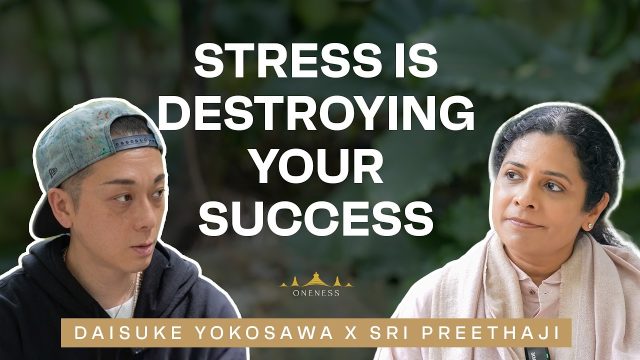
This teaching addresses how habitual attachment to past memories and mental patterns keeps us trapped outside the present moment, creating stress and emotional disconnection. The practice involves recognizing how consciousness naturally gravitates toward old narratives and learning to consciously redirect attention back to immediate experience—transforming stress into stillness, emotional wounds into love, and fragmented attention into genuine presence and connection.
The fundamental problem most people face is not the absence of the present moment—it is always available—but rather the habitual pull of memory and mental patterns that colonize attention. The mind, shaped by past experiences and emotional imprints, automatically loops through old narratives, reconstructing problems that no longer exist in real time. This is not a flaw; it is how the conditioned mind evolved to protect us. But protection through rumination becomes a prison when we lose the ability to simply be here, now.
According to the teaching framework of Ekam and the Oneness Movement, consciousness can exist in two modes: reactive and responsive. In the reactive mode, we are enslaved to habitual patterns—our attention captured by what happened yesterday, what might happen tomorrow, what someone said, what we fear we should have done. The present moment exists, but we are not in it. Instead, we are in a reconstructed past or an imagined future, both of which are mentally generated rather than lived.
The teaching identifies this as the core source of suffering. Stress is not caused by the present moment itself—present-moment reality is always manageable because it contains only what is actually here. Stress arises when we layer past hurts, future anxieties, and identity narratives onto the simple fact of now. Emotional wounds calcify not because they happened, but because we repeatedly re-experience them in thought, keeping the nervous system in a chronic state of threat.
The mechanism is subtle but powerful. Every emotion we have not fully processed leaves an imprint in consciousness. When a similar trigger appears—a tone of voice, a situation, a time of day—the old emotional pattern automatically activates. This is not conscious choice; it is conditioning. The mind believes it is protecting you by keeping the wound alive, ready to react if the threat returns. But since most of our emotional wounds come from the past, we are repeatedly reactivating old threats that no longer exist in present reality.
This creates a loop: unprocessed emotion → buried in memory → triggered by similarity → re-experienced in the body and mind → reinforced as "real" → buried deeper because it was painful to re-experience. Over time, we become strangers to the present moment. We are defending against ghosts. Our nervous system is chronically mobilized against threats that exist only in memory.
The Ekam teaching suggests that one reason people remain disconnected is that they mistake thinking about a problem for solving it. We ruminate, analyze, worry, and confess our wounds in conversation—all of which are mental rehearsals of the same pattern. Real resolution requires a shift from the thinking mind to direct awareness of what is actually happening in the body and nervous system right now.
Returning to presence is not about forcing the mind to stop thinking or achieving a blank state. It is simpler and more practical: it means shifting attention from the narrative to direct sensory and somatic reality. What are you actually sensing right now? What is the felt sense of your body in this moment, free of the story about your body? What do you hear, see, and feel when you drop the commentary?
The present moment is not special or mystical. It is the only place where actual life happens. When you eat, the taste happens now. When you connect with someone, the connection happens now. When you breathe, the breath happens now. Yet most people eat while lost in thought, connect while partly absent, breathe without noticing. The teaching suggests that enlightenment is not an exotic state but the natural result of being fully awake to what is already here.
Presence is also where agency actually exists. In the past, you cannot change what happened. In the future, nothing has happened yet. Only in the present moment can you make a choice, take an action, or respond with awareness rather than react with habit. A life lived in presence is therefore a life lived with real power—not the power to control outcomes, but the power to meet reality with clarity and intention.
The Ekam framework emphasizes that releasing the past is not about forgetting or suppressing emotion. It is about completing the emotional experience that was interrupted or denied when the wound occurred. Many traumatic or painful events were processed cognitively (we made a story: "I am not good enough," "People cannot be trusted," "I will always be alone") but not somatically (the nervous system was never allowed to fully move through the full cycle of that emotion).
When you consciously return to the present moment and notice what emotions are alive in your body right now, you give the nervous system the safety to finish what was started long ago. This is not regression to the past event; it is allowing the current activation in your body to be felt, named, and released. Often, old grief, rage, or fear emerges—not because you are broken, but because these energies were stored in the body as a protective measure and now have the space to move through and dissolve.
A key distinction the teaching makes: emotions in the body are temporary. Sadness, anger, fear, and joy all have a natural lifespan measured in minutes to perhaps an hour if we do not mentally amplify them. But when we add stories—"This will never end," "This means something is wrong with me," "I should not feel this"—we extend the emotion indefinitely. The practice is to feel the emotion without the story, and it naturally releases.
The teaching suggests that what we call love is actually the natural state that emerges when defensiveness dissolves. When you are no longer protecting yourself against perceived threats from the past, you do not need to armor your heart or distance yourself from others. Love is not something you manufacture; it is what remains when fear and contraction release.
Emotional hurts transform into love not through forgiveness as an act of will (which often becomes another form of control), but through the recognition that the person who hurt you was also operating from their own unprocessed wounds, their own reactive patterns. This recognition is not sentimental; it is seeing clearly how suffering propagates through unconsciousness. When you see that, blame naturally dissolves. Compassion arises not as a spiritual achievement but as an obvious response to the fact of human suffering.
Furthermore, the teaching implies that presence itself is intimacy. When you are fully here with another person—not mentally rehearsing a past hurt with them, not anxiously projecting into a future with them, but actually experiencing them as they are now—that is the deepest form of connection possible. Disconnected lives arise from fragmented attention. True connection arises from the simple miracle of two people being fully present to each other.
Stress transforms into stillness when the nervous system realizes that the perceived threat no longer requires mobilization. This realization comes through repeated experiences of being present and safe. Many spiritual practices emphasize quiet or meditation as ways to access stillness. But according to the Ekam teaching, stillness is not something you must create through effort; it is the natural state that appears when the constant mental activity—the replaying of the past, the forecasting of dangers, the reinforcement of identity narratives—finally quiets.
Paradoxically, the path to stillness often involves allowing more movement initially—allowing trapped emotions and energies to move through the body rather than being frozen in protective patterns. Once these energies complete their cycle, what remains is a stillness that is not deadened or suppressed, but alive and responsive. This is the basis for genuine resilience: a nervous system that can be activated when necessary and return to baseline when the challenge has passed, rather than a system locked in chronic vigilance.
The practical starting point is simple but requires conscious effort: notice when you are absent from the present moment. What pulls your attention away? Is it a memory, an anxiety, a story about yourself? Once you notice the pull, gently return. Feel your feet on the ground. Notice the temperature of the air. Observe the natural rhythm of your breath. These are anchors to presence that are always available.
If emotional content arises as you practice presence, the teaching suggests not pushing it away or analyzing it, but allowing it to be felt in the body without judgment or narrative. Give yourself permission to grieve, rage, or feel fear in a safe space. This is not indulgence; it is completion. As you repeatedly practice returning to presence and allowing emotions to move through, the nervous system gradually learns that it is safe to release its protective grip on the past.
For deeper support, the Ekam center offers teachings, practices, and community environments specifically designed to facilitate this liberation from past conditioning. The core principle is that enlightenment is not achieved through exotic techniques or rare insights; it emerges naturally when the mind returns home to the only moment where life actually happens: now.