BrightStar
BlogMis entradas
BlogMis entradas
Saved events
Ayuda y contactoRegistrarseIniciar sesión
Eventos
  • Ver Todos los Eventos
  • Yoga
  • Meditación
  • Respiración consciente
  • Qigong
  • Música sagrada
  • Música del mundo
  • Música medicina
  • Sanación con sonido
  • Danza extática
  • Ceremonia
  • Plantas medicinales
  • Sanación energética
  • Satsang y sabiduría
  • Tantra
  • Retiros
  • Todas las Categorías →
Destinos
  • Bali
  • Sedona
  • Los Angeles
  • Costa Rica
  • Tulum
  • Byron Bay
  • San Francisco
  • Austin
  • New York
  • San Diego
  • Denver
  • Seattle
  • Portland
  • Miami
  • London
  • Maui
  • Boulder
  • Todas las Ciudades →
Plataforma
  • Para organizadores
  • Únete al movimiento
  • Sell Globally
  • Para Creadores
  • Para equipos
  • Para Escritores
  • Para Maestros
  • Para Artistas de Kirtan
  • Para Estudios
  • Para Festivales
  • Para Centros de Retiros
  • Para Organizaciones Sin Fines de Lucro
  • Embajador de Marca
  • Entradas sin costo
  • Pro
  • Amplify
  • El ecosistema
Características

Venta de entradas y pago

  • Ticket categories
  • Assigned seating
  • Custom questions
  • Coupon codes
  • Smart pricing
  • Ticket sharing
  • Waitlist
  • Flexible refunds
  • Digital waivers
  • Tip jar
  • Donations and sliding scale
  • Embed widget
  • Mindful checkout
  • Recurring events
  • Private sessions
  • Online courses
  • Summits
  • Rooms and stays
  • Ticket scanner

Marketing y crecimiento

  • Abandoned cart recovery
  • Visitor recovery
  • Upsells and add-ons
  • Affiliate engine
  • Upsell affiliate network
  • Brand ambassador
  • Meta retargeting
  • Verified buyer network
  • Outbound email marketing
  • Email sequences
  • SMS and WhatsApp
  • Event upsell network
  • Direct mail campaigns
  • SEO engine
  • Syndication
  • Event sharing
  • Custom event pages
  • Artist profiles
  • Link in bio
  • Event blog
  • Blog newsletter

Pagos

  • Payments, powered by Stripe
  • Buy now, pay later
  • Apple Wallet
  • Multi currency

Datos y operaciones

  • Team access
  • Message center
  • Reports
  • Analytics reporting
  • Performance reporting
  • Customer data
  • Integrations
  • Switch from another platform

IA

  • Assistant
  • AI FAQ assistant
  • Todas las Características →
Empresa
  • Acerca de
  • Preguntas frecuentes
  • Contacto
  • Blog
  • Glosario
  • Guides
  • Inspiración
  • Centro de Ayuda
  • Documentación API
  • Recursos de Marca
  • Prensa
  • Términos de Servicio
  • Política de Privacidad

Eventos

  • Ver Todos los Eventos
  • Yoga
  • Meditación
  • Respiración consciente
  • Qigong
  • Música sagrada
  • Música del mundo
  • Música medicina

Destinos

  • Bali
  • Sedona
  • Los Angeles
  • Costa Rica
  • Tulum
  • Byron Bay
  • San Francisco
  • Austin

Plataforma

  • Para organizadores
  • Únete al movimiento
  • Sell Globally
  • Para Creadores
  • Para equipos
  • Para Escritores
  • Para Maestros
  • Para Artistas de Kirtan

Características

  • Red de la comunidad
  • Recuperación de Carritos
  • Categorías de Entradas
  • Eventos Recurrentes
  • Asientos Asignados
  • Motor de Afiliados
  • Lista de Espera / Notificar
  • Todas las Características →

Empresa

  • Acerca de
  • Preguntas frecuentes
  • Contacto
  • Blog
  • Glosario
  • Guides
  • Términos de Servicio
  • Política de Privacidad
Leer más

Eventos

  • Sanación con sonido
  • Danza extática
  • Ceremonia
  • Plantas medicinales
  • Sanación energética
  • Satsang y sabiduría
  • Tantra
  • Retiros
  • Todas las Categorías →

Destinos

  • New York
  • San Diego
  • Denver
  • Seattle
  • Portland
  • Miami
  • London
  • Maui
  • Boulder
  • Todas las Ciudades →

Plataforma

  • Para Estudios
  • Para Festivales
  • Para Centros de Retiros
  • Para Organizaciones Sin Fines de Lucro
  • Embajador de Marca
  • Entradas sin costo
  • Pro
  • Amplify
  • El ecosistema

Empresa

  • Inspiración
  • Centro de Ayuda
  • Documentación API
  • Recursos de Marca
  • Prensa

Venta de entradas y pago

  • Ticket categories
  • Assigned seating
  • Custom questions
  • Coupon codes
  • Smart pricing
  • Ticket sharing
  • Waitlist
  • Flexible refunds
  • Digital waivers
  • Tip jar
  • Donations and sliding scale
  • Embed widget
  • Mindful checkout
  • Recurring events
  • Private sessions
  • Online courses
  • Summits
  • Rooms and stays
  • Ticket scanner

Marketing y crecimiento

  • Abandoned cart recovery
  • Visitor recovery
  • Upsells and add-ons
  • Affiliate engine
  • Upsell affiliate network
  • Brand ambassador
  • Meta retargeting
  • Verified buyer network
  • Outbound email marketing
  • Email sequences
  • SMS and WhatsApp
  • Event upsell network
  • Direct mail campaigns
  • SEO engine
  • Syndication
  • Event sharing
  • Custom event pages
  • Artist profiles
  • Link in bio
  • Event blog
  • Blog newsletter

Pagos

  • Payments, powered by Stripe
  • Buy now, pay later
  • Apple Wallet
  • Multi currency

Datos y operaciones

  • Team access
  • Message center
  • Reports
  • Analytics reporting
  • Performance reporting
  • Customer data
  • Integrations
  • Switch from another platform

IA

  • Assistant
  • AI FAQ assistant
Descarga la app
Descárgalo en elApp StoreDisponible enGoogle Play
© 2026 BrightStar. Todos los derechos reservados. BrightStar Selection · Créditos fotográficos · Registro de cambios ·
Inspiration

Plan for the Future Without Losing Present Awareness

Eckhart Tolle
Eckhart Tolle
Jan 2, 2026
7 min de lectura

De Eckhart Tolle

Planning for the future is a necessary function of human life, but when we become entirely absorbed in future scenarios, worries, and what-ifs, we disconnect from the only place where actual living occurs—the present moment. This talk explores the paradox at the heart of modern productivity culture: obsessive future-focused thinking actually diminishes both our well-being and our capacity to make effective decisions. The key is to plan strategically while maintaining your primary residence in presence.

Leer · 6 secciones

Why We Become Lost in Future Planning

The human mind has a remarkable capacity to leave the present moment and dwell in imagined futures. This is not inherently problematic—the ability to anticipate, prepare, and strategize is crucial for survival and achievement. However, there is a critical difference between using thought as a tool for practical planning and becoming chronically identified with future concerns to the point where you lose touch with your actual life as it unfolds.

Many people spend the majority of their waking hours mentally rehearsing future scenarios: what might go wrong, what they need to accomplish, how they will handle challenges that have not yet occurred. This mental habit is reinforced by cultural narratives about success, responsibility, and productivity. The constant message is: think ahead, stay prepared, anticipate problems. While prudent planning has its place, the compulsive projection into future time creates a persistent underlying anxiety that erodes your sense of well-being in the present.

When consciousness becomes trapped in the future dimension, a subtle but profound split occurs: you are physically present in the here and now, but your attention, your sense of self, your emotional energy—all of it resides in a time that does not yet exist. This creates an internal fragmentation. You cannot actually live your life while your primary focus is elsewhere.

The Cost of Future-Focused Living

Losing yourself in future planning has measurable psychological costs. Chronic future-orientation is linked to anxiety, because imagined futures—particularly those constructed by an anxious mind—tend toward worst-case scenarios. Your mind generates problems that may never materialize, and you experience emotional stress about them as if they were real and present. This is a fundamental misalignment with reality: you are treating thought-created futures as though they have the same status as what is actually happening now.

There is also a paradox: the more you lose yourself in future concerns, the less effective your planning actually becomes. Effective action requires presence. When your mind is scattered across multiple imagined futures, you lack the clarity, intuition, and cognitive flexibility needed to navigate actual situations skillfully. Anxiety clouds judgment. Desperate effort born from fear-based planning often produces the opposite of the intended result.

Furthermore, in becoming so preoccupied with what comes next, you miss the texture and substance of your actual present experience. Relationships become shallow because only a fragment of your attention is with another person. Work becomes mechanical because you are not fully present with the task. Even moments of potential joy or peace are diminished because your consciousness is partially elsewhere, perpetually braced for the future.

The Distinction Between Thinking About the Future and Losing Yourself in It

It is essential to clarify that the teaching here is not to eliminate all thought about the future or to abandon planning altogether. Rather, the point is to recognize the difference between functional future-thinking and dysfunctional over-identification with it.

Functional future planning looks like this: you recognize that certain decisions made today will have consequences tomorrow. You take a moment to consider what might be needed, you make a choice, and then you return your attention to the present. The thinking serves a practical purpose, and once the purpose is fulfilled, you are able to disengage from that mental activity.

Dysfunction emerges when future-thinking becomes a chronic identity state rather than an occasional tool. When someone says, "I'm always worried about next month," or "I can't enjoy this moment because I'm thinking about the presentation I have to give in two weeks," they have lost the ability to toggle between planning mode and presence mode. The future has become their primary operating location.

One way to recognize whether you are using thought about the future or losing yourself in it: ask yourself, "Is this thought helping me make a practical decision right now?" If the answer is no—if you are simply ruminating, rehearsing, worrying in loops—then your consciousness has been captured by a thinking pattern that is not serving you. At that point, the practice is to notice it and gently bring yourself back.

How Present Awareness Improves Both Well-Being and Effectiveness

When you learn to stay anchored in the present moment, something shifts. First, your baseline well-being improves. This is not because you become passive or complacent; it is because you are no longer manufacturing suffering through compulsive worry about events that may never occur. The present moment, when you are actually in it, contains far less suffering than the anxious future you have constructed in your mind.

Second, your practical functioning improves. Presence brings clarity. When you face an actual challenge, you respond from a place of openness and awareness rather than from fear and defense. Your decisions tend to be wiser because they are informed by intuition, by the whole of your being, not just by the fearful part of your mind that is trying to control outcomes.

Third, you paradoxically become better at long-term planning. This may seem counterintuitive, but it makes sense: a calm, present mind is far more capable of strategic thinking than a fragmented, anxious one. You can hold the longer view while still remaining rooted in what is. The future is considered as a possibility space, not as a threat to be controlled.

Practical Approaches to Staying Present While Planning

How does one actually maintain presence while still meeting the practical requirement to plan and prepare? A few approaches emerge from a deeper understanding of this principle:

  • Designate thinking time: Rather than allowing future-thinking to happen randomly throughout the day, you might set aside specific times to address planning concerns. During these designated periods, you think deliberately about what needs to happen. Outside these times, you practice returning attention to the present. This creates a boundary that prevents chronic mental dispersal.
  • Notice the quality of the thought: When a future-thought arises, pause and sense its quality. Is it grounded in genuine insight about something that needs preparation? Or is it an anxious loop with no practical purpose? Learning to make this distinction allows you to engage with functional thoughts while releasing the unproductive ones.
  • Use the body as an anchor: The present moment is always available through bodily sensation. When you notice yourself spiraling into future thoughts, bring attention to your feet on the ground, your breath, the feeling of your hands. The body is always now. This simple redirection interrupts the mind's escape into imagined time and returns you to actual life.
  • Accept what cannot be controlled: Much of the compulsive future-thinking arises from an attempt to control outcomes through mental effort. Recognizing that many things lie beyond your control—and that attempting to micromanage them through worry is futile—is liberating. You can take reasonable action in the present; beyond that, you can let go.

Where to Go From Here

The invitation is to begin noticing, without judgment, how much of your inner life is actually located in the future rather than in the present. Notice the subtle anxiety that comes with chronic future-focus. Then, gradually, practice what it feels like to be fully here. To make a decision, take action, and then return. To experience the world through your senses rather than through layers of anticipatory thought.

This is not about rejecting responsibility or failing to plan. It is about reclaiming your life from the tyranny of compulsive future-thinking. It is about discovering that the only place you can actually live, act, and be well is now—and that when you are truly present, your engagement with the future becomes far more skillful, not less.

Comentarios

Cargando la conversación…

El artista de esta historia

Eckhart Tolle

Eckhart Tolle

Spiritual Teacher

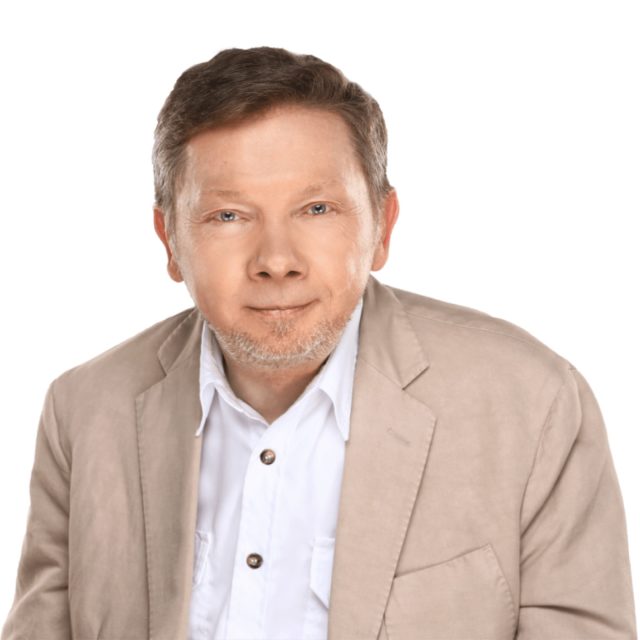
Eckhart Tolle is a spiritual teacher and author whose bestsellers The Power of Now and A New Earth have introduced millions to living in the present moment, and who sees awakened Presence as the essential next step in human evolution.

Ver perfil
Explorar temas
Future planningPresent moment awarenessConsciousnessAnxiety reductionMindfulness
Preguntas Frecuentes

Preguntas Frecuentes

The key is to distinguish between functional planning and dysfunctional rumination. Set aside specific times to address future concerns, make practical decisions, then consciously return your attention to the present moment. Outside those designated planning periods, practice releasing future-thoughts by anchoring yourself in bodily sensation and what is actually happening now.

Chronic anxiety fragments your attention and cloud your judgment. Effective action requires presence, clarity, and intuition—all of which are diminished when your consciousness is dispersed across imagined future scenarios. A calm, present mind is far more capable of strategic thinking and wise decision-making than a fearful, fragmented one.

Being prepared means you take practical steps and make conscious decisions based on foresight, then you let go. Losing yourself means your primary residence is in imagined future concerns, creating a chronic split between your physical presence and your mental focus. It's a matter of whether thought serves you as a tool or has captured your identity.

Yes. In fact, a present-centered approach often leads to better long-term outcomes because you make clearer decisions and take more aligned action. The difference is that goals are held as possibilities while your actual living happens now. You address what is in front of you without constantly escaping into anxious projections about what might come.

Notice when it happens without judgment. Then gently redirect your attention to the present through your senses—your breath, your feet on the ground, the feeling in your hands. The body is always in the now. With practice, you strengthen your capacity to stay present, and compulsive future-thinking naturally diminishes.

No. Being responsible means you take thoughtful action based on foresight—not that you spend your mental energy in constant worry. Worry is not the same as preparation. You can be fully responsible, plan carefully, and make wise decisions while remaining grounded in the present moment rather than lost in anxious projections.

También te puede gustar

Ver Todo
God Beyond the Sky: Rethinking Divine Nature
Inspire

God Beyond the Sky: Rethinking Divine Nature

God is not an external judge deciding human suffering. Suffering itself becomes the mechanism through which consciousness awakens to itself.…

6 min read
God, Suffering, and the One Life Across Traditions
Inspire

God, Suffering, and the One Life Across Traditions

Eckhart Tolle explores how Islam, Buddhism, and Greek philosophy all point to the same ultimate reality—and why the problem of suffering dis…

7 min read
Medicine Buddha Practice: Feeling Beneath the Thinking
Inspire

Medicine Buddha Practice: Feeling Beneath the Thinking

Lama Rod Owens opens a Monday-night Medicine Buddha session six years into the practice, teaching how to feel an experience instead of think…

10 min read
We Are All Visitors to This Material World: A Gita Reflection
Inspire

We Are All Visitors to This Material World: A Gita Reflection

In a 22-second clip, Radhika Das frames human life as a temporary visit, not a permanent residence. The idea draws on Bhagavad-gītā 8.15 and…

3 min read
Ver todoTambién te puede gustar→

Continúa tu camino

Más sabiduría y encuentros de todo el directorio de BrightStar.

Más artículos

Recorre la biblioteca completa de enseñanzas, entrevistas y guías.

Ver todos los artículos →

Maestros y artistas

Explora los linajes, músicos y guías del mundo consciente.

Explorar artistas →

Encuentra un evento

Kirtan, retiros, baños de sonido, breathwork, festivales — muy pronto.

Ver eventos →