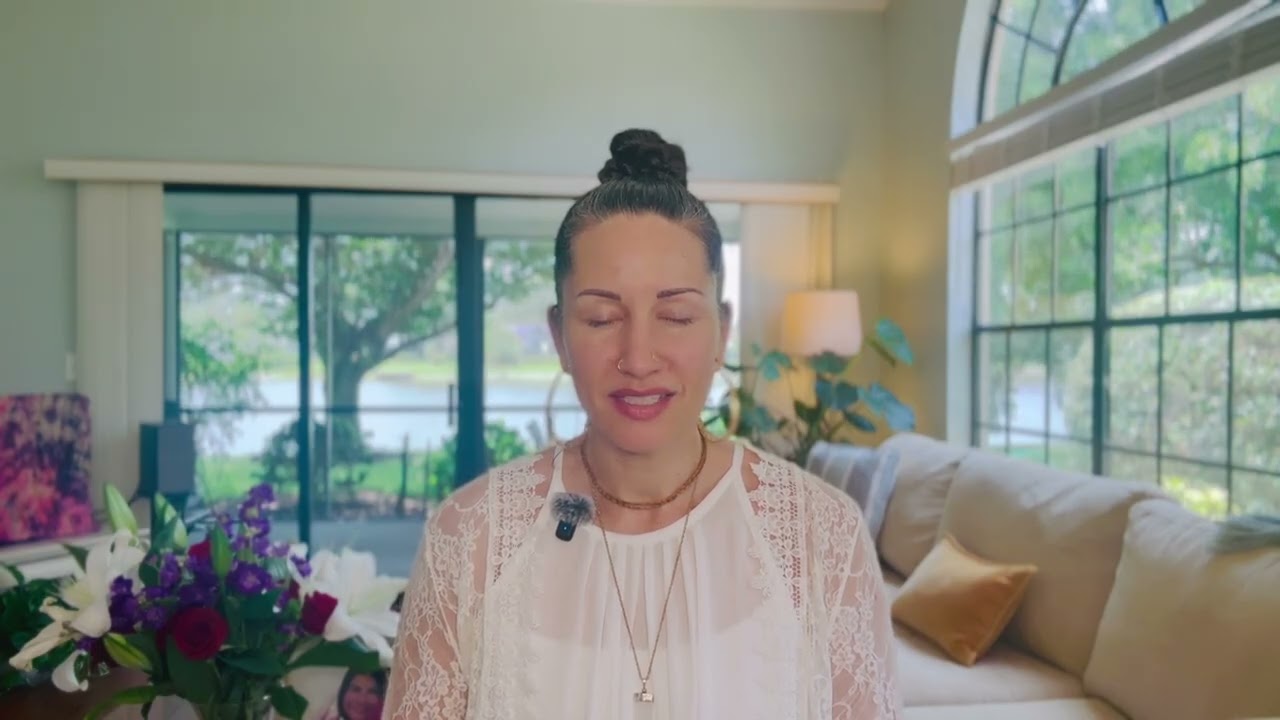
Nine minutes is a strange unit for a meditation. It is too short to be a retreat and too long to dismiss as a breather between meetings. Yet that is the entire container Tom Evans built for "Be Calm in 9 Minutes," a short guided practice he recorded in December 2014 and offered as a contribution to MicroBizMattersDay, a small-business event held on 9 January 2015. Within those nine minutes he moves through a body scan, a breath-and-mantra exercise, a method for interrogating the thoughts that run through your head, and a rule for decision-making that asks your heart and gut to weigh in before your head gets the final word. The whole thing rests on a single claim, stated plainly near the start of the recording: our minds can only have one thought at a time. Everything else in the practice is an application of that idea.
Evans opens with a picture most people will recognize. "From the moment we awaken until when we fall asleep, our minds start chattering," he says at the top of the video (10s). The practice, in his framing, is not an escape from the day but a way to get something back from it. "This time of calmness might at first sound like a waste of time, but you'll find that you get this time back in spades," he tells viewers (39s). He lists the returns he has in mind: a better day, better health and vitality, and "all those chance happenings that you wouldn't notice when you have a busy mind" (49s–55s).
It is a modest promise, and Evans makes it without ceremony. He also makes the practice unusually flexible. You can do it in the morning or as you go to bed, sitting upright or lying down. "There's no right or wrong way for this," he says. "Doesn't even matter if you fall asleep," with the one sensible exception that you should not attempt it while driving, operating machinery, or, as he puts it, "flying a jumbo jet" (68s–83s). That openness matters. A lot of beginners quit meditation because they fear they are doing it wrong. Evans keeps returning to the same reassurance, and he applies it even to the moment when a listener loses count of their breaths: "if you did lose count, then that's actually a really good thing" (279s–290s).
The first movement is a slow sweep from head to toe. Evans asks you to get comfortable, uncross your arms and legs, and "just scan your body for any tension" (87s–92s). He starts at the forehead, where he asks you to "let those tiny muscles relax." From there he moves to the jaw, where he suggests noticing "the position of your tongue," letting it rest on the floor of the mouth, and releasing the jaw. The shoulders come next, dropped slightly. Then the arms, from elbows to forearms to wrists, ending with a small wiggle of the fingers. The chest, hips, thighs, knees, calves, shins, ankles, and feet follow, finishing with a playful instruction to "give your toes a little wack or two" (106s–155s).
Structurally, the scan is doing something useful. It gives the attention a route to travel. A busy mind tends to run in loops, and a body scan interrupts the loop by handing attention a series of concrete, physical tasks. Each body part becomes a checkpoint. Note the instruction is not to force relaxation but to notice and let go. The language is permissive throughout: "let it lie down," "let that tension flow away," "let all that tension just flow." The practice asks for allowance, not effort.
The first of the two core techniques is breath work with a mantra. Evans asks you to breathe from the diaphragm, using a specific hand position: "put both hands on your belly. So your middle fingers just touch." As you breathe in, the fingers part; as you breathe out, they come back together. He is specific about the rhythm. The outbreath should last "about four times as long as the in breath" (191s–209s). That longer exhale is the part of the instruction most likely to slow the body down, and it gives the mantra a natural pace.
The mantra is two words. "On each in breath just say internally the word be. And on each out breath you say internally the word calm" (215s–222s). Evans calls this a mantra, and he is clear that its purpose is repetition, not meaning-making. Repeat the pattern five times, he says, and then pause to check in: "How was that for you? Are you feeling relaxed and calm? Did you lose count?" (270s). The point of the counting is not precision. It is a gentle anchor that keeps attention on the breath long enough for the thinking mind to ease off.
"Let me tell you something about meditation. There's no right or wrong way to do it."
Tom Evans, in his 2014 video "Be Calm in 9 Minutes"
The second technique is more unusual, and it is where the central principle does its work. Evans asks you to notice the thoughts moving through your head, and he locates most of them "in our frontal lobes behind our forehead or around the side of our brain," which he describes as "where most cognitive activity is based and sourced" (294s–303s). Then he makes a playful observation: "It's almost like we got somebody talking to us inside our brain. But have you ever thought about this? What accent are they speaking in? And who is speaking to who?" (308s–319s).
The method is simple. As each thought arrives, you ask it three questions: who sent it, for what purpose, and where did it come from? Evans's claim is that asking the question displaces the original thought. This is where the one-thought-at-a-time principle comes into play. If the mind can only hold one thought, then a question about the thought occupies the slot the thought was using. "As we ask the thought that question, the original thought gets replaced by us asking the thought these questions," he says (333s–344s). The effect is not to argue with the thought or to suppress it. It is to change its status from a command you obey into an object you examine.
Evans extends the principle with a small piece of self-observation that is worth sitting with. If someone is speaking and someone else is listening, he asks, "are they the same person?" (319s–326s). He leaves the question open. It is the kind of inquiry a listener can test in their own head during the practice, and that is the point: the technique turns the viewer into a witness rather than a participant in the chatter.
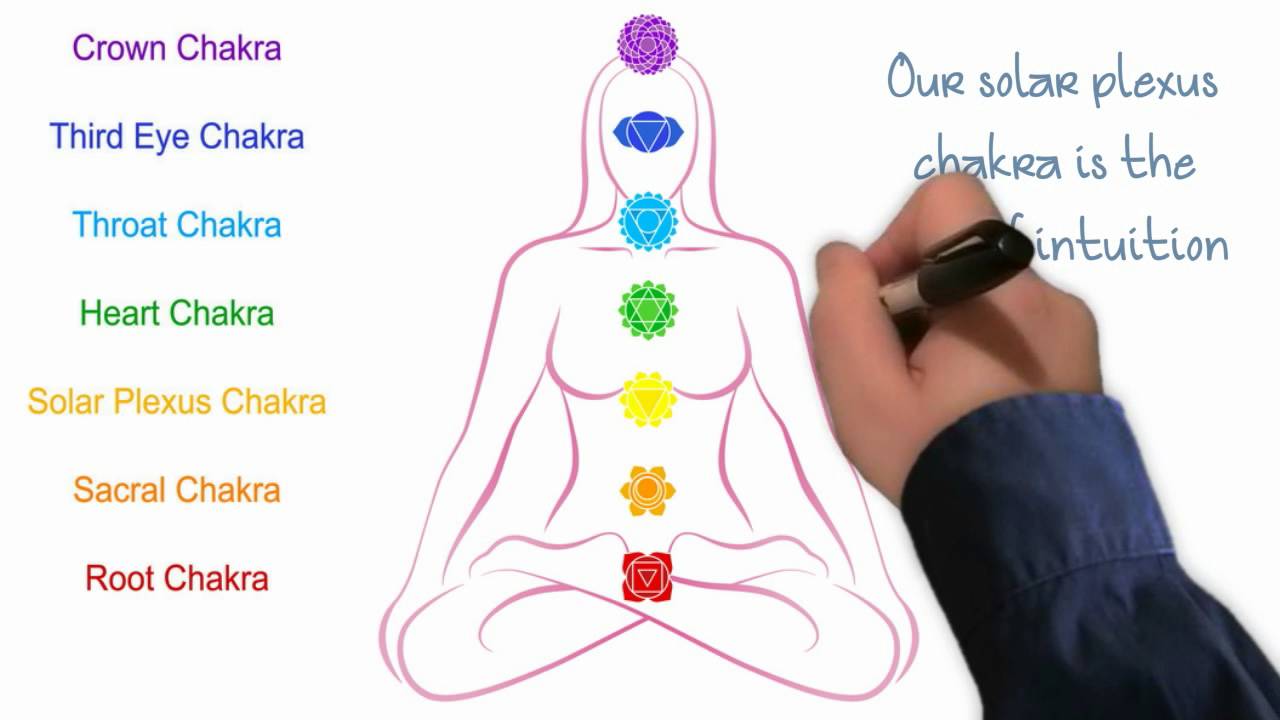
This is the part of the video that departs most from ordinary meditation advice, and it is the piece that gives the title its quiet charge. Evans proposes that the heart and the gut are cognitive centers in their own right. "From an evolutionary perspective, they're very old," he says, "and they speak in a very primitive language too" (394s–405s). The gut, in his account, speaks in binary terms: "a yes or no," a go or a no-go. The heart speaks in degrees of feeling: "either be in love with something, red hot about something, lukewarm about something, or positively cold" (405s–422s).
Evans is candid about why we seldom consult these centers. Our head, he says, "normally shouts very loudly and tells us what to do. Sometimes our ego can get inflated by some of our choices. And as a result, our heart and our gut don't get a look in" (437s–451s). The fix he suggests is a decision habit rather than a belief system. Before you choose, let the head "consult with your heart and your gut." Ask the heart how warm the matter feels, from cold to boiling hot. Ask the gut whether it is a go or a no-go. "You'll get an answer straight away," he says (478s–493s). The promise is that once head, heart, and gut align, "you will become unstoppable" (465s–473s).
It is worth reading this part with the same care Evans brings to the rest of the practice. He does not offer evidence for the claim that the gut and heart function as cognitive centers, and this article should not supply any. What he offers is a usable framework: a fast, two-channel check that asks different questions than analytical reasoning does. Whether or not one accepts his model of the body, the habit of pausing to ask "how do I feel about this, in a single word?" before committing is a plain and portable one.
Evans closes by bringing the body back into the room. "Give your toes a waggle, give your fingers a waggle, come back into your body, open your eyes really slowly," and then, as you go about your day, "just remember to be calm" (510s–527s). The closing line is the whole practice in miniature. Be calm is also the mantra from the breath work, and by the end the viewer has been given two ways to return to it: the breath, and the question put to each thought.
A few things are worth taking from the video as a standalone resource. The first is the structure. Each movement has a purpose: the body scan lowers physical tension, the breath work slows the rhythm, the thought questioning changes your relationship to mental noise, and the heart-and-gut check gives the calm a practical application in decisions. The second is the tone. Evans never insists on a particular posture, outcome, or belief. The third is the modesty of the production. The video, a single take with a calm voice and a little music, has had a relatively small audience (4,383 views at the time of this writing), but the practice is designed to be repeated, not admired. Nine minutes is short enough to try tomorrow, and that is probably the most useful thing about it.
If the practice caught your attention, the best next step is to run it once, exactly as written, and then notice what changed in the body and in the thoughts. Try the breath and mantra first, then the body scan, then the thought questions. Keep a note of one decision you make that day and ask the heart and the gut about it before you commit. The video's own description points viewers to Evans's website for further meditations and resources, and that is a natural next stop for anyone who finds the nine-minute format useful. For the practice itself, you need nothing but a comfortable place to sit or lie down and a few minutes you are willing to give back to the day.