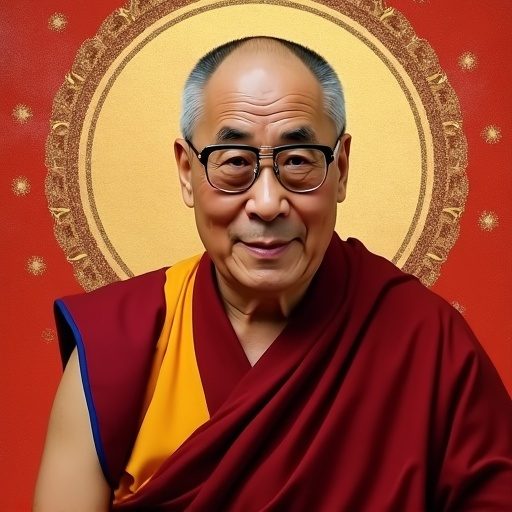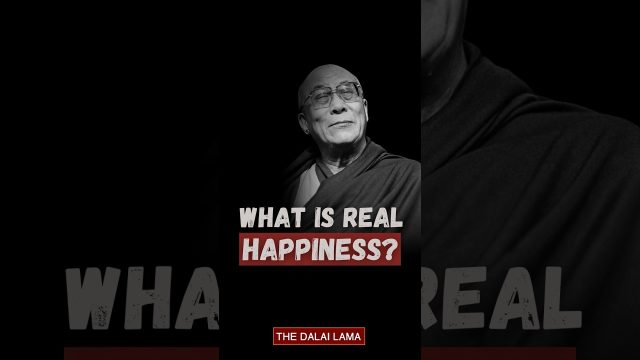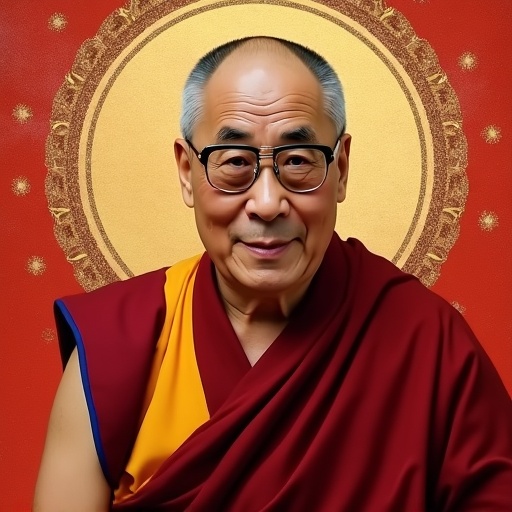
The deepest fear we carry is often unspoken: that when death comes, we will look back with crushing regret. The Dalai Lama addresses this head-on with a teaching so simple it stops you cold. A meaningful life—one devoted to something good, lived compassionately toward others—carries with it a guarantee: at the end, no regret.
The Dalai Lama offers a metaphor that dissolves the mystery many feel around dying. "Death is something like change of clothes," he explains. "Clothes become dirty or old. Then time come to change. Similarly this body become too old. Then time come to change." The image is startlingly practical—neither poetic nor frightening, simply natural.
What transforms this teaching is how he frames what happens before that change. If we view death as something dark or mysterious, fear and anxiety attach to it. But if we understand that death is inevitable and simply the next phase in a sequence—and if we have lived that sequence meaningfully—the weight lifts. This approach sidesteps theology. Whether one holds theistic faith (belief in God) or non-theistic conviction (reliance on oneself), the principle remains the same: a life lived meaningfully carries a guarantee.
That guarantee is the absence of regret. Not happiness, not peace necessarily—but the clarity that comes from having used this life for something beyond self-interest. The Dalai Lama is precise about what that means: "utilize for something good for other. More compassionate way." Compassion toward others becomes the measure by which a life avoids regret at its close.
This is not an argument for any particular religious path. It is a psychological observation dressed in spiritual language. When we reach the end having consistently chosen generosity and care over fear and selfishness, the ledger of our life reads balanced. There is nothing left unsaid, no opportunity squandered through smallness.
The teaching dissolves a false dichotomy many carry: that we must either believe in an afterlife to justify virtue, or abandon virtue if we don't. The Dalai Lama shows a third door. The meaning of a good life is not dependent on what comes after. The meaning is in how it has been lived.
This teaching is a threshold. To explore how compassion and service anchor a life across Buddhist practice and secular ethics alike, seek out the Dalai Lama's fuller teachings on bodhicitta (the aspiration to help all beings) and the practical integration of dharma into daily life. The Office of His Holiness the Dalai Lama maintains resources on these teachings at dalailama.com.