


What is Mantra Music?
Mantra music is a devotional and meditative musical genre that centers on the vocal repetition of mantras—sacred syllables, words, or phrases drawn from Sanskrit, Pali, Tibetan, or other liturgical languages. Unlike conventional songs with narrative lyrics, mantra music is structured around cyclic repetition, rhythm, and melodic phrasing designed to induce states of concentration, devotional absorption, or trance. The practice assumes that certain sound vibrations carry intrinsic spiritual potency, capable of affecting consciousness independently of semantic meaning. Mantra music spans Hindu kirtan, Buddhist chanting, Sikh gurbani sangeet, and contemporary fusion genres that adapt traditional forms to Western instrumentation and studio production.
Origins & Lineage
The roots of mantra music lie in the Vedic hymns of ancient India, composed between roughly 1500 and 500 BCE and codified in texts such as the Rigveda and Samaveda. The Samaveda in particular prescribed melodic structures (raga) and rhythmic patterns (tala) for chanting Vedic verses in ritual contexts, establishing the prototype for later devotional music. The concept of mantra as a vehicle for spiritual transformation is articulated in the Upanishads (circa 800–400 BCE), which describe the syllable Om as the sonic representation of ultimate reality.
Buddhist mantra chanting developed independently in the first millennium CE, particularly within Vajrayana traditions in Tibet, where texts such as the Tibetan Book of the Dead (Bardo Thodol) prescribe specific mantras—like Om Mani Padme Hum—for meditation and death rites. By the medieval period, Hindu bhakti (devotional) movements transformed mantra recitation into communal musical practice. Figures such as Mirabai (1498–1547) and Tulsidas (1532–1623) composed devotional songs in vernacular languages that popularized mantra repetition beyond Brahmanical ritual.
Kirtan—call-and-response chanting of divine names—emerged in Bengal in the 15th century through the work of Chaitanya Mahaprabhu (1486–1534), whose ecstatic street singing of the Hare Krishna mantra founded a lineage that would eventually reach the West. Sikh musical tradition, formalized by Guru Nanak (1469–1539) and codified in the Guru Granth Sahib, established gurbani kirtan as a central liturgical practice.
How It’s Practiced
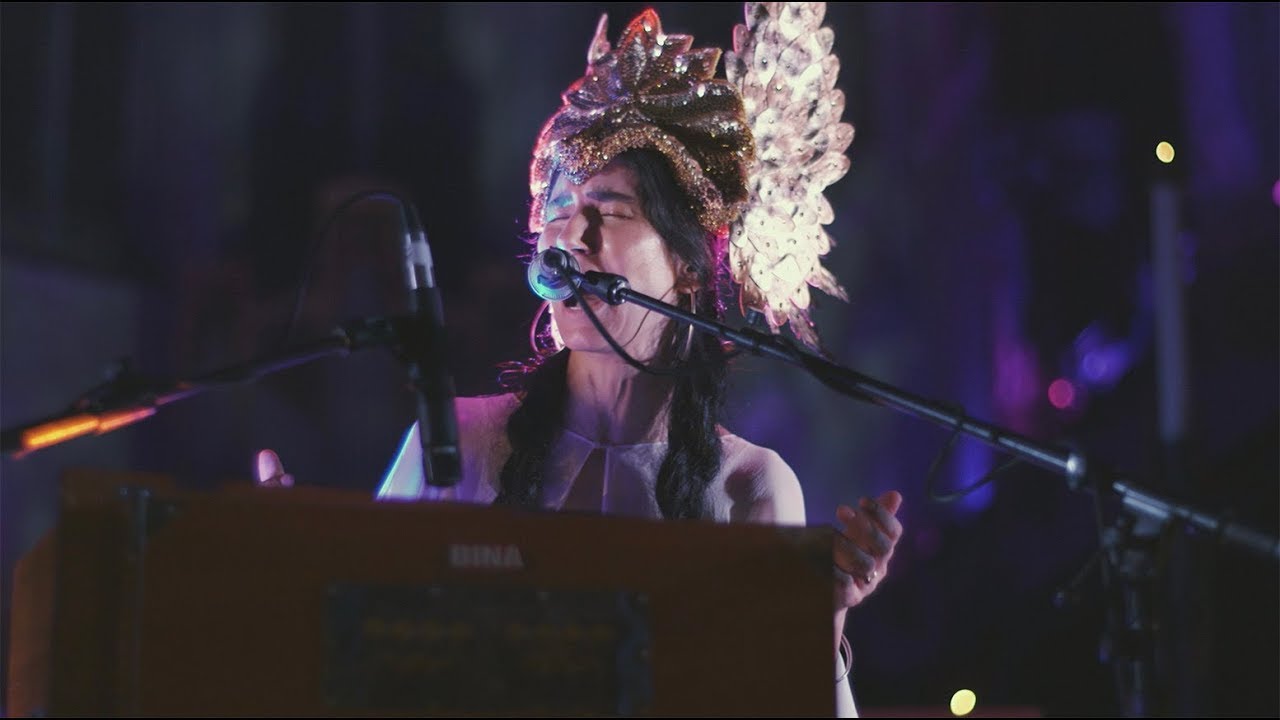
Mantra music is performed in multiple settings and formats. In traditional contexts, it is practiced in temples, ashrams, and monasteries as part of daily liturgy or during festivals. Kirtan sessions feature a lead vocalist who sings a line of the mantra, which the congregation repeats in unison, often accompanied by harmonium, tabla, and hand cymbals. Intensity builds through gradual acceleration and dynamic variation, sometimes leading participants into states of ecstatic movement or weeping.
Buddhist mantra chanting tends toward slower, more meditative tempos, with monks chanting in unison or in harmonic overtone styles (as practiced in Tibetan Gelug monasteries). Instruments are minimal—bells, drums, and long horns—or entirely absent.
Contemporary mantra music has migrated to yoga studios, concert venues, and streaming platforms. Artists layer traditional chants over ambient electronic production, Western folk instrumentation, or pop song structures. Albums are produced for personal meditation, often featuring extended tracks (10–30 minutes) designed for repetitive listening. Live performances may incorporate loop pedals, synthesizers, and multi-track vocal layering, creating immersive soundscapes that blur the line between ritual and performance art.
Mantra Music Today
Seekers encounter mantra music through yoga classes (particularly Kundalini and Bhakti yoga lineages), meditation apps, wellness retreats, and concerts billed as “sacred sound journeys” or “kirtan nights.” The genre has cross-pollinated with ambient, world music, and New Age categories, producing hybrid artists whose work circulates in both spiritual and secular contexts.
Recording artists such as Krishna Das, Deva Premal, Snatam Kaur, and Jai-Jagdeesh have built international audiences, releasing albums through mainstream labels and performing at festivals like Bhakti Fest and Wanderlust. Platforms like Insight Timer and Spotify host thousands of mantra music tracks categorized under meditation, sleep, and relaxation playlists. The form has also been adopted by non-Hindu practitioners, including Western converts to Buddhism and participants in eclectic “conscious community” networks who may lack formal training in the source traditions.
Common Misconceptions
Mantra music is frequently conflated with any slow, repetitive, or vaguely Eastern-sounding music. In fact, the genre is defined by the use of specific liturgical texts—not simply atmospheric soundscapes or instrumental drone music. Calling a wordless ambient track “mantra music” misunderstands the centrality of language and semantic precision in the tradition.
Another misconception is that all mantra music is devotional or theistic. While much of it originates in bhakti and Vajrayana contexts, certain mantras (such as Om or the Buddhist Gate Gate Paragate) are used in non-theistic or philosophical frameworks, where the emphasis is on vibrational resonance rather than deity invocation.
Finally, mantra music is not universally regarded as “calming.” Traditional kirtan can be rhythmically intense and emotionally cathartic, designed to rupture ordinary consciousness rather than soothe it.
How to Begin
Beginners can start by attending a local kirtan session at a yoga studio, Hindu temple, or Sikh gurdwara, where participation requires no prior knowledge—simply listening and repeating when comfortable. For recorded music, Krishna Das’s Live on Earth (1997) offers an accessible entry point to Western-style kirtan, while Deva Premal’s The Essence (1998) provides a gentler introduction via studio-produced arrangements.
Those interested in Buddhist mantra chanting might explore recordings by Tibetan monks of the Gyuto or Drepung monasteries, available through labels like Spirit Voyage or Sounds True. For understanding the cultural and theological context, Diana Eck’s Darsan: Seeing the Divine Image in India (1981) and Guy Beck’s Sonic Theology: Hinduism and Sacred Sound (1993) provide scholarly background.
Most importantly, approach mantra music as a practice rather than passive listening—repetition, vocalization, and attentive presence are central to its intended function.