BrightStar
BlogMeine Tickets
BlogMeine Tickets
Saved events
Hilfe & KontaktRegistrierenAnmelden
Events
  • Alle Events durchsuchen
  • Yoga
  • Meditation
  • Breathwork
  • Qigong
  • Heilige Musik
  • Weltmusik
  • Medicine Music
  • Klangheilung
  • Ecstatic Dance
  • Zeremonie
  • Pflanzenmedizin
  • Energieheilung
  • Satsang & Weisheit
  • Tantra
  • Retreats
  • Alle Kategorien →
Reiseziele
  • Bali
  • Sedona
  • Los Angeles
  • Costa Rica
  • Tulum
  • Byron Bay
  • San Francisco
  • Austin
  • New York
  • San Diego
  • Denver
  • Seattle
  • Portland
  • Miami
  • London
  • Maui
  • Boulder
  • Alle Städte →
Plattform
  • Für Veranstalter
  • Werde Teil der Bewegung
  • Sell Globally
  • Für Kreative
  • Für Teams
  • Für Autoren
  • Für Lehrer
  • Für Kirtan-Künstler
  • Für Studios
  • Für Festivals
  • Für Retreat-Zentren
  • Für gemeinnützige Organisationen
  • Markenbotschafter
  • Kostenloses Ticketing
  • Pro
  • Amplify
  • Das Ökosystem
Funktionen

Ticketverkauf und Checkout

  • Ticket categories
  • Assigned seating
  • Custom questions
  • Coupon codes
  • Smart pricing
  • Ticket sharing
  • Waitlist
  • Flexible refunds
  • Digital waivers
  • Tip jar
  • Donations and sliding scale
  • Embed widget
  • Mindful checkout
  • Recurring events
  • Private sessions
  • Online courses
  • Summits
  • Rooms and stays
  • Ticket scanner

Marketing und Wachstum

  • Abandoned cart recovery
  • Visitor recovery
  • Upsells and add-ons
  • Affiliate engine
  • Upsell affiliate network
  • Brand ambassador
  • Meta retargeting
  • Verified buyer network
  • Outbound email marketing
  • Email sequences
  • SMS and WhatsApp
  • Event upsell network
  • Direct mail campaigns
  • SEO engine
  • Syndication
  • Event sharing
  • Custom event pages
  • Artist profiles
  • Link in bio
  • Event blog
  • Blog newsletter

Zahlungen

  • Payments, powered by Stripe
  • Buy now, pay later
  • Apple Wallet
  • Multi currency

Daten und Betrieb

  • Team access
  • Message center
  • Reports
  • Analytics reporting
  • Performance reporting
  • Customer data
  • Integrations
  • Switch from another platform

KI

  • Assistant
  • AI FAQ assistant
  • Alle Funktionen →
Unternehmen
  • Über uns
  • Häufige Fragen
  • Kontakt
  • Blog
  • Glossar
  • Guides
  • Inspiration
  • Hilfe-Center
  • API-Dokumentation
  • Marken-Assets
  • Presse
  • Nutzungsbedingungen
  • Datenschutzrichtlinie

Events

  • Alle Events durchsuchen
  • Yoga
  • Meditation
  • Breathwork
  • Qigong
  • Heilige Musik
  • Weltmusik
  • Medicine Music

Reiseziele

  • Bali
  • Sedona
  • Los Angeles
  • Costa Rica
  • Tulum
  • Byron Bay
  • San Francisco
  • Austin

Plattform

  • Für Veranstalter
  • Werde Teil der Bewegung
  • Sell Globally
  • Für Kreative
  • Für Teams
  • Für Autoren
  • Für Lehrer
  • Für Kirtan-Künstler

Funktionen

  • Community-Netzwerk
  • Warenkorbabbruch-Wiederherstellung
  • Ticket-Kategorien
  • Wiederkehrende Veranstaltungen
  • Sitzplatzreservierung
  • Affiliate-System
  • Warteliste / Benachrichtigen
  • Alle Funktionen →

Unternehmen

  • Über uns
  • Häufige Fragen
  • Kontakt
  • Blog
  • Glossar
  • Guides
  • Nutzungsbedingungen
  • Datenschutzrichtlinie
Mehr lesen

Events

  • Klangheilung
  • Ecstatic Dance
  • Zeremonie
  • Pflanzenmedizin
  • Energieheilung
  • Satsang & Weisheit
  • Tantra
  • Retreats
  • Alle Kategorien →

Reiseziele

  • New York
  • San Diego
  • Denver
  • Seattle
  • Portland
  • Miami
  • London
  • Maui
  • Boulder
  • Alle Städte →

Plattform

  • Für Studios
  • Für Festivals
  • Für Retreat-Zentren
  • Für gemeinnützige Organisationen
  • Markenbotschafter
  • Kostenloses Ticketing
  • Pro
  • Amplify
  • Das Ökosystem

Unternehmen

  • Inspiration
  • Hilfe-Center
  • API-Dokumentation
  • Marken-Assets
  • Presse

Ticketverkauf und Checkout

  • Ticket categories
  • Assigned seating
  • Custom questions
  • Coupon codes
  • Smart pricing
  • Ticket sharing
  • Waitlist
  • Flexible refunds
  • Digital waivers
  • Tip jar
  • Donations and sliding scale
  • Embed widget
  • Mindful checkout
  • Recurring events
  • Private sessions
  • Online courses
  • Summits
  • Rooms and stays
  • Ticket scanner

Marketing und Wachstum

  • Abandoned cart recovery
  • Visitor recovery
  • Upsells and add-ons
  • Affiliate engine
  • Upsell affiliate network
  • Brand ambassador
  • Meta retargeting
  • Verified buyer network
  • Outbound email marketing
  • Email sequences
  • SMS and WhatsApp
  • Event upsell network
  • Direct mail campaigns
  • SEO engine
  • Syndication
  • Event sharing
  • Custom event pages
  • Artist profiles
  • Link in bio
  • Event blog
  • Blog newsletter

Zahlungen

  • Payments, powered by Stripe
  • Buy now, pay later
  • Apple Wallet
  • Multi currency

Daten und Betrieb

  • Team access
  • Message center
  • Reports
  • Analytics reporting
  • Performance reporting
  • Customer data
  • Integrations
  • Switch from another platform

KI

  • Assistant
  • AI FAQ assistant
Hol dir die App
Laden imApp StoreJetzt beiGoogle Play
© 2026 BrightStar. Alle Rechte vorbehalten. BrightStar Selection · Bildnachweise · Änderungsprotokoll ·
Inspiration

Why You Never Feel Fully Present in the Moment

Eckhart Tolle
Eckhart Tolle
Apr 7, 2026
8 Min. Lesezeit

Von Eckhart Tolle

The present moment is the only reality that exists, yet we rarely meet it in its fullness. Eckhart Tolle examines why presence feels perpetually out of reach—not because the present is deficient, but because the mind's habitual patterns of judgment, resistance, and seeking actively distance us from direct experience. Understanding this gap between the reality of now and how we actually experience it is the entry point to genuine presence.

Lesen · 8 Abschnitte

The Paradox of Ever-Present Absence

One of the deepest paradoxes of human consciousness is that the present moment is the only thing that truly exists, and yet it feels like the most elusive thing to access. We are always, by definition, in the present moment—our bodies exist here, our breath happens now—and yet our awareness habitually resides elsewhere: in regret about what happened, anxiety about what might happen, or mental narratives about what is happening. The present moment is not absent; our presence is.

This distinction matters profoundly. The present moment does not require us to change it, improve it, or feel a certain way about it in order for it to be valid. It simply is. And yet, most of us move through our days with a sense that something is missing, that we are not quite arriving at the depth of presence we intuitively sense is available. This absence of presence in the midst of constant availability creates a low-level anxiety—a feeling that we are missing life as it happens.

How Does the Mind Create Distance from the Present?

The human mind has evolved to categorize, compare, and make meaning out of experience. These functions are useful in certain contexts, but they become pathological when applied continuously to the present moment. The mind cannot be present; it can only think about presence. It cannot experience the now; it can only conceptualize about time.

When you are genuinely present—tasting food, listening to music, feeling warmth on your skin—the mind temporarily falls silent. There is just the direct sensation, without commentary. But the moment the mind re-engages, it begins its natural operation: it judges ("This is good" or "This is bad"), compares ("This is better than last time" or "I wish it were different"), and seeks ("When will I feel this again?" or "How can I hold onto this?").

This judging-comparing-seeking structure creates a subtle but constant rejection of what is. If you are drinking coffee and the mind says "This is too hot" or "It's not as good as yesterday," you are no longer fully present with the taste; you are present with the mind's evaluation of the taste. The evaluation may be practical, but it also creates a layer of resistance between awareness and experience. When this pattern becomes habitual—when nearly every moment is filtered through this evaluative layer—genuine presence becomes rare.

The Seeking That Prevents Arrival

Implicit in the lack of presence is a seeking: the seeking for a better present moment than the one that is actually here. This might be subtle. It might not be an obvious desire for something external. It might simply be a quality of unease, a sense that the present moment is not quite enough. A moment of anxiety might create the thought "I need to feel calm." A moment of grief might create "I need to feel happy." A moment of ordinariness might create "I need to feel alive."

But this seeking ensures that you cannot be fully present with what is actually here, because part of your attention is always directed toward what you wish were here instead. You are divided. One part of you is attempting to be present with the moment; another part is implicitly rejecting it and reaching for something else.

This creates a peculiar situation: the very strategies we use to improve our experience of the present—trying to be more present, trying to feel better, trying to extract meaning—are the mechanisms that prevent genuine presence. They introduce a sense of lack and seeking into a present moment that, in itself, lacks nothing.

The Role of Resistance and Non-Acceptance

Closely related to seeking is resistance. Most of us have built a complex relationship with what we consider to be "negative" experiences—pain, discomfort, unpleasant emotions, boredom, difficulty. Our habitual response is to resist them, to push them away, to wish them gone, or to distract ourselves from them.

But resistance is not presence. When you are resisting something—even mentally, even subtly—you are not actually present with it. You are present with the resistance. There is a fundamental difference. If you feel anxiety and you resist the anxiety, thinking "I shouldn't feel this" or "This is wrong," you create a second layer of suffering on top of the original experience. The original anxiety is what is happening; the resistance is what prevents presence.

True presence does not mean liking what is happening or approving of it. It means meeting what is actually here without the additional layer of "this should not be happening." In that meeting—without the resistance—the thing itself often changes, shifts, or reveals something previously invisible.

What Prevents the Mind from Settling into Now?

The mind has a fundamental problem with the present moment: it cannot hold it. The moment the mind becomes aware of the present, it has already conceptualized it, which means it is one step removed from it. The mind works with time—past, future, abstract concepts. The present moment is always beyond the mind's grasp, always fresh, always now. This creates an underlying existential tension.

Many spiritual traditions have recognized this. The practice of meditation does not teach the mind to be more present; it teaches the mind to be still enough that presence can emerge naturally. When the mind stops its constant movement, presence is revealed to be what you already are. It is not something to achieve.

Part of why presence feels so elusive is that we are taught to approach it as an achievement, something to get better at, something to work toward. We treat it like a goal. But goals always exist in the future, and a future-directed mindset is antithetical to presence. Presence is not a destination; it is what is always available when the seeking stops.

The Present Moment Is Not Lacking

A crucial insight is recognizing that the sense of incompleteness we project onto the present moment does not come from the present moment itself. It comes from the mind's habitual comparing function. The mind is constantly comparing what is to what could be, what was, what should be. In that comparison, what is never measures up. It is always seen as insufficient in some way.

But if you step out of comparison—if you notice the present moment without the mental narrative of it being insufficient—you may discover that presence itself is complete. There is nothing missing in this breath. There is nothing lacking in the sensation of your body right now. There is nothing incomplete about this moment as it is.

This is not about toxic positivity or denying genuine difficulties. Pain is real, loss is real, difficulty is real. But the actual experience of pain—the raw sensation, the physical reality—is different from the story the mind tells about pain. The story creates suffering; the sensation is what it is. Presence allows a discrimination between the two.

Why Understanding This Gap Changes Everything

The recognition that the present moment is all there is—and that we habitually resist it, judge it, and seek beyond it—is not depressing. It is liberating. It means that freedom is not something you need to build toward; it is available in the next breath, in the next moment you consciously release the seeking and the resistance.

It means that presence is not a rare, advanced state reserved for accomplished meditators. It is the natural state when the mind's typical patterns temporarily cease. A child before language and conceptualization is present. An animal is present. A moment of genuine laughter is presence. These are not special; they are the default when the mind's interference is absent.

Understanding this gap—between the actual present moment and how the mind habitually experiences it—is the beginning of real change. Not because you should feel guilty for not being present enough, but because you begin to see exactly which patterns prevent presence, and those patterns can then be recognized and released in real time.

Where to Go From Here

If you recognize the truth in these observations, the next step is not to try harder to be present. Trying creates the very seeking that prevents presence. Instead, begin to notice, without judgment, the patterns of seeking and resistance as they happen. Notice when the mind is comparing the present moment to an imagined alternative. Notice when you are resisting what is actually here. This noticing itself is a form of presence. From that awareness, the patterns naturally begin to loosen. Presence does not come from effort; it comes from seeing clearly what prevents it and allowing those patterns to dissolve naturally.
Kommentare

Gespräch wird geladen…

Der Künstler in dieser Geschichte

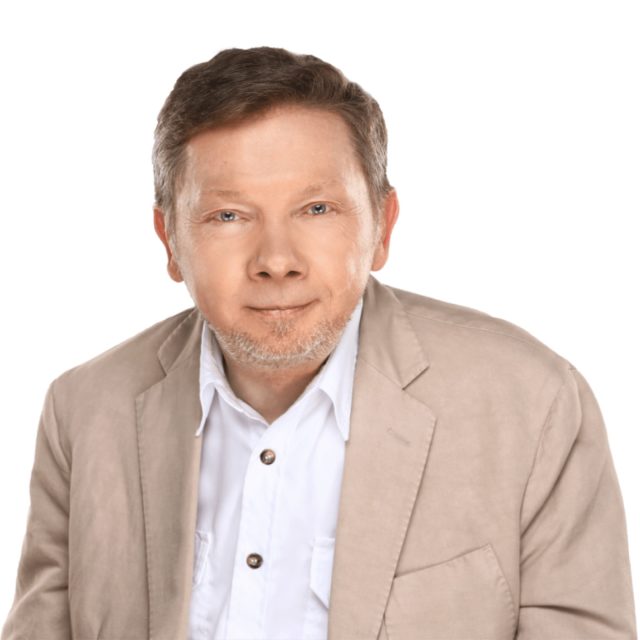
Eckhart Tolle

Eckhart Tolle

Spiritual Teacher

Eckhart Tolle is a spiritual teacher and author whose bestsellers The Power of Now and A New Earth have introduced millions to living in the present moment, and who sees awakened Presence as the essential next step in human evolution.

Profil ansehen
Themen erkunden
Presence nowConsciousnessMind patternsResistance acceptanceSpiritual practice
Häufig gestellte Fragen

Häufig gestellte Fragen

The present moment is always here, but the mind's habitual pattern of judging, comparing, and seeking creates a layer of resistance between awareness and direct experience. You are never truly absent from the present—your presence is. The mind cannot be present; it can only think about presence, and those thoughts distance you from immediate experience.

When you resist an unpleasant feeling by thinking 'this shouldn't be happening,' you add a second layer of suffering on top of the original experience. True presence means meeting what is actually here without the resistance. In that meeting—without the judgment—the experience often shifts or reveals something previously invisible.

No. Trying to be more present introduces the very seeking and effort that prevent genuine presence. Presence emerges naturally when seeking stops, not through effort. The practice is to notice, without judgment, which patterns of resistance and seeking arise, and allow them to dissolve naturally.

The mind works with time, concepts, and comparisons—it cannot hold the present moment. When you think about the present, you have already conceptualized it, stepping away from direct experience. The mind's natural operation of judging and comparing what is to what could be always leaves the present moment appearing insufficient.

Yes. Presence does not require liking or approving of what is happening. You can be fully present with pain, grief, or difficulty without the additional layer of resistance that says 'this should not be happening.' Meeting the actual sensation without the story around it is genuine presence.

Presence is what you already are when the mind's interference ceases. It is not an advanced state or something to build toward. When you stop seeking and stop resisting, presence is revealed as the natural condition. A child before language, an animal, or a moment of genuine laughter all demonstrate this.

Das könnte dir auch gefallen

Alle anzeigen
God Beyond the Sky: Rethinking Divine Nature
Inspire

God Beyond the Sky: Rethinking Divine Nature

God is not an external judge deciding human suffering. Suffering itself becomes the mechanism through which consciousness awakens to itself.…

6 min read
God, Suffering, and the One Life Across Traditions
Inspire

God, Suffering, and the One Life Across Traditions

Eckhart Tolle explores how Islam, Buddhism, and Greek philosophy all point to the same ultimate reality—and why the problem of suffering dis…

7 min read
Medicine Buddha Practice: Feeling Beneath the Thinking
Inspire

Medicine Buddha Practice: Feeling Beneath the Thinking

Lama Rod Owens opens a Monday-night Medicine Buddha session six years into the practice, teaching how to feel an experience instead of think…

10 min read
We Are All Visitors to This Material World: A Gita Reflection
Inspire

We Are All Visitors to This Material World: A Gita Reflection

In a 22-second clip, Radhika Das frames human life as a temporary visit, not a permanent residence. The idea draws on Bhagavad-gītā 8.15 and…

3 min read
AlleDas könnte dir auch gefallen→

Setze deinen Weg fort

Mehr Weisheit und Zusammenkünfte aus dem BrightStar-Verzeichnis.

Mehr Artikel

Durchstöbere die ganze Bibliothek an Lehren, Interviews und Leitfäden.

Zu allen Artikeln →

Lehrer & Künstler

Entdecke die Linien, Musiker und Wegbegleiter der bewussten Welt.

Künstler erkunden →

Event finden

Kirtan, Retreats, Klangbäder, Atemarbeit, Festivals — bald in deiner Nähe.

Events ansehen →