BrightStar
BlogMeine Tickets
BlogMeine Tickets
Saved events
Hilfe & KontaktRegistrierenAnmelden
Events
  • Alle Events durchsuchen
  • Yoga
  • Meditation
  • Breathwork
  • Qigong
  • Heilige Musik
  • Weltmusik
  • Medicine Music
  • Klangheilung
  • Ecstatic Dance
  • Zeremonie
  • Pflanzenmedizin
  • Energieheilung
  • Satsang & Weisheit
  • Tantra
  • Retreats
  • Alle Kategorien →
Reiseziele
  • Bali
  • Sedona
  • Los Angeles
  • Costa Rica
  • Tulum
  • Byron Bay
  • San Francisco
  • Austin
  • New York
  • San Diego
  • Denver
  • Seattle
  • Portland
  • Miami
  • London
  • Maui
  • Boulder
  • Alle Städte →
Plattform
  • Für Veranstalter
  • Werde Teil der Bewegung
  • Sell Globally
  • Für Kreative
  • Für Teams
  • Für Autoren
  • Für Lehrer
  • Für Kirtan-Künstler
  • Für Studios
  • Für Festivals
  • Für Retreat-Zentren
  • Für gemeinnützige Organisationen
  • Markenbotschafter
  • Kostenloses Ticketing
  • Pro
  • Amplify
  • Das Ökosystem
Funktionen

Ticketverkauf und Checkout

  • Ticket categories
  • Assigned seating
  • Custom questions
  • Coupon codes
  • Smart pricing
  • Ticket sharing
  • Waitlist
  • Flexible refunds
  • Digital waivers
  • Tip jar
  • Donations and sliding scale
  • Embed widget
  • Mindful checkout
  • Recurring events
  • Private sessions
  • Online courses
  • Summits
  • Rooms and stays
  • Ticket scanner

Marketing und Wachstum

  • Abandoned cart recovery
  • Visitor recovery
  • Upsells and add-ons
  • Affiliate engine
  • Upsell affiliate network
  • Brand ambassador
  • Meta retargeting
  • Verified buyer network
  • Outbound email marketing
  • Email sequences
  • SMS and WhatsApp
  • Event upsell network
  • Direct mail campaigns
  • SEO engine
  • Syndication
  • Event sharing
  • Custom event pages
  • Artist profiles
  • Link in bio
  • Event blog
  • Blog newsletter

Zahlungen

  • Payments, powered by Stripe
  • Buy now, pay later
  • Apple Wallet
  • Multi currency

Daten und Betrieb

  • Team access
  • Message center
  • Reports
  • Analytics reporting
  • Performance reporting
  • Customer data
  • Integrations
  • Switch from another platform

KI

  • Assistant
  • AI FAQ assistant
  • Alle Funktionen →
Unternehmen
  • Über uns
  • Häufige Fragen
  • Kontakt
  • Blog
  • Glossar
  • Guides
  • Inspiration
  • Hilfe-Center
  • API-Dokumentation
  • Marken-Assets
  • Presse
  • Nutzungsbedingungen
  • Datenschutzrichtlinie

Events

  • Alle Events durchsuchen
  • Yoga
  • Meditation
  • Breathwork
  • Qigong
  • Heilige Musik
  • Weltmusik
  • Medicine Music

Reiseziele

  • Bali
  • Sedona
  • Los Angeles
  • Costa Rica
  • Tulum
  • Byron Bay
  • San Francisco
  • Austin

Plattform

  • Für Veranstalter
  • Werde Teil der Bewegung
  • Sell Globally
  • Für Kreative
  • Für Teams
  • Für Autoren
  • Für Lehrer
  • Für Kirtan-Künstler

Funktionen

  • Community-Netzwerk
  • Warenkorbabbruch-Wiederherstellung
  • Ticket-Kategorien
  • Wiederkehrende Veranstaltungen
  • Sitzplatzreservierung
  • Affiliate-System
  • Warteliste / Benachrichtigen
  • Alle Funktionen →

Unternehmen

  • Über uns
  • Häufige Fragen
  • Kontakt
  • Blog
  • Glossar
  • Guides
  • Nutzungsbedingungen
  • Datenschutzrichtlinie
Mehr lesen

Events

  • Klangheilung
  • Ecstatic Dance
  • Zeremonie
  • Pflanzenmedizin
  • Energieheilung
  • Satsang & Weisheit
  • Tantra
  • Retreats
  • Alle Kategorien →

Reiseziele

  • New York
  • San Diego
  • Denver
  • Seattle
  • Portland
  • Miami
  • London
  • Maui
  • Boulder
  • Alle Städte →

Plattform

  • Für Studios
  • Für Festivals
  • Für Retreat-Zentren
  • Für gemeinnützige Organisationen
  • Markenbotschafter
  • Kostenloses Ticketing
  • Pro
  • Amplify
  • Das Ökosystem

Unternehmen

  • Inspiration
  • Hilfe-Center
  • API-Dokumentation
  • Marken-Assets
  • Presse

Ticketverkauf und Checkout

  • Ticket categories
  • Assigned seating
  • Custom questions
  • Coupon codes
  • Smart pricing
  • Ticket sharing
  • Waitlist
  • Flexible refunds
  • Digital waivers
  • Tip jar
  • Donations and sliding scale
  • Embed widget
  • Mindful checkout
  • Recurring events
  • Private sessions
  • Online courses
  • Summits
  • Rooms and stays
  • Ticket scanner

Marketing und Wachstum

  • Abandoned cart recovery
  • Visitor recovery
  • Upsells and add-ons
  • Affiliate engine
  • Upsell affiliate network
  • Brand ambassador
  • Meta retargeting
  • Verified buyer network
  • Outbound email marketing
  • Email sequences
  • SMS and WhatsApp
  • Event upsell network
  • Direct mail campaigns
  • SEO engine
  • Syndication
  • Event sharing
  • Custom event pages
  • Artist profiles
  • Link in bio
  • Event blog
  • Blog newsletter

Zahlungen

  • Payments, powered by Stripe
  • Buy now, pay later
  • Apple Wallet
  • Multi currency

Daten und Betrieb

  • Team access
  • Message center
  • Reports
  • Analytics reporting
  • Performance reporting
  • Customer data
  • Integrations
  • Switch from another platform

KI

  • Assistant
  • AI FAQ assistant
Hol dir die App
Laden imApp StoreJetzt beiGoogle Play
© 2026 BrightStar. Alle Rechte vorbehalten. BrightStar Selection · Bildnachweise · Änderungsprotokoll ·
Inspiration

Simplest Entry Point Into Presence: Breath Awareness

Eckhart Tolle
Eckhart Tolle
Mar 12, 2026
7 Min. Lesezeit

Von Eckhart Tolle

The most direct and uncomplicated pathway into present-moment awareness already exists in your own body: the breath. You don't need to learn a complex meditation technique, adopt a spiritual practice, or cultivate special states. Simply becoming conscious of the breathing that is already happening—the natural rhythm of inhalation and exhalation—interrupts thought patterns and anchors attention in the here-and-now. This requires no equipment, no prior experience, and no commitment beyond a single moment of noticing.

Lesen · 7 Abschnitte

What Is the Simplest Entry Into Presence?

Most people imagine that accessing the present moment demands significant effort: years of meditation, retreats, disciplines, philosophical study. But according to Eckhart Tolle's teaching, the gateway already exists within your moment-to-moment experience. It is not something to acquire or achieve—it is something to notice.

Your body breathes continuously, whether you pay attention to it or not. The breath flows in and flows out, regulated by the nervous system, requiring no effort on your part beyond the ordinary biological process of being alive. Yet this constant, available process contains a profound opportunity: the moment your awareness shifts from the chatter of the thinking mind to the felt sensation of breathing, you have stepped out of thought and into presence.

This is not a metaphorical shift. When attention lands on the breath—on the cool sensation of air entering the nostrils, the expansion of the chest and belly, the subtle pause at the top of the inhale, the release of the exhale—the thinking mind loses momentum. Thought requires a kind of narrative continuity, a story about past and future. The breath, by contrast, is inherently here. It cannot be breathed in the past or the future; it is always now.

Why Does Breath Awareness Stop Thinking?

The relationship between breath and thought is not accidental. In ordinary waking consciousness, awareness is almost entirely captured by the thinking process. The mind generates a continuous commentary—memories, plans, judgments, worries, fantasies—that creates a sense of continuous self. This stream of thought is so habitual that most people believe it is who they are.

When attention shifts to the breath, however, the thinking process naturally quiets. This is because consciousness has a limited capacity for simultaneous focus. You cannot fully attend to the sensation of breathing while simultaneously maintaining a detailed narrative in your head. One or the other dominates awareness.

The breath is also unique because it is one of the few biological processes that can be either automatic or conscious. It runs on its own—you don't have to think about breathing in order to breathe. But the instant you notice it, you bring it into consciousness. This creates a peculiar intersection: the breath occupies the boundary between automatic body processes and conscious awareness. By focusing there, you're working with something that is always available, requires no learning, and naturally interrupts the default mode of the thinking mind.

How Does Breath Awareness Create Present-Moment Consciousness?

Presence is not a distant state or an altered consciousness. It is the simple fact of being aware of what is actually happening now, rather than being lost in a mental storyline about what happened or what might happen.

When you become aware of your breath, several things occur simultaneously. First, your mental narrative loses continuity. You can't be fully lost in thought about yesterday's argument and simultaneously feel the cool air of the inhale in your nostrils. The mind must release its grip on the past or future in order to feel the present.

Second, you establish a direct, non-conceptual relationship with your body. Breath awareness is not about thinking about breathing; it's about sensing it. This moves consciousness away from the realm of words, symbols, and abstract thought into the realm of direct sensation. This is important because thought and presence are nearly opposite modes: thought abstracts and interprets; presence is direct and immediate.

Third, you anchor consciousness in a process that is inherently now. The breath cannot be anywhere else. Unlike your thoughts, which can spin out scenarios about next year, your breath is always occurring in this moment. By attending to it, you align your awareness with the fundamental fact of the present.

Why Is This the Easiest Method for Most People?

Many meditation practices require you to empty your mind or reach a particular state. This creates a goal, and goals live in the future. You're sitting in the present moment trying to achieve something that will happen later, which is paradoxical. Other practices require you to understand complex philosophy or adopt specific beliefs.

Breath awareness requires none of this. You don't need to believe in anything. You don't need to understand a philosophy. You don't even need to call it a spiritual practice. Your breath is simply there, and the instruction is simple: notice it. This is accessible to anyone—a child, someone with no spiritual background, someone skeptical of meditation, someone in a crowded room during a work break.

There is also no way to fail at breath awareness. You can't do it "wrong." The breath will be there, and the moment your attention lands on it, the thinking process will naturally lose momentum. You don't have to force presence or strain for a particular experience. The mechanism is automatic; all that's required is the initial shift of attention.

What Happens When You Make This Shift?

When you become aware of your breath for the first time in a while, you may notice several changes. Thought quiets. A sense of calm or spaciousness may appear. Your body may relax slightly. Your sense of being a separate, anxious self may soften. This is because habitual thinking—especially anxious, self-referential thinking—requires a lot of mental energy and generates tension throughout the nervous system.

By shifting attention to the breath, you're essentially switching off the mental machinery that creates psychological suffering. The suffering is not in the present moment itself; it's in the overlay of past regrets and future fears that the thinking mind adds to the present. When that chatter quiets, even briefly, you encounter what the present moment actually is: usually simple, often peaceful, and always available.

This shift doesn't require time or preparation. It can happen in a single breath. This is why it is the simplest entry point: it requires only a moment of noticing, and the results are immediate.

Can Breath Awareness Be Used Anytime?

One of the greatest advantages of breath awareness is that it requires no special conditions. You can notice your breath while walking, while in a conversation, while working, while dealing with a difficult emotion. You don't need a quiet room, a meditation cushion, or a block of time set aside.

Many people reserve meditation for mornings or special retreats, then spend the rest of their day lost in habitual thinking. But presence is available all day long, in every moment. Breath awareness offers a way to access it anywhere—in traffic, at the office, in conflict, during boredom. This universality makes it extraordinarily practical.

The challenge is not that breath awareness is difficult; it's that we forget to use it. The mind has such a strong habit of running through its narratives that we can go hours without noticing we're not present. But the instant you remember—the instant you think "Oh, I could notice my breath right now"—you can do it. There is no learning curve, no practice period required before the technique works.

Where to Go From Here

Breath awareness serves as both a beginning and a continuous practice. It requires nothing more than a single moment of attention, yet it can deepen over a lifetime. You might start by noticing your breath once today. The next day, you might remember to notice it twice. Over time, the habit of noticing presence becomes more automatic, and the moments when you're lost in thought become easier to recognize and interrupt.

As breath awareness becomes more familiar, other aspects of presence may open up: an awareness of sensations throughout the body, a sense of space or stillness beneath the thinking mind, a shift in how you relate to emotions and thoughts. But none of this requires anything beyond what is already suggested here: notice what is already happening.

Kommentare

Gespräch wird geladen…

Der Künstler in dieser Geschichte

Eckhart Tolle

Eckhart Tolle

Spiritual Teacher

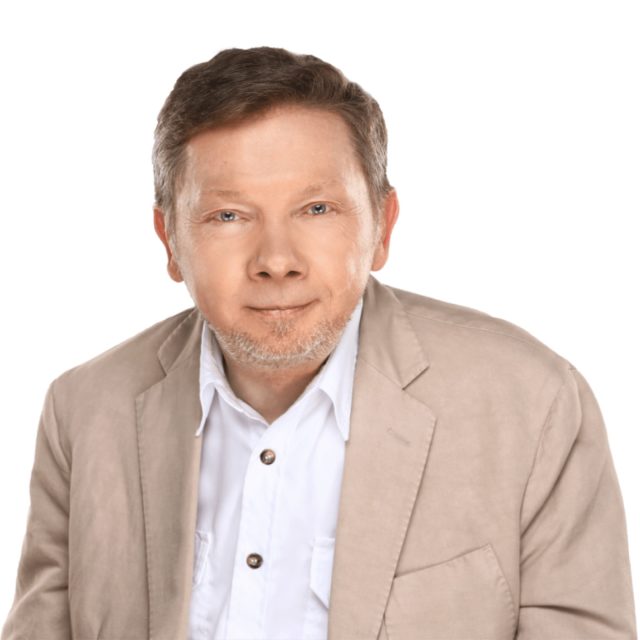
Eckhart Tolle is a spiritual teacher and author whose bestsellers The Power of Now and A New Earth have introduced millions to living in the present moment, and who sees awakened Presence as the essential next step in human evolution.

Profil ansehen
Themen erkunden
Breath awarenessPresenceMeditationConsciousnessMindfulness
Häufig gestellte Fragen

Häufig gestellte Fragen

Simply bring your attention to the sensation of breathing—notice the cool air entering your nostrils, the expansion of your chest or belly, and the release of the exhale. The moment you place awareness on the breath, thought naturally quiets and you step into the present moment. No technique or practice is required.

Thought and breath awareness are competing for the same limited attention. When consciousness fully lands on the sensation of breathing, the narrative mind loses continuity because you cannot maintain a detailed story while feeling the present moment. The breath anchors you in the now, where anxiety about past or future has no ground.

Yes, breath awareness is accessible even during stress. In fact, it may be most useful then, because it interrupts the mental loops that fuel anxiety. The moment your attention shifts to the physical sensation of breathing, even for one breath, the nervous system begins to settle and the anxious narrative loses momentum.

The shift happens immediately. The moment you notice your breath, you are present. There is no waiting period or learning curve. However, building the habit of remembering to notice your breath throughout the day takes time, and the deeper you explore, the more subtle effects may reveal themselves.

Breath awareness is a simple entry into presence, whereas meditation can refer to many different practices. You don't need to call it meditation or adopt any belief system to benefit from breath awareness—it's simply noticing what is already happening in your body right now.

Yes, this is one of breath awareness's greatest strengths. Unlike formal meditation, you can notice your breath anywhere—while walking, working, or in conversation. You can anchor into presence for a single breath even in the midst of a busy day, making it available as an immediate tool whenever you need it.

Thinking about breathing keeps you in the thinking mind; noticing your breath moves consciousness into direct sensation. Presence happens when attention shifts from the conceptual mind into the felt experience of the breath itself. This subtle distinction is the key to stepping out of thought.

Das könnte dir auch gefallen

Alle anzeigen
God Beyond the Sky: Rethinking Divine Nature
Inspire

God Beyond the Sky: Rethinking Divine Nature

God is not an external judge deciding human suffering. Suffering itself becomes the mechanism through which consciousness awakens to itself.…

6 min read
God, Suffering, and the One Life Across Traditions
Inspire

God, Suffering, and the One Life Across Traditions

Eckhart Tolle explores how Islam, Buddhism, and Greek philosophy all point to the same ultimate reality—and why the problem of suffering dis…

7 min read
The Heart Space Where All Is Welcome: A Guided Meditation
Inspire

The Heart Space Where All Is Welcome: A Guided Meditation

Tara Brach's guided meditation starts with a smile spreading across an open sky. Here is how its softening, expanding awareness and return t…

9 min read
Medicine Buddha Practice: Feeling Beneath the Thinking
Inspire

Medicine Buddha Practice: Feeling Beneath the Thinking

Lama Rod Owens opens a Monday-night Medicine Buddha session six years into the practice, teaching how to feel an experience instead of think…

10 min read
AlleDas könnte dir auch gefallen→

Setze deinen Weg fort

Mehr Weisheit und Zusammenkünfte aus dem BrightStar-Verzeichnis.

Mehr Artikel

Durchstöbere die ganze Bibliothek an Lehren, Interviews und Leitfäden.

Zu allen Artikeln →

Lehrer & Künstler

Entdecke die Linien, Musiker und Wegbegleiter der bewussten Welt.

Künstler erkunden →

Event finden

Kirtan, Retreats, Klangbäder, Atemarbeit, Festivals — bald in deiner Nähe.

Events ansehen →