BrightStar
BlogMeine Tickets
BlogMeine Tickets
Saved events
Hilfe & KontaktRegistrierenAnmelden
Events
  • Alle Events durchsuchen
  • Yoga
  • Meditation
  • Breathwork
  • Qigong
  • Heilige Musik
  • Weltmusik
  • Medicine Music
  • Klangheilung
  • Ecstatic Dance
  • Zeremonie
  • Pflanzenmedizin
  • Energieheilung
  • Satsang & Weisheit
  • Tantra
  • Retreats
  • Alle Kategorien →
Reiseziele
  • Bali
  • Sedona
  • Los Angeles
  • Costa Rica
  • Tulum
  • Byron Bay
  • San Francisco
  • Austin
  • New York
  • San Diego
  • Denver
  • Seattle
  • Portland
  • Miami
  • London
  • Maui
  • Boulder
  • Alle Städte →
Plattform
  • Für Veranstalter
  • Werde Teil der Bewegung
  • Sell Globally
  • Für Kreative
  • Für Teams
  • Für Autoren
  • Für Lehrer
  • Für Kirtan-Künstler
  • Für Studios
  • Für Festivals
  • Für Retreat-Zentren
  • Für gemeinnützige Organisationen
  • Markenbotschafter
  • Kostenloses Ticketing
  • Elevate
  • Amplify
  • Das Ökosystem
Funktionen

Ticketverkauf und Checkout

  • Ticket categories
  • Assigned seating
  • Custom questions
  • Coupon codes
  • Smart pricing
  • Ticket sharing
  • Waitlist
  • Flexible refunds
  • Digital waivers
  • Tip jar
  • Donations and sliding scale
  • Embed widget
  • Mindful checkout
  • Recurring events
  • Private sessions
  • Online courses
  • Summits
  • Rooms and stays
  • Ticket scanner

Marketing und Wachstum

  • Abandoned cart recovery
  • Visitor recovery
  • Upsells and add-ons
  • Affiliate engine
  • Upsell affiliate network
  • Brand ambassador
  • Meta retargeting
  • Verified buyer network
  • Outbound email marketing
  • Email sequences
  • SMS and WhatsApp
  • Event upsell network
  • Direct mail campaigns
  • SEO engine
  • Syndication
  • Event sharing
  • Custom event pages
  • Artist profiles
  • Link in bio
  • Event blog
  • Blog newsletter

Zahlungen

  • Payments, powered by Stripe
  • Buy now, pay later
  • Apple Wallet
  • Multi currency

Daten und Betrieb

  • Team access
  • Message center
  • Reports
  • Analytics reporting
  • Performance reporting
  • Customer data
  • Integrations
  • Switch from another platform

KI

  • Assistant
  • AI FAQ assistant
  • Alle Funktionen →
Unternehmen
  • Über uns
  • Häufige Fragen
  • Kontakt
  • Blog
  • Glossar
  • Guides
  • Inspiration
  • Hilfe-Center
  • API-Dokumentation
  • Marken-Assets
  • Presse
  • Nutzungsbedingungen
  • Datenschutzrichtlinie

Events

  • Alle Events durchsuchen
  • Yoga
  • Meditation
  • Breathwork
  • Qigong
  • Heilige Musik
  • Weltmusik
  • Medicine Music

Reiseziele

  • Bali
  • Sedona
  • Los Angeles
  • Costa Rica
  • Tulum
  • Byron Bay
  • San Francisco
  • Austin

Plattform

  • Für Veranstalter
  • Werde Teil der Bewegung
  • Sell Globally
  • Für Kreative
  • Für Teams
  • Für Autoren
  • Für Lehrer
  • Für Kirtan-Künstler

Funktionen

  • Community-Netzwerk
  • Warenkorbabbruch-Wiederherstellung
  • Ticket-Kategorien
  • Wiederkehrende Veranstaltungen
  • Sitzplatzreservierung
  • Affiliate-System
  • Warteliste / Benachrichtigen
  • Alle Funktionen →

Unternehmen

  • Über uns
  • Häufige Fragen
  • Kontakt
  • Blog
  • Glossar
  • Guides
  • Nutzungsbedingungen
  • Datenschutzrichtlinie
Mehr lesen

Events

  • Klangheilung
  • Ecstatic Dance
  • Zeremonie
  • Pflanzenmedizin
  • Energieheilung
  • Satsang & Weisheit
  • Tantra
  • Retreats
  • Alle Kategorien →

Reiseziele

  • New York
  • San Diego
  • Denver
  • Seattle
  • Portland
  • Miami
  • London
  • Maui
  • Boulder
  • Alle Städte →

Plattform

  • Für Studios
  • Für Festivals
  • Für Retreat-Zentren
  • Für gemeinnützige Organisationen
  • Markenbotschafter
  • Kostenloses Ticketing
  • Elevate
  • Amplify
  • Das Ökosystem

Unternehmen

  • Inspiration
  • Hilfe-Center
  • API-Dokumentation
  • Marken-Assets
  • Presse

Ticketverkauf und Checkout

  • Ticket categories
  • Assigned seating
  • Custom questions
  • Coupon codes
  • Smart pricing
  • Ticket sharing
  • Waitlist
  • Flexible refunds
  • Digital waivers
  • Tip jar
  • Donations and sliding scale
  • Embed widget
  • Mindful checkout
  • Recurring events
  • Private sessions
  • Online courses
  • Summits
  • Rooms and stays
  • Ticket scanner

Marketing und Wachstum

  • Abandoned cart recovery
  • Visitor recovery
  • Upsells and add-ons
  • Affiliate engine
  • Upsell affiliate network
  • Brand ambassador
  • Meta retargeting
  • Verified buyer network
  • Outbound email marketing
  • Email sequences
  • SMS and WhatsApp
  • Event upsell network
  • Direct mail campaigns
  • SEO engine
  • Syndication
  • Event sharing
  • Custom event pages
  • Artist profiles
  • Link in bio
  • Event blog
  • Blog newsletter

Zahlungen

  • Payments, powered by Stripe
  • Buy now, pay later
  • Apple Wallet
  • Multi currency

Daten und Betrieb

  • Team access
  • Message center
  • Reports
  • Analytics reporting
  • Performance reporting
  • Customer data
  • Integrations
  • Switch from another platform

KI

  • Assistant
  • AI FAQ assistant
Hol dir die App
Laden imApp StoreJetzt beiGoogle Play
© 2026 BrightStar. Alle Rechte vorbehalten. BrightStar Selection · Bildnachweise · Änderungsprotokoll ·
Inspiration

Krishnamurti's Approach to Meditation Practice

Apr 1, 2026
7 Min. Lesezeit

Von Be Here Now Network

This discussion explores Krishnamurti's radical reframing of meditation as not a technique to master but a state of choiceless awareness and direct observation. Rather than cultivating special experiences or manipulating the mind through methods, Krishnamurti points to the dissolution of fragmented thinking itself—the watcher, the watched, and the act of watching becoming one unified intelligence. The teaching addresses how the mind's habit of seeking, striving, and dividing reality obscures the clarity that arises when thought naturally quiets.

Lesen · 7 Abschnitte

What Did Krishnamurti Mean by Meditation?

Krishnamurti's understanding of meditation stands apart from most conventional definitions. He did not present meditation as a technique—a set of prescribed steps designed to produce a desired mental state. Instead, he approached meditation as the natural flowering of awareness when the mind releases its compulsive patterns of thought and fragmentation. Meditation, in his view, is not something you do but something that happens when you stop doing.

The starting point of his inquiry is simple: the mind operates through division. It separates the observer from what is being observed. This separation creates the illusion of a separate self trying to improve itself, control itself, or transcend itself. Meditation, as Krishnamurti taught it, begins with seeing this division clearly—not conceptually, but directly, as lived experience. When you observe the mind's tendency to fragment reality into subject and object, watcher and watched, you begin to understand how meditation is the ending of that very division.

How Does Choiceless Awareness Differ From Focused Attention?

Most meditation systems teach concentration or focus—training the mind to rest on a single object (breath, mantra, visualization) and gently returning attention when it wanders. Krishnamurti distinguished sharply between this focused approach and what he called choiceless awareness. Choiceless awareness is not attention directed toward one thing while excluding others; rather, it is a receptive, panoramic alertness to whatever arises in consciousness without preference or resistance.

When you practice choiceless awareness, you observe thoughts, sensations, and emotions as they appear—not selecting some for attention and rejecting others. This is radically different from concentration practice, which inherently involves choice: choosing the object of focus and repeatedly choosing to return to it when the mind strays. Krishnamurti argued that any form of choice-making, even in meditation, reinforces the fragmented ego consciousness that meditation supposedly liberates you from. The very act of choosing what to pay attention to is an act of the divided mind.

In choiceless awareness, there is no meditator separate from meditation. The entire structure of subject observing object dissolves into unified perception. You are not doing awareness; awareness is simply occurring without the interference of a chooser or controller.

What Is the Role of Thought in Meditation?

Krishnamurti's radical insight was that thought cannot meditate. The thinking mind—the discursive, analyzing, conceptualizing faculty—is by nature fragmentary. Thought always operates through division, comparison, and the creation of psychological time (past and future narratives). To ask thought to meditate is to ask the mechanism of division to produce unity. It cannot be done.

This does not mean suppressing thoughts or trying to force the mind into blankness. Krishnamurti consistently warned against such approaches because they still involve the ego's effort and willfulness. Instead, he pointed to the importance of understanding thought—seeing how it operates, observing its patterns and habits without judgment or resistance. When you watch thought with complete attention, without trying to change it, something shifts. Thought, faced with this quality of alive, responsive awareness, begins to slow and eventually to quiet itself.

The key is that this quieting happens naturally, not as a forced achievement. When there is genuine observation—when the observer has dissolved into the observed—thought naturally settles because the psychological charge behind thought has been understood and released. Meditation, then, is the space where thinking has become irrelevant because reality is being perceived directly, not through the filter of conceptual mind.

What Is the Watcher Problem in Meditation Practice?

A central paradox in Krishnamurti's teaching concerns the observer. Most people enter meditation with the idea that there is an "I" (the observer/watcher) that will observe thoughts and feelings and eventually transcend them. This very structure—positing a separate watcher—maintains the fragmentation that prevents true meditation. The watcher is part of the ego structure, and as long as the watcher is present as a separate entity, unity remains impossible.

Krishnamurti's radical proposal is that the watcher and the watched are not two separate things but a single, unified process that thought artificially divides. When you observe this division itself—when you see that there is no separate watcher but only watching, no separate observer but only observation—the entire psychological structure that creates suffering and fragmentation collapses. At that point, what remains is not a "you" achieving meditation but a unified intelligence responding directly to reality without the distortion of a self-centered perspective.

This is why Krishnamurti often said that meditation cannot be pursued or cultivated. Any effort to achieve a meditative state reinforces the structure of a self trying to accomplish something. Meditation arises only when this entire apparatus of the seeking self is seen through and abandoned.

How Does Meditation Relate to Understanding Reality?

For Krishnamurti, meditation is not separate from the understanding of reality. When the mind is not fragmenting reality through thought, judgment, and the constant comparison with memory, perception becomes direct and whole. This is not mystical or abstract—it is the natural outcome of ceasing to interpret reality through the lens of personal desire, fear, and psychological conditioning.

When you meditate in Krishnamurti's sense, you are not escaping from the world or achieving an altered state. Rather, you are becoming lucidly aware of how you habitually distort reality through thought. In that awareness, distortion falls away. Reality, perceived without the interference of a thinking self, reveals itself to be fundamentally different from what thought tells you. Meditation, in this sense, is a form of clear seeing—a direct apprehension of life as it is, not as the thinking mind believes it to be.

What Happens When the Mind Becomes Silent?

Krishnamurti taught that true silence of the mind is not a blank state or a suppression of thought but the natural outcome of complete attention. When the entire being is awake, responsive, and undefended, thought ceases because there is no longer any need for it. This is not sleep or unconsciousness; it is the opposite—a state of heightened, unified awareness in which the mind is free from the constant commentary that ordinarily fragments and diminishes perception.

In this state of silence, there is extraordinary sensitivity and responsiveness. The mind, freed from its habitual patterns, can respond freshly to each moment. This responsiveness is intelligence itself—not the intellect (which is thought), but a deeper order of intelligence that operates without the separateness of a self trying to be intelligent.

Krishnamurti distinguished between the absence of thought (which can be induced through concentration or drugs and is temporary) and the natural silence that comes from the complete understanding and dissolution of the psychological mechanisms that generate thought. The latter brings with it clarity, compassion, and the ending of psychological fragmentation.

Where to Go From Here

If you are interested in exploring Krishnamurti's teachings on meditation, begin not with an attempt to meditate but with observation. Observe how your mind operates: how it judges, compares, seeks, and divides reality. Watch without trying to change what you observe. Notice the separateness you assume between "you" and what you are experiencing. This observation itself, if pursued with complete honesty and without the intention to fix anything, may reveal the mechanism of fragmentation. And in that revelation, something new becomes possible—not a new state achieved by you, but the ending of the very separation that makes achievement possible. This is where Krishnamurti's meditation begins.
Kommentare

Gespräch wird geladen…

Themen erkunden
KrishnamurtiMeditation practiceConsciousnessChoiceless awarenessThought mind
Häufig gestellte Fragen

Häufig gestellte Fragen

Krishnamurti rejected meditation as technique, instead teaching choiceless awareness—a receptive, panoramic alertness without selecting what to focus on. Most techniques involve choosing an object of focus and excluding distractions, which Krishnamurti saw as reinforcing the fragmented ego that meditation should dissolve.

No. Krishnamurti taught that thought is by nature fragmentary and cannot produce the unified awareness of meditation. Instead, meditation arises when thought is understood deeply and naturally quiets itself, not through suppression but through the clarity that comes from genuine observation.

Krishnamurti taught that the separation between observer and observed is artificial—a division created by thought. When you see that there is no separate watcher, only watching, the fragmentation that maintains the ego-self collapses, and unified perception becomes possible.

According to Krishnamurti, meditation is not about achieving a special state or changing your mind. Rather, it is about seeing directly how the mind habitually distorts reality through thought, and in that clear seeing, the distortion naturally falls away.

True silence in Krishnamurti's teaching is not blank unconsciousness but the natural quieting of thought when the whole being is in complete, unified attention. This silence brings heightened clarity and responsiveness rather than a state of emptiness.

Rather than doing a technique, Krishnamurti recommends beginning with honest observation of how your mind operates—how it judges, seeks, and divides reality. This observation itself, without the intention to change anything, may reveal the mechanism of fragmentation and lead to its dissolution.

Das könnte dir auch gefallen

Alle anzeigen
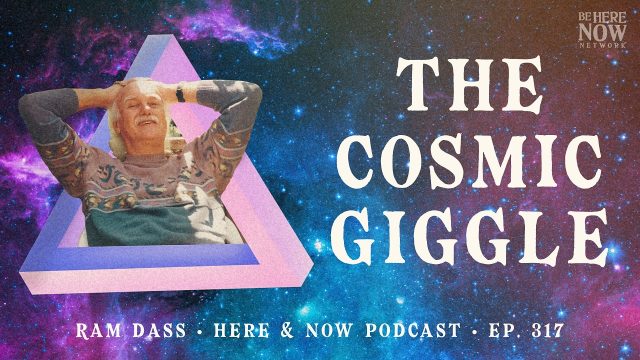
The Cosmic Giggle: Finding Joy Without Denying Suffering
Inspire

The Cosmic Giggle: Finding Joy Without Denying Suffering

Ram Dass explores how to hold both joy and sorrow simultaneously—and why laughter amid suffering isn't denial, but enlightenment itself.…

9 min read
Service as the Ray Into God: The Beloved Everywhere
Inspire

Service as the Ray Into God: The Beloved Everywhere

Ram Dass teaches that recognizing Spirit in all beings transforms service from obligation into the deepest form of love and the truest path …

6 min read
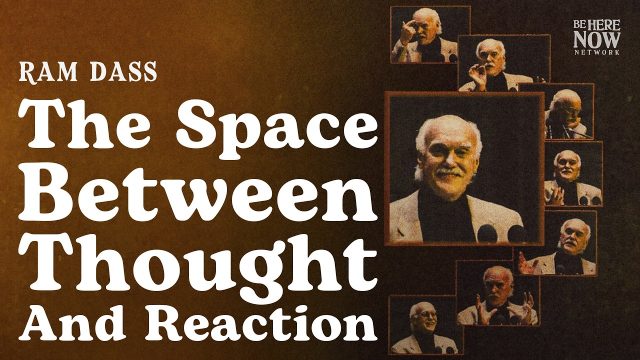
The Hardest Spiritual Practice: Living in Everyday Chaos
Inspire

The Hardest Spiritual Practice: Living in Everyday Chaos

Ram Dass explores why spiritual growth demands confronting desire in the world's hottest fires—not fleeing to sheltered ashrams.…

8 min read
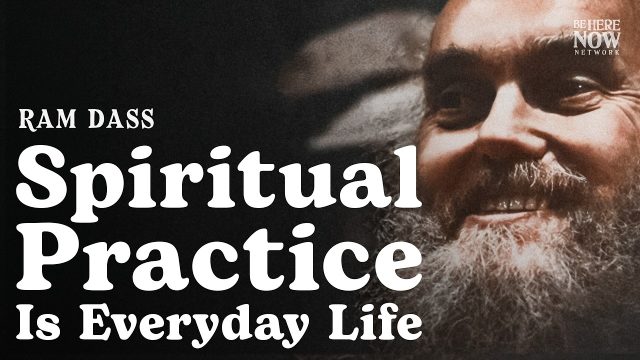
How to Move from Reaction to Response in Daily Life
Inspire

How to Move from Reaction to Response in Daily Life

Ram Dass reveals how cultivating inner space between stimulus and response transforms reactive patterns into conscious, healing actions—a pr…

8 min read
AlleDas könnte dir auch gefallen→

Setze deinen Weg fort

Mehr Weisheit und Zusammenkünfte aus dem BrightStar-Verzeichnis.

Mehr Artikel

Durchstöbere die ganze Bibliothek an Lehren, Interviews und Leitfäden.

Zu allen Artikeln →

Lehrer & Künstler

Entdecke die Linien, Musiker und Wegbegleiter der bewussten Welt.

Künstler erkunden →

Event finden

Kirtan, Retreats, Klangbäder, Atemarbeit, Festivals — bald in deiner Nähe.

Events ansehen →