BrightStar
BlogMeine Tickets
BlogMeine Tickets
Saved events
Hilfe & KontaktRegistrierenAnmelden
Events
  • Alle Events durchsuchen
  • Yoga
  • Meditation
  • Breathwork
  • Qigong
  • Heilige Musik
  • Weltmusik
  • Medicine Music
  • Klangheilung
  • Ecstatic Dance
  • Zeremonie
  • Pflanzenmedizin
  • Energieheilung
  • Satsang & Weisheit
  • Tantra
  • Retreats
  • Alle Kategorien →
Reiseziele
  • Bali
  • Sedona
  • Los Angeles
  • Costa Rica
  • Tulum
  • Byron Bay
  • San Francisco
  • Austin
  • New York
  • San Diego
  • Denver
  • Seattle
  • Portland
  • Miami
  • London
  • Maui
  • Boulder
  • Alle Städte →
Plattform
  • Für Veranstalter
  • Werde Teil der Bewegung
  • Sell Globally
  • Für Kreative
  • Für Teams
  • Für Autoren
  • Für Lehrer
  • Für Kirtan-Künstler
  • Für Studios
  • Für Festivals
  • Für Retreat-Zentren
  • Für gemeinnützige Organisationen
  • Markenbotschafter
  • Kostenloses Ticketing
  • Pro
  • Amplify
  • Das Ökosystem
Funktionen

Ticketverkauf und Checkout

  • Ticket categories
  • Assigned seating
  • Custom questions
  • Coupon codes
  • Smart pricing
  • Ticket sharing
  • Waitlist
  • Flexible refunds
  • Digital waivers
  • Tip jar
  • Donations and sliding scale
  • Embed widget
  • Mindful checkout
  • Recurring events
  • Private sessions
  • Online courses
  • Summits
  • Rooms and stays
  • Ticket scanner

Marketing und Wachstum

  • Abandoned cart recovery
  • Visitor recovery
  • Upsells and add-ons
  • Affiliate engine
  • Upsell affiliate network
  • Brand ambassador
  • Meta retargeting
  • Verified buyer network
  • Outbound email marketing
  • Email sequences
  • SMS and WhatsApp
  • Event upsell network
  • Direct mail campaigns
  • SEO engine
  • Syndication
  • Event sharing
  • Custom event pages
  • Artist profiles
  • Link in bio
  • Event blog
  • Blog newsletter

Zahlungen

  • Payments, powered by Stripe
  • Buy now, pay later
  • Apple Wallet
  • Multi currency

Daten und Betrieb

  • Team access
  • Message center
  • Reports
  • Analytics reporting
  • Performance reporting
  • Customer data
  • Integrations
  • Switch from another platform

KI

  • Assistant
  • AI FAQ assistant
  • Alle Funktionen →
Unternehmen
  • Über uns
  • Häufige Fragen
  • Kontakt
  • Blog
  • Glossar
  • Guides
  • Inspiration
  • Hilfe-Center
  • API-Dokumentation
  • Marken-Assets
  • Presse
  • Nutzungsbedingungen
  • Datenschutzrichtlinie

Events

  • Alle Events durchsuchen
  • Yoga
  • Meditation
  • Breathwork
  • Qigong
  • Heilige Musik
  • Weltmusik
  • Medicine Music

Reiseziele

  • Bali
  • Sedona
  • Los Angeles
  • Costa Rica
  • Tulum
  • Byron Bay
  • San Francisco
  • Austin

Plattform

  • Für Veranstalter
  • Werde Teil der Bewegung
  • Sell Globally
  • Für Kreative
  • Für Teams
  • Für Autoren
  • Für Lehrer
  • Für Kirtan-Künstler

Funktionen

  • Community-Netzwerk
  • Warenkorbabbruch-Wiederherstellung
  • Ticket-Kategorien
  • Wiederkehrende Veranstaltungen
  • Sitzplatzreservierung
  • Affiliate-System
  • Warteliste / Benachrichtigen
  • Alle Funktionen →

Unternehmen

  • Über uns
  • Häufige Fragen
  • Kontakt
  • Blog
  • Glossar
  • Guides
  • Nutzungsbedingungen
  • Datenschutzrichtlinie
Mehr lesen

Events

  • Klangheilung
  • Ecstatic Dance
  • Zeremonie
  • Pflanzenmedizin
  • Energieheilung
  • Satsang & Weisheit
  • Tantra
  • Retreats
  • Alle Kategorien →

Reiseziele

  • New York
  • San Diego
  • Denver
  • Seattle
  • Portland
  • Miami
  • London
  • Maui
  • Boulder
  • Alle Städte →

Plattform

  • Für Studios
  • Für Festivals
  • Für Retreat-Zentren
  • Für gemeinnützige Organisationen
  • Markenbotschafter
  • Kostenloses Ticketing
  • Pro
  • Amplify
  • Das Ökosystem

Unternehmen

  • Inspiration
  • Hilfe-Center
  • API-Dokumentation
  • Marken-Assets
  • Presse

Ticketverkauf und Checkout

  • Ticket categories
  • Assigned seating
  • Custom questions
  • Coupon codes
  • Smart pricing
  • Ticket sharing
  • Waitlist
  • Flexible refunds
  • Digital waivers
  • Tip jar
  • Donations and sliding scale
  • Embed widget
  • Mindful checkout
  • Recurring events
  • Private sessions
  • Online courses
  • Summits
  • Rooms and stays
  • Ticket scanner

Marketing und Wachstum

  • Abandoned cart recovery
  • Visitor recovery
  • Upsells and add-ons
  • Affiliate engine
  • Upsell affiliate network
  • Brand ambassador
  • Meta retargeting
  • Verified buyer network
  • Outbound email marketing
  • Email sequences
  • SMS and WhatsApp
  • Event upsell network
  • Direct mail campaigns
  • SEO engine
  • Syndication
  • Event sharing
  • Custom event pages
  • Artist profiles
  • Link in bio
  • Event blog
  • Blog newsletter

Zahlungen

  • Payments, powered by Stripe
  • Buy now, pay later
  • Apple Wallet
  • Multi currency

Daten und Betrieb

  • Team access
  • Message center
  • Reports
  • Analytics reporting
  • Performance reporting
  • Customer data
  • Integrations
  • Switch from another platform

KI

  • Assistant
  • AI FAQ assistant
Hol dir die App
Laden imApp StoreJetzt beiGoogle Play
© 2026 BrightStar. Alle Rechte vorbehalten. BrightStar Selection · Bildnachweise · Änderungsprotokoll ·
Inspiration

Does Enlightenment Include Loneliness and Isolation?

Sadhguru
Sadhguru
Sep 21, 2023
7 Min. Lesezeit

Von Sadhguru

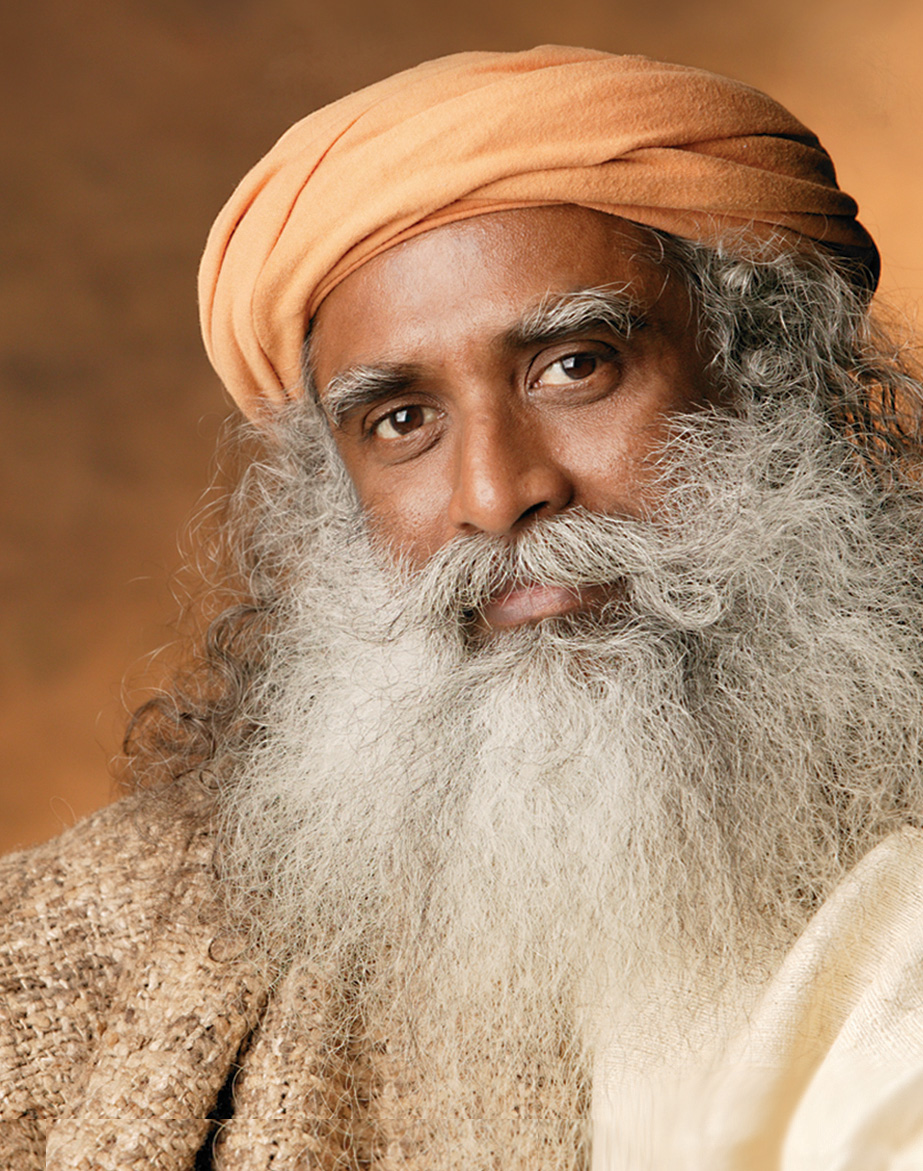
Sadhguru addresses a common assumption about spiritual enlightenment—that advanced practitioners exist in profound isolation. Rather than dismissing loneliness as a spiritual failure, he examines what loneliness actually means for someone who has dissolved the egoic sense of separation. The core insight is that loneliness emerges from a disconnect between one's inner state and external connection, but for those whose consciousness has fundamentally shifted, the nature of that experience transforms entirely. The absence of a constructed self creates a radically different relationship to solitude, presence, and what it means to be "alone."

Lesen · 6 Abschnitte

What Does Loneliness Mean for a Spiritually Evolved Person?

Loneliness is typically understood as painful separation—a gap between oneself and others, arising from unmet needs for connection. For most people, loneliness signals something is wrong: isolation from community, unshared experience, or lack of intimate relationship. Yet this assumes a baseline understanding of "self" that remains constant across all states of consciousness.

When Sadhguru addresses whether he experiences loneliness, he's pointing to a crucial distinction: the experience of being alone changes when the sense of who "you" are changes. In ego-centered consciousness, loneliness arises because the separate self feels cut off from other separate selves. There's a fear of abandonment, a need for validation, an anxiety about being "left out." These are real psychological experiences rooted in the illusion of fundamental separateness.

But in states of expanded or non-dual consciousness, the boundary that creates "me versus others" begins to dissolve. When the sense of individual identity becomes transparent—seen through rather than identified with—the structure that produces loneliness as an emotional pain collapses. This isn't dissociation or numbness; it's a shift in what feels like "self." Without a rigid boundary between inside and outside, the loneliness that depends on that boundary cannot exist in the same way.

The Difference Between Solitude and Loneliness

A critical distinction Sadhguru's question invites is between solitude and loneliness. Solitude is a state of being alone—physically, externally. It can be chosen, peaceful, and generative. Many spiritual practitioners deliberately cultivate solitude through retreat, meditation practice, and minimal external engagement.

Loneliness, by contrast, is a psychological state—a feeling of disconnection, often involuntary. You can be lonely in a crowded room, and you can be alone without feeling lonely. The question Sadhguru implicitly raises is: does enlightenment require or produce loneliness as a byproduct?

For many spiritual traditions, withdrawal from the world has been portrayed as necessary for awakening. Monks retreat to monasteries, yogis to caves, mystics to deserts. Yet this physical withdrawal need not produce psychological loneliness if the inner quality of consciousness has shifted. Someone in deep meditation, alone in a cave, may feel profound connection to existence itself—less lonely than someone scrolling through social media in a city of millions.

Sadhguru's life contradicts the stereotype of the lonely sage. He operates within the world, engages with thousands of seekers, speaks publicly, and builds institutions. His answer to "Do I feel lonely?" cannot be read as simple "yes" or "no." Instead, it opens the question: what would loneliness mean for someone whose sense of separation from others has fundamentally altered?

How Does Consciousness Change the Experience of Isolation?

A central principle in Sadhguru's teaching is that consciousness itself is not individual—that the sense of being a separate "me" is a perceptual overlay on a more fundamental unity. If this is true, then the experience of being isolated depends entirely on how solidly one identifies with the separate self.

In early-stage meditation or spiritual practice, many seekers report feeling more lonely, not less. They become aware of how disconnected they are, how alienated from genuine presence or authentic connection. But as practice deepens, something shifts. The person may spend more time alone (in retreat, in practice), yet the quality of that aloneness transforms. There's less of a felt need to fill the space with others, less anxiety about missing out, less sense of being incomplete without external validation.

This is not coldness or detachment in the pathological sense. Rather, it's a dissolution of the neediness that loneliness depends on. When you're not fundamentally seeking to complete yourself through another person or group, your relationship to solitude becomes lighter. Engagement with others, when it happens, flows from presence rather than hunger.

For someone whose center of gravity has shifted to non-dual awareness, loneliness becomes almost impossible as an involuntary state. Why? Because the existential core of loneliness—the fear of being fundamentally separate and unseen—dissolves when the sense of fundamental separateness itself is seen through. What remains is the capacity to be alone without suffering, and the capacity to engage with others from a place of completeness rather than need.

Does Enlightenment Require Social Withdrawal?

Another layer of Sadhguru's implicit argument is that enlightenment or spiritual maturity does not require becoming a hermit. In fact, one of the markers of genuine realization in many traditions is the ability to engage freely in the world without losing inner stability. Someone who can only maintain peace through isolation may have merely found a comfortable shelter, not transformed their fundamental relationship to existence.

This is why traditions like Zen Buddhism distinguish between the mountaintop sage and the sage who returns to the marketplace. The latter is considered more evolved: not withdrawn but fully present, not isolated but genuinely connected, not lonely because there is no longer a fragmented self seeking completion.

Sadhguru's engagement with the world—teaching, establishing institutions, addressing environmental and social issues—suggests that his spiritual development has not required retreat into loneliness. If anything, it suggests the opposite: that a certain maturity of consciousness allows for deep engagement without being destabilized by it, without falling into the reactivity and neediness that loneliness often masks.

What Loneliness Reveals About Our Sense of Self

The question of whether enlightened beings feel lonely also reveals what loneliness is fundamentally about: it's not about being physically alone, but about being psychologically or existentially alone—feeling that one's true nature is unknown, unseen, unshared. Loneliness is often an expression of the individual self believing it is fundamentally separate, unique in ways that cannot be bridged.

But what if that sense of uniqueness and separateness is itself a misperception? What if, beneath the personality and conditioning, all consciousness is the same fundamental awareness? Then loneliness becomes a kind of existential confusion, a mistaken identity. And the dissolution of loneliness isn't about finding more connection, but about seeing through the illusion of radical separateness in the first place.

This doesn't mean enlightened people feel the same as everyone else, or that emotional complexity disappears. Rather, it means loneliness as a form of existential suffering—rooted in the illusion of being a completely separate, ultimately isolated consciousness—no longer operates in the same way. The person may experience solitude, rest, quietness, preference for depth over breadth in relationships. But they do not experience the pain of loneliness that comes from believing one is fundamentally cut off.

Where to go from here

If Sadhguru's teaching suggests that loneliness is tied to a particular structure of consciousness—one based on the illusion of fundamental separateness—then exploring your own loneliness becomes a contemplative inquiry. When you feel lonely, what is actually happening? Are you physically alone, or are you psychologically cut off? Is the feeling rooted in unmet needs, or in a deeper sense of existential alienation? Begin to notice the difference between solitude (which can be peaceful) and loneliness (which carries a quality of suffering).

Consider also: what parts of your sense of self feel most isolated? Most misunderstood? Most unable to be fully known by another? These edges of isolation often point to places where identity is most rigid, most defended, most invested in being separate and unique. Spiritual practice—whether meditation, inquiry, or other contemplative disciplines—tends to soften these edges, not by making you less unique, but by loosening your investment in separateness as your core reality. From that loosening, loneliness naturally begins to lose its grip.

Kommentare

Gespräch wird geladen…

Der Künstler in dieser Geschichte

Sadhguru

Sadhguru

Teacher

A modern mystic and spiritual leader who founded the Isha Foundation, blending ancient yogic wisdom with contemporary life to foster inner transformation and environmental sustainability globally.

Profil ansehen
Themen erkunden
LonelinessConsciousnessEnlightenmentSolitudeSelf identity
Häufig gestellte Fragen

Häufig gestellte Fragen

According to Sadhguru's teaching, loneliness is rooted in the illusion of fundamental separateness. As consciousness expands and the rigid sense of individual identity dissolves, the structure that produces loneliness as involuntary suffering collapses. Someone fully awake would not experience the painful psychological isolation that characterizes loneliness, though they may choose solitude for rest or reflection.

Being alone (solitude) is a physical state that can be peaceful and generative. Feeling lonely is a psychological state rooted in the sense of disconnection or existential isolation. You can be solitary without loneliness, and lonely in a crowd. Spiritual practice tends to allow people to be comfortable in solitude without the suffering that loneliness brings.

No. While many spiritual traditions include periods of retreat, genuine spiritual maturity is often marked by the ability to engage freely with others and the world without losing inner stability or becoming reactive. Sadhguru's active engagement in teaching and social work illustrates that enlightenment does not require becoming isolated.

Early spiritual practice often makes people aware of existing disconnection and alienation they hadn't noticed before. This can feel like increased loneliness. But as practice deepens, this typically resolves into a comfort with solitude and presence, because the neediness and anxiety that produce painful loneliness gradually dissolve.

Loneliness is not inherently a spiritual failure. It's a message that something in your consciousness is fragmented or defensive. For seekers on a spiritual path, loneliness often points to where identity is most rigid or where you're still invested in the belief that you are fundamentally separate. This makes it valuable information for contemplative inquiry.

Yes. In fact, solitude is often when presence deepens most easily, because there are fewer external distractions and social demands. Many spiritual practitioners find that time alone in meditation or retreat creates profound connection to existence itself—often the opposite of loneliness.

In non-dual awareness, the boundary between "me" and "others" becomes transparent rather than solid. Since loneliness arises from identifying with a separate self cut off from others, the dissolution of that boundary dissolves the existential ground of loneliness itself.

Das könnte dir auch gefallen

Alle anzeigen
Mind as Vehicle: Are You Driving Consciously?
Inspire

Mind as Vehicle: Are You Driving Consciously?

Explore how the mind functions like a vehicle requiring skilled operation. Learn why unconscious mental habits create suffering and how awar…

9 min read
Sleep Hours and Spiritual Practice: What Yogis Actually Need
Inspire

Sleep Hours and Spiritual Practice: What Yogis Actually Need

Sadhguru reveals his personal sleep patterns and explains why the typical 8-hour prescription doesn't apply to those with disciplined yogic …

8 min read
Kirtan as Sacred Thirst: A Closing Ceremony with Krishna Das
Inspire

Kirtan as Sacred Thirst: A Closing Ceremony with Krishna Das

Krishna Das closes NYC's annual kirtan weekend with a final ceremony of devotional chanting, blending musical innovation with timeless Hindu…

6 min read
Direct Recognition of Pure Being Beyond Mind
Inspire

Direct Recognition of Pure Being Beyond Mind

A guide to recognizing the unchanging witness beneath thought. This satsang shows how to find the stability that observes all mental activit…

9 min read
AlleDas könnte dir auch gefallen→

Setze deinen Weg fort

Mehr Weisheit und Zusammenkünfte aus dem BrightStar-Verzeichnis.

Mehr Artikel

Durchstöbere die ganze Bibliothek an Lehren, Interviews und Leitfäden.

Zu allen Artikeln →

Lehrer & Künstler

Entdecke die Linien, Musiker und Wegbegleiter der bewussten Welt.

Künstler erkunden →

Event finden

Kirtan, Retreats, Klangbäder, Atemarbeit, Festivals — bald in deiner Nähe.

Events ansehen →