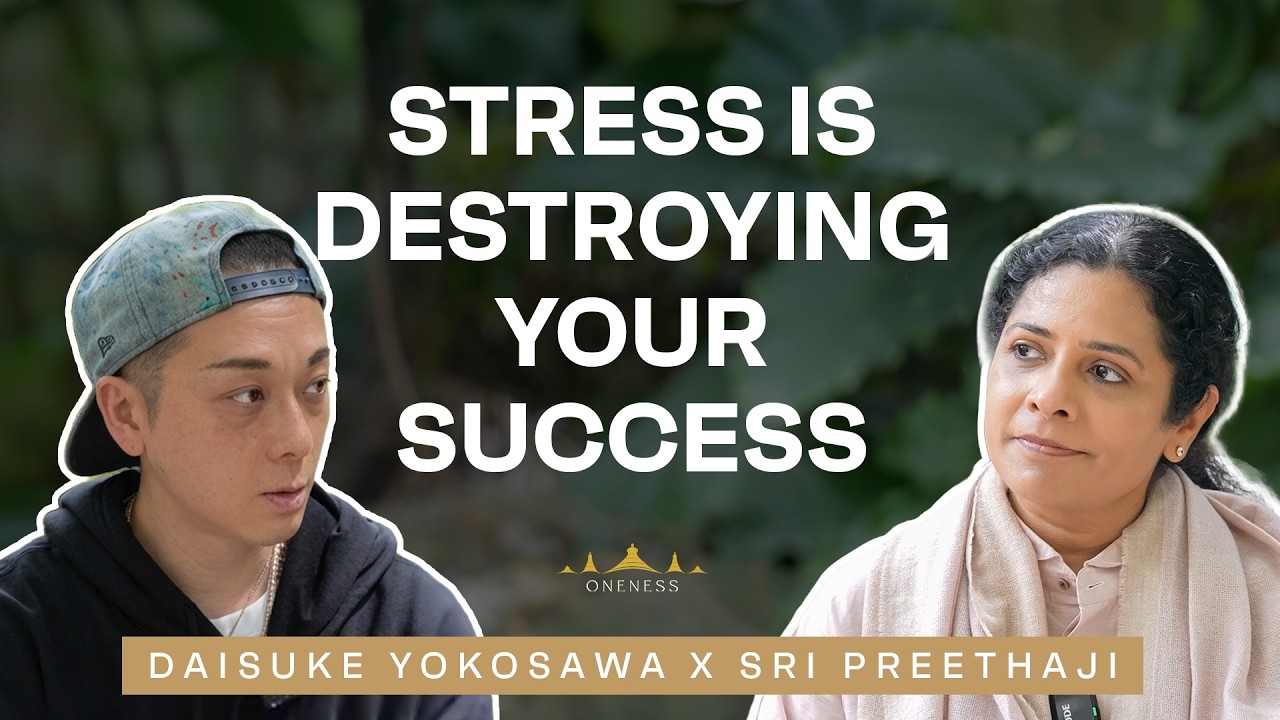
When stress activates your nervous system, your brain narrows its focus to threat-detection mode, eliminating the cognitive spaciousness required for clarity, creativity, and intelligent decision-making. You become trapped in familiar neural pathways and repeat old thought patterns rather than accessing fresh perspectives. The solution lies in cultivating inner spaciousness—a state of mental openness that remains accessible even during challenging circumstances.
What Happens to Your Mind Under Stress?
Stress fundamentally alters how your brain functions. When perceived threat activates your nervous system, your mind contracts into what neuroscience calls "threat-detection mode." In this state, the prefrontal cortex—the region responsible for executive function, creativity, and perspective-taking—takes a backseat to the amygdala and primitive survival circuits. Your attention narrows. Options collapse. The vast landscape of possible thoughts and approaches shrinks to a pinhole.
This contraction is not a failure of your intelligence; it is a survival mechanism that has served humans for millennia. When a predator appears, you do not need creative problem-solving or long-term strategic thinking. You need instant reaction. However, in modern life, the same survival mechanism activates in response to work deadlines, relationship conflict, financial uncertainty, and social pressure. Your brain treats a difficult email from your boss with the same urgency as a physical threat, and your cognitive flexibility collapses accordingly.
Why Do You Spiral Into the Same Thoughts Under Stress?
One of the most frustrating aspects of stress is that it locks you into repetitive thinking. You cycle through the same worries, the same catastrophic narratives, the same failed solutions—each cycle reinforcing the neural pathways that created the problem in the first place. This is not because you lack intelligence. It is because stress forces your mind to rely on well-worn neural grooves.
Under pressure, your brain defaults to whatever patterns are most familiar and automatized. If you have spent years thinking a certain way about a problem, that thought pattern has become a superhighway in your neural landscape. When stress narrows your options, your mind naturally takes the path of least resistance—the superhighway. Fresh perspectives, novel solutions, and creative approaches all require cognitive flexibility and a sense of spaciousness that stress actively suppresses.
This explains why stressed people often make poor decisions, even when they know better. You are not making poor choices because you are stupid. You are making poor choices because your brain has switched into a mode that prioritizes speed and familiarity over wisdom and novelty. The intelligent part of your mind is still there; it is simply offline.
How Does Stress Eliminate Creativity?
Creativity requires what researchers call "cognitive defocus"—the ability to let your attention wander, to make unexpected associations, to explore ideas without immediately judging them. This kind of open, exploratory thinking is fundamentally incompatible with stress, which demands hyper-focus and threat-scanning.
When you are stressed, your brain asks one question: "What is the danger, and how do I survive it?" This question narrows your perceptual field to things that are immediately relevant to threat mitigation. Peripheral details fade. Metaphors vanish. Unexpected connections between ideas become invisible. The creative impulse—which lives in the space between thoughts, in the gaps where new ideas are born—simply cannot flourish in a contracted, threatened mind.
This is why stressed people often say they "cannot think creatively" or that their "mind feels blocked." They are not being poetic. Their neural reality has actually shifted. The pathways that support creative cognition are literally de-activated under stress. This is also why taking a break, going for a walk, or sleeping on a problem often leads to sudden insight. Once you exit threat mode, your cognitive range expands again, and your creative faculties re-activate.
What Is Inner Spaciousness?
Inner spaciousness is a state of mental openness and cognitive freedom that exists independent of external circumstances. It is the felt sense of psychological room—space to think, to breathe, to consider options, to access wisdom. This is not the same as relaxation or calmness, though those states can facilitate spaciousness. Rather, it is a quality of consciousness in which awareness itself feels expansive, and thought arises from a vast background rather than from a tight, constricted place.
The teaching here is that spaciousness is not something you must create or achieve. It is a natural property of consciousness that becomes obscured when you are identified with stress, fear, and survival-mode thinking. Accessing spaciousness does not require that external stressors disappear. Instead, it requires a shift in how you relate to your experience—a movement from contraction and threat-identification to a more open, witnessing awareness.
When you have accessed this inner spaciousness, even in the midst of challenging circumstances, your mind naturally operates differently. You can see problems from multiple angles. You access wisdom that felt unavailable moments before. You make decisions from intelligence rather than from fear. Creative solutions emerge. Clarity is no longer something you have to fight for; it becomes available because the obstruction of contraction has loosened.
How Does Spaciousness Enable Intelligent Living?
Intelligent living is not the same as being smart. A person can be intellectually brilliant and still make disastrous life choices when operating from a contracted, stressed mind. Intelligent living is the capacity to respond to life's situations with wisdom, clarity, and discernment—to make choices that align with your values and the deeper patterns of what actually works.
When you operate from inner spaciousness, several things shift. First, you can distinguish between genuine problems and perceived threats that your anxiety has exaggerated. Second, you can access your own accumulated wisdom rather than being stuck in panic mode. Third, you can perceive options that were literally invisible to your contracted mind. Fourth, you can make decisions based on long-term intelligence rather than short-term threat reduction.
This is why meditation, contemplative practice, and deliberate nervous-system regulation are not luxuries or self-indulgence. They are direct interventions into the conditions that either enable or disable intelligent living. By cultivating spaciousness as a baseline state of consciousness, you create a platform from which clarity and creativity can naturally emerge—even when external stress remains present.
Can You Maintain Clarity While Stressed?
The implication of this teaching is that you do not have to wait until stress disappears to recover clarity. Instead, you can learn to access inner spaciousness even while navigating stressful circumstances. This does not mean being indifferent to real problems or denying genuine challenges. Rather, it means holding your situation in a wider frame of awareness—one that is large enough to contain the problem without being consumed by it.
This is a learnable skill. It involves developing what some call "the witness consciousness"—a dimension of awareness that observes stress and contracted thinking without being identified with it. From this witnessing awareness, you can acknowledge that you are stressed, that a situation is challenging, and simultaneously access the spaciousness that allows for clear seeing and wise action. The two are not mutually exclusive; they are simultaneous aspects of consciousness.
Where to Go From Here
If you recognize yourself in the pattern of stress-induced thinking collapse, the first step is awareness: noticing when your mind has contracted, when you have defaulted to familiar spiraling thoughts, when creativity has vanished. This noticing itself is a form of spaciousness—the spaciousness required to see your own mental patterns.
From there, you can experiment with practices that deliberately cultivate inner spaciousness: meditation, breathwork, time in nature, or any practice that creates psychological room and loosens identification with thought. The specific practice matters less than the direction: toward openness, toward witness consciousness, toward the recognition that awareness itself is vaster than any single stress or thought pattern.
The message of this teaching is ultimately hopeful: your capacity for clarity, creativity, and intelligent decision-making does not disappear under stress. It becomes temporarily obscured by contraction. By learning to access the spaciousness that is always available in consciousness, you reclaim the clarity that stress seemed to steal—and you make it resilient, available even in the midst of real challenge.