BrightStar
BlogMeine Tickets
BlogMeine Tickets
Saved events
Hilfe & KontaktRegistrierenAnmelden
Events
  • Alle Events durchsuchen
  • Yoga
  • Meditation
  • Breathwork
  • Qigong
  • Heilige Musik
  • Weltmusik
  • Medicine Music
  • Klangheilung
  • Ecstatic Dance
  • Zeremonie
  • Pflanzenmedizin
  • Energieheilung
  • Satsang & Weisheit
  • Tantra
  • Retreats
  • Alle Kategorien →
Reiseziele
  • Bali
  • Sedona
  • Los Angeles
  • Costa Rica
  • Tulum
  • Byron Bay
  • San Francisco
  • Austin
  • New York
  • San Diego
  • Denver
  • Seattle
  • Portland
  • Miami
  • London
  • Maui
  • Boulder
  • Alle Städte →
Plattform
  • Für Veranstalter
  • Werde Teil der Bewegung
  • Sell Globally
  • Für Kreative
  • Für Teams
  • Für Autoren
  • Für Lehrer
  • Für Kirtan-Künstler
  • Für Studios
  • Für Festivals
  • Für Retreat-Zentren
  • Für gemeinnützige Organisationen
  • Markenbotschafter
  • Kostenloses Ticketing
  • Pro
  • Amplify
  • Das Ökosystem
Funktionen

Ticketverkauf und Checkout

  • Ticket categories
  • Assigned seating
  • Custom questions
  • Coupon codes
  • Smart pricing
  • Ticket sharing
  • Waitlist
  • Flexible refunds
  • Digital waivers
  • Tip jar
  • Donations and sliding scale
  • Embed widget
  • Mindful checkout
  • Recurring events
  • Private sessions
  • Online courses
  • Summits
  • Rooms and stays
  • Ticket scanner

Marketing und Wachstum

  • Abandoned cart recovery
  • Visitor recovery
  • Upsells and add-ons
  • Affiliate engine
  • Upsell affiliate network
  • Brand ambassador
  • Meta retargeting
  • Verified buyer network
  • Outbound email marketing
  • Email sequences
  • SMS and WhatsApp
  • Event upsell network
  • Direct mail campaigns
  • SEO engine
  • Syndication
  • Event sharing
  • Custom event pages
  • Artist profiles
  • Link in bio
  • Event blog
  • Blog newsletter

Zahlungen

  • Payments, powered by Stripe
  • Buy now, pay later
  • Apple Wallet
  • Multi currency

Daten und Betrieb

  • Team access
  • Message center
  • Reports
  • Analytics reporting
  • Performance reporting
  • Customer data
  • Integrations
  • Switch from another platform

KI

  • Assistant
  • AI FAQ assistant
  • Alle Funktionen →
Unternehmen
  • Über uns
  • Häufige Fragen
  • Kontakt
  • Blog
  • Glossar
  • Guides
  • Inspiration
  • Hilfe-Center
  • API-Dokumentation
  • Marken-Assets
  • Presse
  • Nutzungsbedingungen
  • Datenschutzrichtlinie

Events

  • Alle Events durchsuchen
  • Yoga
  • Meditation
  • Breathwork
  • Qigong
  • Heilige Musik
  • Weltmusik
  • Medicine Music

Reiseziele

  • Bali
  • Sedona
  • Los Angeles
  • Costa Rica
  • Tulum
  • Byron Bay
  • San Francisco
  • Austin

Plattform

  • Für Veranstalter
  • Werde Teil der Bewegung
  • Sell Globally
  • Für Kreative
  • Für Teams
  • Für Autoren
  • Für Lehrer
  • Für Kirtan-Künstler

Funktionen

  • Community-Netzwerk
  • Warenkorbabbruch-Wiederherstellung
  • Ticket-Kategorien
  • Wiederkehrende Veranstaltungen
  • Sitzplatzreservierung
  • Affiliate-System
  • Warteliste / Benachrichtigen
  • Alle Funktionen →

Unternehmen

  • Über uns
  • Häufige Fragen
  • Kontakt
  • Blog
  • Glossar
  • Guides
  • Nutzungsbedingungen
  • Datenschutzrichtlinie
Mehr lesen

Events

  • Klangheilung
  • Ecstatic Dance
  • Zeremonie
  • Pflanzenmedizin
  • Energieheilung
  • Satsang & Weisheit
  • Tantra
  • Retreats
  • Alle Kategorien →

Reiseziele

  • New York
  • San Diego
  • Denver
  • Seattle
  • Portland
  • Miami
  • London
  • Maui
  • Boulder
  • Alle Städte →

Plattform

  • Für Studios
  • Für Festivals
  • Für Retreat-Zentren
  • Für gemeinnützige Organisationen
  • Markenbotschafter
  • Kostenloses Ticketing
  • Pro
  • Amplify
  • Das Ökosystem

Unternehmen

  • Inspiration
  • Hilfe-Center
  • API-Dokumentation
  • Marken-Assets
  • Presse

Ticketverkauf und Checkout

  • Ticket categories
  • Assigned seating
  • Custom questions
  • Coupon codes
  • Smart pricing
  • Ticket sharing
  • Waitlist
  • Flexible refunds
  • Digital waivers
  • Tip jar
  • Donations and sliding scale
  • Embed widget
  • Mindful checkout
  • Recurring events
  • Private sessions
  • Online courses
  • Summits
  • Rooms and stays
  • Ticket scanner

Marketing und Wachstum

  • Abandoned cart recovery
  • Visitor recovery
  • Upsells and add-ons
  • Affiliate engine
  • Upsell affiliate network
  • Brand ambassador
  • Meta retargeting
  • Verified buyer network
  • Outbound email marketing
  • Email sequences
  • SMS and WhatsApp
  • Event upsell network
  • Direct mail campaigns
  • SEO engine
  • Syndication
  • Event sharing
  • Custom event pages
  • Artist profiles
  • Link in bio
  • Event blog
  • Blog newsletter

Zahlungen

  • Payments, powered by Stripe
  • Buy now, pay later
  • Apple Wallet
  • Multi currency

Daten und Betrieb

  • Team access
  • Message center
  • Reports
  • Analytics reporting
  • Performance reporting
  • Customer data
  • Integrations
  • Switch from another platform

KI

  • Assistant
  • AI FAQ assistant
Hol dir die App
Laden imApp StoreJetzt beiGoogle Play
© 2026 BrightStar. Alle Rechte vorbehalten. BrightStar Selection · Bildnachweise · Änderungsprotokoll ·
Inspiration

Who Is It That's Thinking This? A Zen Question Explained

PZ
Providence Zen Center
Nov 14, 2026
8 Min. Lesezeit

Von Providence Zen Center

Ansehen · 6

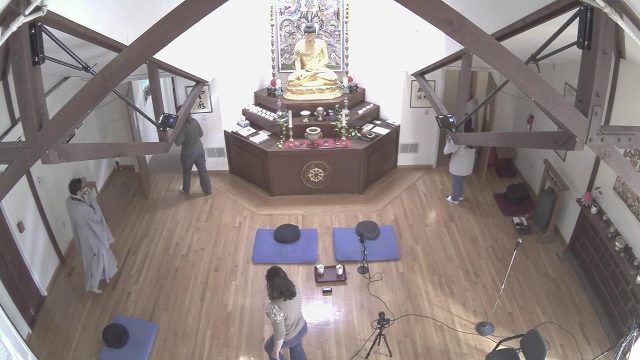
In a brief talk clip from Providence Zen Center, the teacher Kwan Haeng Poep Sa Nim retells an encounter with the Zen master Huang Po, who is recorded in the transcript as "Wang Po." A student has been asking which mind is the real one, the enlightened mind or the unenlightened mind. Huang Po answers that the very distinction is an illusion that hides the true self. The teacher then offers a practical redirection: rather than arguing over which mind is real, ask where this thinking comes from, or who is it that is thinking this. The whole clip runs about ninety seconds, but it packs a complete method of Zen questioning into a few sentences, and it is worth slowing down to hear what it is doing.

Lesen · 6 Abschnitte

What happens in this short Zen exchange?

The story opens with a familiar kind of spiritual problem. Someone has been given a talk and asks the master about "this enlightened mind" and "this non-enlightened mind." The premise is that a person can become enlightened, and then the question becomes what happens to the ordinary mind that remains. It is a tidy, reasonable-sounding question, the kind a serious student asks after absorbing a few teachings. It assumes there are two minds on the table, and the only task left is to sort them and choose the correct one.

Huang Po does not sort them. In the teacher's telling, the questioner answers by pointing to a scripture, a book that says there is an enlightened mind and a non-enlightened mind. Huang Po, who is described as very educated and very well versed in the sutras, says the reader has misunderstood. In the teacher's words, the sutra "points to the fact that the enlightened mind and the non-enlightened mind are both illusions," and that they "cover your true self."

"That sutra points to the fact that the enlightened mind and the non-enlightened mind are both illusions and they cover the your basically cover your true self." (Kwan Haeng Poep Sa Nim, Providence Zen Center video, about 0:45)

The teacher adds a small, human detail: he sent that answer along to the person who had asked, and the person thanked him for it. The laughter in the recording suggests the story lands as a bit of Zen humor. A pointed correction is delivered, and it is received with gratitude, which is itself a reminder that the student's real problem was never a shortage of information.

Why does the question "which mind is the real mind?" trap us?

The core of the teaching is that the question is built wrong from the start. Asking which mind is real assumes that you already stand somewhere outside both minds, able to inspect them and rank them. The enlightened mind and the unenlightened mind become two objects, two concepts to be compared. Once they are objects, the mind is doing what it always does: it turns experience into things it can label, weigh, and argue about.

This is why the teacher says the matter can be dissolved rather than answered. The conversation "which mind is the real mind" can run indefinitely, with new scriptures, new distinctions, and new doubts. Huang Po's reply cuts the whole frame, saying in effect that the frame itself is the cover. Whatever is being argued about is an illusion in the sense that it is a made thing, a conceptual overlay, not the thing it claims to describe.

It helps to notice how natural this trap is. Most of us are trained, by school and by religious study alike, to resolve questions by finding the correct answer in a book or from a teacher. Zen is pointing at a different kind of question, one that does not get resolved by adding another concept on top of the existing ones.

Where does this thinking come from?

After the story, the teacher turns to the practical part. He says that if you have this as a conversation, "which mind is the real mind," there are some things you can do. The first option he names is to ask "what am I?" He then says that a better approach is to ask where the thinking comes from.

"Better yet is where does this thinking come from? Okay? Or um where is this thinking coming from? Or who is it that's thinking this?" (Kwan Haeng Poep Sa Nim, Providence Zen Center video, about 1:14)

The shift here is from content to source. The usual move in thought is to examine what the thought says. The redirection asks instead about the place from which the thought arises. The thought "this is the enlightened mind" or "this is the unenlightened mind" is one more thought in a stream. Asking where it comes from turns attention back toward the one who is doing the thinking, and that is a very different activity from weighing one idea against another.

The teacher's wording is also careful. He does not say the thought is wrong or that you should stop thinking. He invites a question, and the question works like a turn of the head. It moves attention from the object of thought to the thinking itself.

Who is it that's thinking this, and why ask it instead of "what am I?"

The teacher says that either of the two forms of the question, "where is this thinking coming from?" or "who is it that's thinking this?", will get you "right to the matter." He presents "what am I?" as a legitimate option, but he ranks the thinking-focused question higher, and the reason is worth weighing. "What am I?" can quickly become another abstract question, one that invites an answer in words. It can turn into a search for a definition of the self, which is exactly the kind of conceptual construction the story has just exposed. A question about the source of thinking stays closer to direct experience: there is a thought appearing right now, and the question points at the place it appears from.

This is also why the teacher says you "don't have to ask that silly question." The phrase "which mind is the real mind" is silly not because the student is foolish, but because it chases a problem that does not hold together once you look at it closely. The question about the thinker dissolves the knot rather than untying it strand by strand.

It would be a mistake to read this as a trick that delivers an answer. The clip does not tell us what the thinker turns out to be, and it does not claim a final conclusion. What it gives is a direction. Hold the question, look for where the thinking is coming from, and notice what happens when you do.

How can you work with this question in daily life?

The clip is short and does not lay out a full practice, so anything beyond its wording is interpretation rather than the teacher's instruction. With that caveat, the pointer suggests a simple habit. When you catch yourself locked in a debate about your own spiritual state, such as whether you are awake enough, whether your mind is clear, or which of your thoughts counts as real, pause and bring in the question. Ask where this thinking is coming from. Ask who is doing the thinking. Then let the question stay open rather than rushing to a clever answer. The clip's own logic suggests that the answer is not something to be composed in words. It is something to be seen directly.

This is the practical gift of the teaching. Most of our confusion is maintained by treating our mental categories as settled. The enlightened, the unenlightened, the real, the false: each is a label that feels like ground under our feet. Huang Po's answer, as the teacher retells it, pulls out the floor under those labels, and the question about the thinker gives the attention a place to rest.

Where to go from here

If this short clip has raised more questions than it answered, that is consistent with the teaching itself. The teacher is not handing over a finished doctrine. He is pointing at a question and inviting you to keep it alive. The video description notes that Kwan Haeng Poep Sa Nim is scheduled to give a Dharma talk at Providence Zen Center, available to attend in person or online. Hearing a longer treatment of the same themes from the teacher himself is the natural next step. Meanwhile, the most useful thing to take from this ninety seconds is a single question to carry into an ordinary moment: when a thought about your own mind appears, where is it coming from, and who is it that's thinking this?
Kommentare

Gespräch wird geladen…

Transcript

[0:00] Wang Po is is given a talk and somebody

[0:02] asked him a question, and he says, what

[0:05] about this enlightened mind? And this uh

[0:08] non-enlightened mind. So you you're your

[0:10] person, you become enlightened and what

[0:12] what about that? And and Wang Po says,

[0:15] where do you where where do you put your

[0:18] uh

[0:18] enlightened mind and your unenlightened

[0:20] mind?

[0:21] And he says that in the and he quotes

[0:23] like a sutra or something. He says in

[0:25] this particular book it says surely that

[0:27] there is the enlightened mind and

[0:29] there's the um a non-enlightened mind.

[0:32] And uh and and Wang Po of course Wang Po

[0:35] is very educated himself and very up on

[0:38] on a sutra. He says, no, you don't

[0:40] understand. That sutra points to the

[0:42] fact that the enlightened mind and the

[0:45] non-enlightened mind are both illusions

[0:48] and they cover they cover the your

[0:51] basically cover your true self.

[0:54] And so I I sent that

[0:56] I sent that to that person. [laughter]

[0:59] So and uh and

[1:02] thanked me about it. But the thing is

[1:05] if you have that as as a as an issue as

[1:07] a conversation, which mind is the real

[1:09] mind, then there's some things you could

[1:11] do. One is ask what am I?

[1:14] But uh better yet is where does this

[1:17] thinking come from?

[1:19] Okay? Or um

[1:23] where is this thinking coming from? Or

[1:25] who is it that's thinking this?

[1:26] Either one of those and you're going to

[1:28] get right to the to the matter and you

[1:30] don't have to ask that silly question.

Providence Zen Center

Künstler:in

Watch more from Providence Zen Center on YouTube.

Themen erkunden
Zen buddhismHuang poKoan practiceWho am iDharma talk
Häufig gestellte Fragen

Häufig gestellte Fragen

In this Providence Zen Center talk, Kwan Haeng Poep Sa Nim describes Huang Po as a Zen master who was very educated and well versed in the sutras. The clip centers on one exchange in which Huang Po corrects a student who was treating the enlightened and unenlightened mind as two real things. The clip does not cover his wider biography.

According to the teacher's retelling, Huang Po says a sutra that describes an enlightened mind and a non-enlightened mind actually points to the fact that both are illusions covering the true self. The point is that dividing the mind into two labeled states is itself a conceptual overlay. It is not the reality the labels claim to describe.

The teacher says that asking where the thinking comes from, or who is doing the thinking, gets you right to the matter and avoids the silly question of which mind is real. Shifting attention from the content of a thought to its source moves the practitioner away from endless conceptual comparison. The clip presents this as a direction to hold, not a final answer.

The teacher lists 'what am I?' as one option but calls asking about the source of thinking the better one. A question about the self can easily turn into a verbal definition, while a question about where thinking arises stays closer to what is happening in the moment. Both questions point toward self-inquiry, but the teacher ranks the thinking-focused version higher.

The clip is short and does not give a full method, so any practice beyond its wording is interpretation. A reasonable reading is to notice when you are stuck in a debate about your spiritual state and then bring the question into that moment. Let it stay open rather than rushing to a clever verbal answer.

The video description says Kwan Haeng Poep Sa Nim was scheduled to give a Dharma talk at Providence Zen Center and that it could be attended in person or online. Check the Providence Zen Center channel or its schedule for current details, since the listing was posted in November 2026.

In the recording, the teacher says he sent Huang Po's answer to the person who had asked, and the person thanked him for it. The laughter in the clip suggests the story works as Zen humor, a sharp correction delivered in a way that the student received with gratitude.

Das könnte dir auch gefallen

Alle anzeigen
Chanting at the Bedside: A Zen Talk on Loss and Practice
Inspire

Chanting at the Bedside: A Zen Talk on Loss and Practice

A Providence Zen Center dharma talk swerves from planned lessons on art to a family's hospital vigil and the power of chanting. Here is what…

9 min read
Voice Temple Kirtan in Pisac: A Farewell Night of Call and Response
Inspire

Voice Temple Kirtan in Pisac: A Farewell Night of Call and Response

Franko Heke's five-minute highlight reel from a Voice Temple kirtan at Kula Café in Pisac, Peru. What the footage shows and what the call-an…

6 min read
Sacred Kirtan at Radha Madan Mohan Temple, Vrindavan
Inspire

Sacred Kirtan at Radha Madan Mohan Temple, Vrindavan

A 31-second glimpse of sacred kirtan sung at Sri Sri Radha Madan Mohan temple in Vrindavan. Here is what the practice is and why its setting…

2 min read
Ganga Is a Mother to Us All: A Story From Sri Siddhi Ma
Inspire

Ganga Is a Mother to Us All: A Story From Sri Siddhi Ma

A holy dip at Har Ki Pauri turns into a revelation in Sri Siddhi Ma. Nina Rao reads Jaya Prasada's Ganga passage beside the river.…

9 min read
AlleDas könnte dir auch gefallen→

Setze deinen Weg fort

Mehr Weisheit und Zusammenkünfte aus dem BrightStar-Verzeichnis.

Mehr Artikel

Durchstöbere die ganze Bibliothek an Lehren, Interviews und Leitfäden.

Zu allen Artikeln →

Lehrer & Künstler

Entdecke die Linien, Musiker und Wegbegleiter der bewussten Welt.

Künstler erkunden →

Event finden

Kirtan, Retreats, Klangbäder, Atemarbeit, Festivals — bald in deiner Nähe.

Events ansehen →