BrightStar
BlogMeine Tickets
BlogMeine Tickets
Saved events
Hilfe & KontaktRegistrierenAnmelden
Events
  • Alle Events durchsuchen
  • Yoga
  • Meditation
  • Breathwork
  • Qigong
  • Heilige Musik
  • Weltmusik
  • Medicine Music
  • Klangheilung
  • Ecstatic Dance
  • Zeremonie
  • Pflanzenmedizin
  • Energieheilung
  • Satsang & Weisheit
  • Tantra
  • Retreats
  • Alle Kategorien →
Reiseziele
  • Bali
  • Sedona
  • Los Angeles
  • Costa Rica
  • Tulum
  • Byron Bay
  • San Francisco
  • Austin
  • New York
  • San Diego
  • Denver
  • Seattle
  • Portland
  • Miami
  • London
  • Maui
  • Boulder
  • Alle Städte →
Plattform
  • Für Veranstalter
  • Werde Teil der Bewegung
  • Sell Globally
  • Für Kreative
  • Für Teams
  • Für Autoren
  • Für Lehrer
  • Für Kirtan-Künstler
  • Für Studios
  • Für Festivals
  • Für Retreat-Zentren
  • Für gemeinnützige Organisationen
  • Markenbotschafter
  • Kostenloses Ticketing
  • Pro
  • Amplify
  • Das Ökosystem
Funktionen

Ticketverkauf und Checkout

  • Ticket categories
  • Assigned seating
  • Custom questions
  • Coupon codes
  • Smart pricing
  • Ticket sharing
  • Waitlist
  • Flexible refunds
  • Digital waivers
  • Tip jar
  • Donations and sliding scale
  • Embed widget
  • Mindful checkout
  • Recurring events
  • Private sessions
  • Online courses
  • Summits
  • Rooms and stays
  • Ticket scanner

Marketing und Wachstum

  • Abandoned cart recovery
  • Visitor recovery
  • Upsells and add-ons
  • Affiliate engine
  • Upsell affiliate network
  • Brand ambassador
  • Meta retargeting
  • Verified buyer network
  • Outbound email marketing
  • Email sequences
  • SMS and WhatsApp
  • Event upsell network
  • Direct mail campaigns
  • SEO engine
  • Syndication
  • Event sharing
  • Custom event pages
  • Artist profiles
  • Link in bio
  • Event blog
  • Blog newsletter

Zahlungen

  • Payments, powered by Stripe
  • Buy now, pay later
  • Apple Wallet
  • Multi currency

Daten und Betrieb

  • Team access
  • Message center
  • Reports
  • Analytics reporting
  • Performance reporting
  • Customer data
  • Integrations
  • Switch from another platform

KI

  • Assistant
  • AI FAQ assistant
  • Alle Funktionen →
Unternehmen
  • Über uns
  • Häufige Fragen
  • Kontakt
  • Blog
  • Glossar
  • Guides
  • Inspiration
  • Hilfe-Center
  • API-Dokumentation
  • Marken-Assets
  • Presse
  • Nutzungsbedingungen
  • Datenschutzrichtlinie

Events

  • Alle Events durchsuchen
  • Yoga
  • Meditation
  • Breathwork
  • Qigong
  • Heilige Musik
  • Weltmusik
  • Medicine Music

Reiseziele

  • Bali
  • Sedona
  • Los Angeles
  • Costa Rica
  • Tulum
  • Byron Bay
  • San Francisco
  • Austin

Plattform

  • Für Veranstalter
  • Werde Teil der Bewegung
  • Sell Globally
  • Für Kreative
  • Für Teams
  • Für Autoren
  • Für Lehrer
  • Für Kirtan-Künstler

Funktionen

  • Community-Netzwerk
  • Warenkorbabbruch-Wiederherstellung
  • Ticket-Kategorien
  • Wiederkehrende Veranstaltungen
  • Sitzplatzreservierung
  • Affiliate-System
  • Warteliste / Benachrichtigen
  • Alle Funktionen →

Unternehmen

  • Über uns
  • Häufige Fragen
  • Kontakt
  • Blog
  • Glossar
  • Guides
  • Nutzungsbedingungen
  • Datenschutzrichtlinie
Mehr lesen

Events

  • Klangheilung
  • Ecstatic Dance
  • Zeremonie
  • Pflanzenmedizin
  • Energieheilung
  • Satsang & Weisheit
  • Tantra
  • Retreats
  • Alle Kategorien →

Reiseziele

  • New York
  • San Diego
  • Denver
  • Seattle
  • Portland
  • Miami
  • London
  • Maui
  • Boulder
  • Alle Städte →

Plattform

  • Für Studios
  • Für Festivals
  • Für Retreat-Zentren
  • Für gemeinnützige Organisationen
  • Markenbotschafter
  • Kostenloses Ticketing
  • Pro
  • Amplify
  • Das Ökosystem

Unternehmen

  • Inspiration
  • Hilfe-Center
  • API-Dokumentation
  • Marken-Assets
  • Presse

Ticketverkauf und Checkout

  • Ticket categories
  • Assigned seating
  • Custom questions
  • Coupon codes
  • Smart pricing
  • Ticket sharing
  • Waitlist
  • Flexible refunds
  • Digital waivers
  • Tip jar
  • Donations and sliding scale
  • Embed widget
  • Mindful checkout
  • Recurring events
  • Private sessions
  • Online courses
  • Summits
  • Rooms and stays
  • Ticket scanner

Marketing und Wachstum

  • Abandoned cart recovery
  • Visitor recovery
  • Upsells and add-ons
  • Affiliate engine
  • Upsell affiliate network
  • Brand ambassador
  • Meta retargeting
  • Verified buyer network
  • Outbound email marketing
  • Email sequences
  • SMS and WhatsApp
  • Event upsell network
  • Direct mail campaigns
  • SEO engine
  • Syndication
  • Event sharing
  • Custom event pages
  • Artist profiles
  • Link in bio
  • Event blog
  • Blog newsletter

Zahlungen

  • Payments, powered by Stripe
  • Buy now, pay later
  • Apple Wallet
  • Multi currency

Daten und Betrieb

  • Team access
  • Message center
  • Reports
  • Analytics reporting
  • Performance reporting
  • Customer data
  • Integrations
  • Switch from another platform

KI

  • Assistant
  • AI FAQ assistant
Hol dir die App
Laden imApp StoreJetzt beiGoogle Play
© 2026 BrightStar. Alle Rechte vorbehalten. BrightStar Selection · Bildnachweise · Änderungsprotokoll ·
Inspiration

What Is Real Happiness? A Deeper Understanding Beyond Pleasure

Dalai Lama
Dalai Lama
Nov 20, 2026
5 Min. Lesezeit

Von Dalai Lama

Ansehen · 7

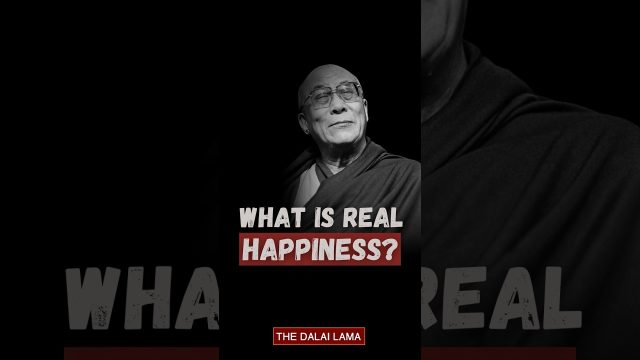
The room is quiet. A simple question hangs in the air: What is happiness? It's the question that has animated philosophy, religion, and pop psychology for millennia—and yet most of us still reach for the wrong answer. We think happiness is the absence of pain, a moment of pleasure, a feeling that arrives and, we hope, stays. His Holiness the Dalai Lama offers something far more radical: happiness is not what we feel, but what we *are*—a deeper sense of satisfaction that can coexist with suffering, difficulty, and physical pain.

Lesen · 5 Abschnitte

Happiness Is Not What You Feel

"I use the word happiness not necessarily some pleasure feeling," the Dalai Lama explains. It's a distinction that cuts to the root of why so many spiritual traditions—and now, neuroscience—insist that chasing pleasure as a life strategy is a losing game. Pleasure fades. It's conditional, dependent on circumstances, and by its nature temporary. A meal satisfies; then hunger returns. A moment of success exhilarates; then doubt creeps in. If happiness were merely pleasure, it would be as unstable as the weather.

What the Dalai Lama calls happiness is something the Sanskrit tradition names sukha—a word often mistranslated as "pleasure" but which really means the deep fulfillment that comes from alignment with one's purpose. When he says, "even suffering sometimes bring more [deeper] satisfaction," he's pointing to an experience many of us know but rarely trust: the satisfaction of completing difficult work, of persevering through illness, of showing up for someone we love despite our exhaustion. These experiences often hurt. And yet they deliver something pleasure never can—a sense of meaning, of rightness, of a life being lived fully.

Satisfaction Through Hardship

Consider the athlete who trains through pain, the caregiver who finds meaning in exhausting work, the artist who struggles through self-doubt to create something true. "Sometimes if you carry certain work through that you may find some physical difficulties," the Dalai Lama notes, "but you get sense of satisfaction." This satisfaction isn't sentimental. It's concrete. It holds you up. It's the difference between a life that merely feels good and a life that *is* good.

This reframing has immediate practical consequences. If we stop waiting for happiness to arrive as a feeling—a pleasurable state we can consume or acquire—and start understanding it as the depth of satisfaction that comes from purposeful engagement with life, everything shifts. We stop asking "Am I happy yet?" and start asking "Am I living in a way that generates genuine satisfaction?" Those are vastly different questions, and they lead to vastly different choices.

Why Hope Is the Root of Life

But there's a catch. How do we maintain that sense of satisfaction when circumstances offer no guarantee of success, comfort, or even tomorrow? Here the Dalai Lama introduces what may be the most underestimated force in human psychology: hope. "There is no guarantee what will happen tomorrow or even this evening," he says. The future is fundamentally uncertain. We cannot control outcomes. And yet we survive—even thrive—because of a single, fragile human capacity: the ability to believe that something good might come.

"We are hoping something could be good," he explains. "Even though today some difficulties, but after some time we may overcome these problems. So that kind of hope sustain our life." Hope, in this teaching, isn't naive optimism or denial of real suffering. It's the realistic acknowledgment that difficulty is temporary, that our capacity to adapt and overcome is real, and that the future remains genuinely open.

What happens when hope collapses? The Dalai Lama speaks with the gravity of hard experience: "One individual completely lost hope. Then that very attitude shortened our life." He identifies a psychological fact that suicide researchers now confirm: loss of hope is more predictive of suicide than current suffering itself. A person enduring intense pain but who believes it can change will continue to live. A person in mild discomfort but who sees no way forward may not. Hope is not a luxury emotion—it's the foundation that keeps us alive.

The Purpose of Life Reconsidered

"So therefore," the Dalai Lama concludes, "I see, I feel very purpose of our life is joyfulness, happiness." But now, having unpacked what he means, the statement carries different weight. He's not saying the purpose of life is to feel good. He's saying it's to generate, through meaningful engagement with difficulty, a stable sense of satisfaction and purpose. And the prerequisite for that is hope—the stubborn human belief that tomorrow might be better, that our efforts matter, that life is worth living.

This teaching arrives from lived experience. The Dalai Lama has spent decades—centuries, if you count the lineage—encountering human suffering in its rawest forms. He speaks not as a theorist of happiness but as a witness to it, and to the conditions that destroy it. His conclusion is not that we should chase pleasure or even that we should aim for a life free of pain. Rather, he's pointing to what ancient traditions and modern psychology now converge on: that a human being flourishes when engaged in purposeful work, connected to others, and held by the belief that life is fundamentally worth living. That's not a feeling you can manufacture. It's a way of being you can cultivate.

Where to go from here

If you recognize yourself in the endless chase for the next good feeling, consider: What work, relationship, or practice generates a sense of satisfaction in you even when it's difficult? Start there. Notice the difference between pleasure (which fades) and meaning (which sustains). And examine the state of your own hope—not as a feeling to be optimized, but as a foundation to be consciously protected and strengthened. In a world designed to harvest your attention and sell you happiness, the Dalai Lama's most radical teaching may be this: the happiness you're looking for was never meant to be bought. It's built through how you show up to your life.
Kommentare

Gespräch wird geladen…

Transcript

[0:00] Very purpose of our life, I believe

[0:05] happiness,

[0:06] joyful life.

[0:09] And I use the word happiness

[0:12] not necessarily

[0:13] some pleasure feeling.

[0:15] Even suffering

[0:18] sometimes bring more giver satisfaction.

[0:23] So

[0:24] when I use the word happiness is

[0:27] more in the sense

[0:29] satisfaction.

[0:31] Some kind of

[0:32] the feeling of satisfaction.

[0:35] Even some physical painful sort of

[0:37] experience.

[0:39] Sometimes

[0:41] if you carry

[0:43] certain work

[0:45] through that

[0:46] you may find some physical difficulties,

[0:49] but you get

[0:50] sense of satisfaction.

[0:54] So

[0:56] that

[0:58] my reason

[1:01] purpose of our life

[1:02] could be

[1:04] happiness or satisfaction.

[1:07] Reason

[1:12] See there is no guarantee

[1:15] what will happen tomorrow

[1:17] or even this evening, what will happen?

[1:20] No guarantee.

[1:22] And no question

[1:24] next year

[1:25] or next decade.

[1:27] No guarantee

[1:28] you get

[1:29] maximum happiness. No.

[1:32] But

[1:34] we are hoping

[1:37] something

[1:38] could be good.

[1:40] Even though today some difficulties,

[1:43] but

[1:44] after some time

[1:46] we may overcome these problems.

[1:49] So that kind of hope

[1:50] sustain our life.

[1:54] One individual completely lost hope.

[1:58] Then

[2:00] that very attitude shortened our life.

[2:08] Once you clear past hope,

[2:11] then depressions,

[2:14] even possible suicide.

[2:18] So our life depend on

[2:21] hope.

[2:23] Hope means something good,

[2:26] happiness or satisfaction.

[2:28] So therefore

[2:30] I see, I feel

[2:32] very purpose of our life is joyfulness,

[2:36] happiness.

Dalai Lama

Dalai Lama

Künstler:in

Spiritual leader of Tibetan Buddhism and Nobel Peace Prize laureate (1989). Born Lhamo Thondup in 1935, recognized at age two as the reincarnation of the 13th Dalai Lama, he fled into exile in 1959 after the Chinese occupation of Tibet. From his seat in Dharamshala, India, he has worked tirelessly for nonviolence, interfaith dialogue, and the cause of the Tibetan people, becoming one of the most beloved spiritual teachers of our time. His books — including The Art of Happiness, Ethics for the New Millennium, and The Book of Joy — have brought Tibetan Buddhist wisdom to a global audience.

Profil ansehen
Themen erkunden
HappinessSatisfactionHopeSufferingPurpose
Häufig gestellte Fragen

Häufig gestellte Fragen

According to the Dalai Lama, happiness is a stable sense of satisfaction and meaning, not merely pleasant feelings. Pleasure is temporary and dependent on circumstances, while true happiness can coexist with physical pain and difficulty when you're engaged in purposeful work. Even suffering can generate deeper satisfaction when you're carrying meaningful work through challenges.

Yes. The Dalai Lama teaches that satisfaction and fulfillment come through carrying difficult work through to completion, even when it involves physical or emotional pain. The sense of satisfaction from meaningful engagement can be more sustaining than the absence of pain itself.

Hope is the belief that things can improve, that difficulties are temporary, and that the future holds possibility. The Dalai Lama notes that when people lose hope entirely, their life deteriorates rapidly—even leading to depression or suicide. Hope sustains us through present hardship by keeping us connected to the possibility of a better future.

The Dalai Lama teaches that the purpose of life is joyfulness and happiness—understood as a deep sense of satisfaction and meaning, not fleeting pleasure. This satisfaction emerges from purposeful engagement with life, meaningful work, and the hope that sustains us through inevitable difficulties.

Since there's no guarantee of future outcomes, satisfaction comes from engaging fully in meaningful work and relationships now, while maintaining hope that things can improve. The Dalai Lama emphasizes that this hope—not denial of real difficulty—is what allows us to find satisfaction even when success is uncertain.

Das könnte dir auch gefallen

Alle anzeigen
Warmheartedness as the Source of Inner Strength and Trust
Inspire

Warmheartedness as the Source of Inner Strength and Trust

Asked how he keeps hope and strength, the Dalai Lama points to warmheartedness as the foundation of inner strength and the trust friendship …

8 min read
What Real Happiness Actually Means Beyond Pleasure
Inspire

What Real Happiness Actually Means Beyond Pleasure

The Dalai Lama reframes happiness as deep satisfaction rather than pleasure, arguing that meaning emerges through struggle and that hope sus…

5 min read
The Lotus Principle: Growing Through Life's Mud
Inspire

The Lotus Principle: Growing Through Life's Mud

The lotus flower teaches us that beauty and transcendence grow not despite hardship, but through it. Snatam Kaur explores an ancient spiritu…

4 min read
Voice Temple Kirtan in Pisac: A Farewell Night of Call and Response
Inspire

Voice Temple Kirtan in Pisac: A Farewell Night of Call and Response

Franko Heke's five-minute highlight reel from a Voice Temple kirtan at Kula Café in Pisac, Peru. What the footage shows and what the call-an…

6 min read
AlleDas könnte dir auch gefallen→

Setze deinen Weg fort

Mehr Weisheit und Zusammenkünfte aus dem BrightStar-Verzeichnis.

Mehr Artikel

Durchstöbere die ganze Bibliothek an Lehren, Interviews und Leitfäden.

Zu allen Artikeln →

Lehrer & Künstler

Entdecke die Linien, Musiker und Wegbegleiter der bewussten Welt.

Künstler erkunden →

Event finden

Kirtan, Retreats, Klangbäder, Atemarbeit, Festivals — bald in deiner Nähe.

Events ansehen →