BrightStar
BlogMeine Tickets
BlogMeine Tickets
Saved events
Hilfe & KontaktRegistrierenAnmelden
Events
  • Alle Events durchsuchen
  • Yoga
  • Meditation
  • Breathwork
  • Qigong
  • Heilige Musik
  • Weltmusik
  • Medicine Music
  • Klangheilung
  • Ecstatic Dance
  • Zeremonie
  • Pflanzenmedizin
  • Energieheilung
  • Satsang & Weisheit
  • Tantra
  • Retreats
  • Alle Kategorien →
Reiseziele
  • Bali
  • Sedona
  • Los Angeles
  • Costa Rica
  • Tulum
  • Byron Bay
  • San Francisco
  • Austin
  • New York
  • San Diego
  • Denver
  • Seattle
  • Portland
  • Miami
  • London
  • Maui
  • Boulder
  • Alle Städte →
Plattform
  • Für Veranstalter
  • Werde Teil der Bewegung
  • Sell Globally
  • Für Kreative
  • Für Teams
  • Für Autoren
  • Für Lehrer
  • Für Kirtan-Künstler
  • Für Studios
  • Für Festivals
  • Für Retreat-Zentren
  • Für gemeinnützige Organisationen
  • Markenbotschafter
  • Kostenloses Ticketing
  • Pro
  • Amplify
  • Das Ökosystem
Funktionen

Ticketverkauf und Checkout

  • Ticket categories
  • Assigned seating
  • Custom questions
  • Coupon codes
  • Smart pricing
  • Ticket sharing
  • Waitlist
  • Flexible refunds
  • Digital waivers
  • Tip jar
  • Donations and sliding scale
  • Embed widget
  • Mindful checkout
  • Recurring events
  • Private sessions
  • Online courses
  • Summits
  • Rooms and stays
  • Ticket scanner

Marketing und Wachstum

  • Abandoned cart recovery
  • Visitor recovery
  • Upsells and add-ons
  • Affiliate engine
  • Upsell affiliate network
  • Brand ambassador
  • Meta retargeting
  • Verified buyer network
  • Outbound email marketing
  • Email sequences
  • SMS and WhatsApp
  • Event upsell network
  • Direct mail campaigns
  • SEO engine
  • Syndication
  • Event sharing
  • Custom event pages
  • Artist profiles
  • Link in bio
  • Event blog
  • Blog newsletter

Zahlungen

  • Payments, powered by Stripe
  • Buy now, pay later
  • Apple Wallet
  • Multi currency

Daten und Betrieb

  • Team access
  • Message center
  • Reports
  • Analytics reporting
  • Performance reporting
  • Customer data
  • Integrations
  • Switch from another platform

KI

  • Assistant
  • AI FAQ assistant
  • Alle Funktionen →
Unternehmen
  • Über uns
  • Häufige Fragen
  • Kontakt
  • Blog
  • Glossar
  • Guides
  • Inspiration
  • Hilfe-Center
  • API-Dokumentation
  • Marken-Assets
  • Presse
  • Nutzungsbedingungen
  • Datenschutzrichtlinie

Events

  • Alle Events durchsuchen
  • Yoga
  • Meditation
  • Breathwork
  • Qigong
  • Heilige Musik
  • Weltmusik
  • Medicine Music

Reiseziele

  • Bali
  • Sedona
  • Los Angeles
  • Costa Rica
  • Tulum
  • Byron Bay
  • San Francisco
  • Austin

Plattform

  • Für Veranstalter
  • Werde Teil der Bewegung
  • Sell Globally
  • Für Kreative
  • Für Teams
  • Für Autoren
  • Für Lehrer
  • Für Kirtan-Künstler

Funktionen

  • Community-Netzwerk
  • Warenkorbabbruch-Wiederherstellung
  • Ticket-Kategorien
  • Wiederkehrende Veranstaltungen
  • Sitzplatzreservierung
  • Affiliate-System
  • Warteliste / Benachrichtigen
  • Alle Funktionen →

Unternehmen

  • Über uns
  • Häufige Fragen
  • Kontakt
  • Blog
  • Glossar
  • Guides
  • Nutzungsbedingungen
  • Datenschutzrichtlinie
Mehr lesen

Events

  • Klangheilung
  • Ecstatic Dance
  • Zeremonie
  • Pflanzenmedizin
  • Energieheilung
  • Satsang & Weisheit
  • Tantra
  • Retreats
  • Alle Kategorien →

Reiseziele

  • New York
  • San Diego
  • Denver
  • Seattle
  • Portland
  • Miami
  • London
  • Maui
  • Boulder
  • Alle Städte →

Plattform

  • Für Studios
  • Für Festivals
  • Für Retreat-Zentren
  • Für gemeinnützige Organisationen
  • Markenbotschafter
  • Kostenloses Ticketing
  • Pro
  • Amplify
  • Das Ökosystem

Unternehmen

  • Inspiration
  • Hilfe-Center
  • API-Dokumentation
  • Marken-Assets
  • Presse

Ticketverkauf und Checkout

  • Ticket categories
  • Assigned seating
  • Custom questions
  • Coupon codes
  • Smart pricing
  • Ticket sharing
  • Waitlist
  • Flexible refunds
  • Digital waivers
  • Tip jar
  • Donations and sliding scale
  • Embed widget
  • Mindful checkout
  • Recurring events
  • Private sessions
  • Online courses
  • Summits
  • Rooms and stays
  • Ticket scanner

Marketing und Wachstum

  • Abandoned cart recovery
  • Visitor recovery
  • Upsells and add-ons
  • Affiliate engine
  • Upsell affiliate network
  • Brand ambassador
  • Meta retargeting
  • Verified buyer network
  • Outbound email marketing
  • Email sequences
  • SMS and WhatsApp
  • Event upsell network
  • Direct mail campaigns
  • SEO engine
  • Syndication
  • Event sharing
  • Custom event pages
  • Artist profiles
  • Link in bio
  • Event blog
  • Blog newsletter

Zahlungen

  • Payments, powered by Stripe
  • Buy now, pay later
  • Apple Wallet
  • Multi currency

Daten und Betrieb

  • Team access
  • Message center
  • Reports
  • Analytics reporting
  • Performance reporting
  • Customer data
  • Integrations
  • Switch from another platform

KI

  • Assistant
  • AI FAQ assistant
Hol dir die App
Laden imApp StoreJetzt beiGoogle Play
© 2026 BrightStar. Alle Rechte vorbehalten. BrightStar Selection · Bildnachweise · Änderungsprotokoll ·
Inspiration

Contentment Meditation: A Guided Practice to Slow Down

MB
Meditations By Gurudev
Nov 25, 2026
7 Min. Lesezeit

Von Meditations By Gurudev

Ansehen · 6

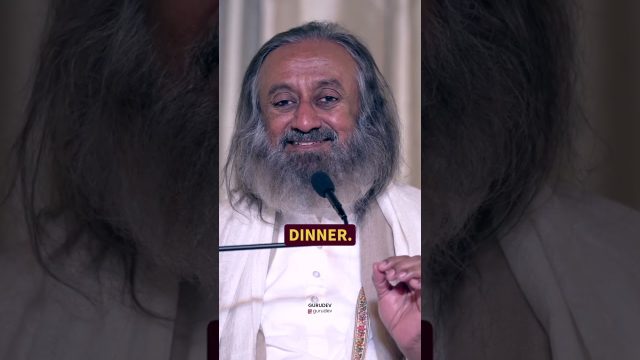
Eyes closed, body settling, a soft tone hanging in the room before any words arrive. In "It's Time to Slow Down," a guided meditation posted to the Meditations By Gurudev channel, Gurudev Sri Sri Ravi Shankar opens with a simple invitation: sit comfortably, easily, and take contentment as the theme of the sitting. Over roughly twenty-three minutes, the practice moves from breath to memory to sound to silence, asking the listener to stop chasing the next thing and simply notice what already has been good. It is a short, spare meditation, and its power lies in how little it asks of you and how precisely it sequences that request.

Lesen · 6 Abschnitte

What is this meditation actually asking you to do?

Most meditation instructions ask you to do something with attention: follow the breath, count, watch a sensation, repeat a phrase. This one is different. The opening instruction is to set the theme, and then to breathe and release. "Another deep breath in and let go," the voice says, twice, with the release built into the exhale rather than tacked on afterward. The repetition is deliberate. A breath that ends in letting go is a small rehearsal of the larger theme: you are not holding on to the day, the to-do list, or the sense that something is missing.

Then comes the central instruction, delivered at about the 31-second mark: "We can take today theme as contentment." Notice the word choice. Contentment is not framed as a goal to achieve, a state to earn, or a problem to fix. It is a theme to recollect. That distinction shapes everything that follows, because recollection looks backward into experience you have already had, while striving looks forward into experience you do not yet have.

Why begin with memory instead of a mantra?

The practice's most distinctive move arrives around the 79-second mark. The voice asks the listener to "just recollect those moments of contentment that you have had in your life." It then narrows the search: moments "when you have experienced pleasure and you're content." Gurudev's examples are concrete and sensory: "Good food you have eaten, you went around through all the five senses, whatever the moment of contentment, just recollect that."

This is worth slowing down on, because it is easy to skim past. Rather than asking you to imagine a peaceful state or to conjure a feeling from nothing, the meditation directs you toward the ordinary record of your own life. A meal that tasted right. A sound that settled you. A texture, a scent, a view. By moving through the five senses, the recollection stays physical and specific, which tends to make it more believable than an abstract affirmation. You are not telling yourself you are content. You are noticing evidence that you have been.

There is a practical logic here too. A mind that is agitated rarely responds well to being told to be calm. It responds better to being given a concrete thing to do. Recollection gives the restless mind a task that is pleasant rather than punishing, and it quietly reframes the sitting: the question is no longer "why can't I settle?" but "what in my life has already felt enough?"

How does the Om chant work inside the practice?

At about the 154-second mark the voice shifts from memory to sound: "Let us resolve the con moment of contentment with the sound Om." The transcript shows the chant returning several times, at roughly 160, 172, 186, and 204 seconds, each Om following the previous one with a little room between. The word "resolve" is doing quiet work here. The recollected moment is not simply thought about; it is brought down into the body and gathered into a single syllable.

Om is one of the most widely recognized sounds in Indian contemplative traditions, and in guided sittings it typically serves as a bridge. The mind has been working with images, memories, and sensations. The chant gives it a single, repeatable point, and the length of each exhale does the rest. Notice how the practice is built so that the chant is not a performance. It is a way of letting the recollected feeling settle into one sound and then letting that sound go.

Later, the closing chant of "Om Shanti Shanti Shanti," heard around the 1268-second mark, works the same way at the end of the sitting. Shanti means peace, and the threefold repetition closes the practice with a single word for the state the whole session has been pointing toward.

What does "let go of all your effort" mean in practice?

The most instructive line in the transcript may be the shortest. Around the 335-second mark, the voice says: "Let go of all your effort. Let the mind expand." It is easy to hear this as a throwaway cue, but it is actually the hinge of the meditation. Up to this point, there has been a lot of gentle doing: breathing, remembering, chanting. Here the instruction changes direction. You are asked to stop managing the sitting and let the attention widen.

For many people this is the hardest part of any meditation, because effort feels like diligence. We are trained to work at things, and sitting still can produce a quiet anxiety that says you should be doing more. The meditation addresses that directly. It does not ask you to become a better meditator. It asks you to stop pushing and see what the mind does when it is no longer being driven. The phrase "let the mind expand" describes a shift from focus, which narrows, to openness, which spreads out.

The transcript's spoken cues become sparse after this point. Between the cues at 526 seconds (a simple "Okay") and 770 seconds (a counted "4"), and again through the long stretch before the closing chant, the video appears to carry little or no narration. That is itself a design feature. A meditation that keeps talking would keep giving the mind something to do. Silence gives the expansion room to happen.

How should you bring yourself back after a session like this?

The ending is as deliberate as the beginning. Around the 1376-second mark, the voice says: "And slowly and gradually become aware of body and surrounding." Then, at about 1397 seconds: "Slowly you may open your eyes." The instruction to return gradually matters. Eyes that open too quickly can undo the settling a sitting has produced, and the meditation builds in a transition from interior attention back to the room.

If you try this practice at home, you can follow the same arc. Sit comfortably. Take a few breaths and let each one end in release. Choose the theme of contentment and recollect two or three moments from your own life, using the senses to make them specific. Chant Om slowly, letting each exhale complete the sound. Then stop directing the mind and let it widen. When you are ready, become aware of your body and the space around you before you open your eyes. The practice takes only as long as you give it, but the sequence is the point: breath, memory, sound, release, return.

One honest caveat: the transcript provided is a subsampled record, and the video's full runtime is nearly twenty-three and a half minutes. The spoken guidance here is concentrated in the opening and closing, with the middle largely silent. That matches how many guided sittings are structured, but readers should not expect a lecture. The teaching is in the instructions themselves.

Where to go from here

Start with the practice rather than with more reading about it. Set aside the full length if you can, and if you cannot, the opening recollection alone, followed by a few Oms and a gradual return, still carries the core of the meditation. Notice which sensory memory comes most easily and which one resists. That friction is often where the practice does its work.

If you want to go further, the video's description points to Gurudev's broader teachings, including a free download of The Art of Living app and a page for learning Sudarshan Kriya, a breathing technique the Art of Living describes as one of its core practices. Those resources extend the same underlying question this meditation begins with: what does it look like to slow down enough to notice that you already have something to be content about?
Kommentare

Gespräch wird geladen…

Transcript

[0:01] [music]

[0:06] Let sit comfortably, easily.

[0:31] We can take today theme as contentment.

[0:52] Another deep breath in

[0:57] and let go.

[1:00] Another deep breath in

[1:05] and let go.

[1:11] Eyes closed, body relaxed.

[1:19] Just recollect those moments of

[1:22] contentment that you have had in your

[1:24] life.

[2:00] Just recollect those moments when you

[2:03] have experienced pleasure and you're

[2:05] content.

[2:07] Good food you have eaten, you went

[2:10] around

[2:12] through all the five senses, whatever

[2:15] the moment of contentment,

[2:17] just recollect that

[2:20] and take a deep breath in and let go.

[2:34] Let us

[2:36] resolve the con moment of contentment

[2:40] with the sound Om.

[2:52] Om.

[3:06] Om.

[3:24] Om.

[5:35] >> Let go of all your effort.

[5:38] Let the mind expand.

[8:46] >> Okay.

[12:50] >> 4

[21:08] >> Om Shanti

[21:11] Shanti

[21:13] Shanti

[22:56] >> And slowly and gradually

[22:59] become aware of body and surrounding.

[23:17] Slowly you may open your eyes.

Meditations By Gurudev

Künstler:in

Watch more from Meditations By Gurudev on YouTube.

Themen erkunden
Contentment meditationGuided meditationOm chantingSlow downSri sri ravi shankar
Häufig gestellte Fragen

Häufig gestellte Fragen

Sit comfortably and take a few deep breaths, letting each exhale end in release. Recollect specific moments of contentment from your life, moving through the five senses such as a good meal, a pleasant sound, or a view. Chant Om slowly, then let the mind expand and become aware of your body before opening your eyes.

In this guided practice, Gurudev Sri Sri Ravi Shankar directs listeners to recall past experiences of pleasure and satisfaction rather than imagining a calm state. Anchoring the theme in concrete, sensory memories makes it feel grounded and believable. It also gives a restless mind a pleasant task to work with.

The guided sitting uses Om to gather the recollected feeling into a single repeatable sound, so the mind has one point to return to. The chant is paced with the breath and then allowed to fade into silence. A threefold 'Om Shanti Shanti Shanti' closes the session.

In this video, the instruction to 'let go of all your effort' and 'let the mind expand' marks a shift from actively managing the sitting to allowing attention to widen. It addresses the common pull to feel that a meditation must be worked at. The practice asks you to stop pushing and observe what happens when the mind is no longer driven.

The video runs about 23 minutes and 22 seconds. Its spoken guidance is concentrated at the beginning and end, with much of the middle largely silent. Listeners can follow the full length or use the opening recollection and closing chant on their own.

The video description identifies Gurudev Sri Sri Ravi Shankar as a humanitarian and spiritual leader who founded The Art of Living, a non-profit engaged in stress-management and service initiatives. The channel offers his guided meditations, and the description links to resources including Sudarshan Kriya instruction.

Das könnte dir auch gefallen

Alle anzeigen
Consistency in Meditation: The 45-Day Mandala Practice
Inspire

Consistency in Meditation: The 45-Day Mandala Practice

Skip breakfast if you skip meditation. This radical reframing treats meditation like mental hygiene—a non-negotiable daily anchor.…

3 min read
Meditation vs. Prayer: Why Silence Matters More
Inspire

Meditation vs. Prayer: Why Silence Matters More

Gurudev Sri Sri Ravi Shankar explains why meditation surpasses prayer as a path to divine connection, using silence instead of words.…

3 min read
The Heart Space Where All Is Welcome: A Guided Meditation
Inspire

The Heart Space Where All Is Welcome: A Guided Meditation

Tara Brach's guided meditation starts with a smile spreading across an open sky. Here is how its softening, expanding awareness and return t…

9 min read
Soften Every Muscle: Body Scan Meditation for Sleep
Inspire

Soften Every Muscle: Body Scan Meditation for Sleep

Chibs Okereke's head-to-toe body scan asks listeners to soften one muscle at a time. Here is how the breath, jaw, shoulders and back let go,…

9 min read
AlleDas könnte dir auch gefallen→

Setze deinen Weg fort

Mehr Weisheit und Zusammenkünfte aus dem BrightStar-Verzeichnis.

Mehr Artikel

Durchstöbere die ganze Bibliothek an Lehren, Interviews und Leitfäden.

Zu allen Artikeln →

Lehrer & Künstler

Entdecke die Linien, Musiker und Wegbegleiter der bewussten Welt.

Künstler erkunden →

Event finden

Kirtan, Retreats, Klangbäder, Atemarbeit, Festivals — bald in deiner Nähe.

Events ansehen →