BrightStar
BlogMeine Tickets
BlogMeine Tickets
Saved events
Hilfe & KontaktRegistrierenAnmelden
Events
  • Alle Events durchsuchen
  • Yoga
  • Meditation
  • Breathwork
  • Qigong
  • Heilige Musik
  • Weltmusik
  • Medicine Music
  • Klangheilung
  • Ecstatic Dance
  • Zeremonie
  • Pflanzenmedizin
  • Energieheilung
  • Satsang & Weisheit
  • Tantra
  • Retreats
  • Alle Kategorien →
Reiseziele
  • Bali
  • Sedona
  • Los Angeles
  • Costa Rica
  • Tulum
  • Byron Bay
  • San Francisco
  • Austin
  • New York
  • San Diego
  • Denver
  • Seattle
  • Portland
  • Miami
  • London
  • Maui
  • Boulder
  • Alle Städte →
Plattform
  • Für Veranstalter
  • Werde Teil der Bewegung
  • Sell Globally
  • Für Kreative
  • Für Teams
  • Für Autoren
  • Für Lehrer
  • Für Kirtan-Künstler
  • Für Studios
  • Für Festivals
  • Für Retreat-Zentren
  • Für gemeinnützige Organisationen
  • Markenbotschafter
  • Kostenloses Ticketing
  • Pro
  • Amplify
  • Das Ökosystem
Funktionen

Ticketverkauf und Checkout

  • Ticket categories
  • Assigned seating
  • Custom questions
  • Coupon codes
  • Smart pricing
  • Ticket sharing
  • Waitlist
  • Flexible refunds
  • Digital waivers
  • Tip jar
  • Donations and sliding scale
  • Embed widget
  • Mindful checkout
  • Recurring events
  • Private sessions
  • Online courses
  • Summits
  • Rooms and stays
  • Ticket scanner

Marketing und Wachstum

  • Abandoned cart recovery
  • Visitor recovery
  • Upsells and add-ons
  • Affiliate engine
  • Upsell affiliate network
  • Brand ambassador
  • Meta retargeting
  • Verified buyer network
  • Outbound email marketing
  • Email sequences
  • SMS and WhatsApp
  • Event upsell network
  • Direct mail campaigns
  • SEO engine
  • Syndication
  • Event sharing
  • Custom event pages
  • Artist profiles
  • Link in bio
  • Event blog
  • Blog newsletter

Zahlungen

  • Payments, powered by Stripe
  • Buy now, pay later
  • Apple Wallet
  • Multi currency

Daten und Betrieb

  • Team access
  • Message center
  • Reports
  • Analytics reporting
  • Performance reporting
  • Customer data
  • Integrations
  • Switch from another platform

KI

  • Assistant
  • AI FAQ assistant
  • Alle Funktionen →
Unternehmen
  • Über uns
  • Häufige Fragen
  • Kontakt
  • Blog
  • Glossar
  • Guides
  • Inspiration
  • Hilfe-Center
  • API-Dokumentation
  • Marken-Assets
  • Presse
  • Nutzungsbedingungen
  • Datenschutzrichtlinie

Events

  • Alle Events durchsuchen
  • Yoga
  • Meditation
  • Breathwork
  • Qigong
  • Heilige Musik
  • Weltmusik
  • Medicine Music

Reiseziele

  • Bali
  • Sedona
  • Los Angeles
  • Costa Rica
  • Tulum
  • Byron Bay
  • San Francisco
  • Austin

Plattform

  • Für Veranstalter
  • Werde Teil der Bewegung
  • Sell Globally
  • Für Kreative
  • Für Teams
  • Für Autoren
  • Für Lehrer
  • Für Kirtan-Künstler

Funktionen

  • Community-Netzwerk
  • Warenkorbabbruch-Wiederherstellung
  • Ticket-Kategorien
  • Wiederkehrende Veranstaltungen
  • Sitzplatzreservierung
  • Affiliate-System
  • Warteliste / Benachrichtigen
  • Alle Funktionen →

Unternehmen

  • Über uns
  • Häufige Fragen
  • Kontakt
  • Blog
  • Glossar
  • Guides
  • Nutzungsbedingungen
  • Datenschutzrichtlinie
Mehr lesen

Events

  • Klangheilung
  • Ecstatic Dance
  • Zeremonie
  • Pflanzenmedizin
  • Energieheilung
  • Satsang & Weisheit
  • Tantra
  • Retreats
  • Alle Kategorien →

Reiseziele

  • New York
  • San Diego
  • Denver
  • Seattle
  • Portland
  • Miami
  • London
  • Maui
  • Boulder
  • Alle Städte →

Plattform

  • Für Studios
  • Für Festivals
  • Für Retreat-Zentren
  • Für gemeinnützige Organisationen
  • Markenbotschafter
  • Kostenloses Ticketing
  • Pro
  • Amplify
  • Das Ökosystem

Unternehmen

  • Inspiration
  • Hilfe-Center
  • API-Dokumentation
  • Marken-Assets
  • Presse

Ticketverkauf und Checkout

  • Ticket categories
  • Assigned seating
  • Custom questions
  • Coupon codes
  • Smart pricing
  • Ticket sharing
  • Waitlist
  • Flexible refunds
  • Digital waivers
  • Tip jar
  • Donations and sliding scale
  • Embed widget
  • Mindful checkout
  • Recurring events
  • Private sessions
  • Online courses
  • Summits
  • Rooms and stays
  • Ticket scanner

Marketing und Wachstum

  • Abandoned cart recovery
  • Visitor recovery
  • Upsells and add-ons
  • Affiliate engine
  • Upsell affiliate network
  • Brand ambassador
  • Meta retargeting
  • Verified buyer network
  • Outbound email marketing
  • Email sequences
  • SMS and WhatsApp
  • Event upsell network
  • Direct mail campaigns
  • SEO engine
  • Syndication
  • Event sharing
  • Custom event pages
  • Artist profiles
  • Link in bio
  • Event blog
  • Blog newsletter

Zahlungen

  • Payments, powered by Stripe
  • Buy now, pay later
  • Apple Wallet
  • Multi currency

Daten und Betrieb

  • Team access
  • Message center
  • Reports
  • Analytics reporting
  • Performance reporting
  • Customer data
  • Integrations
  • Switch from another platform

KI

  • Assistant
  • AI FAQ assistant
Hol dir die App
Laden imApp StoreJetzt beiGoogle Play
© 2026 BrightStar. Alle Rechte vorbehalten. BrightStar Selection · Bildnachweise · Änderungsprotokoll ·
Inspiration

Compassionate Responsiveness as Default State

Jun 6, 2025
8 Min. Lesezeit

Von Be Here Now Network

Joseph Goldstein teaches that the goal of contemplative practice is the transformation of consciousness so that compassionate responsiveness becomes the default setting of our lives—not something we have to think about or manufacture, but our natural way of being. Working with the Satipatthana Sutta, Goldstein examines the dichotomy between skillful and unskillful actions, the role of subtle cruelty in our lives, the practice of empathy as a foundation for compassion, and how releasing anger by understanding the suffering behind it allows us to plant seeds of compassion for all beings. This shift is not about moral effort alone but about seeing things as they truly are through mindfulness.

Lesen · 8 Abschnitte

What is the actual goal of spiritual practice?

Goldstein frames the central aim of contemplative work not as a perpetual moral striving or achievement of some distant state, but as a fundamental transformation of consciousness. The practice is designed to make "compassionate responsiveness the default setting of our lives." This is a crucial distinction. Rather than approaching compassion as a voluntary action we must repeatedly choose, the work is to shift the operating system itself so that compassion flows naturally, effortlessly, as our baseline response to ourselves and others.

This transformation rests on developing what Goldstein calls clear understanding—particularly the ability to perceive the dichotomy between skillful and unskillful actions. Skillful action arises from generosity, compassion, and wisdom; unskillful action arises from greed, hatred, and delusion. By clearly seeing this distinction repeatedly, through mindfulness and reflection, practitioners begin to naturally gravitate toward skillful responses. The practice is not about feeling guilty into compliance or forcing ourselves to be good. It is about seeing clearly enough that compassion becomes the only rational choice.

How does cruelty operate both globally and within ourselves?

Goldstein addresses the "mass madness and destruction caused by cruelty" on both collective and personal scales. At the global level, cruelty manifests in war, oppression, and systemic harm. But he directs particular attention to the subtle, often unnoticed moments of cruelty that live within our own consciousness without our awareness. These might include harsh self-judgment, cutting comments to others made in passing, moments of indifference to another's suffering, or the cruelty embedded in attachment and grasping.

Many practitioners miss these quiet instances because they do not appear as dramatic harm. Yet they compound over time, shaping our habitual patterns and the quality of our relationships. Goldstein's teaching suggests that true transformation requires bringing mindfulness to these subtle moments—noticing when we are being unkind, when we are turning away, when we are operating from a contracted place rather than an open heart. This noticing is not meant to generate shame but to increase our awareness so we can make different choices.

What does it mean to keep the heart open amid suffering?

Goldstein names the spiritual and emotional challenge of maintaining an open heart in the face of immense suffering. This is not a romantic or naive optimism. It is the realistic acknowledgment that the world contains real pain—personal loss, injustice, ecological destruction, the suffering of countless beings. The tendency of the mind is to close down, to protect itself through denial, numbness, or turning away.

Yet the practice invites something different: the capacity to meet suffering with tenderness rather than contraction. Goldstein suggests that mindfulness itself—the gift of seeing things as they truly are—is the foundation for this. When we see clearly what is happening, without the distortion of denial or judgment, we are better able to respond with authentic compassion. The heart stays open not because we are ignoring the difficulty, but because we are fully acknowledging it while remaining connected to our capacity to care.

Why is empathy the foundational practice?

Goldstein positions empathy as "the essential first step toward compassionate action." Empathy is the capacity to understand and feel with another being—to recognize their experience as real and significant. Without empathy, we might perform acts that look compassionate on the surface but lack genuine understanding. We might help someone in a way that serves our ego or our sense of what they should want, rather than truly meeting them where they are.

Empathy requires cultivation. It means practicing what Goldstein calls "seeing things as they truly are"—perceiving the actual lived experience of another being rather than projecting our assumptions onto them. In meditation practice, this might involve directing loving-kindness and empathy toward ourselves first, then gradually expanding that circle to include others. As we become more familiar with our own suffering, our own fears and desires, we naturally become more able to recognize these same patterns in others. This recognition creates the soil in which genuine compassion can grow.

How does releasing anger relate to understanding suffering?

Goldstein teaches that anger, while a natural response to harm or injustice, often prevents us from accessing deeper compassion. Releasing anger does not mean condoning the harmful action or becoming passive in the face of injustice. Rather, it means opening ourselves to "the suffering behind it"—recognizing that cruelty typically arises from delusion, fear, or pain in the person acting harmfully.

This shift in perspective is profound. When we contact the suffering that drives unskillful behavior, our defensive stance softens. We might still need to set boundaries or take action to prevent harm, but we do so from a different place—not from righteous anger or a place of separation, but from a commitment to reducing suffering for all involved. This opens the possibility of what Goldstein calls "two paths of compassion": compassionate action, which addresses the external harm, and compassion as a motivation to awaken, which addresses the confusion and pain that generated the harm in the first place.

What is the role of intention in transforming consciousness?

Goldstein emphasizes the practice of "planting seeds of compassion for the benefit of all beings." This is not merely intellectual or aspirational. In Buddhist understanding, intention shapes consciousness. When we repeatedly set the intention to act with compassion, to understand suffering, and to serve the awakening of all beings, we are literally reshaping our neurological and spiritual patterns. Over time, these intentions become the default.

The practice might include formal meditation on loving-kindness, where we systematically direct compassionate wishes toward ourselves, loved ones, neutral people, difficult people, and all beings. It might include conscious reflection on our actions during the day, noting when we acted skillfully or unskillfully. It might include studying teachings that deepen our understanding of interconnection and suffering. Each of these practices, accumulated over time, shifts what we naturally reach for when faced with choice.

How does a heart free of ego naturally flow with compassion?

Goldstein points toward a compassion that arises "naturally flowing from a heart free of ego and self-reference." This suggests that much of our conditional compassion is still bound up with self-concern. We are kind to people who like us, or who might benefit us, or who reflect well on us. We withhold compassion from those who threaten our image or our security. This is compassion filtered through the self-protective mechanisms of the ego.

As practice deepens and we see through the illusion of a separate, permanent self, something shifts. Compassion becomes less a transaction and more a fundamental openness. We are compassionate not because it makes us look good or because we hope for reciprocation, but because the boundary between self and other has become more permeable. We recognize that the suffering of another is not separate from us. We see that all beings want to avoid suffering and move toward happiness, just as we do. From this seeing, compassion flows naturally—not as a moral obligation or an ideal to live up to, but as the spontaneous expression of a mind that understands interconnection.

Where to go from here

The teaching invites us to examine our own lives with honest curiosity: In what moments do we respond compassionately? In what moments do we contract or turn away? Where do we notice subtle cruelty—toward ourselves or others? Rather than judging these patterns, Goldstein's approach suggests bringing mindfulness to them, again and again, until we develop clear seeing about the difference between skillful and unskillful action.

For those interested in deeper study, Goldstein's full 48-part lecture series on the Satipatthana Sutta provides a detailed map of contemplative practice. The Sutta itself is available in various translations and offers a systematic approach to mindfulness that supports exactly this kind of consciousness transformation. And in daily life, the practice is simple: notice when you are about to act, pause, and ask yourself whether this action arises from openness and compassion, or from contraction and fear. Over time, as Goldstein teaches, that noticing itself becomes the catalyst for a fundamental shift in how we move through the world.
Kommentare

Gespräch wird geladen…

Themen erkunden
Compassionate actionConsciousness transformationMindfulness practiceLoving kindnessSkillful unskillful action
Häufig gestellte Fragen

Häufig gestellte Fragen

Goldstein teaches that repeated mindfulness practice and clear understanding of skillful versus unskillful actions gradually reshape your consciousness. Over time, as you see the difference between actions that arise from compassion and those that arise from greed or hatred, compassion naturally becomes your baseline response—not something you have to manufacture each time.

Empathy is the foundational step that allows genuine compassion to arise. Empathy means truly understanding and feeling with another being's experience, which creates the connection necessary for compassionate action. Without empathy, you might perform kind acts that don't actually meet the person where they are.

Goldstein teaches that releasing anger means opening yourself to the suffering behind the harmful action—recognizing that cruelty typically arises from delusion or pain. This shift allows you to take action to prevent harm while acting from compassion rather than defensive anger, which is far more effective.

In Buddhist teaching, intention shapes consciousness. Repeatedly setting the intention to act with compassion—through formal practice, reflection, or loving-kindness meditation—gradually rewires your patterns. Over time, these intentions become embedded in how you naturally respond.

When you begin to see through the illusion of a separate, permanent self, compassion becomes less conditional. Instead of being kind only to those who benefit you, compassion flows naturally because you recognize that all beings—including those you might dislike—share the same fundamental wish to avoid suffering and be happy.

Goldstein points out that quiet moments of unkindness—harsh self-judgment, cutting comments, indifference to others' pain—compound over time and shape our habitual patterns. Bringing mindfulness to these subtle moments allows you to notice them and make different choices, accelerating the transformation of consciousness.

The Satipatthana Sutta is one of the most celebrated discourses in the Pāli Canon and provides a systematic map of mindfulness practice. Goldstein teaches it because it directly supports the transformation of consciousness needed to make compassionate responsiveness your natural way of being.

Das könnte dir auch gefallen

Alle anzeigen
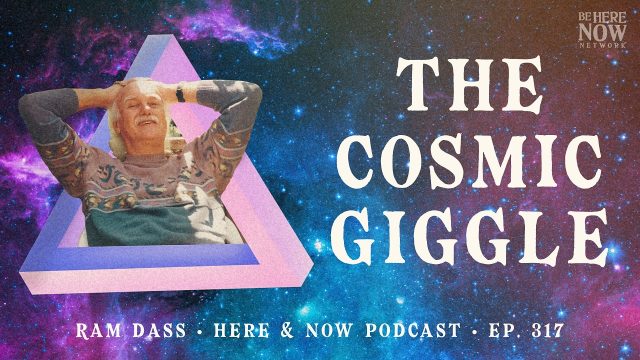
The Cosmic Giggle: Finding Joy Without Denying Suffering
Inspire

The Cosmic Giggle: Finding Joy Without Denying Suffering

Ram Dass explores how to hold both joy and sorrow simultaneously—and why laughter amid suffering isn't denial, but enlightenment itself.…

9 min read
Service as the Ray Into God: The Beloved Everywhere
Inspire

Service as the Ray Into God: The Beloved Everywhere

Ram Dass teaches that recognizing Spirit in all beings transforms service from obligation into the deepest form of love and the truest path …

6 min read
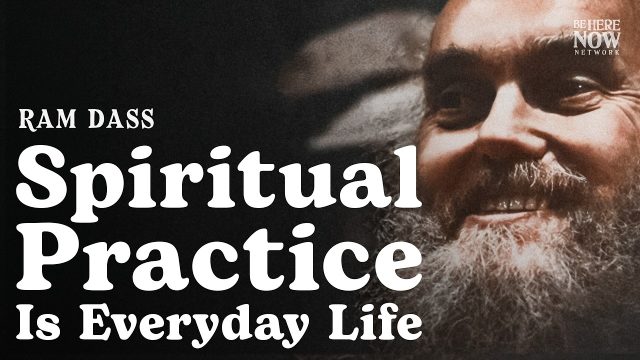
The Hardest Spiritual Practice: Living in Everyday Chaos
Inspire

The Hardest Spiritual Practice: Living in Everyday Chaos

Ram Dass explores why spiritual growth demands confronting desire in the world's hottest fires—not fleeing to sheltered ashrams.…

8 min read
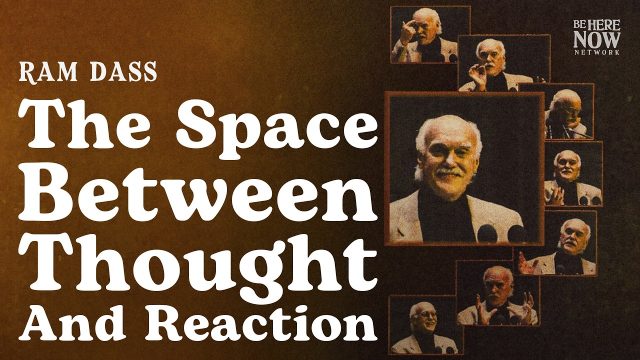
How to Move from Reaction to Response in Daily Life
Inspire

How to Move from Reaction to Response in Daily Life

Ram Dass reveals how cultivating inner space between stimulus and response transforms reactive patterns into conscious, healing actions—a pr…

8 min read
AlleDas könnte dir auch gefallen→

Setze deinen Weg fort

Mehr Weisheit und Zusammenkünfte aus dem BrightStar-Verzeichnis.

Mehr Artikel

Durchstöbere die ganze Bibliothek an Lehren, Interviews und Leitfäden.

Zu allen Artikeln →

Lehrer & Künstler

Entdecke die Linien, Musiker und Wegbegleiter der bewussten Welt.

Künstler erkunden →

Event finden

Kirtan, Retreats, Klangbäder, Atemarbeit, Festivals — bald in deiner Nähe.

Events ansehen →