BrightStar
BlogMeine Tickets
BlogMeine Tickets
Saved events
Hilfe & KontaktRegistrierenAnmelden
Events
  • Alle Events durchsuchen
  • Für Suchende
  • Yoga
  • Meditation
  • Breathwork
  • Qigong
  • Heilige Musik
  • Weltmusik
  • Medicine Music
  • Klangheilung
  • Ecstatic Dance
  • Zeremonie
  • Pflanzenmedizin
  • Energieheilung
  • Satsang & Weisheit
  • Tantra
  • Retreats
  • Alle Kategorien →
Reiseziele
  • Bali
  • Sedona
  • Los Angeles
  • Costa Rica
  • Tulum
  • Byron Bay
  • San Francisco
  • Austin
  • New York
  • San Diego
  • Seattle
  • Portland
  • Miami
  • London
  • Maui
  • Boulder
  • Oakland
  • Alle Städte →
Plattform
  • Event kostenlos eintragen
  • Autopilot
  • Werde Teil der Bewegung
  • Sell Globally
  • Für Kreative
  • Für Teams
  • Für Autoren
  • Für Lehrer
  • Für Kirtan-Künstler
  • Für Studios
  • Für Festivals
  • Für Retreat-Zentren
  • Für gemeinnützige Organisationen
  • Markenbotschafter
  • Kostenloses Ticketing
  • Elevate
  • Amplify
  • Das Ökosystem
Funktionen

Ticketverkauf und Checkout

  • Ticket categories
  • Assigned seating
  • Custom questions
  • Coupon codes
  • Smart pricing
  • Ticket sharing
  • Waitlist
  • Flexible refunds
  • Digital waivers
  • Tip jar
  • Donations and sliding scale
  • Embed widget
  • Mindful checkout
  • Recurring events
  • Private sessions
  • Online courses
  • Summits
  • Rooms and stays
  • Ticket scanner

Marketing und Wachstum

  • Abandoned cart recovery
  • Visitor recovery
  • Upsells and add-ons
  • Affiliate engine
  • Upsell affiliate network
  • Brand ambassador
  • Meta retargeting
  • Verified buyer network
  • Outbound email marketing
  • Email sequences
  • SMS and WhatsApp
  • Event upsell network
  • Direct mail campaigns
  • SEO engine
  • Syndication
  • Event sharing
  • Custom event pages
  • Artist profiles
  • Link in bio
  • Event blog
  • Blog newsletter

Zahlungen

  • Payments, powered by Stripe
  • Buy now, pay later
  • Apple Wallet
  • Multi currency

Daten und Betrieb

  • Team access
  • Message center
  • Reports
  • Analytics reporting
  • Performance reporting
  • Customer data
  • Integrations
  • Switch from another platform

KI

  • Maestro
  • AI FAQ assistant
  • Alle Funktionen →
Unternehmen
  • Über uns
  • Häufige Fragen
  • Kontakt
  • Blog
  • Glossar
  • Inspiration
  • Hilfe-Center
  • API-Dokumentation
  • Marken-Assets
  • Presse
  • Nutzungsbedingungen
  • Datenschutzrichtlinie

Events

  • Alle Events durchsuchen
  • Für Suchende
  • Yoga
  • Meditation
  • Breathwork
  • Qigong
  • Heilige Musik
  • Weltmusik

Reiseziele

  • Bali
  • Sedona
  • Los Angeles
  • Costa Rica
  • Tulum
  • Byron Bay
  • San Francisco
  • Austin

Plattform

  • Event kostenlos eintragen
  • Autopilot
  • Werde Teil der Bewegung
  • Sell Globally
  • Für Kreative
  • Für Teams
  • Für Autoren
  • Für Lehrer

Funktionen

  • Community-Netzwerk
  • Warenkorbabbruch-Wiederherstellung
  • Ticket-Kategorien
  • Wiederkehrende Veranstaltungen
  • Sitzplatzreservierung
  • Affiliate-System
  • Warteliste / Benachrichtigen
  • Alle Funktionen →

Unternehmen

  • Über uns
  • Häufige Fragen
  • Kontakt
  • Blog
  • Glossar
  • Inspiration
  • Nutzungsbedingungen
  • Datenschutzrichtlinie
Mehr lesen

Events

  • Medicine Music
  • Klangheilung
  • Ecstatic Dance
  • Zeremonie
  • Pflanzenmedizin
  • Energieheilung
  • Satsang & Weisheit
  • Tantra
  • Retreats
  • Alle Kategorien →

Reiseziele

  • New York
  • San Diego
  • Seattle
  • Portland
  • Miami
  • London
  • Maui
  • Boulder
  • Oakland
  • Alle Städte →

Plattform

  • Für Kirtan-Künstler
  • Für Studios
  • Für Festivals
  • Für Retreat-Zentren
  • Für gemeinnützige Organisationen
  • Markenbotschafter
  • Kostenloses Ticketing
  • Elevate
  • Amplify
  • Das Ökosystem

Unternehmen

  • Hilfe-Center
  • API-Dokumentation
  • Marken-Assets
  • Presse

Ticketverkauf und Checkout

  • Ticket categories
  • Assigned seating
  • Custom questions
  • Coupon codes
  • Smart pricing
  • Ticket sharing
  • Waitlist
  • Flexible refunds
  • Digital waivers
  • Tip jar
  • Donations and sliding scale
  • Embed widget
  • Mindful checkout
  • Recurring events
  • Private sessions
  • Online courses
  • Summits
  • Rooms and stays
  • Ticket scanner

Marketing und Wachstum

  • Abandoned cart recovery
  • Visitor recovery
  • Upsells and add-ons
  • Affiliate engine
  • Upsell affiliate network
  • Brand ambassador
  • Meta retargeting
  • Verified buyer network
  • Outbound email marketing
  • Email sequences
  • SMS and WhatsApp
  • Event upsell network
  • Direct mail campaigns
  • SEO engine
  • Syndication
  • Event sharing
  • Custom event pages
  • Artist profiles
  • Link in bio
  • Event blog
  • Blog newsletter

Zahlungen

  • Payments, powered by Stripe
  • Buy now, pay later
  • Apple Wallet
  • Multi currency

Daten und Betrieb

  • Team access
  • Message center
  • Reports
  • Analytics reporting
  • Performance reporting
  • Customer data
  • Integrations
  • Switch from another platform

KI

  • Maestro
  • AI FAQ assistant
Hol dir die App
Laden imApp StoreJetzt beiGoogle Play
© 2026 BrightStar. Alle Rechte vorbehalten. Bildnachweise ·
Inspiration

Chi Flow: Dynamic Movement Guided by Breath

Travis Eliot
Travis Eliot
Nov 12, 2026
6 Min. Lesezeit

Von Travis Eliot

Ansehen · 6

Chi flow is built on a simple but profound principle: let your breath choreograph the movement. This practice layers breath-work and dynamic sequencing into something that feels less like following instructions and more like being guided by an internal current. When you synchronize each transition—each reaching gesture, each fold, each pivot—with the inhale and exhale, the body enters a state of continuity. What might otherwise feel like a list of postures becomes a river.

Lesen · 7 Abschnitte

How the Breath Sets the Rhythm

The opening of this chi flow establishes the essential pattern immediately. As you inhale, the right hand reaches back and taps the outer left ankle—a subtle awakening of the lower body and the hip socket. That reach is not forced; it follows the breath. On the exhale, you return to the top of the mat, grounding the movement with intention. The inhale creates expansion; the exhale creates return. This call-and-response between breath and body is the heartbeat of chi flow.

The practice continues with this dialogic quality throughout. Left hand reaches back on the next inhale. Exhale brings you back to center. Then a bigger stretch: "Big inhale, stretch back, create a little bit more stretch," and on the exhale, "walk or spring, top of the mat." Notice the choice offered—walk or spring. Chi flow invites you to meet yourself where you are. Some days the breath feels spacious enough for a spring; other days a walk honors the body's honest rhythm. Either way, you are listening.

Building Heat and Momentum Through Standing Sequences

Once you've arrived at the top of the mat, the flow shifts into a more vigorous architecture. A flat back position—hips tilted forward, the spine long—invites an inhale that opens the heart and lengthens the entire front body. The exhale brings a forward fold, releasing the head and neck with the cue to simply "let it go." This toggle between extension and surrender repeats throughout the practice, training the nervous system to cycle between effort and ease.

What follows is a series of arm sequences that move chi downward through the body with what the instruction calls "present mind." The right arm sweeps up on the inhale, then crosses over and down on the exhale. The left arm mirrors this. These movements are not arbitrary; they engage the intercostal muscles, mobilize the shoulder girdle, and create a subtle internal massage that moves stagnant energy. By the third cycle, both hands draw upward together, the palms rotate, and the arms reach all the way overhead—a moment of full extension and gathering before the next transition.

The Swan Dive Into Lower-Body Work

The swan dive—that graceful descent from arms overhead to a forward fold—marks a turning point in the sequence. It is an elegant name for what is essentially a momentum shift from vertical extension into horizontal work. The inhale reaches the spine long in a flat-back position, and the exhale steps or springs the feet back to plank pose. This moment asks something different of the body: weight-bearing, core engagement, the foundation of an entirely new phase.

What begins as a plank then unfolds into a series of alternating lunges. Right foot bends in on the inhale; on the exhale, the body lowers (slowly, with control). The left foot mirrors the movement. This alternating pattern warms the hip flexors, strengthens the legs, and continues the dialogue between breath and body that has been established. Each repetition is not punishment or quota; it is simply the next natural progression of chi moving through the body.

Closing the Cycle: From Strength Back to Softness

The sequence concludes with a brief visit to cobra pose—"sweet back massage," as the instruction tenderly names it—and then exhales into downward-facing dog. The dog pose is itself a full-body reset: a moment of inversion, of decompression, of returning to the breath. It is both ending and new beginning, which is the nature of any true flow.

What makes this chi flow work is not the complexity of the poses but the coherence of the breath underneath. Each transition is small enough to feel manageable, yet the cumulative effect is comprehensive. Ankles wake up. The spine lengthens and folds. The arms carve energy through space. The legs build heat. The nervous system learns, again, that movement and stillness are not opposites but partners in the same rhythm.

Why Softness in Transition Matters

The original instruction includes a seemingly casual detail: "soften into the transitions." This is not a minor note. Many practitioners move from one pose to the next with a kind of mechanical efficiency, as if the pose itself is the prize and the journey between poses is merely administrative. But chi flow asks something different. The transition—the moment of stepping back, the descent of the arms, the fold forward—is where the actual flow lives. To soften into it is to let the body release any armoring or bracing and instead become a channel for the chi itself.

This softness does not mean collapse or passivity. It means meeting effort with a kind of ease, the way water moves. It means that even as your legs build strength in a lunge, your shoulders can drop away from the ears. Even as your core engages in plank, your breath can remain full and round. Softness and strength are not in conflict; they are the two wings of the same bird.

Bringing Chi Flow Into Your Own Practice

The beauty of a short chi flow like this one is that it asks very little and offers very much. You do not need a perfect understanding of anatomy or a background in yoga philosophy to benefit. You simply need to show up, to let your breath guide the rhythm, and to trust the intelligence of your own body as it moves. Some days the practice will feel energizing and mobile. Other days it will feel grounding and calming. The same sequence, breathed differently, becomes a different medicine.

Save this flow for those moments when you need to move but do not want to overthink the movement. Use it as a warm-up before a longer practice. Use it as a standalone offering to yourself on a morning when time is short or energy is scattered. Use it as a reminder that the body is never static and that chi—that animating life force—is always moving through you, waiting only for your breath to orchestrate its journey.

Where to go from here

This chi flow is designed as a standalone practice, but it also serves as an introduction to larger movement sequences. If you find yourself drawn to this style of breath-synchronized flow, consider exploring longer vinyasa practices or chi kung sequences that build on these same principles. Inner Dimension Yoga offers extended practices that develop these movements further. The key is consistency: return to this or similar sequences regularly, and notice how your relationship to your own body's wisdom deepens. Chi flow is ultimately a conversation between you and your own animating life force—and like any conversation, it grows richer with practice.

Kommentare

Gespräch wird geladen…

Transcript

[0:00] Right hand reaches back, tap the outer

[0:02] left ankle, inhale.

[0:04] Top of the mat, exhale.

[0:07] Other side, inhale left hand reaches

[0:09] back.

[0:10] Exhale, top of the mat.

[0:13] Big inhale, stretch back, create a

[0:15] little bit more stretch.

[0:17] And then exhale, walk or spring, top of

[0:20] the mat.

[0:21] Flat back, inhale, heart out.

[0:25] Forward fold, exhale, let it go.

[0:28] Inhale, sweep those arms all the way up

[0:31] to the sky.

[0:33] And then move that chi down on the

[0:35] exhale with that present mind.

[0:38] Right arm up on the inhale.

[0:42] Over and down, exhale.

[0:46] Left arm up on the inhale.

[0:49] Cross it over and down, exhale.

[0:53] One big inhale, draw all the hands up,

[0:55] rotate the hands, reach all the way up.

[0:59] And then exhales, swan dive.

[1:04] Flat back, inhale, reach out long. And

[1:07] then step back to plank pose, lower

[1:09] down.

[1:11] Right foot bends in, inhale.

[1:15] Down slow, exhale.

[1:18] Other side, inhale left foot bends.

[1:21] Exhale, lower down.

[1:24] Cobra, inhale, sweet back massage.

[1:28] Exhale, you got it, downward facing dog.

Travis Eliot

Travis Eliot

Künstler:in

Travis Eliot is a Los Angeles yoga and meditation teacher, kirtan musician and author, creator of Holistic Yoga Flow and co-founder of Inner Dimension, who teaches workshops and retreats worldwide.

Profil ansehen
Themen erkunden
Chi flowBreath workYoga movementDynamic flowBody awareness
Häufig gestellte Fragen

Häufig gestellte Fragen

Chi flow is a movement practice that synchronizes dynamic postures with breath to create a continuous, meditative sequence. Rather than holding static poses, chi flow emphasizes smooth transitions guided by inhalation and exhalation, allowing energy (chi) to move freely through the body while building mobility and body awareness.

In chi flow, each inhalation cues an expanding or lengthening movement, while each exhalation guides a folding, grounding, or weight-bearing action. This creates a natural rhythm where the breath becomes the metronome, eliminating the need to count or force transitions.

Yes. Chi flow is accessible to all levels because the emphasis is on softening into transitions and listening to your breath rather than achieving perfect form. You can walk instead of spring, move slowly instead of fluidly, and still honor the essential principle of breath-synchronized movement.

Chi flow loosens the whole body, mobilizes joints (particularly ankles, hips, and shoulders), builds gentle leg strength, activates core muscles, and improves spinal mobility. Regular practice also enhances body awareness and proprioception while calming the nervous system.

Chi flow can be practiced for as little as 1-2 minutes as a warm-up or standalone practice, or extended into longer 15-30 minute sequences. Even a brief chi flow provides meaningful benefits when breath and movement are synchronized with presence.

While both vinyasa and chi flow link breath to movement, vinyasa typically follows a more structured sequence of poses, whereas chi flow emphasizes fluid, continuous transitions with emphasis on internal energy movement and softness rather than holding poses.

Das könnte dir auch gefallen

Alle anzeigen
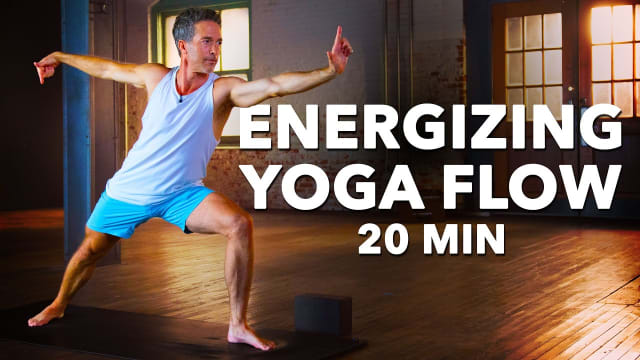
Energizing Power Yoga Flow: Build Strength & Vitality
Inspire

Energizing Power Yoga Flow: Build Strength & Vitality

A dynamic 20-minute all-levels yoga practice that links breath, body, and mind to awaken energy, strength, and focus through deliberate flow…

8 min read
15-Minute Daily Yoga Flow: How a Full-Body Practice Is Built
Inspire

15-Minute Daily Yoga Flow: How a Full-Body Practice Is Built

Travis Eliot's 15-minute daily flow packs side bends, warriors, backbends, and a yogi squat into one breath-metered loop. Here's how the seq…

7 min read
Kirtan Deepens: NYC Urban Retreat Explores Chant Practice
Inspire

Kirtan Deepens: NYC Urban Retreat Explores Chant Practice

An immersive weekend of live-streamed kirtan and dharma teaching from Krishna Das, the Kirtan Wallah Foundation, and guest artists—freely of…

6 min read
Sacred Feminine Power: Chanting Devi Beyond the Mat
Inspire

Sacred Feminine Power: Chanting Devi Beyond the Mat

An in-person gathering in Bengaluru merges ancient devotional chanting with modern psychotherapy to explore how the Goddess archetype illumi…

8 min read
AlleDas könnte dir auch gefallen→

Setze deinen Weg fort

Mehr Weisheit und Zusammenkünfte aus dem BrightStar-Verzeichnis.

Mehr Artikel

Durchstöbere die ganze Bibliothek an Lehren, Interviews und Leitfäden.

Zu allen Artikeln →

Lehrer & Künstler

Entdecke die Linien, Musiker und Wegbegleiter der bewussten Welt.

Künstler erkunden →

Event finden

Kirtan, Retreats, Klangbäder, Atemarbeit, Festivals — bald in deiner Nähe.

Events ansehen →