BrightStar
BlogMeine Tickets
BlogMeine Tickets
Saved events
Hilfe & KontaktRegistrierenAnmelden
Events
  • Alle Events durchsuchen
  • Yoga
  • Meditation
  • Breathwork
  • Qigong
  • Heilige Musik
  • Weltmusik
  • Medicine Music
  • Klangheilung
  • Ecstatic Dance
  • Zeremonie
  • Pflanzenmedizin
  • Energieheilung
  • Satsang & Weisheit
  • Tantra
  • Retreats
  • Alle Kategorien →
Reiseziele
  • Bali
  • Sedona
  • Los Angeles
  • Costa Rica
  • Tulum
  • Byron Bay
  • San Francisco
  • Austin
  • New York
  • San Diego
  • Denver
  • Seattle
  • Portland
  • Miami
  • London
  • Maui
  • Boulder
  • Alle Städte →
Plattform
  • Für Veranstalter
  • Werde Teil der Bewegung
  • Sell Globally
  • Für Kreative
  • Für Teams
  • Für Autoren
  • Für Lehrer
  • Für Kirtan-Künstler
  • Für Studios
  • Für Festivals
  • Für Retreat-Zentren
  • Für gemeinnützige Organisationen
  • Markenbotschafter
  • Kostenloses Ticketing
  • Pro
  • Amplify
  • Das Ökosystem
Funktionen

Ticketverkauf und Checkout

  • Ticket categories
  • Assigned seating
  • Custom questions
  • Coupon codes
  • Smart pricing
  • Ticket sharing
  • Waitlist
  • Flexible refunds
  • Digital waivers
  • Tip jar
  • Donations and sliding scale
  • Embed widget
  • Mindful checkout
  • Recurring events
  • Private sessions
  • Online courses
  • Summits
  • Rooms and stays
  • Ticket scanner

Marketing und Wachstum

  • Abandoned cart recovery
  • Visitor recovery
  • Upsells and add-ons
  • Affiliate engine
  • Upsell affiliate network
  • Brand ambassador
  • Meta retargeting
  • Verified buyer network
  • Outbound email marketing
  • Email sequences
  • SMS and WhatsApp
  • Event upsell network
  • Direct mail campaigns
  • SEO engine
  • Syndication
  • Event sharing
  • Custom event pages
  • Artist profiles
  • Link in bio
  • Event blog
  • Blog newsletter

Zahlungen

  • Payments, powered by Stripe
  • Buy now, pay later
  • Apple Wallet
  • Multi currency

Daten und Betrieb

  • Team access
  • Message center
  • Reports
  • Analytics reporting
  • Performance reporting
  • Customer data
  • Integrations
  • Switch from another platform

KI

  • Assistant
  • AI FAQ assistant
  • Alle Funktionen →
Unternehmen
  • Über uns
  • Häufige Fragen
  • Kontakt
  • Blog
  • Glossar
  • Guides
  • Inspiration
  • Hilfe-Center
  • API-Dokumentation
  • Marken-Assets
  • Presse
  • Nutzungsbedingungen
  • Datenschutzrichtlinie

Events

  • Alle Events durchsuchen
  • Yoga
  • Meditation
  • Breathwork
  • Qigong
  • Heilige Musik
  • Weltmusik
  • Medicine Music

Reiseziele

  • Bali
  • Sedona
  • Los Angeles
  • Costa Rica
  • Tulum
  • Byron Bay
  • San Francisco
  • Austin

Plattform

  • Für Veranstalter
  • Werde Teil der Bewegung
  • Sell Globally
  • Für Kreative
  • Für Teams
  • Für Autoren
  • Für Lehrer
  • Für Kirtan-Künstler

Funktionen

  • Community-Netzwerk
  • Warenkorbabbruch-Wiederherstellung
  • Ticket-Kategorien
  • Wiederkehrende Veranstaltungen
  • Sitzplatzreservierung
  • Affiliate-System
  • Warteliste / Benachrichtigen
  • Alle Funktionen →

Unternehmen

  • Über uns
  • Häufige Fragen
  • Kontakt
  • Blog
  • Glossar
  • Guides
  • Nutzungsbedingungen
  • Datenschutzrichtlinie
Mehr lesen

Events

  • Klangheilung
  • Ecstatic Dance
  • Zeremonie
  • Pflanzenmedizin
  • Energieheilung
  • Satsang & Weisheit
  • Tantra
  • Retreats
  • Alle Kategorien →

Reiseziele

  • New York
  • San Diego
  • Denver
  • Seattle
  • Portland
  • Miami
  • London
  • Maui
  • Boulder
  • Alle Städte →

Plattform

  • Für Studios
  • Für Festivals
  • Für Retreat-Zentren
  • Für gemeinnützige Organisationen
  • Markenbotschafter
  • Kostenloses Ticketing
  • Pro
  • Amplify
  • Das Ökosystem

Unternehmen

  • Inspiration
  • Hilfe-Center
  • API-Dokumentation
  • Marken-Assets
  • Presse

Ticketverkauf und Checkout

  • Ticket categories
  • Assigned seating
  • Custom questions
  • Coupon codes
  • Smart pricing
  • Ticket sharing
  • Waitlist
  • Flexible refunds
  • Digital waivers
  • Tip jar
  • Donations and sliding scale
  • Embed widget
  • Mindful checkout
  • Recurring events
  • Private sessions
  • Online courses
  • Summits
  • Rooms and stays
  • Ticket scanner

Marketing und Wachstum

  • Abandoned cart recovery
  • Visitor recovery
  • Upsells and add-ons
  • Affiliate engine
  • Upsell affiliate network
  • Brand ambassador
  • Meta retargeting
  • Verified buyer network
  • Outbound email marketing
  • Email sequences
  • SMS and WhatsApp
  • Event upsell network
  • Direct mail campaigns
  • SEO engine
  • Syndication
  • Event sharing
  • Custom event pages
  • Artist profiles
  • Link in bio
  • Event blog
  • Blog newsletter

Zahlungen

  • Payments, powered by Stripe
  • Buy now, pay later
  • Apple Wallet
  • Multi currency

Daten und Betrieb

  • Team access
  • Message center
  • Reports
  • Analytics reporting
  • Performance reporting
  • Customer data
  • Integrations
  • Switch from another platform

KI

  • Assistant
  • AI FAQ assistant
Hol dir die App
Laden imApp StoreJetzt beiGoogle Play
© 2026 BrightStar. Alle Rechte vorbehalten. BrightStar Selection · Bildnachweise · Änderungsprotokoll ·
Inspiration

Ancient Qigong Practice for Healing and Longevity

Daisy Lee
Daisy Lee
Mar 19, 2012
6 Min. Lesezeit

Von Daisy Lee

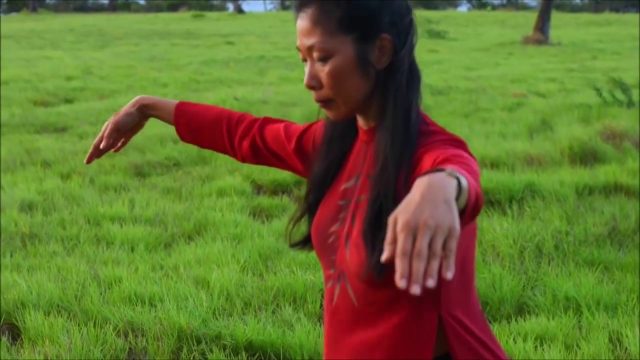
In the mountains of Steamboat Springs, Colorado, two instructors demonstrate movements so fluid they seem to float—graceful sweeps of the arms, shifts of weight so subtle they appear effortless. This is Qigong, pronounced "chee gung," an ancient Chinese practice that has survived five millennia by quietly proving itself through the bodies and longevity of those who dedicate themselves to it.

Qigong is fundamentally a self-healing art rooted in the principle that the human body possesses the capacity to restore and maintain its own health when the vital energy—or "qi"—flows unobstructed. Unlike many wellness practices that arrived in the West bearing the weight of marketing claims, Qigong carries something more durable: a historical record. In China, where the practice originated and flourished across dynasties, elderly masters who have trained for decades become living evidence of its efficacy. Their vitality—their strength, flexibility, mental sharpness, and the absence of the degenerative patterns common in aging populations—speaks to something consistent about the system.

Lesen · 6 Abschnitte

What Makes Qigong Different From Other Movement Practices?

Qigong is not primarily about performance or athletic achievement. It is not yoga's marriage of asana and philosophy, nor is it martial arts' expression through combat. Instead, Qigong sits at the intersection of movement, breath, and intention—each element deliberately choreographed to circulate qi through the body's meridian pathways. The practice assumes that health is not something to be pursued externally but rather accessed internally through the restoration of proper energy flow.

The movements, as demonstrated by instructors Daisy Lee and Brian Seraiah Wood at Humble Ranch, embody a philosophy expressed through the body. Each gesture is economical; nothing is wasted. The transitions between positions are smooth, the weight shifts gradual. This is not exercise in the Western sense—not repetitions aimed at muscular hypertrophy or cardiovascular stress—but rather a systematic cultivation of inner balance and the unobstructed movement of life force through the organism.

How Does Qigong Work in the Body?

Modern science has begun to measure what Chinese medicine understood for centuries. Qigong practice is scientifically proven to boost immunity, increase mental alertness, improve oxygen and blood flow, and enhance inner peace and well-being. These benefits arrive not from forcing the body into positions or straining against resistance, but from the opposite: from releasing tension, coordinating breath with movement, and allowing the nervous system to shift from sympathetic (fight-or-flight) dominance into parasympathetic rest-and-digest regulation.

The meridian system—the network of pathways through which qi is said to flow—may be understood through contemporary anatomy as the fascia, the connective tissue that interpenetrates every structure in the body. When the fascia is tense, dehydrated, and restricted, sensation diminishes and disease accumulates. Qigong practice, by combining gentle movement with focused attention and coordinated breathing, rehydrates the connective tissue, restores range of motion, and awakens proprioceptive awareness. The result is not mystical but neurophysiological: a nervous system that has returned to its default state of ease.

Why Has Qigong Remained Unchanged for Millennia?

Durability is itself evidence. A practice does not survive five thousand years because it feels good in the moment—it survives because it produces measurable results that practitioners can feel, teach to others, and verify across generations. The fact that China's elderly Qigong masters are not exceptions but the natural output of the system suggests something about its alignment with human physiology that transcends cultural context or philosophical framework.

The movements themselves are economical enough to be learned quickly and simple enough to be practiced daily, yet subtle enough that decades of dedicated practice can yield ever-deeper layers of refinement. A person can begin at any age, in any condition, and find benefit. An athlete can practice and recover better. An elderly person can maintain mobility and mental clarity. Someone recovering from illness can gently restore function. The practice meets people where they are.

What Is the Experience of Practicing Qigong?

Practitioners often describe a sensation of internal movement—of energy circulating, of blockages clearing. Newcomers may feel warmth, tingling, or a sense of aliveness in parts of the body where sensation had dimmed. Over time, regular practice produces a baseline shift: the ability to remain calm under stress, the resilience to recover quickly from illness, improved sleep, heightened mental clarity. These are not subjective fantasies; they are measurable outcomes, documented now by research institutions studying Qigong's effects on immune function, blood pressure, cortisol levels, and brain activity.

The movements themselves are a form of meditation. Unlike sitting meditation, which requires the mind to observe its own thinking, Qigong moving meditation gives the mind something to attend to—the coordination of breath and movement, the sensations arising in the body, the intention of circulating energy. For people who find sitting still difficult or who benefit from the anchoring effect of the body in motion, Qigong offers a gateway into the meditative state.

Where Does Qigong Fit in Modern Wellness?

The current wellness landscape is crowded with practices claiming ancient lineages and modern scientific validation. What distinguishes Qigong is not novelty but maturity. The system has been refined through five thousand years of direct observation and practical feedback. Chinese medicine doctors prescribed Qigong to prevent and heal specific ailments long before clinical trials existed to measure its effects. The fact that contemporary research is now catching up—proving what practitioners already knew—is not a triumph of Qigong over skepticism but rather the alignment of science with an ancient empirical tradition.

Demonstrations like the one filmed at Humble Ranch serve an important function: they make Qigong visible to those who have never encountered it. Seeing the movements performed by experienced practitioners reveals something that description cannot convey—the economy of motion, the grace, the sense that something profound is happening even though nothing dramatic appears to be occurring. The body recognizes efficiency and elegance.

Where to go from here

If Qigong resonates with you, the entry point is simple: find a qualified instructor in your area or online, and begin with a basic routine. Start with ten or fifteen minutes daily. Pay attention to what you feel—not what you think you should feel, but what actually arises. The nervous system will respond. Breath will deepen. Tension will dissolve. Over weeks and months, you may notice sleep improving, energy stabilizing, mental clarity sharpening. You will begin to understand, through your own direct experience, why this practice has endured. You will become part of a five-thousand-year lineage of people who discovered that health is not something to be conquered from outside but rather something to be cultivated from within.

]]>
Kommentare

Gespräch wird geladen…

Daisy Lee

Daisy Lee

Künstler:in

A Qigong teacher and practitioner who blends traditional Chinese teachings with modern insights to cultivate inner peace, vitality, and holistic wellness across the globe.

Profil ansehen
Themen erkunden
QigongChinese medicineSelf healingEnergy workLongevity
Häufig gestellte Fragen

Häufig gestellte Fragen

Qigong (pronounced 'chee gung') is an ancient Chinese self-healing art estimated to be 5,000 years old. It combines gentle movement, controlled breathing, and focused intention to cultivate and circulate vital energy (qi) throughout the body's meridian pathways.

Scientific research has demonstrated that Qigong boosts immunity, increases mental alertness, improves oxygen and blood flow, and enhances inner peace and overall well-being. Regular practitioners often experience improved sleep, stress resilience, and better recovery from illness.

While all three are movement-based practices, Qigong specifically focuses on the cultivation and circulation of vital energy (qi) through the body's meridians. It emphasizes economy of motion and the coordination of breath with subtle movements rather than athletic performance or combat application.

Yes. Qigong is designed to meet people where they are, making it accessible to beginners, elderly practitioners, athletes, and those recovering from illness. The movements can be modified for any ability level and yield benefits at any stage of practice.

Many practitioners report noticing changes within weeks of regular practice—improved sleep, reduced stress, and heightened awareness. However, Qigong is designed as a lifelong practice; deeper benefits and greater refinement continue to develop over months and years of dedication.

The longevity and vitality of elderly Qigong masters suggests the practice's profound alignment with human physiology. Five thousand years of refined observation and practical feedback have created a system that consistently produces measurable results in strength, flexibility, mental clarity, and disease resistance.

Das könnte dir auch gefallen

Alle anzeigen
Vertical Alignment and Showering Qi: A Qigong Practice
Inspire

Vertical Alignment and Showering Qi: A Qigong Practice

Daisy Lee guides two movements from her Radiant Lotus Qigong path, filmed by the ocean in Playa Ella, Puerto Rico. Here is how Vertical Alig…

8 min read
Daily Qigong Practice on Kaua'i: A Beach Session Explained
Inspire

Daily Qigong Practice on Kaua'i: A Beach Session Explained

A short 2009 video shows international qigong instructor Daisy Lee practicing on Kealia Beach, Kaua'i. Here is what a daily outdoor qigong s…

5 min read
Kirtan as Sacred Thirst: A Closing Ceremony with Krishna Das
Inspire

Kirtan as Sacred Thirst: A Closing Ceremony with Krishna Das

Krishna Das closes NYC's annual kirtan weekend with a final ceremony of devotional chanting, blending musical innovation with timeless Hindu…

6 min read
Direct Recognition of Pure Being Beyond Mind
Inspire

Direct Recognition of Pure Being Beyond Mind

A guide to recognizing the unchanging witness beneath thought. This satsang shows how to find the stability that observes all mental activit…

9 min read
AlleDas könnte dir auch gefallen→

Setze deinen Weg fort

Mehr Weisheit und Zusammenkünfte aus dem BrightStar-Verzeichnis.

Mehr Artikel

Durchstöbere die ganze Bibliothek an Lehren, Interviews und Leitfäden.

Zu allen Artikeln →

Lehrer & Künstler

Entdecke die Linien, Musiker und Wegbegleiter der bewussten Welt.

Künstler erkunden →

Event finden

Kirtan, Retreats, Klangbäder, Atemarbeit, Festivals — bald in deiner Nähe.

Events ansehen →