Transcript
[0:03] [music]
[0:04] Welcome to your hips stretchy gooey
[0:08] practice. I am Cat Muffin, founder of
[0:10] the Soul Sanctuary app and this is just
[0:12] going to make us and our hips feel
[0:14] incredible today. Now, I just want to
[0:16] let you know very importantly that we
[0:19] have an amazing Black Friday offer on my
[0:21] app. It is 50% off for your annual
[0:23] membership. So, I recommend you getting
[0:25] there. It's only available, this offer
[0:27] is only available this weekend. I'm
[0:29] going to leave all the information in
[0:31] the description box, so check it out
[0:33] afterwards and come and join me for 50%
[0:35] off your first year of Soul Section
[0:37] membership. But right now, we're get
[0:39] going to get on into this. So, get
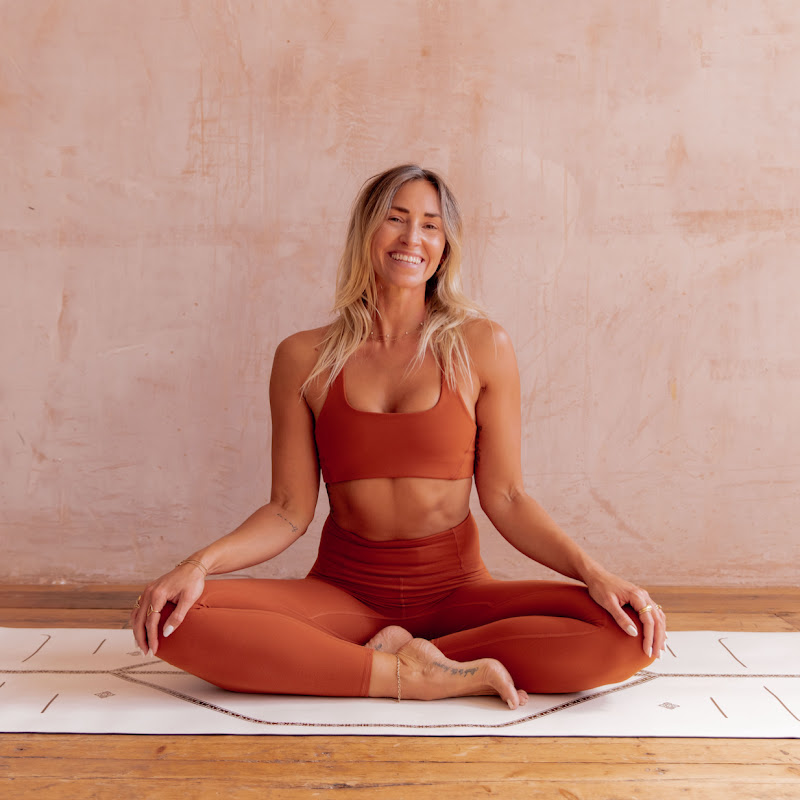
[0:41] yourself into a comfortable seated
[0:43] position. You could sit yourself up on a
[0:45] block or a bolster if you wanted to.
[0:47] You're just going to find a comfortable
[0:48] cross-legg position. Or if that isn't
[0:50] comfortable, you could just come to a
[0:52] kneeling position so we can get started
[0:54] and ground. So, closing down the eyes
[0:56] and rolling the shoulders back a couple
[0:58] of times.
[1:01] Can you just visualize your bottom
[1:03] grounding down into your mat as the
[1:06] crown of the head reaches up towards the
[1:09] sky? And maybe you can even visualize
[1:12] this thread going all the way from the
[1:14] root up to the crown and it's just
[1:16] elongating, pulling you taller. Not to
[1:19] the point where you're kind of having to
[1:21] hold your breath and you're straining to
[1:23] be tall, but just to the point that
[1:25] maybe your emotion shifts with the
[1:30] change of the body position
[1:32] because so often our body language has a
[1:35] direct effect on how we're feeling. So
[1:37] if we do roll those shoulders back and
[1:39] puff the chest slightly, sometimes we do
[1:41] feel a little bit more courageous, a
[1:44] little bit more confident, and a little
[1:45] bit brighter.
[1:48] So settling into your breath here. Just
[1:50] noticing gentle inhales and exhales
[1:53] through the nose
[1:57] and set an intention for our practice
[1:59] today. Something you would like to offer
[2:00] to the space.
[2:04] We'll be working the whole way around
[2:07] the hip space. So, not just opening in
[2:10] terms of having the legs wide in
[2:12] straddle positions or goddesses, but
[2:14] also the closed hip, the internal
[2:17] rotation as well.
[2:20] Let's take a nice big releasing breath
[2:22] here together. Inhale through the nose.
[2:26] Soften the jaw. Release it through the
[2:28] mouth.
[2:30] One more like that. Breathing in.
[2:35] Soften and release.
[2:37] >> [sighs]
[2:37] >> Ah,
[2:42] and just take a final few moments here
[2:44] to ground, to arrive.
[2:51] You can flutter open the eyes, finding a
[2:53] soft gaze down in front of you. If
[2:56] you're sat up on any blocks or bolsters,
[2:58] if you're on a block, you could stay on
[2:59] it. If you're on a bolster, you're going
[3:01] to come down to the ground. We're going
[3:02] to shift the legs into this baticana
[3:05] position. Now you can support yourself
[3:07] with fingertips down to the ground if
[3:09] you want to just see how this feels or
[3:11] you can bring the hands behind interlace
[3:14] behind the head and we're going to draw
[3:16] the knees up together. So hip flexors
[3:18] getting a little bit of work here and
[3:20] then exhale them bringing them down and
[3:22] the feet as naturally will come apart
[3:23] here. So bring them up feet ground and
[3:27] down. Two more like that. Doesn't matter
[3:29] how far you go here or how big the
[3:31] movement is. Just seeing how this feels.
[3:37] Nice. Let's do one more.
[3:40] And then keeping them open, release the
[3:43] hands. Bring the hands to the ankles.
[3:45] And then just draw the feet together
[3:47] again. And can you bring the heels a
[3:49] little bit closer to you? And it's
[3:50] almost like you press into the ankles
[3:52] and wiggle the chest through and the
[3:55] crown of the head reaches even higher.
[3:59] And then we're going to start to walk
[4:01] the hands forwards. Again, it doesn't
[4:02] matter how far they go. Obviously, we're
[4:05] right at the beginning of this practice.
[4:07] Everyone's going to be feeling a little
[4:08] differently depending on if it's morning
[4:11] or evening, middle of the day, or what
[4:12] you've done. So, just checking in with
[4:15] yourself as always in every practice,
[4:18] asking what is it that my body needs
[4:20] right now. Is it to fold a little
[4:23] deeper? Is it to lift the chest a little
[4:25] higher?
[4:30] And then lifting the chest back to
[4:32] neutral. Place the hands back onto the
[4:34] ankles. You're going to inhale, just
[4:36] lift the chest forward. It's like we're
[4:38] working through cat cows. So, inhale,
[4:40] lift, and then exhale, let the spine
[4:43] round. Chin comes down to the chest.
[4:46] Inhale, lift.
[4:50] Exhale, round.
[4:52] Two more. Inhale, lift.
[4:57] Exhale, round.
[4:59] Last one. We lift
[5:03] and we round.
[5:05] Coming all the way back through neutral.
[5:07] You're going to place the hands down and
[5:09] roll over onto all fours. You're going
[5:12] to very quickly take the weight into the
[5:14] left side and just open up here. You can
[5:17] keep the right toes down for now. So,
[5:18] you've got your left hand down and your
[5:20] right hip is opening. You're going to
[5:22] see if you can bring your knee up and
[5:24] then your right hand onto your right
[5:27] knee. And it doesn't matter how high or
[5:30] how close in this knee comes. If you
[5:32] can't quite reach it, then you can just
[5:34] be here holding. And it's going to be a
[5:36] little bit more of a strength exercise
[5:37] for you rather than a stretch.
[5:44] Holding. Holding.
[5:48] Two more breaths.
[5:52] And then keeping that right leg lifted
[5:54] from the ground, you're going to pivot
[5:55] yourself back around to all fours, but
[5:57] all threes in this scenario. And we're
[5:59] going to take hip circles with that
[6:01] right leg. Now, how much can you isolate
[6:04] the movement here just through the hips
[6:07] rather than the whole body having a
[6:09] dance? I want you to keep it slow and
[6:13] controlled.
[6:14] Still as big as you can make it, but
[6:17] without sending other body parts flying.
[6:20] Beautiful.
[6:26] And then you're going to pivot back into
[6:27] that same position that we just left.
[6:29] So, right knee coming in and right hand.
[6:32] Either hold here or if it's available to
[6:35] you, and this is obviously very deep,
[6:37] but we'll just see if it's available.
[6:38] Two piece fingers around the right big
[6:41] toes. And you can lengthen that leg.
[6:44] Maybe to get a bit more space, you can
[6:45] bring the left hand up onto the
[6:47] fingertips
[6:49] or onto a block. Like I said, this is
[6:52] very deep, very early. So, just if it's
[6:54] available.
[6:58] Two more breaths
[7:01] and then slowly releasing and coming all
[7:04] the way down. And we'll take it straight
[7:05] over to the other side. So, we're going
[7:07] to stack up onto the right wrist, elbow,
[7:10] shoulder, lift the left knee, open that
[7:13] left hip, right hand coming over onto
[7:16] that left knee, and we just hold here
[7:18] for a moment.
[7:29] Taking another breath here.
[7:32] And then bringing the left hand down.
[7:34] Keep the left leg lifted. And we're
[7:36] going to find those hip circles here.
[7:39] Again, keeping them slow and controlled.
[7:44] Isolate the movement into just the hip.
[7:54] And then we're coming back onto that
[7:56] right side. Either the same again or
[7:59] this time if it feels good. Two-piece
[8:01] fingers around the left big toes.
[8:03] Lengthening that leg.
[8:16] Taking one more breath here
[8:19] and then slowly release it all the way
[8:21] down. Come back to all fours. Tuck under
[8:24] the toes. Fly the bottom all the way up.
[8:27] Find your way to a downward-facing dog.
[8:30] Take a couple of breaths here. pedling
[8:32] out through the feet. Maybe a shake, a
[8:36] knot of the head.
[8:39] And we're going to go right side first
[8:41] here. So, sweeping that right leg all
[8:44] the way up to the sky. Opening the hip.
[8:47] And you can bend the top knee if that
[8:49] feels good. And really see how high up
[8:52] to the sky can you get that right knee.
[8:56] [sighs]
[8:57] Push back through the hands.
[9:00] And you're going to really feel it in
[9:02] the groin here.
[9:04] Take another breath. And then gaze
[9:07] forwards and step that right foot to the
[9:10] outside of the right hand.
[9:13] Now, this is kind of all about depth,
[9:15] but obviously your depth as to where
[9:17] feels right for you. So, we're going to
[9:19] bend into that right leg, sink the hips
[9:22] down, lift the chest, and then we're
[9:24] going to open the right arm up. So,
[9:27] we're kind of coming into a little bit
[9:28] of an easy twist, but an open one.
[9:30] option to rise up onto the toes of the
[9:33] right foot,
[9:36] but you still want to focus on staying
[9:38] low into the hips here. And you can take
[9:41] tiny pulses if that feels good for 10 9
[9:47] 8 7 6 5 4 3 2 one. Nice. Place the right
[9:57] hand down. Now heel toe the right foot
[10:00] towards the center line. Right arm's
[10:03] going to reach up in front of you as you
[10:05] pivot round. We're taking a revolve
[10:06] scandasana. So you're dropping the left
[10:09] hip down to the ground or down towards
[10:13] the ground. Right arm is reaching all
[10:15] the way out with this right leg bent
[10:17] over. This is a very strong position.
[10:21] [sighs] You're going to get a nice side
[10:23] body opener here as well. Now, just to
[10:26] get into a different variation of this
[10:28] shape, you're going to place your right
[10:29] hand down just to take the weight and
[10:31] see if it feels nice to come down onto
[10:33] that left elbow. And then rather than
[10:36] the right arm coming out, you're going
[10:37] to send your right hand onto that right
[10:40] knee.
[10:42] [sighs]
[10:46] Taking another two breaths here. [sighs]
[10:56] And then placing the right hand down,
[10:58] pushing up onto the left hand. Pivot
[11:00] around through that lunge. Heel toe the
[11:03] foot towards the center line again. And
[11:05] bring yourself down into a right side
[11:08] scandasana.
[11:10] So you are bent through that right leg.
[11:12] Lengthen through that left leg. And you
[11:14] can reach the left arm up to the sky if
[11:16] that feels good.
[11:27] You've got three more breaths here.
[11:32] And then you're going to reach that left
[11:34] arm forwards as if you're coming into a
[11:36] forward fold. As the hands plant down,
[11:39] can the bottom lower down to the ground?
[11:42] Again, it's going to intensify it. It's
[11:44] going to feel pretty deep here and it
[11:46] might not be available to come all the
[11:49] way down to the ground. That's
[11:50] absolutely fine. You can just take the
[11:51] fold still in the scandasana
[12:02] and then lifting all the way back to the
[12:04] scandas if you're not already. Place the
[12:07] hands around that right foot and then
[12:10] move the right leg around into pigeon.
[12:13] So, pigeon on the right side. Untuck
[12:16] those back toes. Take an inhale here.
[12:19] And we're just going to bow the chest
[12:21] forwards with the elbows up. And we're
[12:23] going to keep breathing and bowing here.
[12:25] So, we inhale, find a little undulating
[12:27] lift. Exhale, fold.
[12:31] Inhale, lift.
[12:35] Exhale, fold. Can you reach the crown of
[12:37] the head forwards a little bit more each
[12:38] time? Inhale, lift.
[12:42] Exhale, fold. Last one. Inhale, lift.
[12:47] Exhale, fold. And then reach the arms
[12:50] forwards. You can be up on fingertips if
[12:53] that feels good.
[12:57] Trying just to let the head hang heavy
[12:58] here. Breathing that energy into the
[13:01] right side of the hips, the glute, the
[13:03] IT band.
[13:14] and gently starting to walk the hands
[13:17] all the way in. Press through the hands.
[13:20] Tuck under the back toes. And then step
[13:22] yourself all the way back into a
[13:24] downward-f facing dog. And just have a
[13:27] little wiggle through the hips here.
[13:30] Maybe a pedal out through the feet.
[13:33] [snorts]
[13:34] And we'll take all of that to the left
[13:36] side. So to begin with, sweep that left
[13:38] leg up to the sky. Open the hip. You can
[13:40] bend that knee. You're going to reach
[13:42] that left knee as high up to the sky as
[13:44] you can get it.
[13:54] Take another inhale here. And then start
[13:56] to move forwards and step that left foot
[13:58] to the outside of the left hand. You're
[14:02] going to bring your left hand up towards
[14:04] the sky and then up onto the ball of
[14:07] that left foot.
[14:12] We're going to pulse for 10 9 8 7 6 5 4
[14:22] 3 two and one. Lowering that left hand
[14:27] down. Pivot the left foot in. It's a
[14:30] little bit more a little bit more
[14:31] towards the center line. And then you're
[14:33] going to heel toe it. Wiggle it back to
[14:35] find that revolve scandasana. Reaching
[14:38] left arm long. [sighs]
[14:42] Keep lifted for a moment longer.
[14:44] Pressing energy into that right hand.
[14:48] And then you'll support yourself for the
[14:50] transition with the left hand down.
[14:52] Coming down to the forearm of that right
[14:55] arm. And then left hand goes onto the
[14:58] left knee. Gazing up to the sky.
[15:12] Taking one more breath here.
[15:15] And then slowly unravel. Place the hands
[15:18] down. Lift the hips. Heel toe that foot.
[15:22] And then bring yourself down to
[15:23] scandasana on the left side.
[15:26] Left hand can be down. Right arm all the
[15:28] way up to the sky.
[15:31] [sighs]
[15:40] Taking one more inhale as you reach
[15:42] energy up and then start to reach that
[15:45] energy forwards. And same as before,
[15:47] either stay in the scandasa or can you
[15:50] sit the bottom down and keep reaching
[15:53] into the fold.
[16:10] On an inhale, start to walk those hands
[16:13] all the way up. Pivot round. Frame the
[16:15] left foot. Lift the hips and then slide
[16:18] that left leg down into your pigeon
[16:20] position. Allow the back toes to untuck.
[16:24] Fingertips down. We undulate four
[16:26] breaths here first. So, we're folding it
[16:28] down. [snorts] We inhale up.
[16:32] Exhale.
[16:34] Inhale up for two.
[16:38] Exhale fold.
[16:41] Inhale up for three.
[16:45] Exhale fold.
[16:48] Inhale up for four.
[16:52] Exhale fold. Walk the hands forwards.
[16:56] Just allow the head to hang heavy here
[16:58] for a few breaths.
[17:15] Take another inhale.
[17:17] Start to walk the hands all the way
[17:19] back. Press through the hands. Tuck
[17:21] under the toes. Step that left foot all
[17:25] the way back. And then you're going to
[17:26] walk your hands to the back of the mat.
[17:30] Feet hipwidth apart. Take an inhale.
[17:32] Find some length. Exhale. Fold over both
[17:36] legs. Take hold of opposite elbows.
[17:39] Find a gentle sway side to side.
[17:56] And finding stillness here in this fold
[17:58] for another breath.
[18:03] And then taking a softening through the
[18:05] knees. Engage the glutes as you come all
[18:07] the way up to standing. We're stepping
[18:10] out with that left foot. Opening up to
[18:13] find goddess. So the toes are on the
[18:16] diagonal corners to the top of the mat.
[18:18] And we're dropping down the hips here.
[18:21] Place the hands onto your knees. And
[18:23] we're going to lower left shoulder down.
[18:27] Lift. Lower right shoulder down.
[18:30] Lift. Lower left
[18:34] lift. Lower right
[18:38] lift. Lower left
[18:41] lift. Lower right. Back to center. Dip
[18:46] low into that goddess. Pulse here for 10
[18:50] 9 8 7 6 [snorts]
[18:54] 5 4 3 2 one. Lift all the way up.
[19:00] Inhale. Reach the arms high. Just
[19:02] lengthening the legs. Exhale the hands
[19:05] down through the heart space.
[19:08] Release them down to the side. One more
[19:09] round into goddess. So opening it up
[19:12] this time. Placing the left elbow on the
[19:14] right leg. Reaching over, finding a side
[19:17] bend, but staying. Don't be tempted to
[19:19] kind of like push the bum back and lift
[19:22] yourself out of the goddess. I really
[19:23] want you to stay deep in the hips here.
[19:27] Circle that arm all the way around as
[19:29] you sweep it to the other side. Right
[19:31] elbow comes onto the right knee. Left
[19:34] arm reaches up and over
[19:38] [sighs]
[19:39] and circle it all the way around. Come
[19:42] all the way up and then forward fold
[19:45] here just to transition. So place the
[19:48] hands down, bend through the knees, and
[19:51] slide yourself down onto your bottom
[19:53] down into seated to find up vista
[19:56] canasa.
[19:57] So you're going to bring your left hand
[20:00] down into a side bend again. [snorts]
[20:03] Right arm up and over.
[20:07] Holding here.
[20:21] You got another three breaths.
[20:30] Bringing it through center.
[20:32] And then taking it over to the other
[20:34] side. Sweeping that left arm up and
[20:38] over.
[20:40] Trying to stay as grounded as you can
[20:42] through the bottom.
[20:47] Pivoting the heart space up to the sky.
[20:49] A little more
[21:00] and then lifting all the way up. Coming
[21:03] through center and we'll take the fold
[21:05] forwards. If you need to pop yourself up
[21:07] on a block, then by all means do start
[21:10] to walk the hands forward. Your depth
[21:12] here. As always, you find what feels
[21:15] good for you.
[21:18] Can you keep the legs active here?
[21:21] Finding external rotation from the hip
[21:24] joint. So that thigh bone is kind of
[21:27] like the knees are reaching up to the
[21:28] sky and the toes are reaching up to the
[21:30] sky. Rather than kind of flopping
[21:32] forwards, you want them pointing
[21:34] upwards.
[21:45] And again, if it is in your practice, so
[21:48] if it's if it's not, you're just going
[21:49] to stay exactly where you are for
[21:50] another five breaths. If it's in your
[21:53] practice to open the legs a little wider
[21:55] and come into a box split or middle
[21:58] split, whatever you want to call it, and
[22:00] also take a fold here. It's just another
[22:02] variation. You absolutely can. Just
[22:05] being mindful of where your depth is
[22:08] today. Just because you can do it
[22:10] doesn't mean that you need to do it
[22:11] today. And I think that's one of the
[22:13] most important challenges that we come
[22:14] to in our ASA practice is just because
[22:17] we can doesn't mean that we have to.
[22:20] Let me just check in. How do I feel
[22:22] today? What does my body need? What's
[22:24] going to serve me?
[22:39] Finding another breath here
[22:43] and then lifting all the way up. [sighs]
[22:46] And you're going to bring the leg at the
[22:48] back of the mat round to meet the one at
[22:50] the front of the mat. And then really
[22:52] slowly take yourself down to lay down.
[22:56] and we will take a supine figure four.
[22:58] So, you're going to take the left ankle
[23:00] over the right knee. Um, and just for
[23:02] the first few breaths, we can bring the
[23:04] knees in, find an interlace behind the
[23:07] leg.
[23:09] If it feels nice to, you can take a
[23:10] little rock side to side. We are going
[23:12] to add on a supine twist to the figure
[23:15] four in a moment.
[23:30] So from here, keep the left ankle as it
[23:32] is. Place the right foot down. And then
[23:35] we're going to drop the legs over to the
[23:38] right side. Plant the left foot down.
[23:40] And take the head over to the left.
[24:10] and gently starting to think about
[24:12] bringing yourself back through center.
[24:15] Hug the knees into the chest just for a
[24:17] moment. Find a little rock side to side
[24:20] and then switch sides. So, left ankle
[24:22] coming onto the sorry, right ankle
[24:24] coming onto the left knee. You can bend
[24:26] the knees in towards the chest as you
[24:28] interlace behind the thigh and give
[24:30] yourself maybe a little rock side to
[24:31] side.
[24:47] And when you're ready, keeping the legs
[24:49] as they are, you can just take the toes
[24:50] of the left foot down to the ground. Let
[24:53] the legs drop to the left.
[24:56] Sole of the right foot goes down and
[24:57] then the head goes over to the
[25:31] Got a few more breaths here.
[25:38] And starting to think about bringing
[25:40] yourself through center.
[25:42] A final happy baby. And you can take
[25:45] that with bent knees traditionally or if
[25:48] it feels nice, you can have the legs
[25:50] straight in your happy baby. Two-piece
[25:53] fingers around the big toes. Obviously,
[25:55] that requires a certain level of
[25:56] mobility. So, just seeing where you're
[25:58] at in this moment.
[26:01] Let's take three nice releasing breaths
[26:03] in our happy baby. So, inhale
[26:07] and release.
[26:11] [sighs]
[26:11] Breathing in.
[26:19] [sighs]
[26:19] Last one.
[26:26] >> [sighs]
[26:31] >> And when you're ready, hugging those
[26:34] knees together,
[26:36] bringing them into the chest, wrapping
[26:37] your arms around the legs, and giving a
[26:40] little sway side to side.
[26:44] If you're feeling called to a shabasana,
[26:47] then that is where you can go from here.
[26:48] If you're going to be with me, we're
[26:50] going to take a micro meditation sat up
[26:52] in seated. So you can rock yourself
[26:54] forwards and backwards and just come to
[26:57] seated instead of laying down. But it's
[26:59] entirely up to you where you want to go.
[27:02] So closing down the eyes and no matter
[27:04] where you are, you're going to draw upon
[27:09] your energy
[27:10] and your energy being this prana, this
[27:13] breath. So with every breath, you're
[27:14] feeling like you're anchoring down into
[27:17] the hip space.
[27:20] So the hips being made up of the root as
[27:22] well as the sacral.
[27:27] So feeling this abundance of energy
[27:30] flowing here. Maybe something in
[27:32] particular feels like it's shifted
[27:34] physically, energetically, emotionally.
[27:38] Or maybe for you it's just very subtle
[27:40] today and you were just here for the
[27:41] stretch and it feels good. every single
[27:44] experience of the practices that we take
[27:46] on our mats are worthy.
[27:51] So just being with any energy that you
[27:54] can feel, any sensations that you can
[27:57] feel in the hips right now,
[28:02] in your emotional body,
[28:05] in your spirit body.
[28:07] And just for a few moments of silence,
[28:09] we'll be with this
[29:22] Bring your awareness to a deeper breath.
[29:28] [sighs]
[29:28] If you're laying down, you can slowly
[29:31] start to rise yourself up to seated in
[29:33] your own time.
[29:41] And together we'll take a lovely big
[29:44] inhale as we reach the arms all the way
[29:46] up to the sky. [snorts] Palms come
[29:48] together as we exhale. The hands down
[29:50] through the heart space. And then place
[29:53] one hand on top of the other into the
[29:56] heart space. And we'll close this
[29:58] practice with an M together. I invite
[30:01] you to join me. Let's take an inhale.
[30:05] Oh,
[30:17] thank you. Thank you all so much for
[30:20] opening the hips, feeling into that
[30:23] energy today. I hope you loved it as
[30:25] much as I did.
[30:27] YouTube friends, thank you so much. Like
[30:30] it, share it, comment, come back again
[30:33] and again. And if you really enjoy it,
[30:34] then you know where to find me on my
[30:36] app. Everything is in the description
[30:37] box. The Soul Sanctuary is what it's
[30:40] called. It's amazing. I will see you
[30:42] again soon. Bye-bye.