BrightStar
BlogMeine Tickets
BlogMeine Tickets
Saved events
Hilfe & KontaktRegistrierenAnmelden
Events
  • Alle Events durchsuchen
  • Für Suchende
  • Yoga
  • Meditation
  • Breathwork
  • Qigong
  • Heilige Musik
  • Weltmusik
  • Medicine Music
  • Klangheilung
  • Ecstatic Dance
  • Zeremonie
  • Pflanzenmedizin
  • Energieheilung
  • Satsang & Weisheit
  • Tantra
  • Retreats
  • Alle Kategorien →
Reiseziele
  • Bali
  • Sedona
  • Los Angeles
  • Costa Rica
  • Tulum
  • Byron Bay
  • San Francisco
  • Austin
  • New York
  • San Diego
  • Seattle
  • Portland
  • Miami
  • London
  • Maui
  • Boulder
  • Oakland
  • Alle Städte →
Plattform
  • Event kostenlos eintragen
  • Autopilot
  • Werde Teil der Bewegung
  • Sell Globally
  • Für Kreative
  • Für Teams
  • Für Autoren
  • Für Lehrer
  • Für Kirtan-Künstler
  • Für Studios
  • Für Festivals
  • Für Retreat-Zentren
  • Für gemeinnützige Organisationen
  • Markenbotschafter
  • Kostenloses Ticketing
  • Elevate
  • Amplify
  • Das Ökosystem
Funktionen

Ticketverkauf und Checkout

  • Ticket categories
  • Assigned seating
  • Custom questions
  • Coupon codes
  • Smart pricing
  • Ticket sharing
  • Waitlist
  • Flexible refunds
  • Digital waivers
  • Tip jar
  • Donations and sliding scale
  • Embed widget
  • Mindful checkout
  • Recurring events
  • Private sessions
  • Online courses
  • Summits
  • Rooms and stays
  • Ticket scanner

Marketing und Wachstum

  • Abandoned cart recovery
  • Visitor recovery
  • Upsells and add-ons
  • Affiliate engine
  • Upsell affiliate network
  • Brand ambassador
  • Meta retargeting
  • Verified buyer network
  • Outbound email marketing
  • Email sequences
  • SMS and WhatsApp
  • Event upsell network
  • Direct mail campaigns
  • SEO engine
  • Syndication
  • Event sharing
  • Custom event pages
  • Artist profiles
  • Link in bio
  • Event blog
  • Blog newsletter

Zahlungen

  • Payments, powered by Stripe
  • Buy now, pay later
  • Apple Wallet
  • Multi currency

Daten und Betrieb

  • Team access
  • Message center
  • Reports
  • Analytics reporting
  • Performance reporting
  • Customer data
  • Integrations
  • Switch from another platform

KI

  • Maestro
  • AI FAQ assistant
  • Alle Funktionen →
Unternehmen
  • Über uns
  • Häufige Fragen
  • Kontakt
  • Blog
  • Glossar
  • Inspiration
  • Hilfe-Center
  • API-Dokumentation
  • Marken-Assets
  • Presse
  • Nutzungsbedingungen
  • Datenschutzrichtlinie

Events

  • Alle Events durchsuchen
  • Für Suchende
  • Yoga
  • Meditation
  • Breathwork
  • Qigong
  • Heilige Musik
  • Weltmusik

Reiseziele

  • Bali
  • Sedona
  • Los Angeles
  • Costa Rica
  • Tulum
  • Byron Bay
  • San Francisco
  • Austin

Plattform

  • Event kostenlos eintragen
  • Autopilot
  • Werde Teil der Bewegung
  • Sell Globally
  • Für Kreative
  • Für Teams
  • Für Autoren
  • Für Lehrer

Funktionen

  • Community-Netzwerk
  • Warenkorbabbruch-Wiederherstellung
  • Ticket-Kategorien
  • Wiederkehrende Veranstaltungen
  • Sitzplatzreservierung
  • Affiliate-System
  • Warteliste / Benachrichtigen
  • Alle Funktionen →

Unternehmen

  • Über uns
  • Häufige Fragen
  • Kontakt
  • Blog
  • Glossar
  • Inspiration
  • Nutzungsbedingungen
  • Datenschutzrichtlinie
Mehr lesen

Events

  • Medicine Music
  • Klangheilung
  • Ecstatic Dance
  • Zeremonie
  • Pflanzenmedizin
  • Energieheilung
  • Satsang & Weisheit
  • Tantra
  • Retreats
  • Alle Kategorien →

Reiseziele

  • New York
  • San Diego
  • Seattle
  • Portland
  • Miami
  • London
  • Maui
  • Boulder
  • Oakland
  • Alle Städte →

Plattform

  • Für Kirtan-Künstler
  • Für Studios
  • Für Festivals
  • Für Retreat-Zentren
  • Für gemeinnützige Organisationen
  • Markenbotschafter
  • Kostenloses Ticketing
  • Elevate
  • Amplify
  • Das Ökosystem

Unternehmen

  • Hilfe-Center
  • API-Dokumentation
  • Marken-Assets
  • Presse

Ticketverkauf und Checkout

  • Ticket categories
  • Assigned seating
  • Custom questions
  • Coupon codes
  • Smart pricing
  • Ticket sharing
  • Waitlist
  • Flexible refunds
  • Digital waivers
  • Tip jar
  • Donations and sliding scale
  • Embed widget
  • Mindful checkout
  • Recurring events
  • Private sessions
  • Online courses
  • Summits
  • Rooms and stays
  • Ticket scanner

Marketing und Wachstum

  • Abandoned cart recovery
  • Visitor recovery
  • Upsells and add-ons
  • Affiliate engine
  • Upsell affiliate network
  • Brand ambassador
  • Meta retargeting
  • Verified buyer network
  • Outbound email marketing
  • Email sequences
  • SMS and WhatsApp
  • Event upsell network
  • Direct mail campaigns
  • SEO engine
  • Syndication
  • Event sharing
  • Custom event pages
  • Artist profiles
  • Link in bio
  • Event blog
  • Blog newsletter

Zahlungen

  • Payments, powered by Stripe
  • Buy now, pay later
  • Apple Wallet
  • Multi currency

Daten und Betrieb

  • Team access
  • Message center
  • Reports
  • Analytics reporting
  • Performance reporting
  • Customer data
  • Integrations
  • Switch from another platform

KI

  • Maestro
  • AI FAQ assistant
Hol dir die App
Laden imApp StoreJetzt beiGoogle Play
© 2026 BrightStar. Alle Rechte vorbehalten. Bildnachweise ·
Inspiration

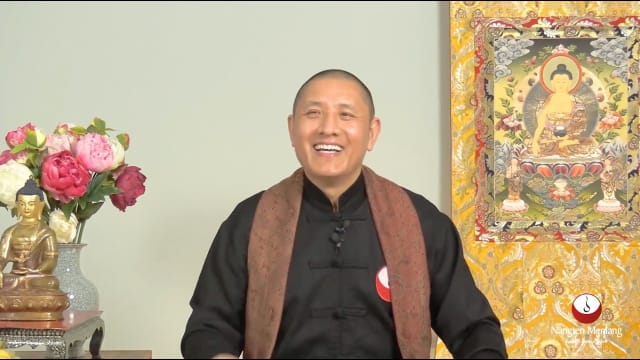
The Three-Second Practice: Why Consistency Beats Duration in Meditation

Tulku Lobsang
Tulku Lobsang
Nov 18, 2026
5 Min. Lesezeit

Von Tulku Lobsang

Ansehen · 5

The mind wants what it cannot have—especially in meditation. Tulku Lobsang Rinpoche identifies a paradox that stops countless practitioners cold: the desire for the perfect practice becomes the reason no practice happens at all. We wait for the golden hour. We wait for the quiet afternoon, the unrushed morning, the retreat weekend that never quite materializes. And in waiting, the gap between intention and action grows wider.

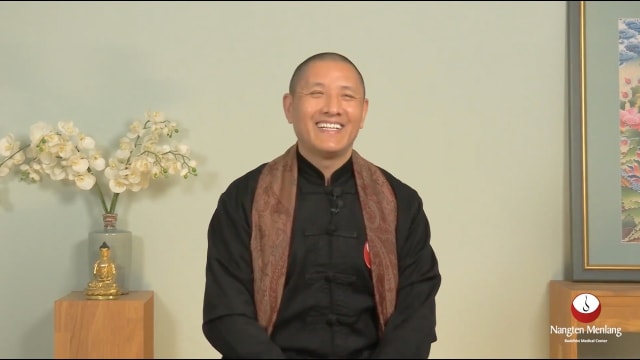
Speaking during a recent visit to Buchinger Wilhelmi Marbella, Rinpoche offers a teaching that cuts through the noise of spiritual perfectionism with almost disarming simplicity. The purpose of meditation, he explains, is clear and straightforward: to calm the mind and achieve clarity. The mechanics are basic—keep your spine straight, relax your shoulders, release unnecessary effort, and maintain awareness. But it is the consistency of practice, not its length, that transforms everything.

Lesen · 5 Abschnitte

When Ego Blocks the Path

The obstacle is rarely laziness. It is, Rinpoche suggests, a kind of spiritual vanity. "Many time because of our ego, we don't want small practice, we don't want three second practice, we don't want one minutes practice, we want one hour practice." This is the trap: the mind insists on magnitude. It rejects the modest offering as somehow beneath it, unworthy of the name "practice." But life does not bend to these requirements. Work, family, illness, fatigue, and simple circumstance interfere with the grand vision. The result is that people abandon meditation entirely rather than practice at a scale their actual life permits.

Three Seconds as Radical Acceptance

Rinpoche's proposal is radical in its humility. If you have one minute, practice one minute. If you have eleven minutes, practice eleven minutes. But if the day has given you nothing but a bathroom stall and ninety seconds between obligations, three seconds of remembering—of turning your awareness toward the breath, toward presence—is enough. "Because this help you to do continue," he says. The practice survives. The habit remains unbroken. Tomorrow is possible.

This is not settling. This is not a compromise for the weak-willed. It is architecture. The ego's demand for the perfect hour creates a binary choice: either I practice as intended, or I don't practice at all. Accepting the three-second offering collapses that binary. It becomes possible to practice every day. The streak continues. Momentum builds invisibly, day by day, in the smallest possible increments.

The Secret of the Secret

"Something consistent is the secret of the secret," Rinpoche concludes. The phrasing itself—redundant, emphatic—underscores how thoroughly this truth has been overlooked in a culture of spiritual aspiration. We know about consistency. We have read it in a thousand books. And yet we do not live it, because living it requires surrendering the fantasy of the perfect practice. It requires meeting ourselves where we actually are, not where we wish to be.

The teaching lands especially hard because it speaks to a particular modern affliction: the collapse of practice into an impossible standard. Many people who abandon meditation do so not because the method failed, but because they demanded too much of themselves at the beginning. They constructed a practice so ambitious that life could not accommodate it, then blamed themselves for falling short. Rinpoche offers a different calculus. If consistency is the goal, then the smallest daily practice that actually happens is infinitely more valuable than the largest practice that remains imagined.

Building an Unbreakable Habit

The three-second practice is also neurologically sound. Habit formation requires repetition more than duration. The brain needs the signal to repeat, day after day, that this is now part of your life. Length amplifies that signal, but cannot substitute for it. A one-minute meditation every single day will reshape your mind more profoundly than a weekly hour-long session, because the daily practice builds a groove, a pathway that deepens with each traversal. Three seconds, then three seconds tomorrow, then three seconds the day after: this is how the mind learns.

Rinpoche's teaching also grants permission in a quieter way. For people whose lives are genuinely constrained—parents of infants, frontline workers, anyone in acute circumstances—the possibility of a three-second practice means the possibility of remaining a practitioner. You do not have to put meditation on hold until conditions improve. You do not have to wait for retirement or a sabbatical to maintain your connection to awareness. The practice is available now, in however small a form life permits.

Where to go from here

The invitation is to experiment with what Rinpoche calls "the secret of the secret." Notice the moments when your ego dismisses a small practice as too insignificant to bother with. Feel the resistance to three seconds, to one minute, to anything less than the ideal. Then, deliberately, choose the small practice anyway. Watch what happens to your mind when you practice consistently, however modestly. Notice whether the three-second session today makes the three-second session tomorrow easier, and the one the day after that easier still. Over weeks and months, you may find that the small daily practice has quietly become substantial—not because the duration increased, but because the consistency transformed your relationship to meditation itself. At that point, the perfect hour-long practice, should circumstances permit it, will feel like a natural extension of a habit that was never broken, never abandoned, never placed on hold.

Kommentare

Gespräch wird geladen…

Transcript

[0:00] Why we're doing meditation, we try to

[0:03] overcome and what say

[0:06] clear mind. To make calm and clear mind,

[0:11] keep straight your spine, [music]

[0:13] relax your shoulders, relax all effort,

[0:17] [music] keep you awareness.

[0:21] Every day

[0:23] if you really don't have a time do one

[0:26] minutes. [snorts]

[0:28] As you have a little more time

[0:31] do 11 minutes.

[0:34] As a most important thing

[0:38] you

[0:39] practice every day.

[0:41] Never give up.

[0:45] Maybe sometime you really really don't

[0:48] have time, [music] I say you also do

[0:50] three second is okay.

[0:52] [snorts]

[0:52] Because this help you to

[0:56] to do continue. [music]

[0:59] But many time because of our ego, we

[1:02] don't want small practice, we don't want

[1:04] three second practice, we don't want one

[1:06] [music] minutes practice, we want one

[1:08] hour practice. But sometime our life

[1:11] don't [music] permit that one hour and

[1:13] that is kind of way to you never go to

[1:15] practice.

[1:17] Therefore you every day

[1:20] if you are really don't have time, maybe

[1:22] you are in the in the toilet, sit

[1:24] [music] and three second to just

[1:27] remember this, just to remember this and

[1:29] this help you do continue tomorrow.

[1:32] Something consistent

[1:36] is [snorts] the secret of the secret.

Tulku Lobsang

Tulku Lobsang

Künstler:in

Tulku Lobsang Rinpoche is a Tibetan Buddhist master and the recognized eighth reincarnation of the Nyentse Lama, teaching Tummo, Lu Jong, and other Tantric Buddhist practices across three continents. He transmits methods from the Tantrayana tradition to address suffering and cultivate innate happiness.

Profil ansehen
Themen erkunden
Meditation practiceConsistency disciplineSpiritual egoMindfulness dailyDharma teaching
Häufig gestellte Fragen

Häufig gestellte Fragen

According to Tulku Lobsang, even three seconds of daily awareness is sufficient to maintain your practice. The key is showing up every day—a one-minute practice is vastly more effective than a weekly hour-long session, because consistency builds the neural groove.

Perfectionism and ego are the primary obstacles. Many people reject small practices because they want an ideal hour-long meditation, but when life doesn't permit that, they abandon practice altogether rather than accepting what's actually available.

Yes—if done consistently. The brain's habit-formation is driven by daily repetition more than duration. Three seconds every day, every single day, builds a stronger pathway than sporadic longer sessions because the signal reinforces itself through constancy.

Tulku Lobsang's teaching is designed for exactly this scenario. If you're in a bathroom stall with ninety seconds between obligations, three seconds of remembering your breath and turning your awareness inward is enough to keep the practice alive and unbroken.

Because it's simple but widely ignored. Everyone knows consistency matters intellectually, but most people don't practice it because they demand perfection first. The real secret is that tiny, daily repetition is more transformative than rare, ambitious effort.

Das könnte dir auch gefallen

Alle anzeigen
Love as Our Unconditional Nature: Tulku Lobsang on Energy
Inspire

Love as Our Unconditional Nature: Tulku Lobsang on Energy

Tulku Lobsang argues love is our unconditional nature, not something we earn. Here is his case for why genuine love gives energy instead of …

9 min read
Why the Overthinking Mind Never Stops: A Buddhist Map
Inspire

Why the Overthinking Mind Never Stops: A Buddhist Map

Tulku Lobsang explains why the human mind loops through repetitive thought and why thinking is both our greatest power and our deepest stres…

9 min read
Ong Namo: How a Sacred Mantra Grows With Us
Inspire

Ong Namo: How a Sacred Mantra Grows With Us

Snatam Kaur releases her Barcelona live performance of "Ong Namo," a foundational mantra that evolves alongside the people who sing it.…

2 min read
Sleep Meditation for Middle-of-the-Night Waking
Inspire

Sleep Meditation for Middle-of-the-Night Waking

When sleep won't return, this guided meditation reframes waking as rest, then transports you to a storm-sheltered cottage. A deep-voiced com…

8 min read
AlleDas könnte dir auch gefallen→

Setze deinen Weg fort

Mehr Weisheit und Zusammenkünfte aus dem BrightStar-Verzeichnis.

Mehr Artikel

Durchstöbere die ganze Bibliothek an Lehren, Interviews und Leitfäden.

Zu allen Artikeln →

Lehrer & Künstler

Entdecke die Linien, Musiker und Wegbegleiter der bewussten Welt.

Künstler erkunden →

Event finden

Kirtan, Retreats, Klangbäder, Atemarbeit, Festivals — bald in deiner Nähe.

Events ansehen →