BrightStar
BlogMeine Tickets
BlogMeine Tickets
Saved events
Hilfe & KontaktRegistrierenAnmelden
Events
  • Alle Events durchsuchen
  • Yoga
  • Meditation
  • Breathwork
  • Qigong
  • Heilige Musik
  • Weltmusik
  • Medicine Music
  • Klangheilung
  • Ecstatic Dance
  • Zeremonie
  • Pflanzenmedizin
  • Energieheilung
  • Satsang & Weisheit
  • Tantra
  • Retreats
  • Alle Kategorien →
Reiseziele
  • Bali
  • Sedona
  • Los Angeles
  • Costa Rica
  • Tulum
  • Byron Bay
  • San Francisco
  • Austin
  • New York
  • San Diego
  • Denver
  • Seattle
  • Portland
  • Miami
  • London
  • Maui
  • Boulder
  • Alle Städte →
Plattform
  • Für Veranstalter
  • Werde Teil der Bewegung
  • Sell Globally
  • Für Kreative
  • Für Teams
  • Für Autoren
  • Für Lehrer
  • Für Kirtan-Künstler
  • Für Studios
  • Für Festivals
  • Für Retreat-Zentren
  • Für gemeinnützige Organisationen
  • Markenbotschafter
  • Kostenloses Ticketing
  • Pro
  • Amplify
  • Das Ökosystem
Funktionen

Ticketverkauf und Checkout

  • Ticket categories
  • Assigned seating
  • Custom questions
  • Coupon codes
  • Smart pricing
  • Ticket sharing
  • Waitlist
  • Flexible refunds
  • Digital waivers
  • Tip jar
  • Donations and sliding scale
  • Embed widget
  • Mindful checkout
  • Recurring events
  • Private sessions
  • Online courses
  • Summits
  • Rooms and stays
  • Ticket scanner

Marketing und Wachstum

  • Abandoned cart recovery
  • Visitor recovery
  • Upsells and add-ons
  • Affiliate engine
  • Upsell affiliate network
  • Brand ambassador
  • Meta retargeting
  • Verified buyer network
  • Outbound email marketing
  • Email sequences
  • SMS and WhatsApp
  • Event upsell network
  • Direct mail campaigns
  • SEO engine
  • Syndication
  • Event sharing
  • Custom event pages
  • Artist profiles
  • Link in bio
  • Event blog
  • Blog newsletter

Zahlungen

  • Payments, powered by Stripe
  • Buy now, pay later
  • Apple Wallet
  • Multi currency

Daten und Betrieb

  • Team access
  • Message center
  • Reports
  • Analytics reporting
  • Performance reporting
  • Customer data
  • Integrations
  • Switch from another platform

KI

  • Assistant
  • AI FAQ assistant
  • Alle Funktionen →
Unternehmen
  • Über uns
  • Häufige Fragen
  • Kontakt
  • Blog
  • Glossar
  • Guides
  • Inspiration
  • Hilfe-Center
  • API-Dokumentation
  • Marken-Assets
  • Presse
  • Nutzungsbedingungen
  • Datenschutzrichtlinie

Events

  • Alle Events durchsuchen
  • Yoga
  • Meditation
  • Breathwork
  • Qigong
  • Heilige Musik
  • Weltmusik
  • Medicine Music

Reiseziele

  • Bali
  • Sedona
  • Los Angeles
  • Costa Rica
  • Tulum
  • Byron Bay
  • San Francisco
  • Austin

Plattform

  • Für Veranstalter
  • Werde Teil der Bewegung
  • Sell Globally
  • Für Kreative
  • Für Teams
  • Für Autoren
  • Für Lehrer
  • Für Kirtan-Künstler

Funktionen

  • Community-Netzwerk
  • Warenkorbabbruch-Wiederherstellung
  • Ticket-Kategorien
  • Wiederkehrende Veranstaltungen
  • Sitzplatzreservierung
  • Affiliate-System
  • Warteliste / Benachrichtigen
  • Alle Funktionen →

Unternehmen

  • Über uns
  • Häufige Fragen
  • Kontakt
  • Blog
  • Glossar
  • Guides
  • Nutzungsbedingungen
  • Datenschutzrichtlinie
Mehr lesen

Events

  • Klangheilung
  • Ecstatic Dance
  • Zeremonie
  • Pflanzenmedizin
  • Energieheilung
  • Satsang & Weisheit
  • Tantra
  • Retreats
  • Alle Kategorien →

Reiseziele

  • New York
  • San Diego
  • Denver
  • Seattle
  • Portland
  • Miami
  • London
  • Maui
  • Boulder
  • Alle Städte →

Plattform

  • Für Studios
  • Für Festivals
  • Für Retreat-Zentren
  • Für gemeinnützige Organisationen
  • Markenbotschafter
  • Kostenloses Ticketing
  • Pro
  • Amplify
  • Das Ökosystem

Unternehmen

  • Inspiration
  • Hilfe-Center
  • API-Dokumentation
  • Marken-Assets
  • Presse

Ticketverkauf und Checkout

  • Ticket categories
  • Assigned seating
  • Custom questions
  • Coupon codes
  • Smart pricing
  • Ticket sharing
  • Waitlist
  • Flexible refunds
  • Digital waivers
  • Tip jar
  • Donations and sliding scale
  • Embed widget
  • Mindful checkout
  • Recurring events
  • Private sessions
  • Online courses
  • Summits
  • Rooms and stays
  • Ticket scanner

Marketing und Wachstum

  • Abandoned cart recovery
  • Visitor recovery
  • Upsells and add-ons
  • Affiliate engine
  • Upsell affiliate network
  • Brand ambassador
  • Meta retargeting
  • Verified buyer network
  • Outbound email marketing
  • Email sequences
  • SMS and WhatsApp
  • Event upsell network
  • Direct mail campaigns
  • SEO engine
  • Syndication
  • Event sharing
  • Custom event pages
  • Artist profiles
  • Link in bio
  • Event blog
  • Blog newsletter

Zahlungen

  • Payments, powered by Stripe
  • Buy now, pay later
  • Apple Wallet
  • Multi currency

Daten und Betrieb

  • Team access
  • Message center
  • Reports
  • Analytics reporting
  • Performance reporting
  • Customer data
  • Integrations
  • Switch from another platform

KI

  • Assistant
  • AI FAQ assistant
Hol dir die App
Laden imApp StoreJetzt beiGoogle Play
© 2026 BrightStar. Alle Rechte vorbehalten. BrightStar Selection · Bildnachweise · Änderungsprotokoll ·
Back to Karmapa
Karmapa's Teaching: Approach, Method, and Voice
Teaching

Karmapa's Teaching: Approach, Method, and Voice

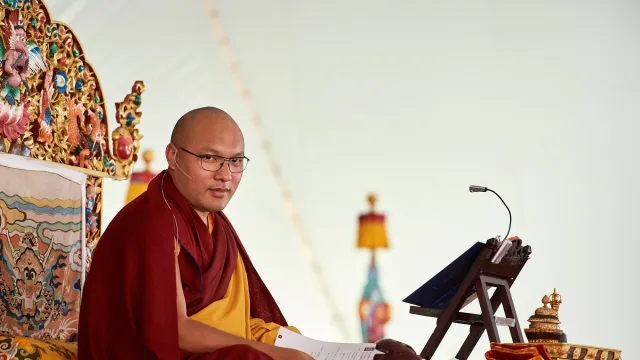
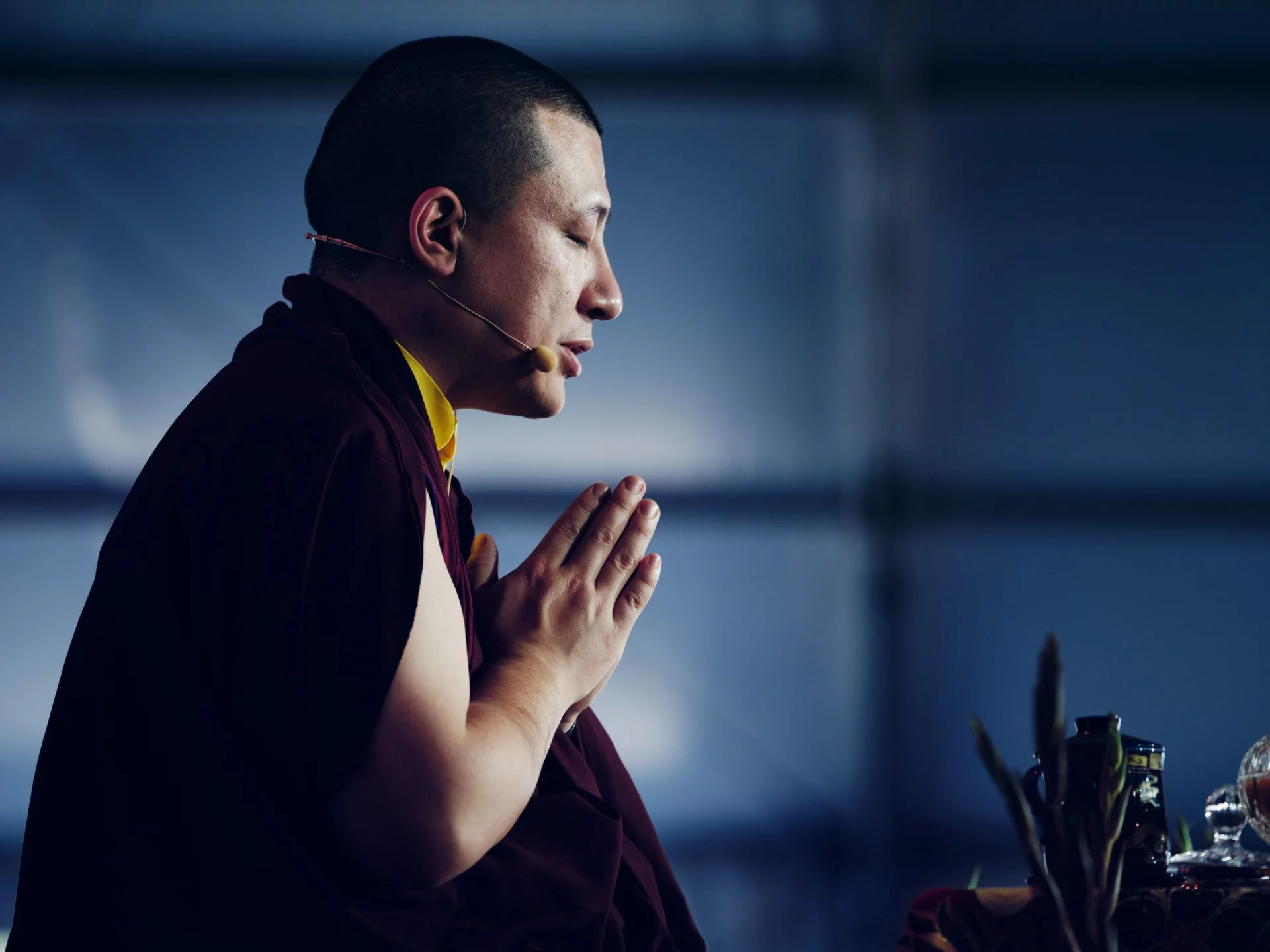
A teaching session with the 17th Karmapa, Ogyen Trinley Dorje, typically unfolds without theatrics. He sits, often in traditional robes, sometimes in casual dress, and begins speaking in a measured cadence that suggests the weight of a lineage stretching back…

Karmapa
Karmapa
Jul 18, 2026
4 Min. Lesezeit
Lesen · 4 Abschnitte

Karmapa's Teaching: Approach, Method, and Voice

A teaching session with the 17th Karmapa, Ogyen Trinley Dorje, typically unfolds without theatrics. He sits, often in traditional robes, sometimes in casual dress, and begins speaking in a measured cadence that suggests the weight of a lineage stretching back nine centuries. His delivery is neither austere nor overly warm—there is formality, but it bends. A retreat with him might include extended periods of silent meditation punctuated by teachings that toggle between classical Buddhist philosophy and unexpectedly concrete discussions: the ethics of meat consumption, the mechanics of institutional corruption, the way anger lives in the body. He does not rush. Silence is structural, not accidental. When he pauses, it is to let a point settle, not to perform gravitas.

The Karmapa belongs to the Karma Kagyu lineage, one of the four major schools of Tibetan Buddhism, and his teaching style reflects its emphasis on direct experience over scholastic elaboration. Mahamudra—the "great seal" meditation tradition central to Kagyu practice—prioritizes recognizing the nature of mind through sustained contemplation rather than doctrinal mastery. This shapes his method: he will cite scripture, but he more often circles back to the question of what you are actually doing when you sit down to meditate. What are you bringing to the cushion? What are you avoiding? He pushes students to examine their motivation, not as a moral audit but as a diagnostic tool. Why are you here? What do you want from this practice? The questions are not rhetorical.

Recurring Themes and Concerns

Environmental collapse appears frequently in his teachings, not as a side topic but as a moral emergency continuous with Buddhist ethics. He draws the connection plainly: interdependence is not metaphor. If all beings are connected, then the destruction of ecosystems is a failure of compassion at scale. He has spoken about reducing meat consumption, about the carbon footprint of large religious gatherings, about the complicity of silence. This is not the language of traditional dharma talks, and it can feel jarring to students expecting purely contemplative instruction.

Gender inequality within Buddhist institutions is another thread he returns to, sometimes with visible frustration. He has publicly supported full ordination for women in Tibetan Buddhism, a position that places him at odds with conservative elements of his own tradition. His critiques are measured but clear: institutional inertia is not the same as doctrinal necessity. The question he leaves hanging: if Buddhism teaches the dissolution of ego and the equality of all beings, why do its power structures contradict this?

Nonviolence, in his teaching, is both principle and practice. He speaks often about anger—not to demonize it, but to anatomize it. Where does it come from? What does it cost? He draws on Shantideva's Bodhisattvacharyavatara, but he also talks about geopolitics, about Tibet, about the ethics of resistance. He does not offer easy answers. The question persists: how do you hold both compassion and accountability?

Aesthetic and Delivery

Humor exists in his teaching but arrives obliquely. A wry comment about the absurdity of celebrity lamas. A self-deprecating aside about his own impatience. He does not perform levity; it surfaces when the tension of a difficult teaching needs puncturing. Story is present but not dominant—he will relate a Jataka tale or a lineage anecdote, but more often he works through concepts methodically, building arguments rather than painting parables.

Scripture is cited, but he does not hide behind it. He will quote Nagarjuna or Gampopa and then pivot to contemporary application. The Uttaratantra Shastra on Buddha-nature becomes a lens for examining self-hatred. The Abhidharma becomes a framework for understanding digital distraction. He assumes his students can handle complexity. There is little coddling.

His voice on digital platforms—YouTube, Instagram—extends this approach. The production is clean but unadorned. He speaks directly to the camera, often from a simple room. The content is teaching, not branding. This is consistent with his broader aesthetic: clarity over charisma.

Who It Lands For

This teaching appeals to practitioners who want rigor without scholasticism, tradition without nostalgia. It suits people who are uncomfortable with guru devotion as pageantry but still want lineage transmission. Those drawn to socially engaged Buddhism, to the intersection of contemplative practice and systemic critique, will find traction here.

It may not land for students seeking ecstatic experience, for those who want teaching to feel like balm rather than challenge. His refusal to soften difficult questions—about complicity, about motivation, about the gap between belief and action—can feel confrontational. If you come wanting reassurance, you may leave unsettled. That appears to be intentional. The Karmapa teaches as though the stakes are high, because in his framework, they are.

Karmapa

Karmapa

About

Ogyen Trinley Dorje is the 17th Gyalwang Karmapa, the head of the Karma Kagyu lineage of Tibetan Buddhism. He teaches on the Dharma through both traditional monastery settings and a growing suite of digital platforms.

Profil ansehen

More about Karmapa

Alle anzeigen
Where to Start with Karmapa: A Beginner's Guide
Artikel

Where to Start with Karmapa: A Beginner's Guide

Who Is Karmapa? Life, Work, and Legacy
Artikel

Who Is Karmapa? Life, Work, and Legacy

AlleMore about Karmapa→

Setze deinen Weg fort

Mehr Weisheit und Zusammenkünfte aus dem BrightStar-Verzeichnis.

Mehr Artikel

Durchstöbere die ganze Bibliothek an Lehren, Interviews und Leitfäden.

Zu allen Artikeln →

Lehrer & Künstler

Entdecke die Linien, Musiker und Wegbegleiter der bewussten Welt.

Künstler erkunden →

Event finden

Kirtan, Retreats, Klangbäder, Atemarbeit, Festivals — bald in deiner Nähe.

Events ansehen →