

Ruth Smith
Hammered Dulcimer Player · North Carolina, USA
Über
Ruth Smith is a hammered dulcimer player, composer and teacher from the Blue Ridge Mountains of North Carolina. A native North Carolinian, she fell in love with the sound of the hammered dulcimer at an apple festival in the mountains. Her many years of classical training give her a special touch, and she is recognized for a delicate, expressive style. She also plays the Appalachian mountain dulcimer.
Ruth Smith is a hammered dulcimer player, composer and teacher from the Blue Ridge Mountains of North Carolina. A native North Carolinian, she fell in love with the sound of the hammered dulcimer at an apple festival in the mountains. Her many years of classical training give her a special touch, and she is recognized for a delicate, expressive style. She also plays the Appalachian mountain dulcimer.
Ruth performs acoustic Americana music with Celtic and Appalachian roots in a duo with Steve Smith, who plays guitar and banjo, sings and writes original songs. The two have played together for over 50 years, across the United States and abroad, and they have been featured on the PBS series Song of the Mountains and NPR's All Songs Considered. Dirty Linen Folk & World Music Magazine says, "Ruth Smith's touch on the hammered dulcimer is absolutely magical, with exquisite phrasing, highlighting the range of the instrument especially on her own pieces."
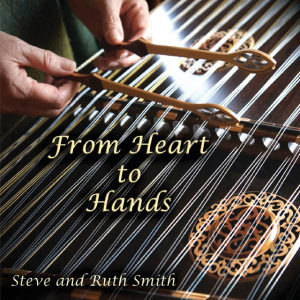
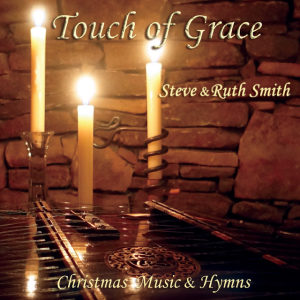
Ruth enjoys composing especially for the hammered dulcimer. She teaches hammered dulcimer workshops at festivals and folk schools around the country, and she is the author of two instructional books of her compositions and arrangements, From Heart to Hands and Touch of Grace.
FAQ
Questions
Ruth Smith is a hammered dulcimer player, composer, and workshop teacher from North Carolina who performs with her husband Steve as Steve and Ruth Smith. The duo lives in the Blue Ridge Mountains and plays acoustic Americana with Celtic and Appalachian roots, and their bio says they have been making music together for over 50 years. Her reputation rests largely on her original compositions, written with the hammered dulcimer in mind, which the bio says have been featured on NPR’s All Songs Considered, SiriusXM Satellite Radio, PBS TV’s Song of the Mountains, and in Dulcimer Players News. Dirty Linen Folk & World Music Magazine described her touch on the instrument as “absolutely magical,” citing “exquisite phrasing” that shows off the dulcimer’s range, especially in her own pieces. Listeners who follow her tend to care about the instrument and its phrasing more than spectacle, since she came to the hammered dulcimer after hearing it at an apple festival in the Blue Ridge Mountains and her years of classical training shaped a delicate, expressive style. Her Spotify presence is modest, with about 410 followers, so most of her audience has built up through radio, print, and festival stages rather than playlists.
Ruth Smith’s work sits within Appalachian and Celtic strands of American folk music, anchored in the mountain dulcimer traditions of the Blue Ridge region of North Carolina. She plays both the hammered dulcimer and the Appalachian mountain dulcimer, and the hammered dulcimer has a long history in European and American folk music that her classical training reshapes. The available record does not name a specific teacher or formal lineage, so placing her in a named school would be guesswork; what the evidence supports is a regional and instrumental tradition. Her compositions and arrangements carry that tradition forward, and her instructional books, From Heart to Hands and Touch of Grace, gather those pieces in a form students can learn from. Steve’s fingerstyle guitar, banjo, and vocals give the duo’s Americana side its Appalachian grounding. Newcomers often treat Celtic and Appalachian music as a single category, but the bio lists them separately, which suggests her arrangements draw on both rather than choosing one. For a fuller account of the regional roots, the listener should expect a tradition shaped by festivals, folk schools, and community playing rather than by a single conservatory path.
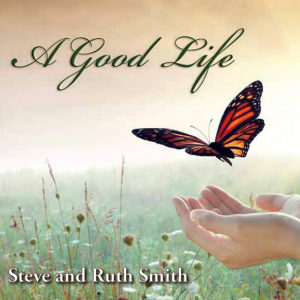
The data does not identify a single breakout record, so the best entry point depends on whether a newcomer wants the instrument, the composer, or the duo. For the hammered dulcimer and Ruth’s own writing, From Heart to Hands (2018, 25 tracks) is the most representative starting point, since the bio describes it as a gathering of her compositions and arrangements. Touch of Grace, released the same year with the same track count, is a natural companion for hearing how her phrasing works across a second set of pieces. Listeners who want the earliest documented recordings should go to An Appalachian Aire (2005), the oldest entry in the catalog. The Spotify listings for the two 2018 titles carry the same names as the instructional books, so it is reasonable to assume the albums are companion recordings, though the data does not confirm the relationship. Newcomers who want the duo’s warmer vocal side may prefer A Good Life (2016), which has 13 tracks and sits between the early instrumental work and the later compositional releases.
In the view of this guide, Ruth Smith’s distinction is phrasing rather than tempo or volume, which is a meaningful difference in a field where hammered dulcimer playing is often judged by rhythmic drive. The bio credits her with exquisite phrasing and a wide use of the instrument’s range, and it highlights her own pieces as the place where that range is most visible. Her classical training is the detail that sets her apart from most folk-trained dulcimer players, because it shapes how she voices melodies and sustains notes rather than how fast she plays. She is also a composer who writes primarily for the hammered dulcimer, which means her catalog is built around the instrument instead of adapting pieces from other sources. Her standing is reinforced by her teaching, since she runs hammered dulcimer workshops at festivals and folk schools and has put her compositions into instructional books. Most of the comparisons that matter will be with other dulcimer composers and teachers, and in that company her distinction is the combination of original writing, classical polish, and a public teaching record.
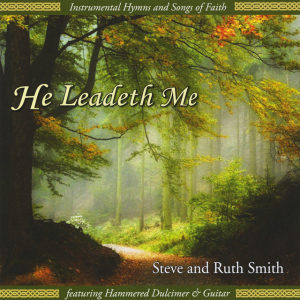
Ruth Smith’s work is not for listeners who want high-energy, high-BPM material, electronic production, or music built around a driving beat, since the hammered dulcimer and acoustic Americana arrangements favor clarity and phrasing over momentum. Listeners looking for a loud, dance-oriented festival set will likely find the pacing too measured, even though the duo has played major folk events like MerleFest and the Walnut Valley Festival. Those who want a dulcimer style built around fast, rhythmic strumming, or who expect the traditional Appalachian repertoire to be played closely from source recordings, may feel the compositional emphasis is a different project. Several titles in the catalog, including He Leadeth Me, Bring Him Home, and Christmas in Our Hearts, point toward hymn and holiday material, so listeners who want secular or instrumental-only programming should check track listings before committing. Students who expect a tightly structured online course will also find the workshop model, which the data describes only in general terms as festival and folk school teaching, less formal than a standardized curriculum. Her streaming numbers are small, which suggests a niche audience rather than a mass one.
The most direct route is the official site, steveandruth.com, which the profile lists as the duo’s main web presence and which should carry the most current tour and workshop information. The Spotify artist page is the place to watch for new singles, and the catalog shows a steady cadence recently, with Old Friends and Bring Him Home released in September 2023, Always There for Me in June 2024, and Christmas in Our Hearts in October 2024. The YouTube channel listed under SteveRuthSmith is the second route, useful for video of performances and workshops. Only one upcoming date appears in the current record: Recreation Unlimited in Ashley, USA, on April 21, 2027, and the data does not specify a state, so the event page should be checked for location details. Because the listing is far from today’s date, the absence of other dates is not a sign of inactivity; the duo has historically performed across the United States and abroad, and festival calendars often publish later than individual venue announcements. Followers who want workshop dates should check festival and folk school calendars directly, since those are the main venues for her teaching.
Ruth Smith’s music is acoustic and sparse in texture, built around the hammered dulcimer and the Appalachian mountain dulcimer, with the duo’s Americana side adding fingerstyle guitar, banjo, and vocals from Steve. The hammered dulcimer is struck rather than plucked, so the attack is bright and percussive, but in Ruth’s playing the bio emphasizes delicacy and expressive phrasing over volume. The result is an aesthetic of restraint: the first listen tends to reveal melodic shaping and careful spacing between notes rather than dense harmonic layering. Her Celtic and Appalachian roots show up in tune choice and in the fiddle-tune sensibility of the mountain dulcimer repertoire, though the bio presents her as a composer first, so many pieces are original. Vocals appear in the duo’s work, and the bio describes the group as acoustic Americana, which means arrangements are kept clean enough for the voices and instruments to sit close together. Newcomers should expect an unhurried, detail-oriented listen, and the best way to hear what the bio means by expressive phrasing is to start with an instrumental track rather than a vocal one.
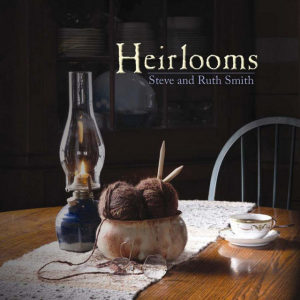
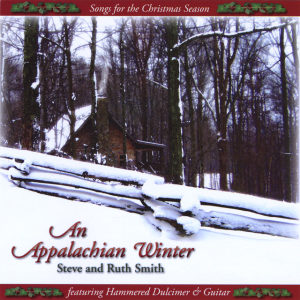
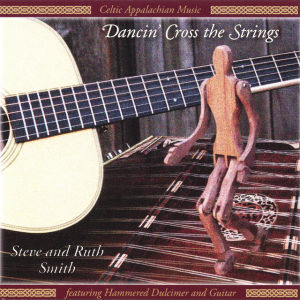
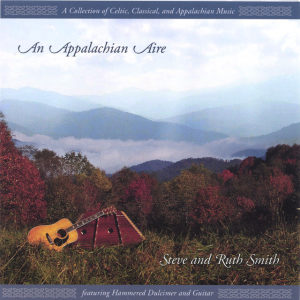
The essential Ruth Smith albums are the ones that show the range from early recordings to the compositional instructional sets, and the catalog offers a clear arc across roughly two decades. An Appalachian Aire (2005, 14 tracks) is the earliest entry and a useful baseline for the instrument and the Appalachian material. Dancin’ Cross The Strings (2007, 15 tracks) and An Appalachian Winter (2008, 15 tracks) follow, with the latter best suited to listeners who respond to seasonal and wintry programming. Heirlooms (2011, 14 tracks) and He Leadeth Me (2014, 14 tracks) show the duo’s work in the middle years, with He Leadeth Me carrying the hymn tradition its title implies. A Good Life (2016, 13 tracks) bridges toward the 2018 pair, From Heart to Hands and Touch of Grace, each with 25 tracks, which best represent Ruth’s own compositions and arrangements. For a selective list, most listeners would start with An Appalachian Aire, Heirlooms, and From Heart to Hands, then move to the later singles. Those who want the most recent material should look at Old Friends (2023), Always There for Me (2024), and Christmas in Our Hearts (2024), which are single releases rather than full albums.
Ruth Smith’s core instruments are the hammered dulcimer and the Appalachian mountain dulcimer, and she is the duo’s primary instrumental voice. Her husband Steve is the most consistent collaborator named in the record, playing fingerstyle guitar, banjo, and providing vocals in their duo, Steve and Ruth Smith. Together they have performed across the United States and abroad, with festival appearances at MerleFest and the Walnut Valley Festival among the standout stages listed in the bio. The data does not name producers, session musicians, or label partners, so any claim about recording personnel beyond the duo would be speculative, and the listener should consult album credits on the streaming platforms for details. The duo’s instrumentation is intentionally compact, which helps explain why the bio describes the sound as acoustic Americana rather than a full band. Her role as a composer and music instructor also brings her into contact with festival and folk school communities, which function as collaborative settings even though they do not appear as named partners here. Listeners interested in guitar or banjo specifics should note that Steve’s role is listed as fingerstyle, which points toward a supportive, melodically aware accompaniment style.
Ruth Smith teaches hammered dulcimer workshops at festivals and folk schools around the country, and the bio describes her as a popular instructor, which suggests a student base that returns for repeated sessions. The data does not describe session format, duration, or the balance between group and individual instruction, so newcomers should contact the host festival or folk school for details. Her teaching is closely tied to her writing, since her two instructional books gather compositions and arrangements that students can work through independently. That connection shapes what a workshop is likely to emphasize: phrasing, range across the instrument, and the expressive touch the bio credits her with, rather than rote speed work. Students of the Appalachian mountain dulcimer and the hammered dulcimer are both within her teaching scope, which makes her a practical teacher for players who already have an instrument. Because the setting is festival-based, a workshop will probably be short and concentrated, which suits players looking for targeted technique rather than a long apprenticeship. Anyone who wants the teaching voice before attending should begin with From Heart to Hands, since it is the book most directly connected to her compositional method.



Bist du das? Diese Seite beanspruchen ›
There's more where this came from.
BrightStar is the global directory of artists, teachers, and healers in the wellness and spiritual movement. Find your next experience — or add yourself.
Discover More Artists
Browse 14,000+ curated profiles across kirtan, yoga, meditation, and beyond.
Explore directory →Find an Event Near You
Kirtan, retreats, sound baths, breathwork, ceremonies — happening this week.
Browse events →Add Your Profile
Are you an artist, teacher, or healer? Get listed — free, AI-assisted, live in minutes.
Get started →