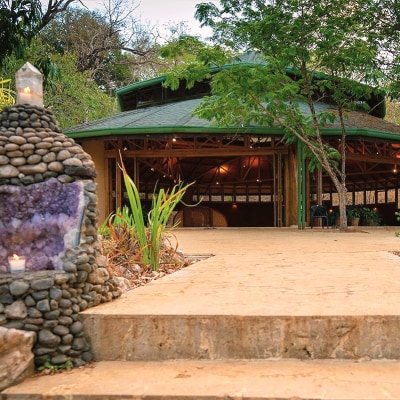
PachaMama Eco Village & Retreat Center — San Juanillo, Costa Rica
Eco village and retreat center in San Juanillo, Guanacaste, Costa Rica
PachaMama Eco Village & Retreat Center is an ecological, spiritual community and retreat center in San Juanillo, Guanacaste, Costa Rica. It is best known for its seven-day Silent Retreats, during which the entire village enters silence together. The community describes itself as an intentional, alternative eco-village where people live their normal lives in harmony with nature. No belief system is practiced there. Instead, the pages describe a safe space for each visitor to shed old layers and discover wholeness, held up by Six Pillars: Meditation, Emotional Healing, Physical Rejuvenation, Native Ceremonies, Ecological Living and Mystical Musical Journeys. PachaMama was founded in 1999 by Tyohar and fellow travelers who answered an invitation to build a commune around a new way of life. Tyohar, the spiritual guide and founder, was travelling the world in the late 1990s, mostly in India, when he discovered the transmissions and meditations of the Indian mystic Osho and was deeply touched by them. Years later, while sharing satsangs and leading silent retreats, he had a seed vision of an alternative community. The land that grew from it covers 500 acres (2,300,000 square meters) and was once a cattle farm, with no electricity, water system, roads or living space. Each year a growing number of seekers, individuals and families, choose to put down roots there permanently. The Silent Retreat is the center of the program. Over seven days it combines twice-daily Satsang with Tyohar, drawn from live sessions and recordings of earlier Satsangs, with daily yoga, several forms of meditation and mindful movement, and it closes with a traditional Sweatlodge by the river. Villagers who are not on the retreat refrain from speaking in public areas so the whole place holds the silence. The December Silent Retreat sits inside the Transformation Cycle, a five-week process held twice a year that moves through physical detoxification, yoga and emotional healing before ending in silence. A Zen koan workshop, Who Is In?, is recommended beforehand. The Body Cleanse Detox Program runs six days of organic juices, movement, a liver flush and breathwork, and the Prana Clinic hosts the cleanse work. Daily yoga classes cover Hatha, Vinyasa, Restorative, Yin, Ashtanga, Kundalini and Yoga Nidra, and teacher trainings run through the season. The calendar also includes Red Road ceremonies such as the Tipi Ceremony, Musical Journeys such as the all-night Rock Odyssey with DJ Tyohar, and a 200-Hour Breathwork Facilitator Training. Guests stay on the property in open-air wooden casitas, screened bungalows, Forest Studios with kitchenettes, and AC Rooms, all within walking distance of the Village Center. Three yoga shalas serve as practice and workshop spaces. Verde Restaurant serves organic vegetarian meals, and the Wild Treats Raw Bar is also on site. The Rio Rosario runs through the property, and San Juanillo beach is a ten-minute drive away. The village closes in September and October for Costa Rica's rainy season. The terrain is rugged, with uneven trails, and the site describes itself as not accessibility friendly. The Silent Retreat is open to experienced practitioners and first-time participants alike, and daily yoga classes welcome complete beginners. The pages are plain about who it is not for: people looking for a resort-style stay, a competitive fitness studio or a vacation. The Volunteer Program offers a longer way in, asking for several hours of daily work in places such as the kitchen and cacao bar, alongside workshops, movement classes and evening events, with a six-week minimum stay. Visitors from around the world come for the retreats, the trainings and the community around them. The pages say they leave with a sustainable practice, a calmer nervous system and a clearer sense of what matters.
Traditions: Satsang, Silent Sitting, Sweatlodge, Hatha Yoga, Vinyasa Yoga, Kundalini Yoga, Yoga Nidra, Red Road Ceremonies
Programs: Silent Retreat, Silent Retreat December, Transformation Cycle, Body Cleanse Detox Program, Who Is In?, Yoga Teacher Training, 200-Hour Breathwork Facilitator Training, Tipi Ceremony, Rock Odyssey, Volunteer Program
Amenities: Yoga Shalas, Verde Restaurant, Wild Treats Raw Bar, Prana Clinic, Rio Rosario Access, Casitas, Bungalows, Forest Studios, AC Rooms, Fibre-Optic Internet
Frequently Asked Questions
What makes PachaMama Eco Village different from other retreat centers in Costa Rica?
PachaMama isn't a weekend wellness resort — it's a 500-acre intentional community founded in 1999 by Tyohar, a spiritual guide who built the entire property from scratch on former cattle ranch land with no infrastructure. The minimum stay is seven days, and many guests arrive for the five-week Transformation Cycle or end up in the six-week Volunteer Program, which tells you everything about the pace here. This is one of the few places in Central America where Red Road ceremonies — honoring Indigenous American ancestral customs — sit alongside Osho-influenced satsangs and all-night musical odysseys with DJ Tyohar. If you're looking for a polished spa experience with optional workshops, this isn't it; PachaMama asks you to live inside the practice, not dip into it. The property closes entirely in September and October during Costa Rica's rainy season, which means the calendar itself enforces rhythms most retreats ignore.
Who should skip PachaMama?
If you need air conditioning, predictable Western service standards, or don't want to confront your discomfort, book somewhere else. Reviews split sharply: long-term guests credit life-changing transformation, but critical accounts describe clique-like dynamics toward short-term visitors, dismissive staff, and portions priced around $15 that left people hungry. The property demands physical effort — steep walking paths through jungle, open-air casitas with cold-water showers, and weeks of rain if you visit during shoulder season. One guest reported mold damaging belongings and alleged unease about additives in the house water, which the community dismissed. If you prefer a retreat where the infrastructure fades into the background and the staff anticipates needs, PachaMama's rough edges and communal ethos will grate; this place rewards people who see discomfort as curriculum.
What does a typical day at PachaMama actually look like?
Mornings start with yoga in one of three forest shalas — Hatha, Vinyasa, Kundalini, Ashtanga, Yin, or Restorative depending on the day — included free with your accommodation. If you're on the Silent Retreat, you'll attend twice-daily Satsang led by Tyohar, where the Osho-influenced transmission work happens in silence with occasional guided inquiry. Meals at Verde Restaurant are communal and strictly organic vegetarian, with lunch and dinner served on a set schedule; expect locally grown greens, rice and beans, tropical fruit, and the option to add raw dishes from the Wild Treats bar for extra cost. Afternoons might include breathwork, a session at Prana Clinic if you're on the Body Cleanse, or free time at Rio Rosario, the river that cuts through the property. The vibe is not structured minute-to-minute like a luxury retreat — you're expected to self-direct, which some find liberating and others find aimless.
What's the food experience really like at PachaMama?
Verde Restaurant serves organic vegetarian meals sourced locally, and the kitchen leans heavily on rice, beans, salads, and whatever's growing on-site or nearby in Guanacaste. Portions have been a flashpoint in reviews — one guest reported paying around $15 per dish and still feeling hungry, which is steep for Costa Rica and frustrating if you're already paying for lodging. The Wild Treats Raw Bar offers cold-pressed juices and raw desserts, especially popular during the six-day Body Cleanse Detox Program when guests drink juices pressed from medicinal plants and locally grown ingredients. The dining hall is communal, not monastic-silent but not party-loud either; you'll eat alongside long-term residents, volunteers, and fellow retreat-goers. If you have dietary restrictions beyond vegan or raw, communicate early — this isn't a place with infinite menu customization, and the kitchen operates on a tight schedule that prioritizes simplicity over variety.
How do the lodging tiers compare, and what are the real tradeoffs?
The open-air casitas are 13 square meters with mosquito nets and cold-water showers — rustic in a way that feels romantic until it rains for three days straight. Screened bungalows offer a step up with better protection from bugs and weather, and reviews mention these as spacious and livable for longer stays. The 22-square-meter forest studios come with kitchenettes, which matters if you want to supplement Verde Restaurant meals or prep your own snacks between the set dining hours. Air-conditioned rooms exist but aren't the norm; most accommodations embrace the jungle climate, meaning you'll hear howler monkeys, rain on thatch roofs, and insects at night. The real tradeoff isn't luxury versus budget — it's whether you can handle weeks in a space with no closet, minimal privacy, and infrastructure that some guests describe as moldy or poorly maintained.
What surprises first-timers about PachaMama, both good and bad?
The good: free daily yoga and weekly meditations are included in all accommodation rates, which is unusual and makes the $$ price range feel more reasonable over a seven-day minimum stay. The scale of the land — 500 acres, roughly 2.3 million square meters — means you can disappear into forest, find the river, or sit in silence without running into anyone. The bad: several reviews mention group pressure to conform, a clique-like vibe among long-term residents, and staff who can be dismissive if you raise concerns about mold, portion sizes, or facility issues. One guest reported belongings damaged by mold and felt the community brushed it off as personal weakness rather than a maintenance problem. The emphasis on confronting discomfort is marketed as transformational, but it also means genuine infrastructure complaints get reframed as spiritual resistance, which doesn't sit well with everyone.
What does the Silent Retreat with Tyohar actually feel like?
The seven-day Silent Retreat is PachaMama's flagship program, and the entire village enters silence together — not just participants, but the community itself. You'll attend Satsang twice daily with Tyohar, the founder, whose transmission work draws heavily from Osho's teachings and centers on direct inquiry into presence and awareness. Daily yoga, Vipassana sits, and various meditation formats fill the schedule, culminating in a Sweatlodge ceremony by Rio Rosario on the final day. The silence isn't negotiable or partial; even eye contact and gestures get minimized, which some find deeply clarifying and others find socially claustrophobic. If you've never done extended silence, know that the jungle itself is loud — rain, insects, howler monkeys — so this isn't sensory deprivation, it's the absence of human conversation with nature turned way up.
What's the deal with the Red Road ceremonies?
PachaMama honors Red Road ancestral customs of Indigenous peoples of the Americas through Tipi Ceremony, Sweatlodge, sacred songs, dances, and other ceremonial practices led by trained facilitators within the community. These aren't add-on workshops — they're woven into the property's six-pillar framework alongside meditation, yoga, and emotional healing, which makes PachaMama unusual among Costa Rican retreat centers. The Sweatlodge happens by Rio Rosario and concludes the Silent Retreat; expect heat, darkness, chanting, and a level of intensity that's meant to be purgative. If you're drawn to these practices, ask specifics about lineage and facilitation — the term "Red Road" is broad, and some guests will want clarity on how Tyohar and the community were trained and by whom. Others come for the Osho satsangs and skip the ceremonies entirely, which the flexible schedule allows.
What does the Transformation Cycle actually entail, and who's it for?
The Transformation Cycle runs twice yearly over five weeks and sequences Physical Detoxification, Yoga immersion, Emotional Healing, and the seven-day Silent Retreat into one continuous arc. You're committing to more than a month on-site in the jungle, eating only what Verde Restaurant and the detox protocol provide, attending twice-daily yoga, and living inside whatever arises emotionally when the distractions drop away. This is the program long-term guests credit with lasting change — and the one that demands you either love or at least tolerate PachaMama's rough edges, because five weeks is enough time for mold, cliques, small portions, and rain to become deal-breakers if you're not all-in. It's designed for people in life transitions — career shifts, breakups, existential reckonings — not casual wellness tourists. Expect to be the oldest or youngest person in a small cohort, and prepare for the intensity to either crack you open or send you home early.
How does the Volunteer Program work, and is it worth it?
The Volunteer Program requires a minimum six-week commitment, during which you contribute four to five hours of daily work — kitchen prep, grounds maintenance, building projects — in exchange for discounted housing and access to the full schedule of yoga, meditations, and workshops. For digital nomads or gap-year travelers, it's a way to stay long-term in Costa Rica without burning savings, and several reviews mention volunteers becoming permanent residents. The tradeoff is that you're working during the heat of the day, living in the most basic accommodations, and subject to the same community dynamics that some describe as clique-like or dismissive toward outsiders. If you thrive in intentional communities and want depth over comfort, six weeks gives you time to integrate; if you chafe at hierarchy, unspoken social rules, or being told your complaints are resistance, you'll count the days. The village itself was built by volunteers, so the lineage runs deep — just know you're joining a culture, not a neutral work-trade.
What should you pack that most first-timers forget?
Bring a headlamp — the property is 500 acres of jungle with minimal lighting after dark, and navigating between your casita and the shalas or dining hall at night requires your own light source. Pack serious rain gear if you're visiting May through November; reviews mention weeks of rain, muddy paths, and no escape from humidity even in screened bungalows. A quick-dry towel matters because the open-air casitas and cold-water showers mean nothing dries fast, and mold has been reported in accommodations. Insect repellent is non-negotiable, and consider a mosquito net even if your lodging includes one — jungle bugs are relentless. Finally, bring cash in both U.S. dollars and Costa Rican colones; the on-site hours are 8 AM to 3 PM daily, and while there's fiber-optic internet, you're far from San Juanillo town and ATMs aren't guaranteed nearby.
What's the land and setting actually feel like day to day?
You're living inside 500 acres of Guanacaste jungle with Rio Rosario cutting through it, howler monkeys overhead, and San Juanillo beach a ten-minute drive away if you need the ocean. The property feels enormous — three yoga shalas scattered among forest, steep walking paths between accommodations and dining, and enough space that even during a Silent Retreat you can find solitude. Everything was built by hand starting in 1999 on former cattle ranch land with no infrastructure, and that DIY history shows: some guests describe it as charmingly rustic, others as poorly maintained with mold and rough edges. The jungle is loud at night and during rainstorms, which means your open-air casita or screened bungalow doesn't offer silence, just the absence of human noise. If you romanticize living in nature, PachaMama delivers; if you need nature to stay picturesque and outside your room, the reality will grate.