

Natalie Young
Cantor
Über
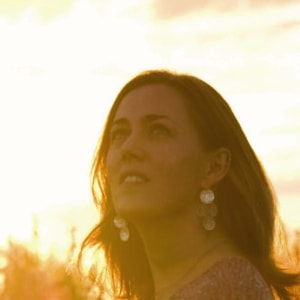
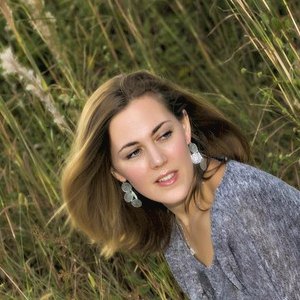
Natalie Young is a cantor and an award-winning composer whose music is used by communities all over the world. Her gift for writing beautiful, memorable melodies has made prayer experiences accessible for worshippers young and old. She takes the power of music seriously, both in her writing and in how she connects with people and crafts services as a cantor. She serves as the cantor at Beth Emet the Free Synagogue in Evanston, IL.
Natalie Young is a cantor and an award-winning composer whose music is used by communities all over the world. Her gift for writing beautiful, memorable melodies has made prayer experiences accessible for worshippers young and old. She takes the power of music seriously, both in her writing and in how she connects with people and crafts services as a cantor. She serves as the cantor at Beth Emet the Free Synagogue in Evanston, IL.
She also shares her music and teaching with communities around the country as a cantor and composer-in-residence, helping individuals deepen and elevate their own spiritual practice. She leads a monthly Soul Spark Shabbat experience that brings together contemplative music and guided meditations.
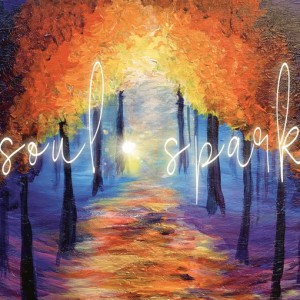
Natalie has released four albums of original music: Carry Me, Natalie Young: Standing on the Shoulders, Soul Spark, and A Light In the Dark: Songs of Hope and Healing, which contains music for meditation and healing. Her songs and writing appear in publications including Music, Carrier of Intention in 49 Jewish Prayers, Shirei Ha-T'fillot, the Ruach Songbook, the Shalshelet Festival Songbook, and the Shirei Mishkan HaNefesh Anthology. The Natalie Young Anthology, published in 2015, brought her sheet music to musicians and prayer leaders around the globe.
Her songs have been featured at URJ Biennials, the Shalshelet Music Festival, Hava Nashira, American Conference of Cantors conventions, and the North American Jewish Choral Festival, and many have been recorded by other artists. She has also composed music on commission for communities and organizations across the country. Colleagues describe her music as soulful and accessible, with a warmth that reaches the heart.


FAQ
Questions
Natalie Young is a cantor, composer, and meditation teacher who serves as cantor at Beth Emet the Free Synagogue in Evanston, Illinois, and whose melodies are sung in Jewish communities well beyond that congregation. Listeners and prayer leaders follow her for a specific craft skill: she writes melodies that are memorable on first hearing and easy for a mixed-age congregation to learn, which is less common in liturgical composition than it sounds. Her original albums include Natalie: Standing On the Shoulders (2011), Carry Me (2013), Soul Spark (2019), and A Light in the Dark (2022). The Natalie Young Anthology, published in 2015, put her sheet music in the hands of musicians and prayer leaders around the world. She also leads a monthly Soul Spark Shabbat that pairs contemplative music with guided meditation, which is where her two strands of work, prayer music and meditation teaching, visibly meet. Colleagues describe her music as soulful and accessible, and the bio notes that many of her songs have been recorded by other artists. Her distinctive quality is that she treats the melody as the working tool of prayer rather than as background decoration.
Her work belongs to the Jewish liturgical and cantorial tradition, in which the cantor leads congregational singing and commissions or composes new settings for the service. Her songs appear in collections that circulate among prayer leaders, including Shirei Ha-T'fillot, the Ruach Songbook, the Shalshelet Festival Songbook, and the Shirei Mishkan HaNefesh Anthology, along with the anthology 49 Jewish Prayers. That places her inside a shared repertoire rather than a solo singer-songwriter lane. Her appearances at URJ Biennials, a gathering associated with the Union for Reform Judaism, along with the North American Jewish Choral Festival and American Conference of Cantors conventions, point to ties with Reform and cantorial networks. The data does not name individual teachers or a formal mentor lineage, so the most accurate description is a working cantor within an established Jewish musical world. Her later contemplative strand, visible in Soul Spark and A Light in the Dark, draws on meditation practice and healing-oriented music, which sets her apart from purely liturgical composers.
A newcomer who wants her meditative side should start with A Light in the Dark, released on December 25, 2022, which the bio describes as songs of hope and healing containing music for meditation and healing. Its ten tracks are the most compact entry point in the catalog and show her current approach most clearly. Soul Spark, from 2019, is the next stop, since it connects directly to the monthly Soul Spark Shabbat she leads. Listeners who come from a synagogue or prayer background may prefer Shabbat Anthology Vol. X, a 2023 compilation of 48 tracks that appears under her name and gives a broader sense of the liturgical material. Those who want to understand her roots as a composer should then go back to Natalie: Standing On the Shoulders, her 2011 debut album with eleven tracks. Carry Me from 2013 rounds out the early catalog with fourteen tracks. Starting with the most recent album, then working backward, makes her development as a writer easier to hear.
Most cantors are primarily performers who lead a congregation, while Natalie Young is also a composer whose songs are recorded by other artists and printed in several major Jewish songbooks. That dual role means her melodies are written to be learned and sung by others, which is the core of her reputation for accessibility. She also works as a composer-in-residence and takes on commissions for communities and organizations across the country, so her output is shaped by outside institutional needs as well as her own pulpit. Her move into meditation teaching, through the monthly Soul Spark Shabbat and her albums of meditation and healing music, is less common among cantors and gives her catalog a contemplative dimension. The bio emphasizes her seriousness about the power of music in both writing and service crafting, which reads as a stated working philosophy rather than a marketing line. Her strongest distinction is the combination of memorable melody, congregational usability, and an explicit meditative practice.
Her work is not a good match for listeners looking for high-energy, high-BPM music, since the catalog is built around sung melody and prayer-oriented texts rather than dance or driving rhythm. Anyone expecting an ambient or purely instrumental wellness album may also find the vocal and liturgical focus more specific than they want. Listeners who are not drawn to Jewish liturgy will find that much of the material assumes familiarity with synagogue prayer and Shabbat, even though the melodies are designed to be accessible. Those who want a deeply experimental or avant-garde approach to sacred music will not find it here, because her style prioritizes memorability and singability over formal innovation. Her Spotify footprint is also modest, with about 150 followers at the time of this data, and no label is listed on her releases, so anyone who needs a large commercial catalog or extensive press coverage should set expectations accordingly. The best fit is a listener who values melody, text, and communal singing over novelty.
The most reliable source is her official website at natalieyoungmusic.com, which the profile lists as her primary channel. Her Spotify artist page and her YouTube channel, under the handle @natalieyoung8335, also show new releases and recordings as they are posted. No upcoming events have been crawled for this profile, so there are no confirmed dates to list at this time. The monthly Soul Spark Shabbat is the most consistent recurring event described in her bio, so following her site is the best way to track its schedule. Synagogue-based appearances will also be found through her pulpit at Beth Emet the Free Synagogue in Evanston, Illinois. Travel as a composer-in-residence and commissioned work is typically arranged through the communities involved, so checking their calendars is worthwhile. Because event information changes frequently, anyone planning a trip should confirm dates directly with her website before making arrangements.
The defining quality is melody: her songs are described as beautiful, memorable, and easy for worshippers of all ages to pick up. Her writing is built for congregational singing, so the lines are shaped to be learned quickly and carried by many voices rather than a single trained soloist. Colleagues describe the music as soulful and accessible, with a warmth that reaches the listener's heart. The data does not specify her instrumentation, arrangements, or tempos, so I cannot confirm details like which instruments accompany her or how the pacing unfolds across an album. The most accurate way to hear her sound is to start with the first track of A Light in the Dark or Soul Spark on Spotify, where the arrangements can be judged directly. Listeners who expect dramatic production or heavy instrumental layering may find the emphasis on the sung line more direct and unadorned than they anticipated. What stands out on first listen is how much the melody does without needing elaborate support.
Her core original albums are Natalie: Standing On the Shoulders from 2011, which has eleven tracks and marks the start of her recorded output. Carry Me followed in January 2013 with fourteen tracks, and it was released alongside the single Lover on the same date. Soul Spark arrived in December 2019 with sixteen tracks and is the album most closely tied to her Soul Spark Shabbat work. A Light in the Dark, released in December 2022, is her most explicitly meditative release, with ten tracks described as songs of hope and healing containing music for meditation and healing. Shabbat Anthology Vol. X, a 2023 compilation of 48 tracks, gives a broader view of the liturgical repertoire that appears under her name. Of these, Soul Spark and A Light in the Dark are the most important for listeners interested in her contemplative side, while the earlier albums show the roots of her songwriting.
A Light in the Dark is the clearest answer, since the bio explicitly describes it as containing music for meditation and healing. Its ten tracks were released in late December 2022, and they are the most direct choice for a personal sitting practice or quiet reflection. Soul Spark is also a strong option, because it is linked to the monthly Soul Spark Shabbat that combines contemplative music with guided meditation. For ceremonial or liturgical use, her songs have been featured at major Jewish music gatherings and are printed in songbooks used by prayer leaders, so they are designed for communal worship rather than solo listening. The data does not include individual track titles or a suitability rating for each song, so listeners should preview the tracklists on Spotify before building a practice playlist. Anyone looking for chant-based meditation in a non-Jewish tradition should understand that her material draws directly on prayer texts and liturgical settings.
Her teaching combines sung music with guided meditation, and the monthly Soul Spark Shabbat is the clearest expression of that method. The bio describes the format as contemplative music and guided meditations brought together for a community gathering, rather than a lecture or performance concert. She also works as a composer-in-residence with communities across the country, where her focus is helping individuals deepen their own spiritual practice. Her teaching is grounded in the same conviction that shapes her songwriting, namely that music should be accessible and useful to worshippers of every age. The data does not include session-level details such as group size, duration, or specific exercises, so the exact feel of a given Shabbat should be confirmed with her website or the host community. Students who are used to rigorous meditation instruction may find the blend of song and guided practice warmer and less technical than a silent retreat. The emphasis is on participation rather than instruction for its own sake.


Bist du das? Diese Seite beanspruchen ›
There's more where this came from.
BrightStar is the global directory of artists, teachers, and healers in the wellness and spiritual movement. Find your next experience — or add yourself.
Discover More Artists
Browse 14,000+ curated profiles across kirtan, yoga, meditation, and beyond.
Explore directory →Find an Event Near You
Kirtan, retreats, sound baths, breathwork, ceremonies — happening this week.
Browse events →Add Your Profile
Are you an artist, teacher, or healer? Get listed — free, AI-assisted, live in minutes.
Get started →