

Hope Arnold
Clinical Social Worker
Über
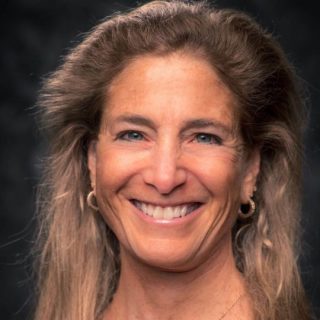
Hope Arnold, LCSW, MA, is a clinician with Simply RO DBT, a practice offering Radically Open Dialectical Behavior Therapy (RO DBT) for disorders of overcontrol. The practice works under the words "Relax. Learn. Connect."
Hope Arnold, LCSW, MA, is a clinician with Simply RO DBT, a practice offering Radically Open Dialectical Behavior Therapy (RO DBT) for disorders of overcontrol. The practice works under the words "Relax. Learn. Connect."
RO DBT is designed for people who struggle with maladaptive perfectionism, obsessional thinking, rumination, rigid behaviors, excessive self-control, avoidance and loneliness. Hope sees clients aged 17 and older, as well as couples, and offers telehealth in Colorado, Texas, Utah and Virginia. Like every clinician at Simply RO DBT, she has completed level 3 intensive training in RO DBT.
She also talks publicly about the approach. She has joined podcasts including Thoughts On Record, Psychologists Off The Clock and Eggshell Transformations to discuss RO DBT, overcontrol and social signaling.
FAQ
Questions
Hope Arnold, LCSW, MA, is a psychotherapist and meditation teacher whose practice is built on Radically Open DBT, mindfulness and meditation. She works as part of Simply RO DBT, a practice that treats disorders of overcontrol, and she is based in a Houston office. Her clinical focus is relaxing the neurological social safety system so that clients can switch off a threat response and engage with others through what RO DBT calls connective social signaling. That emphasis differs from much general mindfulness content, because her work is aimed at people whose perfectionism, rumination and rigid self-control keep them isolated. Her followers tend to be clinicians, students of RO DBT, and clients looking for precise language for overcontrol that does not reduce it to a character flaw. Her public record is modest: her clinical bio and her podcast conversations rather than a large catalogue of published work. Readers come to her for the specificity of how she explains overcontrol and social signaling, not for broad inspirational messaging.
Her work belongs to the Radically Open DBT tradition, a branch of dialectical behavior therapy developed by Thomas R. Lynch that extends the original DBT framework of Marsha Linehan toward disorders of overcontrol. Within that lineage, every clinician at Simply RO DBT has completed level 3 intensive RO DBT training, and Hope is among them. Her meditation practice is framed through the mindfulness component of RO DBT rather than through a named contemplative school, and the available data does not identify a specific meditation teacher she trains under. Where mindfulness roots are discussed in the field, they trace to Buddhist contemplative traditions that DBT adapted for clinical use, but that is the history of the method rather than a stated lineage of hers. Students who want to understand her work should first understand the overcontrol and undercontrol distinction, since it shapes nearly every technique she teaches. Anyone researching her approach should treat RO DBT as the primary lineage and mindfulness as a clinical tool inside it.
A newcomer's first stop is the clinical bio and the description on the Simply RO DBT website at simplyrodbt.com, which explains her core aim of relaxing the threat system. From there, the most accessible public material is her conversations on Thoughts On Record, Psychologists Off The Clock and Eggshell Transformations, where she discusses RO DBT, overcontrol and social signaling. A useful way to listen is to track how she distinguishes a threat response from a safe, connective one, since that distinction anchors her approach. Listeners with a personal stake in perfectionism, avoidance or chronic loneliness will likely find the podcasts more immediately useful than a general introduction to mindfulness. The episodes are conversational, so they suit people who want to hear the framework in practice rather than read theory. No guided meditation recordings or standalone courses are catalogued in the data, so the podcasts and website are the available entry points. Starting with the podcast that best matches the newcomer's interest, then returning to the website for clinical details, is a sensible order.
Many clinicians offer mindfulness, but Hope's distinctive combination is RO DBT, meditation, and a specific interest in vestibular migraines, PPPD and chronic dizziness. Her attention to these physical conditions is unusual within an overcontrol-focused practice, because it recognizes that bodily illness can make social engagement harder to sustain. Her framing treats the neurological social safety system as something to relax rather than something to override with willpower, which is a different posture from exhortation-based self-help. She also treats social signaling as a learnable, observable behavior rather than only an internal emotional state. Her public statements on the podcasts Thoughts On Record, Psychologists Off The Clock and Eggshell Transformations show the precision of that approach. Her Houston-based practice, combined with telehealth in Colorado, Texas, Utah and Virginia, gives her a reach that a purely local therapist would not have.
Her approach is not built for people seeking quick relaxation, symptom-free calm, or a mindfulness practice that avoids emotional and relational work. It is a poor fit for anyone wanting a purely meditative retreat without clinical structure, since the work sits inside a therapy practice. Listeners hoping for devotional or ceremonial spiritual teaching will find the tone clinical rather than mystical. Her clinical services are offered to clients aged 17 and up, along with couples, so younger clients are outside her scope. People whose main difficulty is high-energy impulsivity, or who are not interested in examining their own perfectionism, may find the framework frustrating. Because RO DBT targets disorders of overcontrol, people whose struggles are mainly undercontrol may be better served by a different modality. Those are honest limits, and a good match depends on whether the problem is one of excessive control, avoidance or isolation.
No upcoming events were crawled for Hope Arnold at the time of this profile, so no confirmed dates, tours or retreats can be listed. The most reliable place to check current availability is simplyrodbt.com, which carries the practice's clinical information and contact pathways. Her telehealth coverage in Colorado, Texas, Utah and Virginia is the most concrete form of travel-related access on record. Her Houston office is the in-person location tied to her practice. Her podcast appearances on Thoughts On Record, Psychologists Off The Clock and Eggshell Transformations are the other public traces of her work, so checking those shows' episode listings is a practical way to catch new conversations. No releases are catalogued, so no album or book announcements should be expected from this profile. Anyone planning around her availability should confirm details directly with the practice rather than rely on secondhand listings.
Her teaching sits inside clinical practice, so a session is a psychotherapy appointment shaped by RO DBT rather than a group meditation sit. The work is organized around the social safety system, so sessions tend to examine how threat responses appear in relationships and how a client might respond with connective social signaling. Mindfulness and meditation are part of the toolkit, so contemplative practice is folded into clinical work rather than offered as a separate ritual. On her podcast appearances, her manner is conversational and precise, and she explains overcontrol through concrete examples rather than abstractions. No retreat formats are listed in the data, so an in-person retreat experience should not be assumed. Students coming from retreat-driven backgrounds may find the pace more examined and structured than they expect, with an emphasis on behavior and relationships over transcendent experience.
The most consistent theme is overcontrol, which Hope connects to maladaptive perfectionism, obsessional thinking, rumination, rigid behaviors, excessive self-control, avoidance and loneliness. A second theme is the neurological social safety system, which she describes as something to relax so that a threat response can switch off. A third is social signaling, treated as a set of learnable behaviors that help people connect with others. Her interest in health is a distinct thread, especially vestibular migraines, PPPD and chronic dizziness, and it links bodily illness to the difficulty of engaging socially. Mindfulness and meditation appear as tools running through these themes rather than as separate subjects. Listeners who want to hear these threads developed at length will find them most fully in her podcast conversations, which explore how overcontrol and social signaling show up in daily life.
Hope has spoken publicly about RO DBT, overcontrol and social signaling on three podcasts: Thoughts On Record, Psychologists Off The Clock and Eggshell Transformations. These conversations are the most substantial independent material on record, and they are suited to listeners who prefer hearing the framework discussed rather than reading it. No standalone written talks, transcripts, lecture series or courses are catalogued in the data. Because the podcasts are interview-style, the value lies in how she explains concepts in response to questions, which can reveal her thinking more clearly than a scripted lecture. Students should listen with a notebook, since the framework depends on distinctions such as threat versus safety and overcontrol versus undercontrol. Those seeking more depth than a single episode provides can compare how the concepts are framed across the three shows. Anyone studying her ideas should confirm episode details on each podcast's own listing.
Some background helps, though it is not strictly required for a general listener. The clearest preparation is a basic understanding of dialectical behavior therapy and its origins in the work of Marsha Linehan, since RO DBT grows out of that method. Familiarity with the idea of a threat system and how it differs from a safety system will make her explanations land more quickly. Clinicians and students will follow the framework with the most ease, especially given that her practice is built on level 3 intensive RO DBT training. Readers without clinical training can still benefit by approaching the podcasts as introductions and returning to the clinical bio on simplyrodbt.com for precise terminology. Anyone whose primary goal is simple stress relief without learning new clinical vocabulary may find the material denser than they want. Background, in other words, mostly determines how quickly the framework clicks, not whether the ideas are accessible.






Bist du das? Diese Seite beanspruchen ›
There's more where this came from.
BrightStar is the global directory of artists, teachers, and healers in the wellness and spiritual movement. Find your next experience — or add yourself.
Discover More Artists
Browse 14,000+ curated profiles across kirtan, yoga, meditation, and beyond.
Explore directory →Find an Event Near You
Kirtan, retreats, sound baths, breathwork, ceremonies — happening this week.
Browse events →Add Your Profile
Are you an artist, teacher, or healer? Get listed — free, AI-assisted, live in minutes.
Get started →