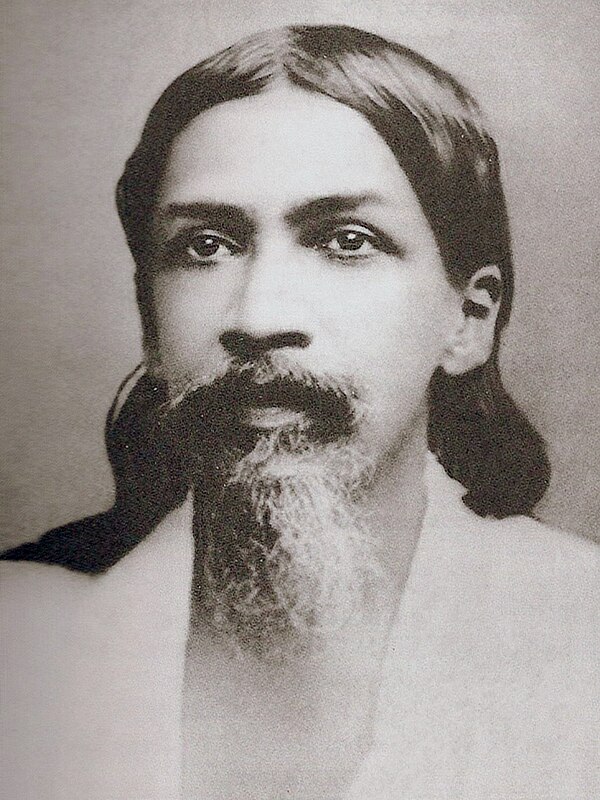
The Unseen Truths of Faith
In the words of Sri Aurobindo, "Faith is the soul's witness to something not yet manifest, achieved or known, but which yet the Knower within us, even in our most ignorant parts, knows to be true." This profound statement invites us to explore the essence of faith as an intrinsic part of our being. It suggests that faith is not merely a belief in the unseen but a deep, intuitive recognition of a truth that transcends our immediate understanding. In a world often dominated by tangible evidence and rational thought, Aurobindo's insight beckons us to embrace the subtler dimensions of existence, where the soul's knowing can guide us toward a more profound reality.
As we delve deeper into this quote, we uncover layers of meaning that resonate with the human experience. Faith, as Aurobindo articulates, is not a passive acceptance of ideas; rather, it is an active engagement with the unknown. It is a dynamic force that propels us forward, urging us to trust in the unseen possibilities that lie ahead. This understanding of faith challenges us to confront our ignorance and limitations, inviting us to cultivate a relationship with the deeper aspects of ourselves that harbor wisdom beyond our conscious awareness. In this light, faith becomes a bridge between our current state of being and the potential that awaits us.
The image / the metaphor
At its core, Aurobindo's quote evokes a rich tapestry of imagery that speaks to the nature of faith. The phrase "soul's witness" conjures the image of an inner observer, a part of ourselves that perceives truths beyond the veil of our immediate reality. The verbs "manifest," "achieved," and "known" suggest a journey from the abstract to the concrete, from potentiality to actuality. This journey is not linear; it is a dance between the seen and the unseen, where faith serves as the guiding light illuminating the path ahead. The felt sense of this quote is one of hope and anticipation, as it encourages us to trust in the unfolding of our lives.
Diving deeper into the metaphor, we can see that faith is portrayed as an innate quality of the soul, a fundamental aspect of our being that connects us to a greater truth. The "Knower within us" signifies an inner wisdom that exists even in our ignorance, suggesting that faith is not contingent upon our understanding or knowledge. This perspective invites us to embrace the paradox of faith: that it can coexist with uncertainty and doubt. In this way, faith becomes a powerful ally, allowing us to navigate the complexities of life with grace and resilience.
In the speaker's tradition
To fully appreciate Aurobindo's insights, we must situate them within the broader context of Hindu philosophy. Faith, or "shraddha," is a central tenet in many spiritual traditions, including Hinduism, where it is often linked to concepts such as "dharma" (righteous duty) and "bhakti" (devotion). In Aurobindo's vision, faith transcends mere belief; it is an active engagement with the divine and the universe. This aligns with the idea of "kenosis," or self-emptying, where one surrenders to a higher truth, allowing faith to fill the void left by ignorance and doubt.
Moreover, Aurobindo's emphasis on the "Knower within us" resonates with the concept of "prajna," or wisdom, which is often described as an innate understanding that arises from deep contemplation and self-inquiry. This inner knowing is not limited to intellectual understanding but encompasses a holistic awareness that integrates body, mind, and spirit. In his work "The Synthesis of Yoga," Aurobindo articulates the transformative power of faith as a means to access this deeper wisdom, inviting practitioners to cultivate a relationship with their inner selves that transcends the superficial layers of existence.
Living the teaching
Consider a modern scenario where this teaching can be applied: a person facing a significant life decision, such as changing careers or entering a new relationship. In such moments of uncertainty, the instinct may be to seek concrete evidence or rational justification for the choice at hand. However, Aurobindo's perspective encourages us to tap into our inner knowing, to cultivate faith in the process of exploration and discovery. By trusting that the soul's witness can guide us, we may find clarity and direction that transcends mere logic, allowing us to embrace the unknown with confidence.
Another application of this teaching can be found in the realm of relationships. When conflicts arise or misunderstandings occur, it is easy to become mired in doubt and fear. Yet, Aurobindo's insights remind us that faith in the inherent goodness of ourselves and others can serve as a powerful antidote to discord. By recognizing the "Knower within" each person, we can foster compassion and understanding, allowing faith to bridge the gaps that separate us. In daily practice, this might manifest as a commitment to see the best in others, even when circumstances challenge that perception, thereby nurturing a deeper connection rooted in trust and love.
A reflection
As we contemplate Aurobindo's profound words, we are invited to reflect on our own relationship with faith. What truths do we sense within ourselves that remain unmanifest? How can we cultivate a deeper trust in our inner knowing, even amidst uncertainty? By engaging with these questions, we open ourselves to the transformative power of faith, allowing it to guide us toward a more authentic and fulfilling existence.


