




What is Listening Meditation?
Listening meditation is a contemplative practice that uses sound as the primary object of awareness to cultivate mindfulness, deepen concentration, and quiet the discursive mind. Rather than attempting to block out auditory stimuli, practitioners direct conscious attention toward sounds—whether external (ambient noise, music, nature) or internal (breath, heartbeat, subtle inner vibrations)—observing them arise and dissolve without judgment, analysis, or conceptual elaboration. The practice appears across multiple contemplative traditions under different names and frameworks, from ancient yogic and Buddhist lineages to contemporary Western adaptations.
Origins & Lineage
Listening meditation has roots in the Sanskrit practice of sravana, the act of hearing or experiencing spiritual teachings from a guru, forming one of the three pillars of Jnana Yoga alongside reflection (manana) and contemplation (nididhyasana). In nada yoga, “union through sound,” practitioners meditate on nada (sound/vibration), a practice rooted in the Vedas, the ancient collection of Sanskrit hymns. The Hatha Yoga Pradipika describes focusing on inner sound heard within the right ear to lead the mind toward stillness. Nada yoga distinguishes between anahata (silent vibrations of the self, or “unstruck sound”) and ahata (external, “struck” sound produced by friction).
In early Buddhism, the dharma was transmitted orally, making listening the primary means of learning; later, “wisdom generated through listening” expanded to include reading texts as well as oral teachings. The threefold practice of listen, contemplate, meditate appears across Buddhist traditions as contemplative technology, beginning with initial encounters with dharma and reaching full expression in direct realization.
In the late 20th century, composer Pauline Oliveros (1932-2016) developed Deep Listening, which explores the difference between involuntary hearing and conscious listening, describing it as “a practice consisting of listening and sounding exercises and pieces” she and others composed since 1970. The practice grew from Oliveros’s Sonic Meditations, published in 1971, which emerged from her work with a group of women (later the ♀ Ensemble) who experimented with meditation, journaling, and other techniques over two years, resulting in 25 text score exercises.
How It’s Practiced
Listening meditation takes multiple forms depending on lineage and intention. In Buddhist approaches, practitioners sit stable and listen to sounds as they occur, neither imagining, naming, nor analyzing them—not grasping or rejecting sounds, but remaining aware as they arise and pass away. Practitioners find a quiet space and simply listen to ambient sounds—birds, traffic, breath—allowing sounds to move through them, becoming an observer rather than a participant.
In traditional nada yoga practice, one sits in meditative posture before dawn (Brahma Muhurta), closes the ears with thumbs, and listens quietly to internal sounds. The practice progresses through four levels: vaikhari (ordinary external sounds), madhyama (internal sounds like thoughts and memories), pashyanti (visual/intuitive sounds), and para (the transcendent “unstruck” inner sound of nada).
Deep Listening includes bodywork, sonic meditations, interactive performance, and listening to sounds of daily life, nature, one’s thoughts, imagination, and dreams. Sessions may involve group vocal exercises, instrument work, or silent attentiveness to the sonic environment.
Listening Meditation Today
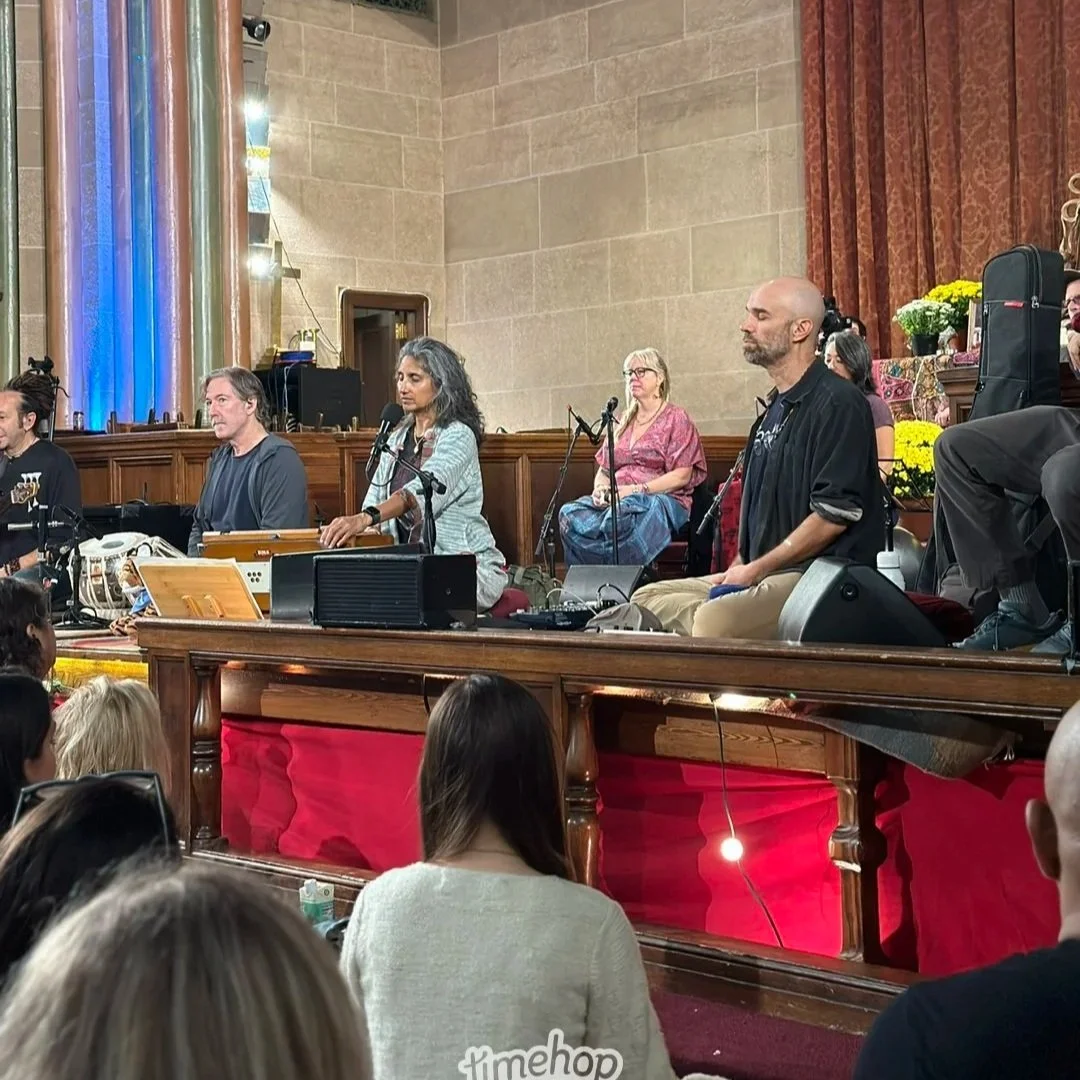
Contemporary seekers encounter listening meditation through multiple channels. Multi-day mindfulness retreats now incorporate mindful listening alongside sitting meditation, with participants practicing cultivating awareness through extended periods of auditory attention. Teachers certified in Deep Listening methods offer workshops worldwide. Nada yoga appears in yoga studios, sound healing sessions, and wellness centers, often utilizing singing bowls, gongs, and other instruments.
Online platforms offer guided listening meditations, and the practice has entered secular mindfulness training programs. Some teachers integrate listening practice with nature immersion (forest sounds, water) or musical performance. The COVID-19 pandemic accelerated development of remote listening meditation offerings through virtual sound baths and recorded sessions.
Common Misconceptions
Listening meditation is not passive relaxation or ambient music consumption. Deep Listening explores the difference between involuntary hearing and voluntary, selective listening—it’s a practice of listening to everything, all of the time, requiring active attentional engagement rather than merely having sounds play in the background.
It is not exclusively about achieving silence or blocking out noise. The practice works with sound rather than against it, using auditory phenomena as objects of investigation. Listening to music meditatively differs from ordinary music appreciation; the former suspends aesthetic judgment and narrative association in favor of direct sensory contact.
Hearing the anahata nada described in classical nada yoga texts requires years of dedicated preparation perfecting hatha yoga techniques; contemporary adaptations are more accessible but should not promise immediate mystical auditory experiences. Meditation retreats are not appropriate for everyone; those with trauma history or acute psychological issues should consult mental health professionals before intensive practice.
How to Begin
Martine Batchelor offers instructions for listening meditation through her teachings, published in Tricycle: The Buddhist Review. Baird Hersey’s The Practice of Nada Yoga: Meditation on the Inner Sacred Sound provides step-by-step instructions for finding inner sound, with detailed exercises guiding practitioners through each level and instructions for daily practice. Oliveros’s Deep Listening is taught worldwide in workshops, retreats, and classes, including at Rensselaer Polytechnic Institute; resources are available through The Center for Deep Listening.
Beginners can start with simple exercises: sit quietly for 10 minutes and count how many distinct sounds you can identify without labeling them. Practice listening to a single sound (a bell, a singing bowl) until it fades completely into silence. Many meditation centers offer daylong or weekend retreats incorporating listening practice alongside other techniques. Local yoga studios teaching nada yoga or sound healing provide structured entry points, though discernment regarding teacher training and lineage is advisable.